
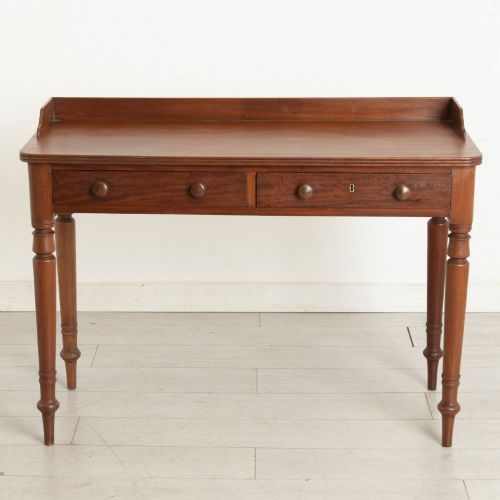
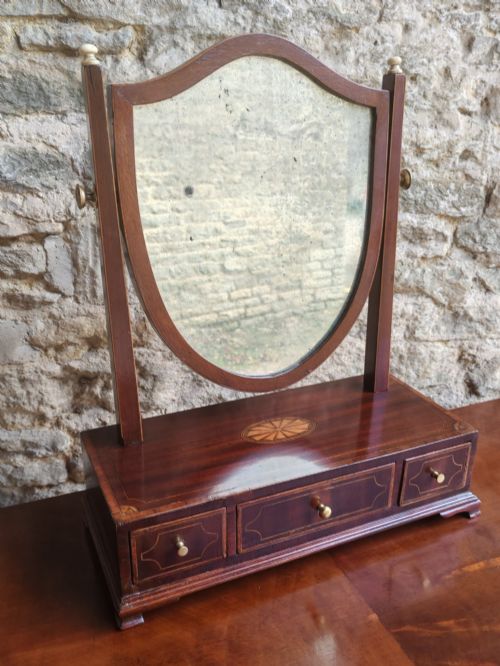
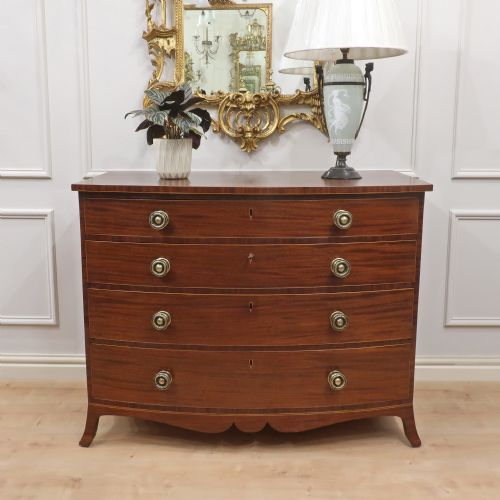
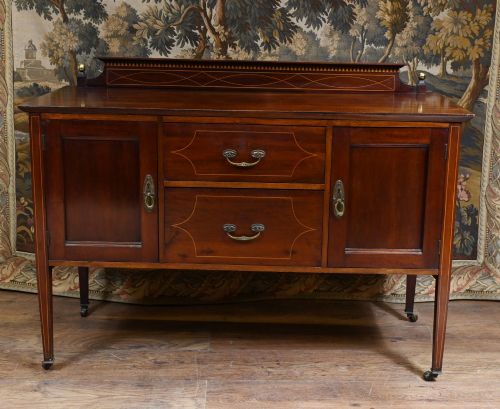
Rich Mahogany Drawers
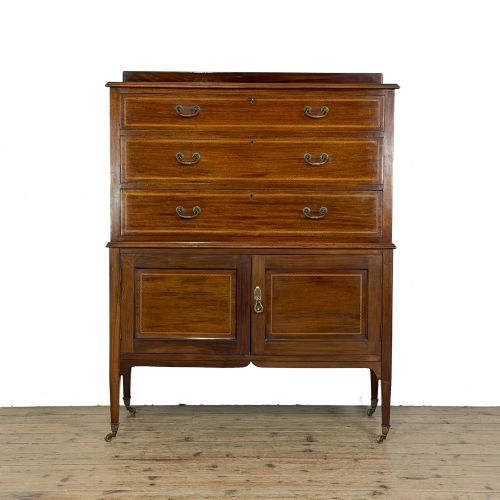
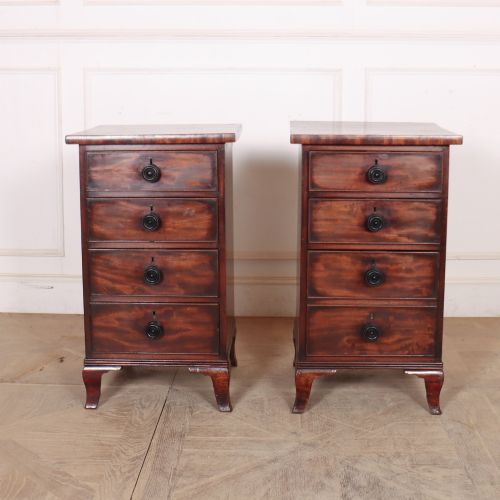
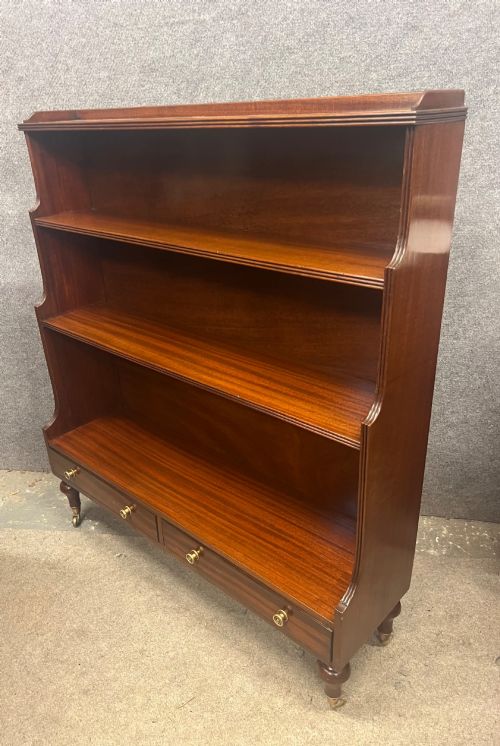
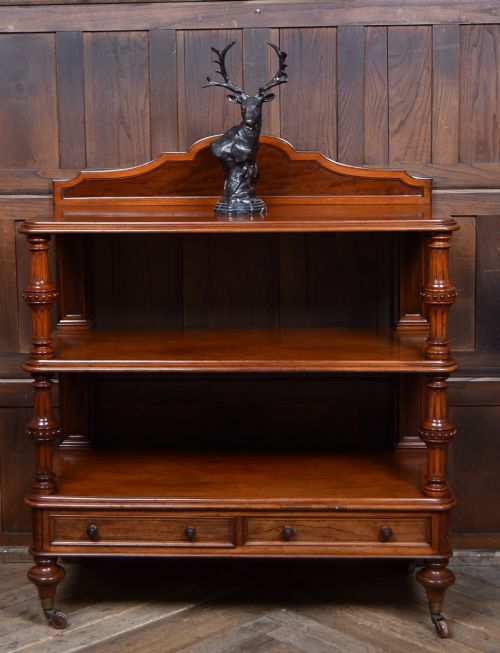
Rich mahogany drawers bring deep, warm timber tones and practical storage to a room, ranging from compact Georgian chests to tall Victorian Wellington cabinets.
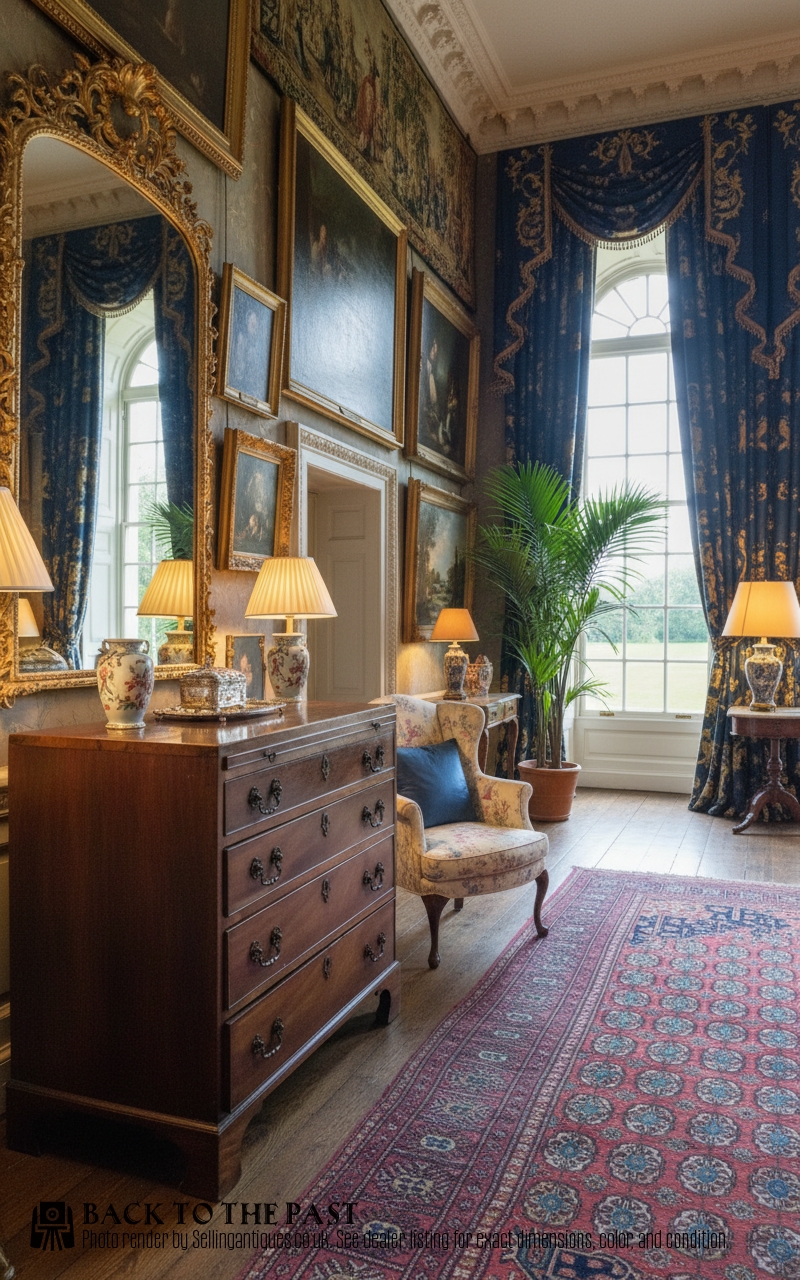
Rich Mahogany Drawers
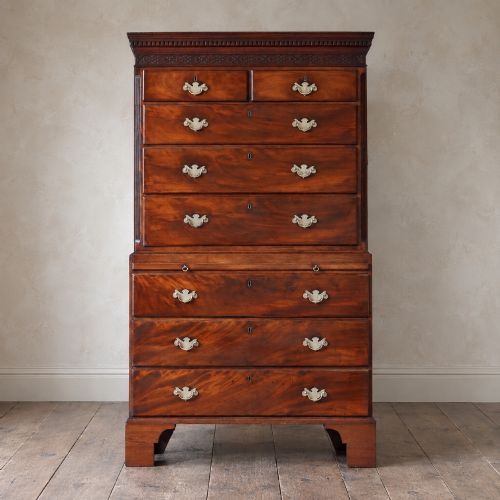
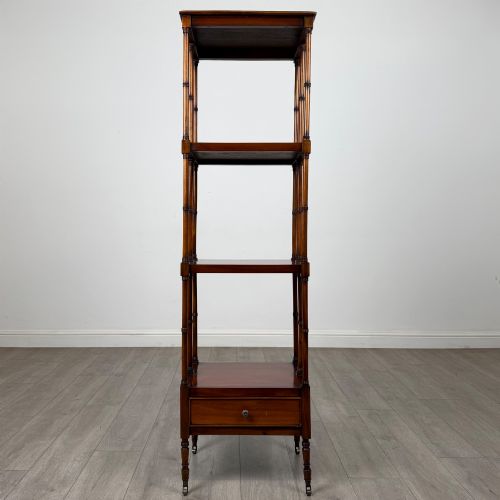
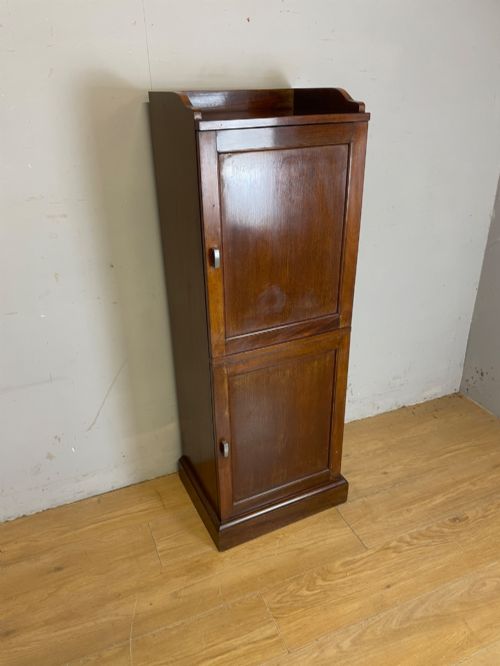
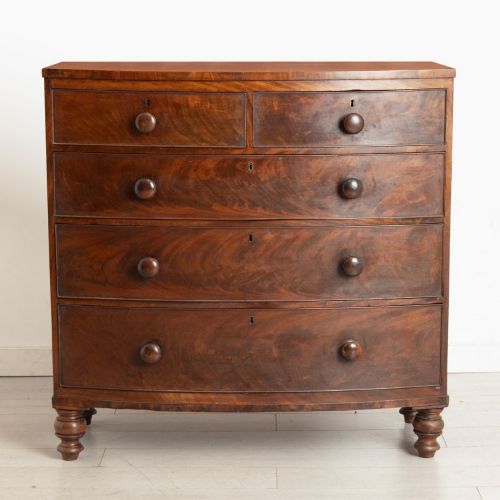
Rich mahogany drawers encompass a variety of storage furniture designed to hold garments, papers, or small collectibles. When searching for rich mahogany drawers, buyers encounter pieces spanning the Georgian, Victorian, Edwardian, and Regency periods, with chests of drawers forming the majority of the selection.
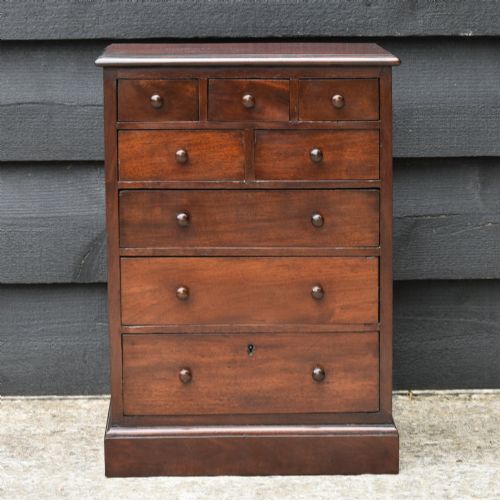
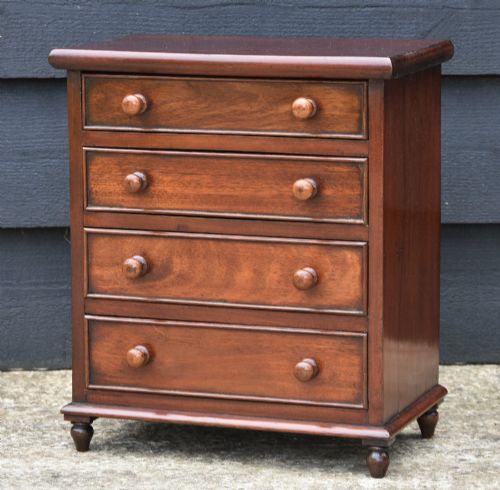
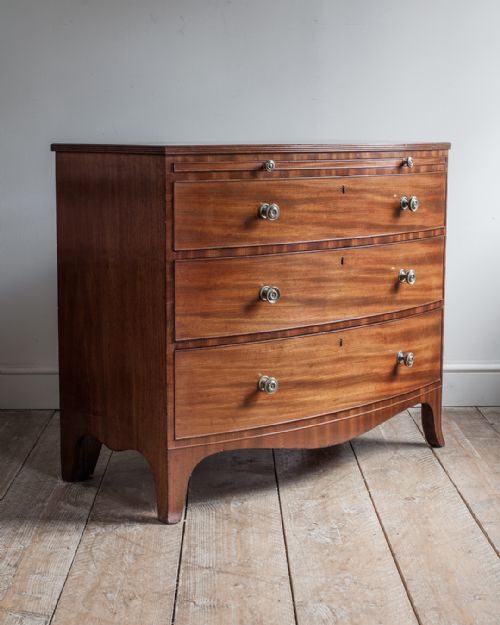
Form scales range from grand chest on chest examples and bowfront linen presses down to miniature apprentice pieces and bedside cabinets. Regional variations, such as Scottish chests, sit alongside continental pieces like Swedish serpentine examples, each bringing distinct proportions to the form.
How they were made
Cabinet makers utilised solid mahogany and wood veneer applied to secondary timbers, often selecting figured grain for drawer fronts to create a rich visual depth. Brass hardware, including drop handles and escutcheons, provides functional contrast against the dark timber.
Secondary materials such as glass appear in glazed bookcase doors and wall cabinets, while bone and metal occasionally contribute to inlay work or internal mechanisms. Construction methods involve traditional drawer dovetailing and tight jointing suited to heavy daily use.
Miniature apprentice chests served as miniature portfolios, proving a young joiner could cut dovetails small enough to make a master smile.
What varies in quality
The standard of timber selection governs the visual weight of a piece, with highly figured grain and book-matched veneers marking out the finer examples. Crispness in cabinet work, from the hand-cut dovetails on drawer linings to the precise shaping of bowfronts and serpentine outlines, separates standard workshop output from superior commissions.
Originality of brass hardware and the preservation of polished surfaces contribute significantly to a piece's integrity. Subtle details, such as integrated brushing slides or working locks with matching keys, elevate the functional sophistication of individual drawers.
Druce and Co·Chippendale·Hepplewhite
The Rich Mahogany Drawers Glossary
- Brushing slide
- A pull-out shelf integrated above the top drawer, traditionally used for folding clothes or writing correspondence.
- Bowfront
- A convex curved front profile popular in Regency and Georgian cabinet making that softens the rectangular lines of a chest.
- Wellington chest
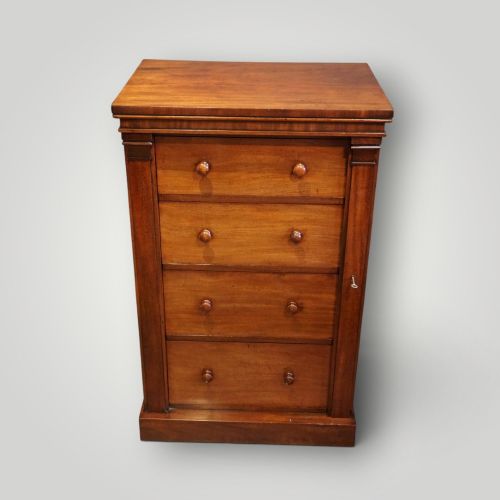
- A tall, narrow chest of drawers secured by a hinged locking side pilaster that fastens over the drawer edges.
- Tallboy
- A tall chest on chest configuration stacking multiple smaller drawers above deeper ones to maximise vertical storage.
- Serpentine
- A front contour characterised by a convex central section flanked by two concave curves, demanding high woodworking skill.
- Apprentice piece
- A miniature scale model constructed by a trainee craftsman to demonstrate mastery before admission to a guild.
Rich Mahogany Drawers: Frequently Asked Questions
What is a brushing slide used for?
A brushing slide pulls out from the upper section of a chest to provide a temporary flat surface. Owners originally used it for folding garments or dusting clothes before retrieval.
Today, the slide offers a convenient spot to rest small items while accessing the drawers below, preserving the primary top surface.
How do I identify a Regency chest?
Regency chests typically display architectural restraint, clean lines, and dark mahogany surfaces accented with brass lion mask handles or ring pulls. Bowfront profiles and splayed bracket feet frequently appear on pieces from this era.
Compared to ornate Victorian pieces, Regency examples rely on timber grain and proportion rather than heavy carving for visual impact.
Where should I place a Wellington chest?
Wellington chests feature a narrow, tall footprint with a locking side bar, making them suited to tight spaces like corners or beside wardrobes. Their vertical orientation provides generous storage without demanding wide floor space.
Ensure adequate room beside the chest for the hinged locking flap to swing completely open when accessing the contents.
How do I care for mahogany drawers?
Mahogany responds well to dry dusting with a soft cloth and occasional applications of traditional beeswax to nourish the timber. Avoid placing these pieces in direct sunlight or near heat sources to prevent the wood veneer from drying and splitting.
Maintain stable room humidity to keep drawer runners moving smoothly within their frames.