

Miniature Apprentice Piece
When you handle a miniature apprentice piece, you hold a scaled-down testament to historical woodworking skill.
Miniature Apprentice Piece
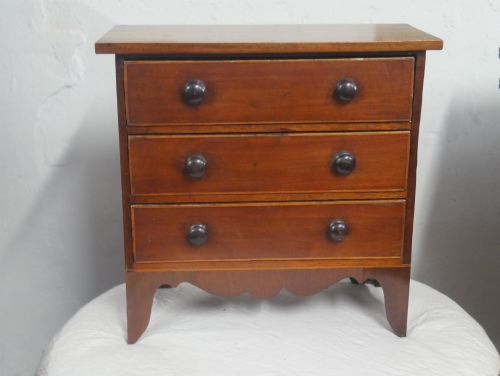
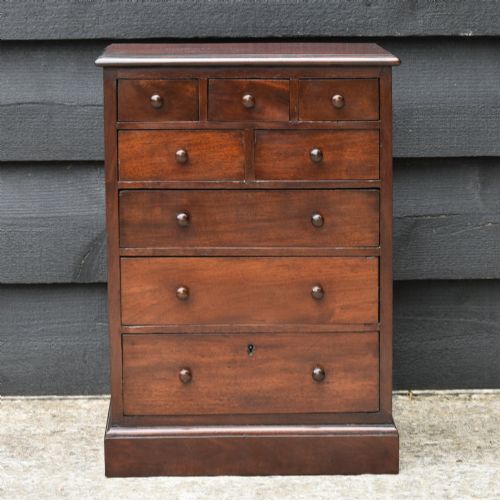
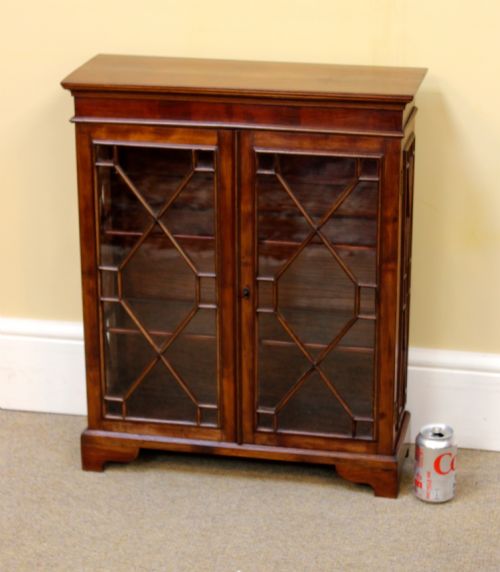
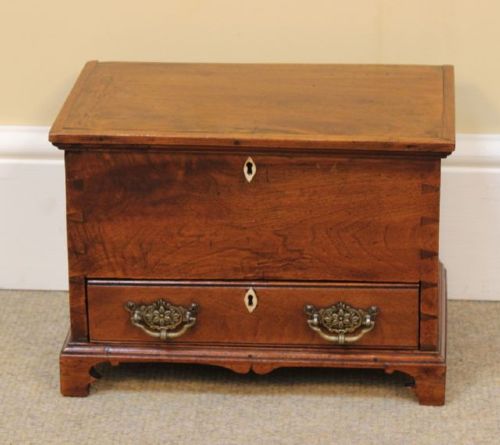
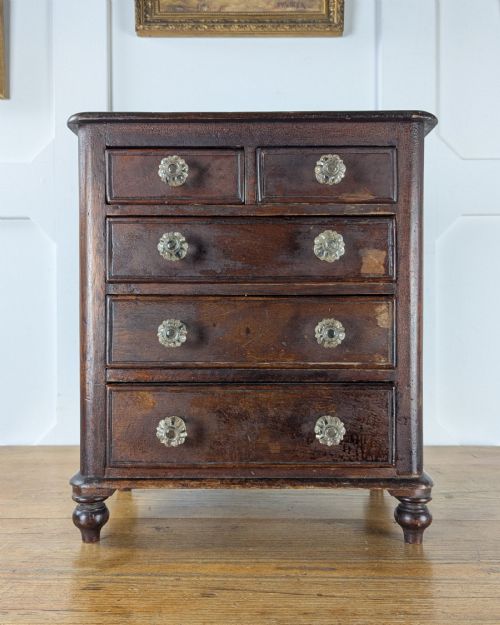
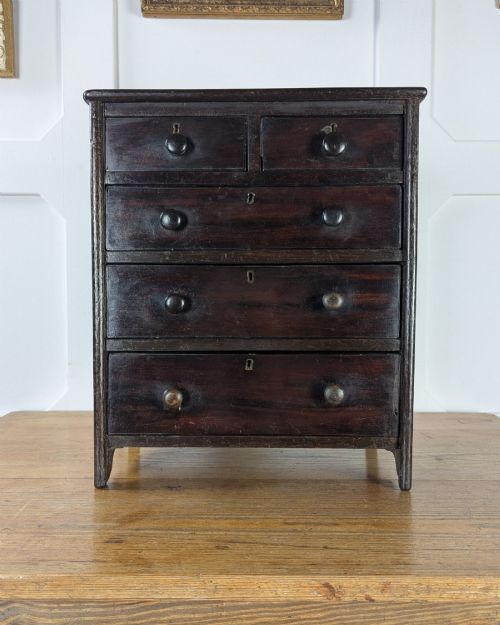
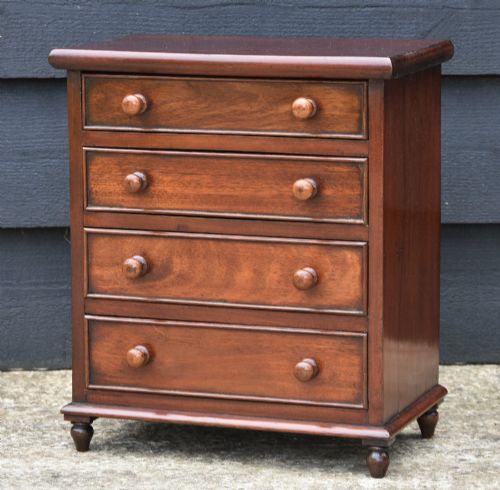
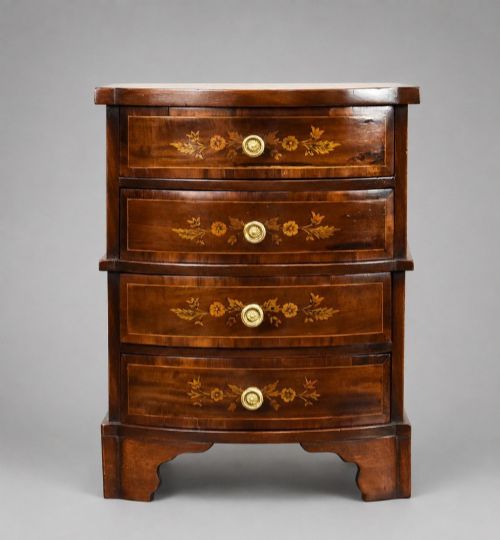
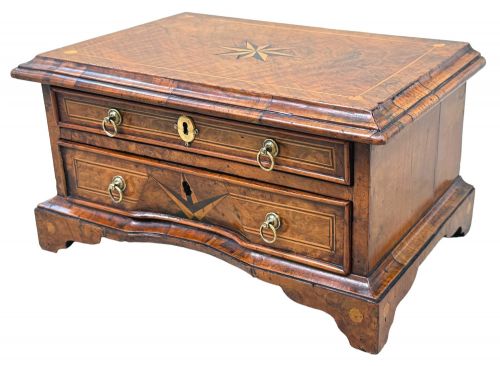
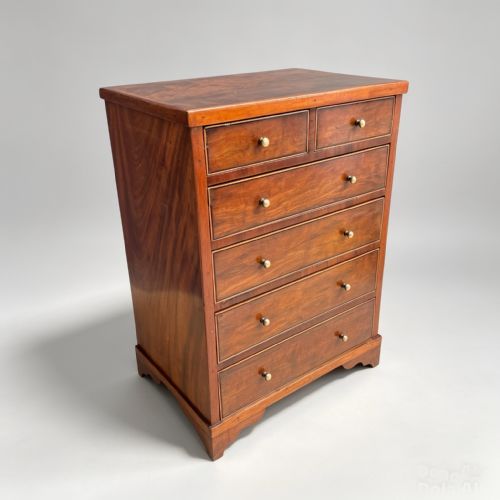
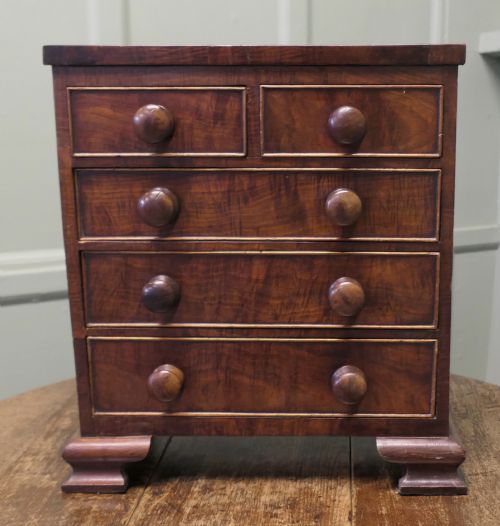
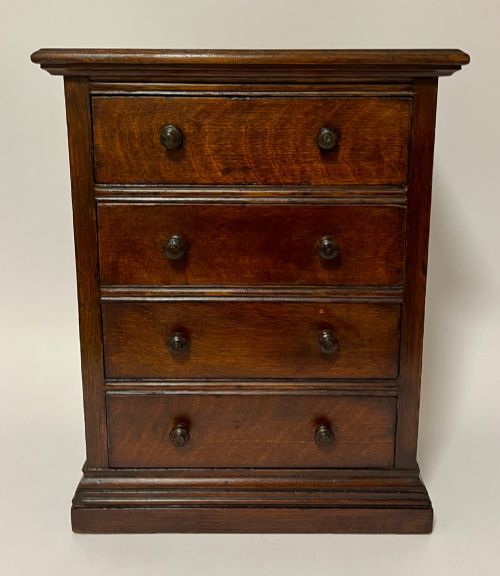
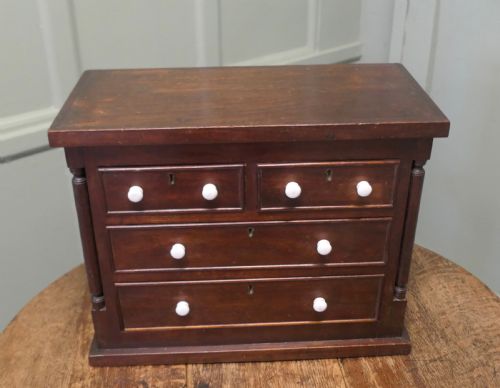
The most common form on this page is the miniature chest of drawers, alongside tables, desks, and cabinets. These objects served as proof of skill or as salesman samples rather than children's toys.
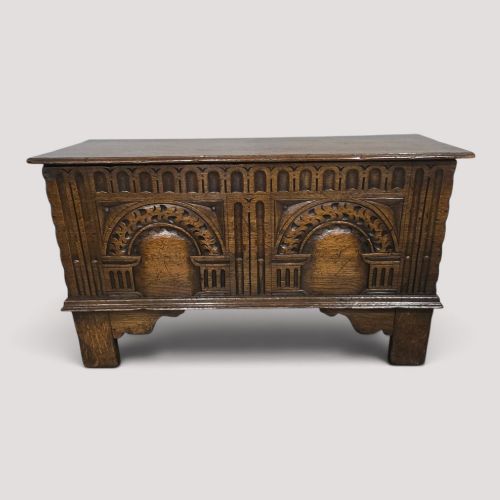
Makers utilised native and exotic timbers to construct everything from diminutive Scottish chests to diminutive bureau bookcases.
Materials and construction methods
Craftsmen shaped these items using traditional hardwoods such as mahogany, oak, walnut, and pine, often complemented by brass handles and glass inserts. Joinery mirrored full-sized furniture production down to the smallest drawer dovetail.
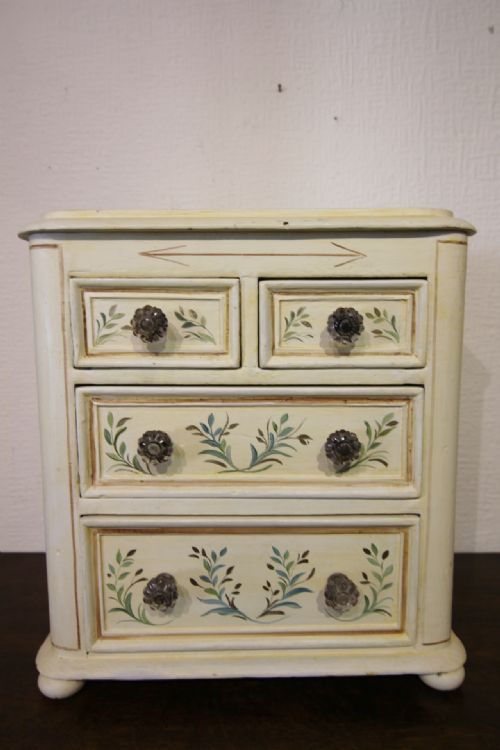
Surfaces received polish, French polish, or painted finishes, while specialised examples incorporated marquetry, bone inlay, or slate elements.
Listings feature items constructed from mahogany, oak, walnut, pine, brass, glass, and bone across Georgian, Victorian, and Edwardian periods.
Quality variations in small-scale furniture
Proportion and fidelity to full-scale prototypes separate standard examples from finer works. The precision of the joinery and the choice of timber veneer reveal the maker's level of competence.
Surface preservation, such as original patination on eighteenth-century oak or mahogany, dictates the standing of a piece within a collection.
The Miniature Apprentice Piece Glossary
- Apprentice piece
- A miniature furniture item created by a trainee to prove proficiency to a guild or master. These objects display the full range of cabinet-making techniques on a reduced scale.
- Salesman sample
- A portable miniature used by merchants to demonstrate furniture designs to prospective buyers. They allowed domestic and commercial clients to inspect styles before ordering full-sized items.
- Marquetry
- The art of applying pieces of veneer to a structure to form decorative patterns. This technique appears on select miniature chests and cabinets.
- Tilt-top table
- A small table featuring a mechanism that allows the surface to rotate vertically when not in use. These space-saving designs occur in miniature form across the Georgian and Regency periods.
Miniature Apprentice Piece: Frequently Asked Questions
What is a miniature apprentice piece?
A miniature apprentice piece is a small-scale item of furniture made by a craftsman in training to demonstrate mastery of woodworking techniques.
These items mirror full-sized counterparts in joinery, timber selection, and proportion, serving as proof of skill.
Were these items meant for children?
Despite their diminutive size, these objects were not intended as children's toys or dollhouse furniture.
They functioned as professional test pieces for craftsmen or as portable samples for travelling salesmen.
Which woods are most common?
Mahogany, oak, and walnut dominate the surviving examples from the eighteenth and nineteenth centuries.
Cabinetmakers also utilised pine, rosewood, and bird's-eye maple alongside brass and glass components.
How do I identify the period?
Dating relies on stylistic markers such as Georgian proportions, Regency brass details, or Victorian turning.
Construction methods and timber choices further clarify whether an item originates from the eighteenth or nineteenth century.
How should I display them?
These items suit placement on tabletops, desks, or within display cabinets where their scale can be appreciated.
Stable indoor environments away from direct sunlight protect the delicate veneers and historical finishes.