
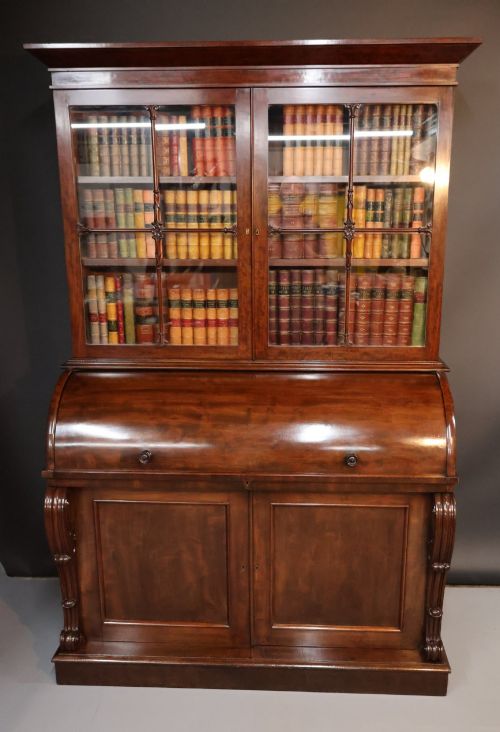

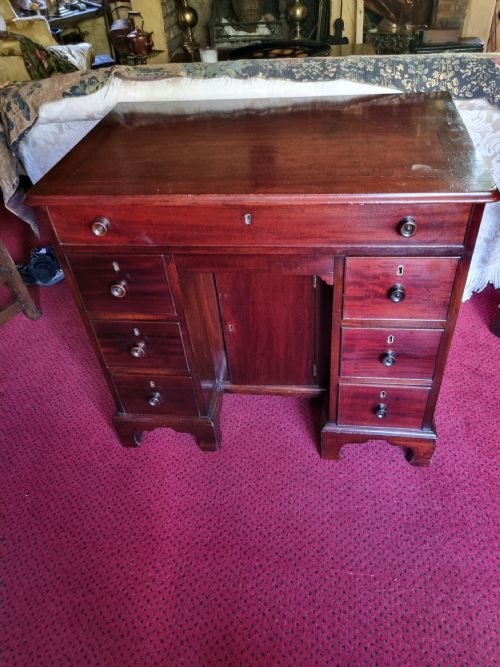


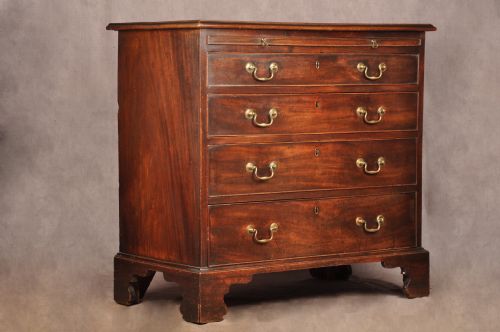
Rich Mahogany Bureau
A rich mahogany bureau brings deep timber tones and drop-front writing practicality straight into a study.
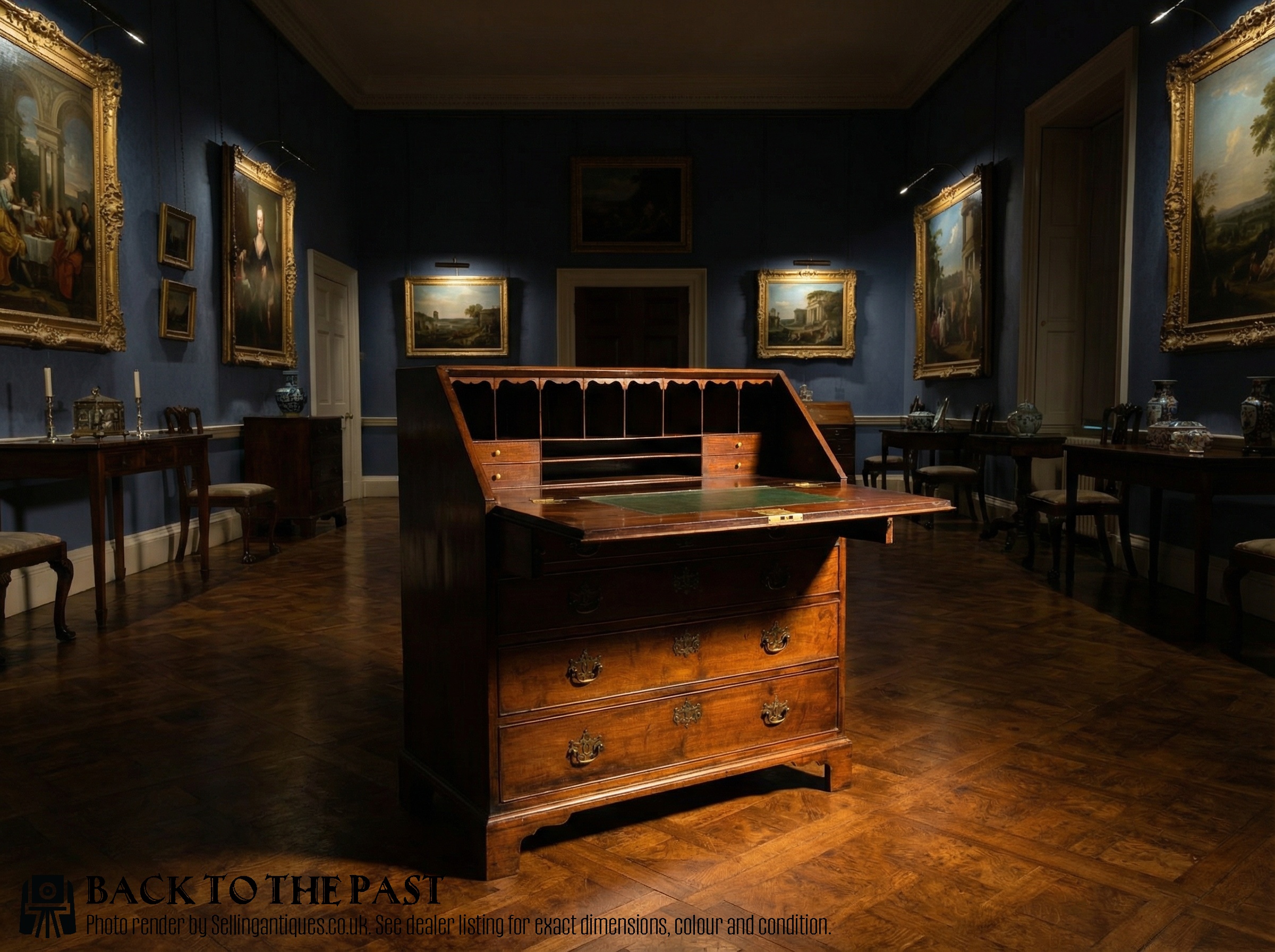
Rich Mahogany Bureau
A rich mahogany bureau is a writing cabinet featuring a sloping fall-front that opens to reveal internal compartments and small drawers. When a buyer searches this phrase, they encounter practical working furniture designed to conceal correspondence and stationery behind panelled wood.
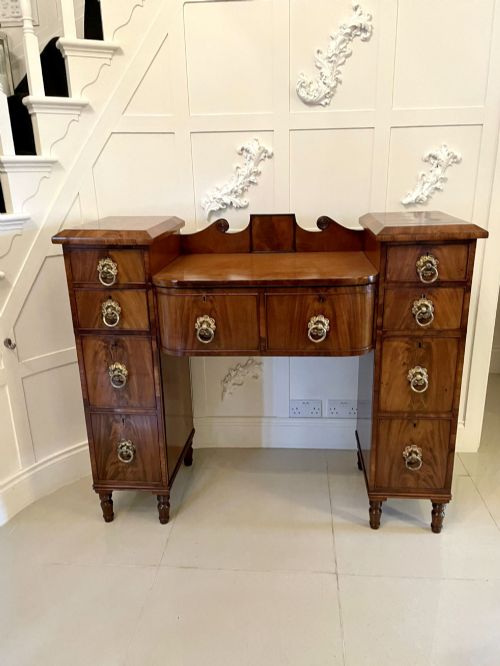
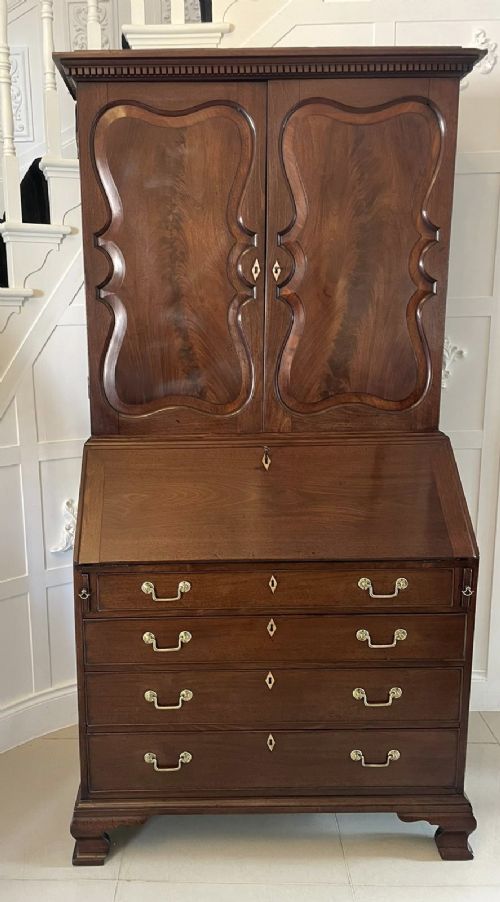
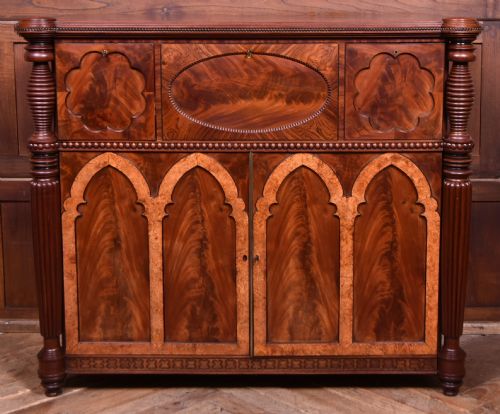
The pieces listed on this page span the eighteenth century, the nineteenth century, and the Edwardian era, showing forms ranging from compact writing desks to towering bureau bookcases. The Georgian period dominates the selection, alongside Victorian iterations and later Edwardian interpretations.
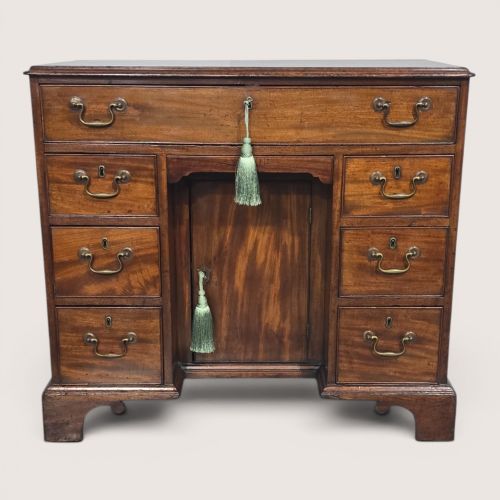
Desks, secretaire cabinets, and bureau bookcases form the primary object types found here. Buyers meet both modest kneehole writing tables and architectural double-height bookcases equipped with glazed upper doors.
How they were made
Makers built these pieces using solid mahogany and figured veneers over secondary timbers, often accentuating the grain with flame mahogany or satinwood highlights. Structural stability relied on traditional joinery techniques such as dovetailed drawer construction and mortise and tenon frames.
Brass hardware, including bracket feet mounts, escutcheons, and drop handles, complements the dark timber surfaces. Selected examples incorporate fruitwood inlay, glass panels in upper bookcase doors, and occasional burr walnut or walnut accents.
Listings span the eighteenth century, nineteenth century, and Edwardian era, incorporating mahogany, satinwood, fruitwood inlay, and brass.
What varies in quality
Quality in a rich mahogany bureau rests upon the selection of the timber grain and the crispness of the internal fitments. Superior examples display symmetrical flame mahogany or figured veneers that wrap evenly across the fall-front and drawer faces.
The complexity of the interior writing compartment separates standard pieces from the finest output. Elaborate pigeonholes, secret compartments, and finely turned small drawers indicate a higher grade of cabinet-making.
Gillows·George Faulkner Armitage·Maple of London
The Rich Mahogany Bureau Glossary
- Bureau bookcase
- A writing bureau combined with a shelved upper cabinet enclosed by doors. The upper section typically holds books behind wooden or glazed frames.
- Secretaire
- A cabinet or desk containing a concealed writing drawer or drop-front writing surface. This term often describes pieces that look like chests of drawers until the middle section pulls out or drops down.
- Kneehole desk
- A compact desk featuring a central recessed space for the legs, flanked by pedestals of small drawers. These tables offer a tidy footprint for smaller rooms.
- Serpentine
- A front contour curving outward at the centre and inward at the sides in a gentle wave. This shaping requires expert timber selection and precise woodworking.
- Brushing slide
- A pull-out shelf located above the top drawers used for writing or placing items temporarily. It tucks away flush when not in use.
Rich Mahogany Bureau: Frequently Asked Questions
What is a rich mahogany bureau?
A rich mahogany bureau is a traditional writing desk featuring a hinged writing flap that folds down for correspondence. Inside, small compartments and pigeonholes organise letters and papers.
These pieces combine display and storage, often standing on bracket feet or terminating in pedestal drawers. The dark reddish-brown timber gives the furniture its distinct traditional appearance.
How do I date an old bureau?
Dating relies on examining construction methods, timber choice, and hardware styles. Eighteenth-century examples often feature hand-cut dovetails and solid timber carcases, while later nineteenth-century pieces may utilise different interior layouts and machine-sawn elements.
Secondary woods inside the drawers also offer clues to the period of manufacture. Comparing the overall proportions and foot style against established design eras helps narrow down the decade.
Where should I place a bureau bookcase?
A bureau bookcase suits a study, library, or living room with adequate wall space. Because these pieces combine a tall bookcase with a fold-down desk, they require clearance in front for the drop-front to open fully.
Positioning the timber away from direct sunlight and radiators protects the polished mahogany finish from fading or drying out over time.
How do I care for mahogany furniture?
Maintaining mahogany involves dusting with a soft, dry cloth and applying traditional beeswax sparingly when the timber appears dry. Avoid commercial silicone sprays that build up residue on antique polish.
Keeping room humidity stable prevents the timber and veneers from shrinking or cracking. Simple preventive care preserves the natural lustre of the wood.