
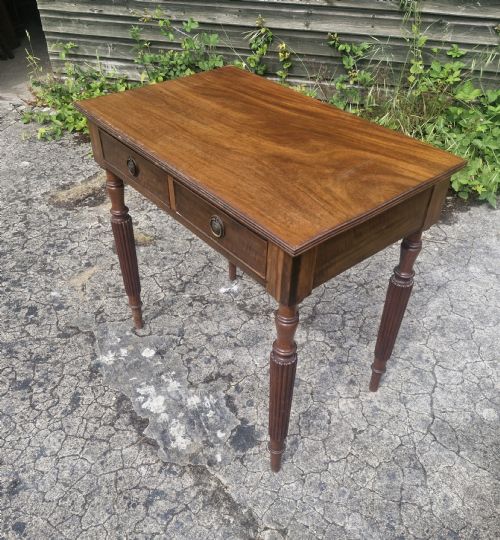


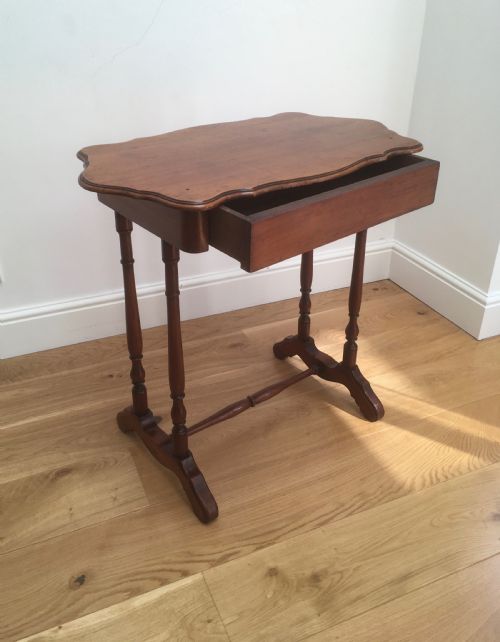

Rich Brown Lamp Table
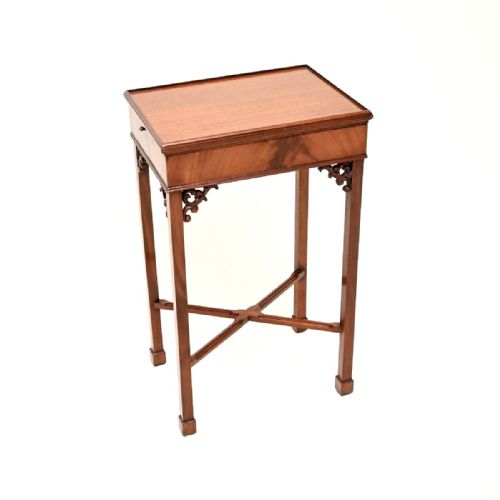
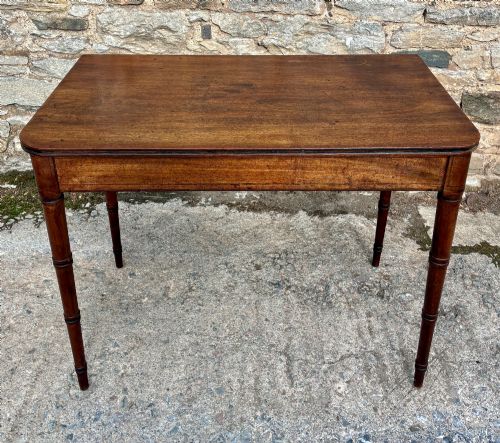
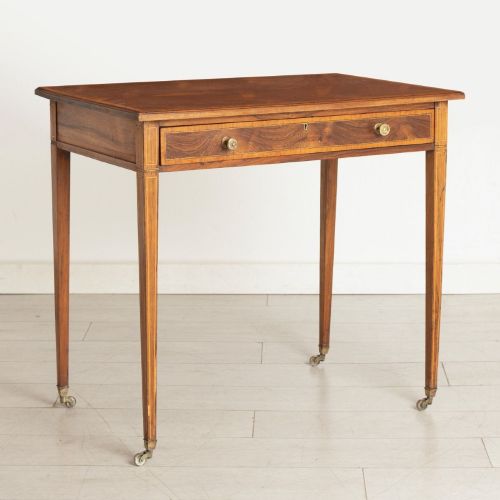
A rich brown lamp table brings warmth and dependable surface space to a room, drawing on centuries of cabinet-making traditions in mahogany, walnut, and rosewood.
Rich Brown Lamp Table
A rich brown lamp table encompasses a variety of timber furniture designed to hold illumination and small items, spanning the Georgian, Regency, Victorian, and Edwardian eras. Buyers searching for a rich brown lamp table will encounter side tables, occasional tables, centre tables, and multi-tiered etageres.
The materials recorded across these listings include mahogany, walnut, rosewood, pollard oak, and oak, often enriched with wood inlay and veneer. Most pieces lean towards Victorian and Edwardian examples, alongside earlier Regency and Georgian forms and later Art Deco designs.
How they were made
Cabinet-makers constructed these tables using solid hardwoods and decorative veneers applied to secondary timbers. Rich brown tones emerge naturally from polished mahogany, walnut, and rosewood, sometimes accented by intricate wood inlay.
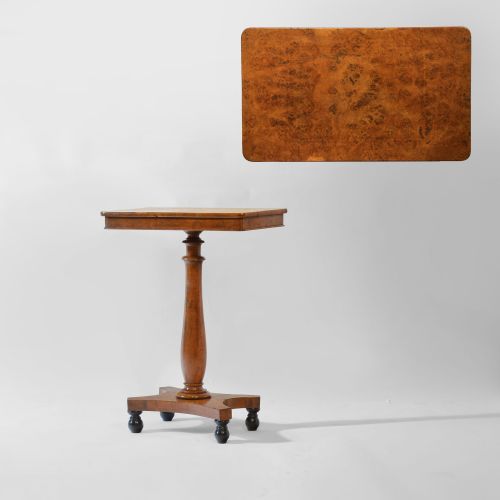
Structural variations include circular tops, tilt-top mechanisms, octagonal surfaces, and two-tier configurations supported by brass details. Joinery techniques from the nineteenth and early twentieth centuries ensure stability across side tables, centre tables, and etageres.
Listings feature mahogany, walnut, rosewood, and pollard oak across periods spanning the Georgian era to Art Deco.
What varies in quality
The distinction between standard examples and superior pieces rests on timber selection and figure depth, particularly in figured mahogany, pollard oak, and rosewood. Higher quality manifests in crisp wood inlay, well-proportioned scaling, and thoughtful integration of brass fittings.
Construction integrity also defines the tier, with finer tables displaying seamless veneering, stable tilt-top mechanisms, and refined turning on legs and columns. Maker attribution, such as documented Gillows pieces, elevates historical significance.
Gillows
The Rich Brown Lamp Table Glossary
- Tilt-top table
- A table featuring a hinged top that can be tilted vertically when not in use. This mechanism allowed spaces to be cleared easily in nineteenth-century interiors.
- Etagere
- A set of open shelves for displaying small objects or books. These multi-tiered pieces offer vertical surface area in compact scales.
- Pollard oak
- Timber taken from trees that have been pollarded, producing a dense, highly figured grain pattern. It yields a distinctive rich brown surface with swirling knots.
- Veneer
- A thin layer of fine wood applied to a base timber to provide a decorative exterior. This technique made rich grain patterns accessible on furniture surfaces.
Rich Brown Lamp Table: Frequently Asked Questions
What is a rich brown lamp table used for?
These tables provide a stable surface for holding table lamps, books, and decorative objects in sitting rooms or bedrooms. Their compact forms allow them to fit easily beside seating.
Historically, occasional and side tables served multiple domestic purposes, adapting to changing needs for surface space throughout the Victorian and Edwardian periods.
How do I identify a Victorian lamp table?
Victorian examples often feature dense mahogany or walnut timbers, sometimes with octagonal tops, tilt mechanisms, or fitted drawers. Turning on the central pillars and legs tends to be robust and detailed.
Comparing the construction methods and wood finishes helps distinguish mid-nineteenth-century pieces from lighter Edwardian or earlier Regency iterations.
What is an etagere?
An etagere is a multi-tiered piece of furniture designed for display, offering several open shelves arranged vertically. They provide generous surface area without occupying a large floor footprint.
Earlier examples from the Georgian and Regency periods frequently utilise compact scales and fine mahogany construction.
How should I care for rosewood and mahogany?
Protect these hardwood surfaces by placing them away from direct sunlight and sudden temperature shifts, which can dry out the timber and veneer. Regular dusting with a soft, dry cloth preserves the polished finish.
Avoid using silicone-based polishes, as they can build up over time and dull the natural rich brown tones of the wood.