
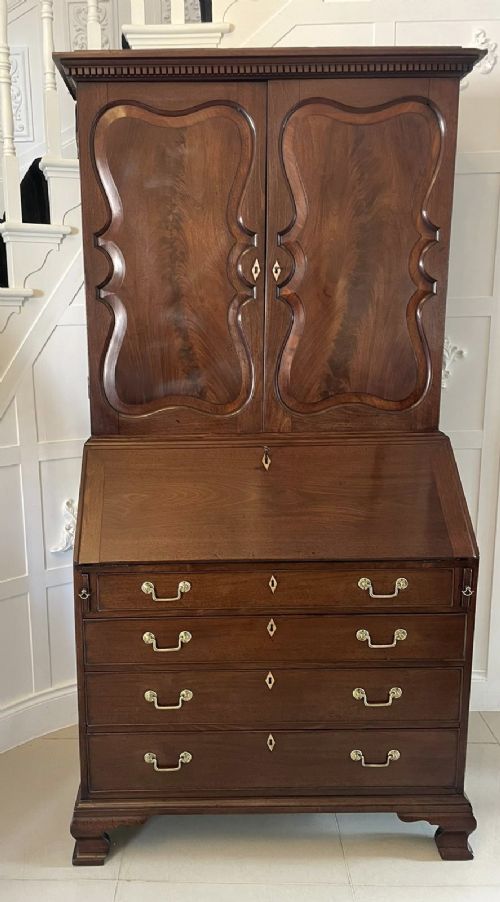
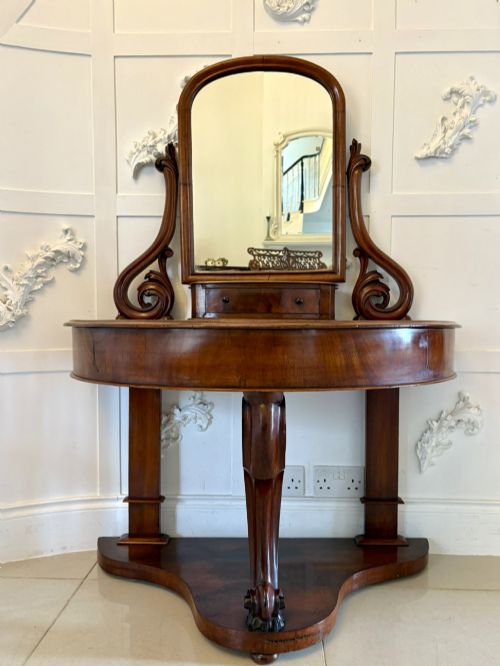
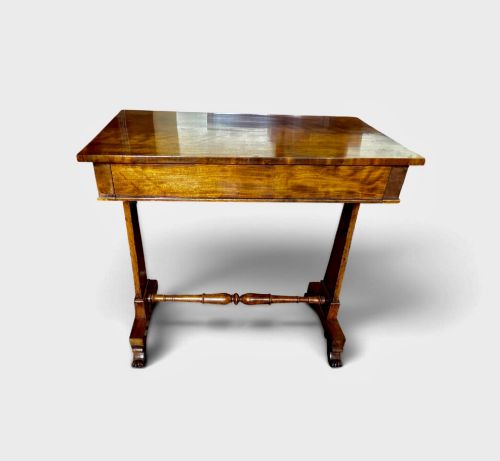
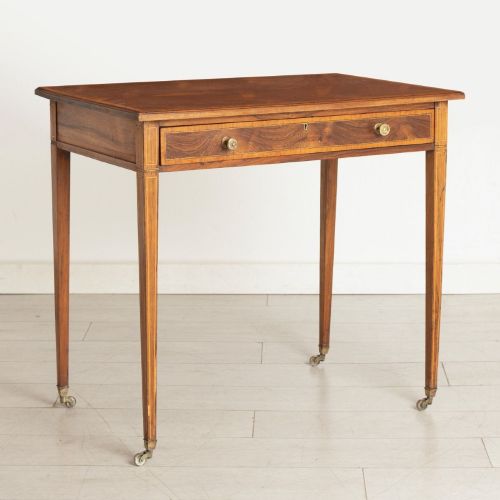
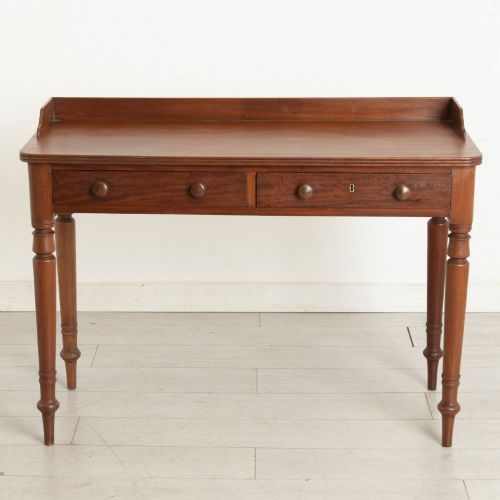
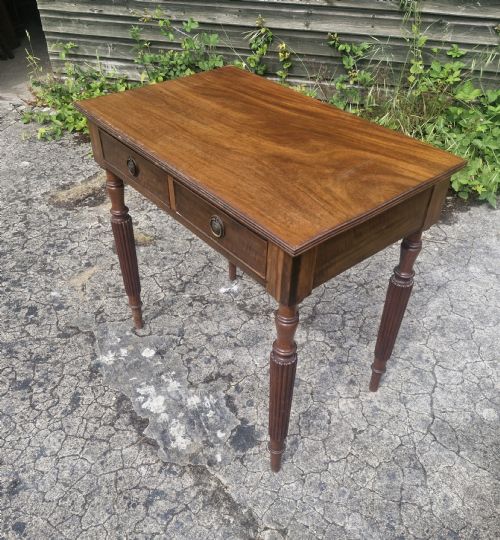

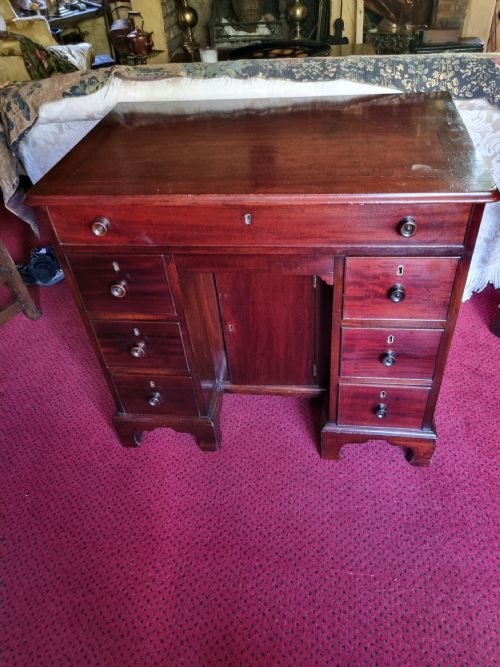


Rich Brown Desk
A rich brown desk brings deep wood tones and historical craftsmanship into a room, offering a solid and practical workspace.
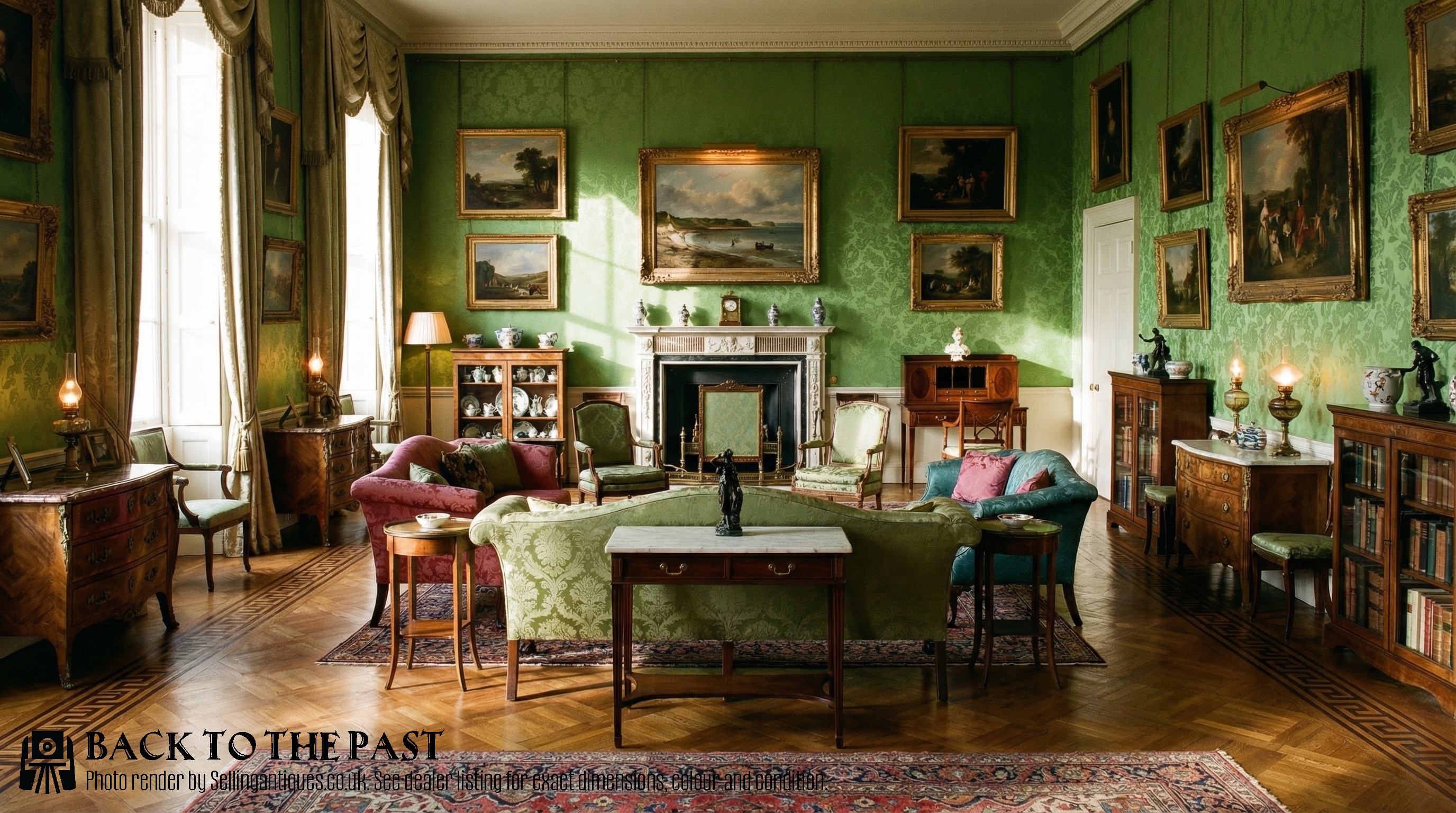
Rich Brown Desk
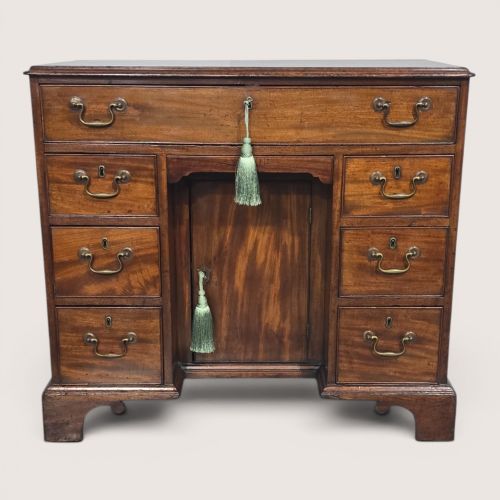
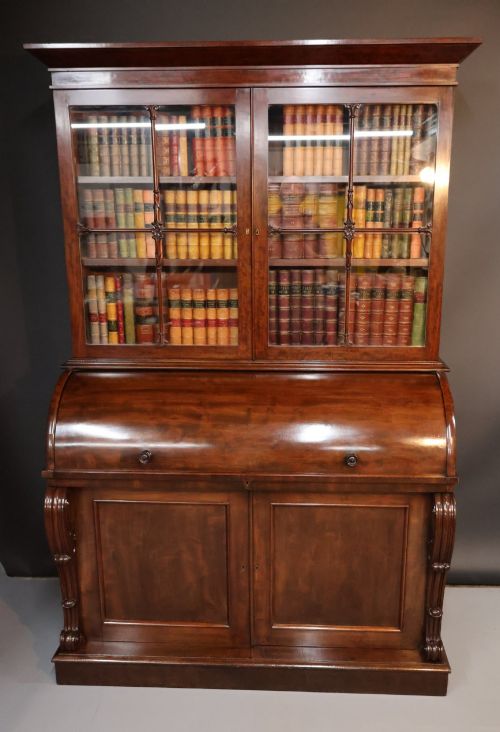
A rich brown desk encompasses a variety of antique writing furniture, with mahogany forming the most common foundation across the selection. Buyers will frequently encounter forms such as bureau bookcases, writing tables, kneehole desks, and cylinder desks originating from the Georgian, Victorian, and Regency periods.
The selection ranges from compact Edwardian writing tables to substantial 18th-century bureau bookcases and architectural desks. Solid timbers and rich veneers define the appearance of these pieces, which were built for domestic studies, libraries, and grand reception rooms.
How they were made
Cabinet makers utilised dense hardwoods like mahogany, walnut, rosewood, and amboyna, often applied as fine veneers over secondary woods to create rich figured surfaces. Secondary materials such as brass for mounts and handles, leather for writing surfaces, and glass for bookcase doors were integrated with traditional joinery techniques.
Construction methods relied on hand-cut dovetails for drawer boxes and mortise and tenon joints for structural stability. Timber selection prioritised grain pattern and depth of colour, allowing the polished wood to develop a warm patina over time.
Listings feature writing furniture in mahogany, walnut, and rosewood across Georgian, Victorian, and Edwardian periods.
What varies in quality
Quality rests in the selection of the timber figures, such as flame mahogany or burr walnut, and the precision of the cabinet work. Superior pieces demonstrate meticulous attention to internal drawer construction, original brass hardware, and the integration of secondary woods.
The sophistication of the mechanism, whether in a pop-up Davenport, a cylinder desk, or a fitted secretaire abattant, distinguishes standard production from exceptional examples. Proportion, unaltered surfaces, and the survival of original patination elevate certain pieces above others.
J Kingerley Manchester·Maple of London·Currie & Co
The Rich Brown Desk Glossary
- Bureau bookcase
- A writing cabinet featuring a sloping fall-front desk combined with enclosed shelving above. The interior typically contains small drawers and pigeonholes for correspondence.
- Secretaire abattant
- A tall vertical cabinet with a drop-front writing surface that conceals fitted interior compartments. This form originates from continental and English traditions.
- Kneehole desk
- A compact desk featuring a central recess flanked by pedestals of small drawers. This layout provides comfortable legroom while maintaining substantial storage capacity.
- Fusee movement
- A conical pulley mechanism used in clocks to ensure even tension from the mainspring as it winds down. It provides consistent power for accurate timekeeping.
- Marquetry
- The art of applying decorative veneer pieces in geometric or floral patterns onto a timber surface. Cabinet makers used contrasting woods to create intricate pictorial designs.
Rich Brown Desk: Frequently Asked Questions
How do I identify a Georgian desk?
Georgian desks are characterised by solid mahogany construction, hand-cut dovetail joints, and restrained proportions. Details such as bracket feet, cockbeaded drawer edges, and brass swan-neck handles point to this era.
The interior layout often includes secret compartments and shaped pigeonholes designed for handwritten correspondence. Timber selection focuses on straight-grained mahogany with a deep, warm colour.
Where were kneehole desks used?
Kneehole desks served as compact writing and dressing stations in smaller private rooms and dressing chambers. Their narrow footprint allowed them to fit into tight spaces without sacrificing drawer storage.
They offered a private space for managing personal accounts and letters in 18th and 19th-century households. The central recess accommodated a chair while the pedestals kept documents organised.
How do I care for a rosewood desk?
Protect antique rosewood from direct sunlight and extreme humidity fluctuations to prevent the timber and veneer from splitting. Dust the surface regularly with a dry, soft cloth and avoid modern silicone polishes.
Periodic application of appropriate wax feeds the wood and maintains its natural sheen without building up a heavy residue. Gentle handling preserves the original finish and patina.