

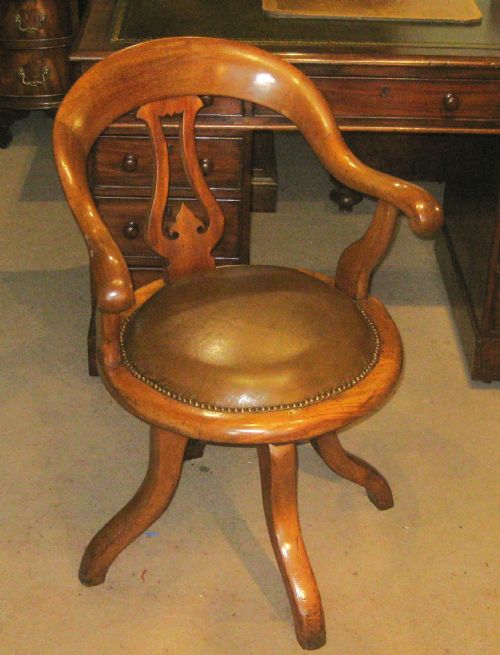
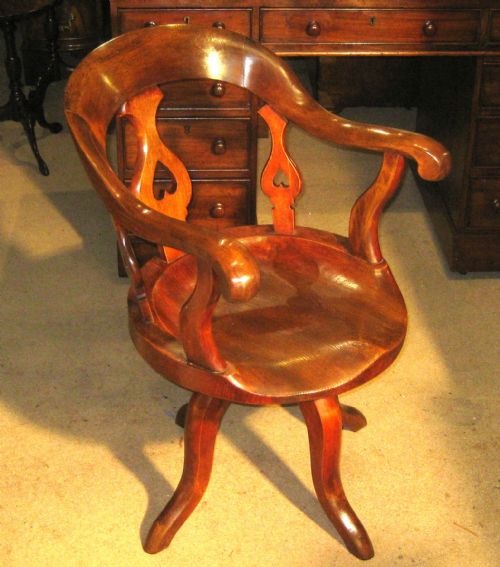
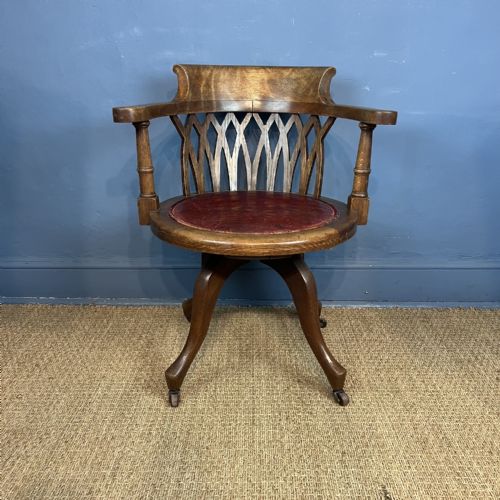
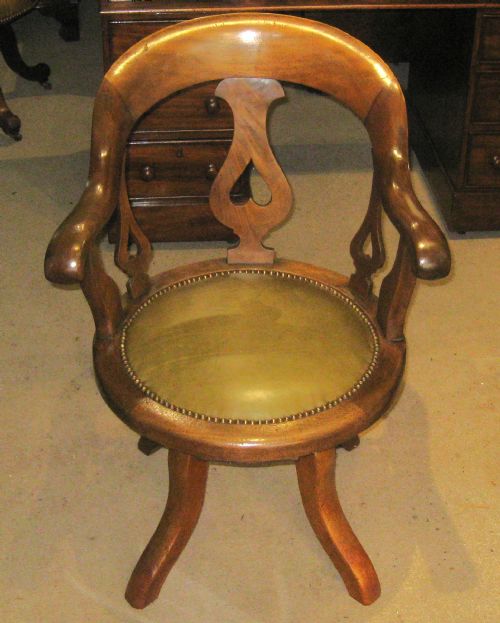
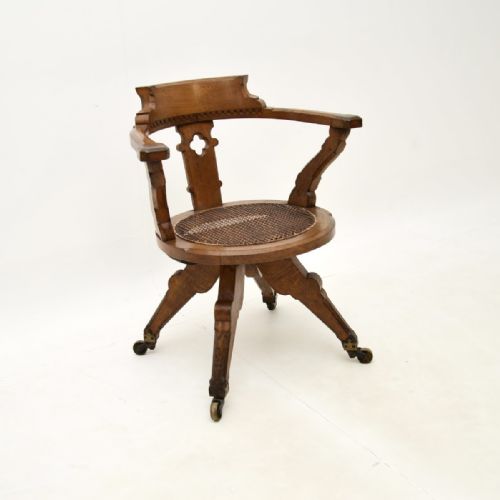
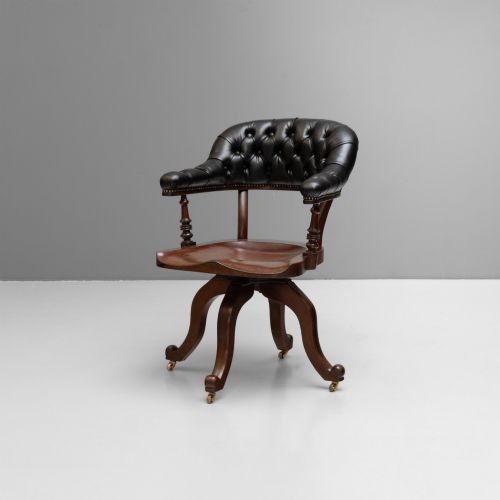
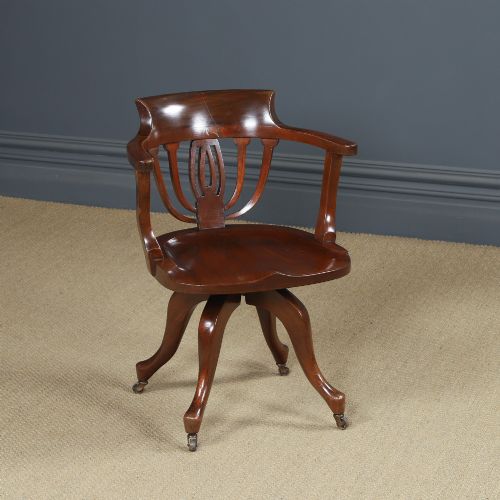
Revolving Office Desk Chair
A revolving office desk chair brings practical mobility and period character to a workspace, offering solid timber frames and leather upholstery shaped for long hours at a ledger.
Revolving Office Desk Chair
A revolving office desk chair functions as a task seat designed for administrative work, combining a swivel mechanism with a supportive wooden frame. These pieces span the Victorian, Edwardian and George V periods, reflecting the evolving demands of professional offices and libraries.
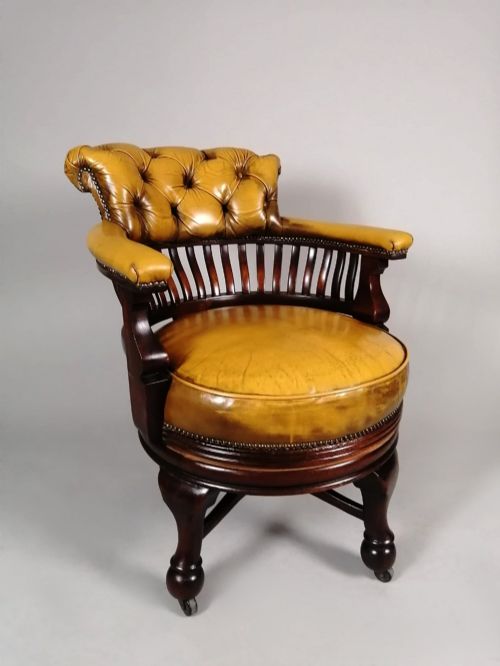
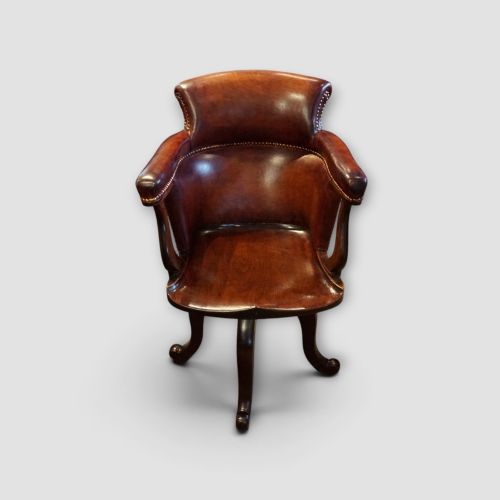
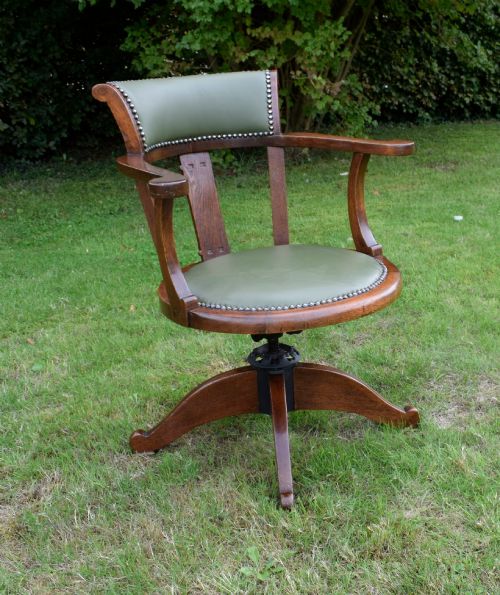
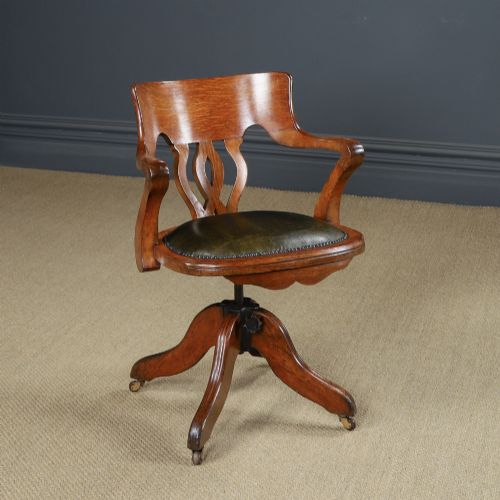
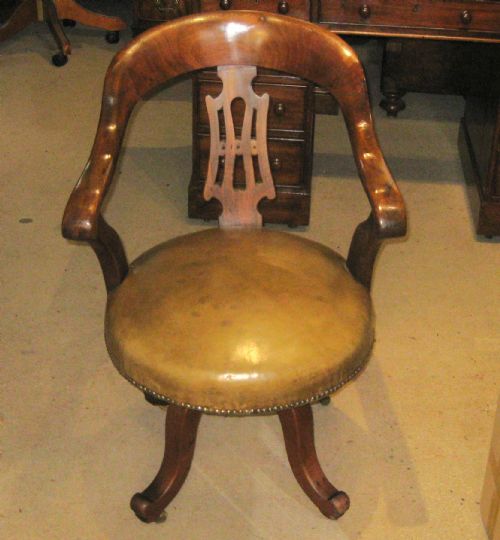
The most common examples on this page are Edwardian and Victorian forms constructed from oak or mahogany. Many incorporate green or red leather upholstery, frequently paired with adjustable height mechanisms and sturdy armrests.
Makers and workshops produced various iterations, from compact armless side chairs to substantial captain chairs and bespoke institutional seating. Each version was built to endure daily workplace use while maintaining traditional cabinet-making standards.
How they were made
Craftsmen built these frames using durable hardwoods such as oak, mahogany, walnut and beech, often shaped with steam-bent components for curved backrests. Joinery relied on secure mortise and tenon construction to withstand the constant twisting of the swivel action.
Upholstered versions utilised supple leather hides fixed with brass tacks over padded seats, while others featured sculpted wooden saddle seats. Central iron and brass spindles enabled the revolving and height-adjusting functions integral to their daily operation.
Listings feature oak and mahogany predominantly, with walnut and beech appearing across Victorian, Edwardian and George V periods.
What varies in quality
The distinction between standard utility seating and finer examples lies in the selection of timber and the sophistication of the turning work. Superior frames display dense grain patterns, harmonious proportions and refined carving rather than basic industrial utility.
Mechanism engineering also separates the grades, with smoother swivel action and robust tilt apparatus indicating a higher standard of manufacture. Original leather upholstery retaining a rich patina commands greater interest than later replacements.
Kendrick and Jefferson·CV Smith·Bell Barn Furniture·William Birchcraft
The Revolving Office Desk Chair Glossary
- Swivel
- A mechanical pivot that allows the seat portion to rotate fully around its vertical axis. This movement facilitated easy access to different parts of a nineteenth-century desk.
- Captain chair
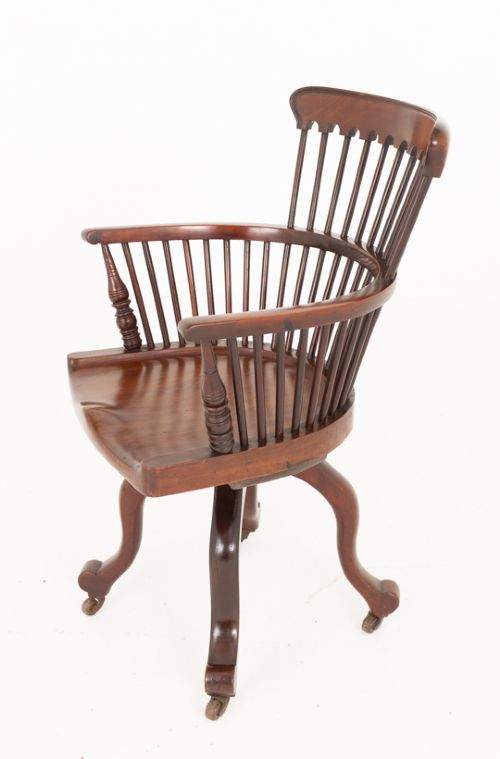
- A sturdy timber armchair with a rounded, spindle-backed upper rail designed for comfort during long working hours. These often feature low profiles suitable for sliding beneath writing tables.
- Bergere
- A type of upholstered armchair with enclosed cane or wicker work on the back and sides. In office settings, this provided a lighter visual weight while maintaining structural support.
- Rise and fall
- An adjustable height mechanism operated by a threaded central spindle or screw column. This allowed users to customise the seat level to match their specific desk height.
Revolving Office Desk Chair: Frequently Asked Questions
How do I adjust the height on these chairs?
Most period models utilise a central threaded screw mechanism beneath the seat. Turning the chair body clockwise or anticlockwise raises or lowers the sitting position.
Some later Edwardian and George V versions incorporate mechanical levers or screw columns to secure the desired height for the user.
Are these chairs comfortable for daily computer work?
The ergonomic design of these seats was originally intended for ledger work and upright writing desks. Their supportive curved backrests and padded leather pads offer solid posture support for modern study spaces.
Buyers should check the seat depth and height range to ensure compatibility with contemporary desk configurations.
What wood types are most common?
Oak and mahogany appear most frequently across Victorian and Edwardian examples. Walnut and beech were also utilised for specific regional or stylistic variations.
Golden mahogany and solid oak frames dominate the surviving inventory from the late nineteenth and early twentieth centuries.
How do I distinguish between Victorian and Edwardian examples?
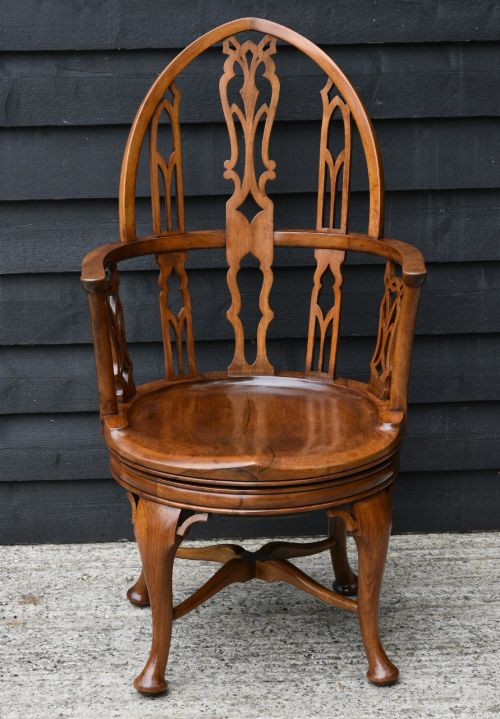
Victorian pieces tend to feature heavier proportions, darker wood tones, and sometimes Gothic Revival detailing. They often emphasise solidity and deep carving.
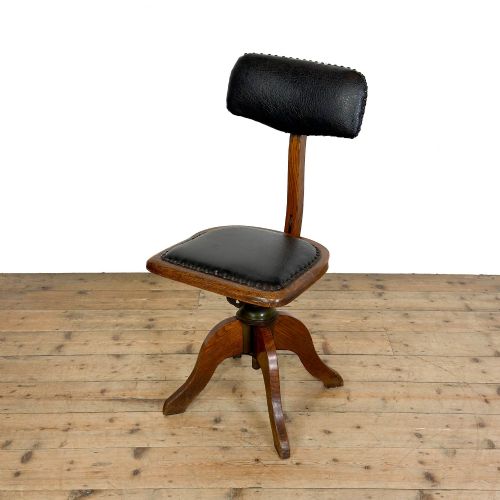
Edwardian and George V examples generally present lighter frames, frequently in oak or beech with bright green leather, reflecting a shift toward simpler domestic and office aesthetics.