
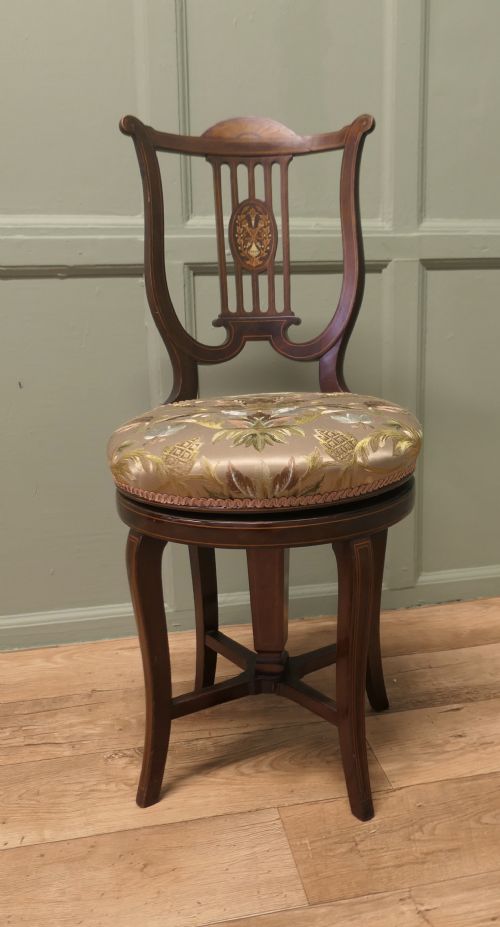
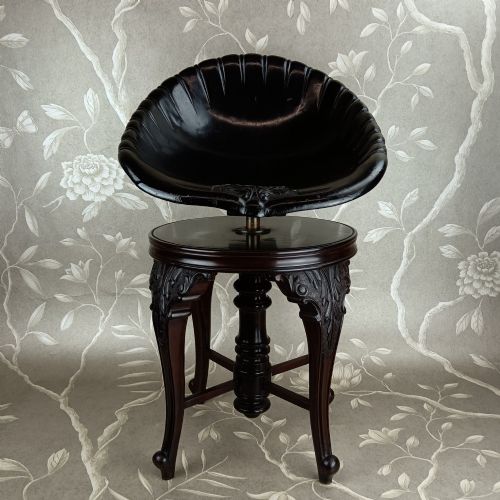
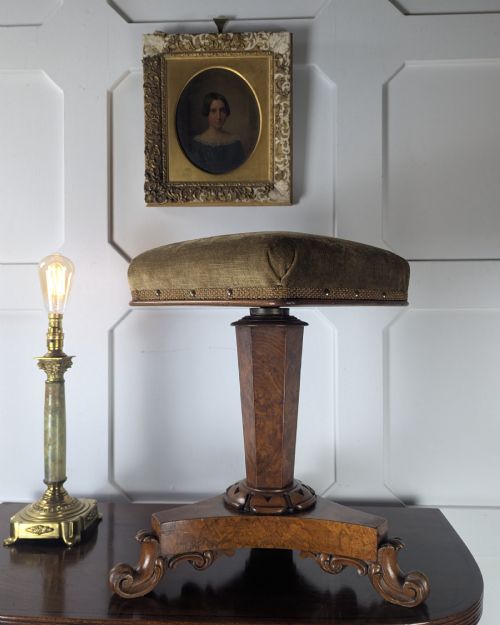
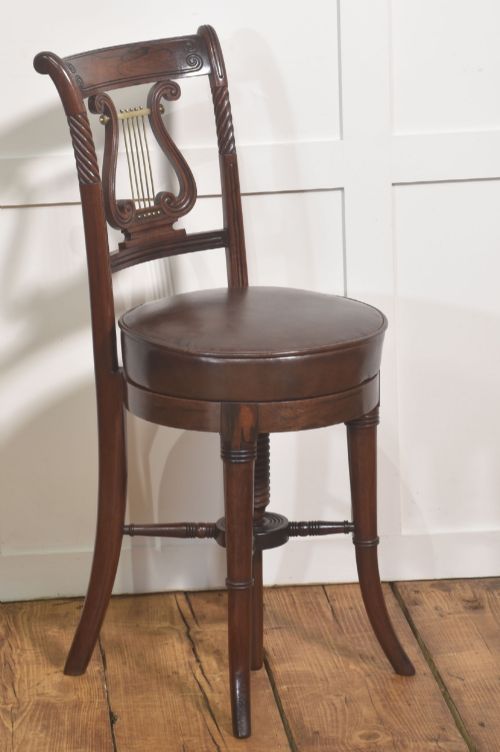



Revolving Music Chair
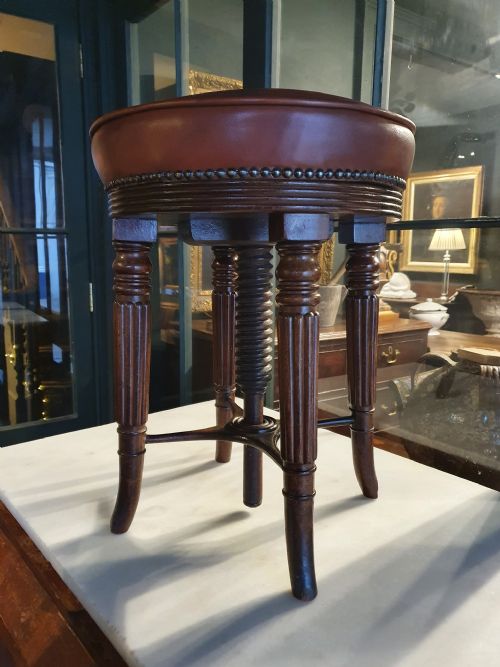
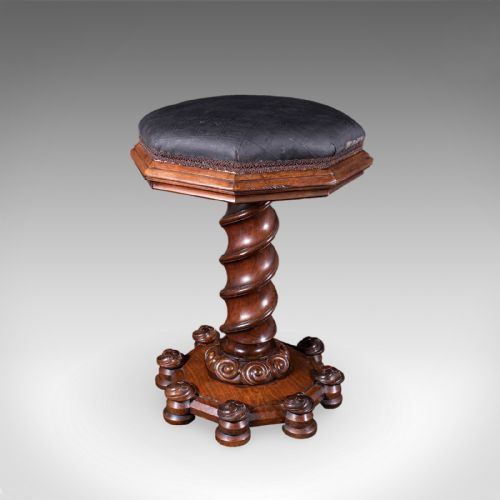
A revolving music chair provides the musician or pianist with stability and height adjustment during performance.
Revolving Music Chair
When you search for a revolving music chair, you encounter specialist seating designed for pianists, cellists, and harpists that permits both rotation and height modification. These pieces span multiple nineteenth-century periods, including Regency, William IV, and Victorian eras, alongside Georgian examples.
The forms encompass round-topped stools, square piano stools, dressing table chairs, and specialised harpist or cellist chairs equipped with backs. Most specimens found here rely on nineteenth-century domestic manufacturing traditions originating in Britain and continental workshops.
Makers often adapted these rotating seats for dual domestic roles, using them equally at dressing tables and in music rooms. The mechanism allows the top to spin freely while a central wooden screw or metal spindle alters the seating plane.
How They Were Made
Cabinet makers utilised dense timber species such as mahogany, rosewood, walnut, and padouk to construct the frames and pedestals. These hardwoods provided the structural rigidity required to support repeated spinning and height adjustment without warping.
Upholstery techniques combined traditional stuffing with fabric, leather, or velvet coverings secured over pad seats. Brass components, including inlay, castors, and internal screw mechanisms, added functional durability and decorative contrast to the dark timber frames.
Revolving Music Chair Retail Price Guide 2026
Typical asking prices for revolving music chair among the pieces listed under this phrase on Sellingantiques today, from the lower quarter to the upper quarter. They describe what is for sale here now, not the wider market.
Listings feature nineteen-century periods including Regency, William IV, and Victorian eras, constructed primarily in mahogany, walnut, and rosewood.
What Varies in Quality
The refinement of the carving upon the pedestal base and the choice of timber figure separate standard utility seating from master cabinet work. Woods selected for rich grain patterns and elaborate embellishments such as brass inlay or papier-mâché indicate superior workshop output.
The smoothness and stability of the revolving mechanism dictate daily utility, where tighter engineering prevents excessive wobble in the extended position. Maker attribution, such as pieces bearing stamps or documented signatures from known workshops, elevates the standing of an individual stool.
Jennens and Bettridge·Gillows·James Shoolbred·Holland and Son
The Revolving Music Chair Glossary
- Rise and fall
- A mechanical seating adjustment system that alters height through a central rotating screw or threaded spindle. This permits the user to raise or lower the seat level incrementally.
- Swivel base
- A pivoting assembly allowing the upper seat portion to rotate completely around the vertical axis. It provides mobility for musicians seated before keyboards or music stands.
- Harpist chair
- A specialised seating form featuring a low back or asymmetric design to accommodate the posture of harp and cello players. These chairs allow unobstructed arm movement during performance.
- Figured walnut
- Timber cut to highlight decorative patterns within the grain, frequently selected for high-status Victorian and Regency music furniture. The natural figuring adds visual depth to circular seat tops.
- Papier-mâché
- A composite material formed from paper pulp mixed with glue and resin, pressed into moulds and lacquered. It appears on decorative nineteenth-century Victorian music stool bodies.
Revolving Music Chair: Frequently Asked Questions
How do you adjust the height?
You rotate the seat top clockwise or anti-clockwise to raise or lower the wooden or metal screw mechanism hidden beneath.
This central spindle alters the elevation while the base remains firmly planted on the floor.
Were these made exclusively for pianos?
Musicians used them for various instruments, including harps, cellos, and organs, as well as at dressing tables.
The inclusion of a low back on specific models aided harpists and cellists who required lower back support.
How do I date a revolving music stool?
You examine the timber species, turning styles on the central pillar, and construction methods used in the base.
Mahogany and rosewood dominate earlier Regency examples, while walnut and ebonised finishes typify later Victorian pieces.
Can I use one as a desk chair?
Their compact footprint and adjustable height make them suitable for modern writing desks and dressing tables.
The swivel action provides convenient movement when sitting down or standing up in tight spaces.