
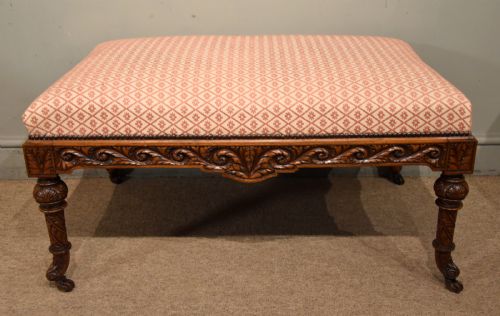
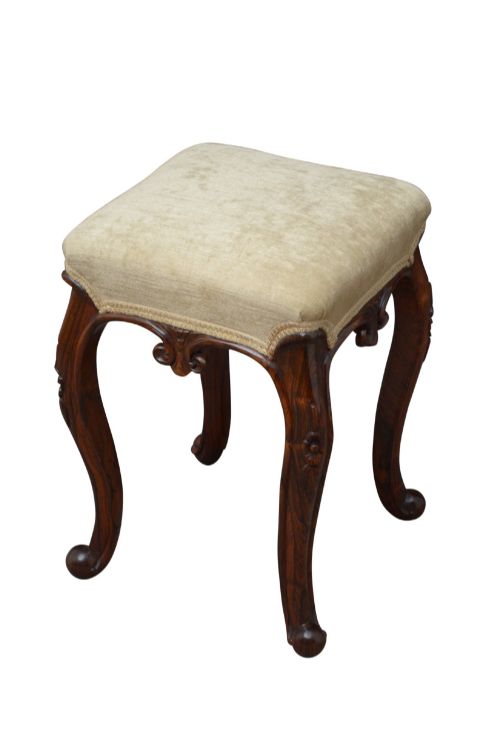
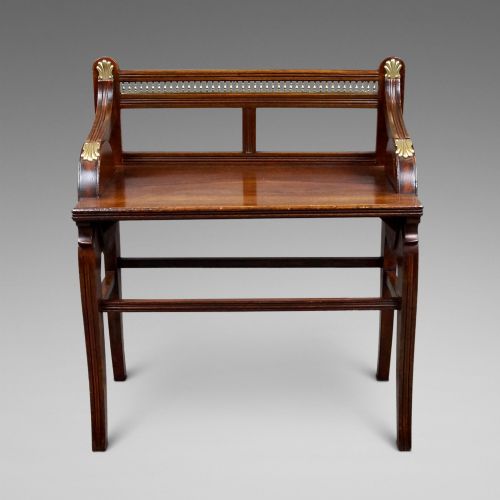
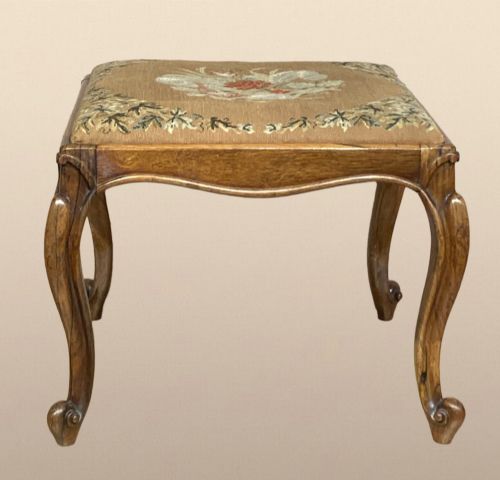


Carved Wooden Piano Stool
When you want a carved wooden piano stool, you are looking for a sturdy, decorative seat designed for the keyboard.
Carved Wooden Piano Stool
A carved wooden piano stool is a seat built specifically for musicians, often featuring adjustable heights or revolving mechanisms for player comfort. These pieces emerge chiefly from the nineteenth century, spanning periods from George III through the Victorian era and into the early twentieth century.
The most common examples you will encounter here are Victorian walnut or mahogany pieces, frequently incorporating cabriole legs and upholstered tops. Alongside dedicated piano stools, the selection includes related forms such as music chairs, dressing stools, window seats, and benches.
Origins vary across English workshops and continental French styles, utilising diverse woods like rosewood, hardwood, and oak. Whether tall circular stools or rise and fall models, each item serves both a practical musical function and a decorative furnishing role.
What varies in quality
The refinement of the wood carving marks the primary distinction between standard production and superior examples. Crisp, deeply carved foliage and well-proportioned cabriole legs indicate skilled workmanship.
Mechanical integrity defines the value of adjustable pieces, where a smooth, stable rising mechanism shows careful engineering. The choice of primary timber, such as figured rosewood or rich walnut, also elevates the standing of the piece.
Listings span the nineteenth and early twentieth centuries, featuring walnut, mahogany, rosewood, oak, and brass.
Jas Shoolbred
The Carved Wooden Piano Stool Glossary
- Cabriole leg
- A furniture leg that curves out and then in, resembling the leg of an animal. This style gained popularity during the eighteenth century and frequent revival in Victorian design.
- Rise and fall
- A mechanical seating mechanism allowing the top to be wound up or down to alter the height. It is commonly found on music and piano stools.
- Needlepoint
- A type of canvas work embroidery utilised for historic upholstery. Surviving original examples add considerable character to antique seats.
- Ebonised
- Wood treated with a dark finish to imitate expensive ebony. This technique appears frequently on nineteenth-century aesthetic movement pieces.
- Duet stool
- An elongated seating form designed to accommodate two players side by side at the keyboard.
Carved Wooden Piano Stool: Frequently Asked Questions
How do I adjust the height?
Many nineteenth-century piano stools feature a central screw mechanism beneath the seat. Turning the upholstered top clockwise or anticlockwise raises or lowers the sitting surface.
Ensure the mechanism is free of obstruction and turn it gently to avoid straining the internal wooden threads.
Can I use it as a dressing stool?
Many period piano stools share dimensions and stylistic traits with dressing table seats. Their compact footprints and upholstered tops suit bedroom settings admirably.
Height adjustability also makes them practical for varying vanity table levels.
How do I care for the upholstery?
Historic fabric and original needlepoint require gentle treatment and protection from direct sunlight. Vacuuming with a low suction attachment helps remove dust without damaging fragile textiles.
Avoid chemical cleaners on antique fabric and consult a textile conservator for deeper cleaning.
How do I date these stools?
Dating relies on identifying stylistic markers, timber choices, and construction methods. Victorian pieces often display rich walnut or rosewood with elaborate carving, while earlier George III items show simpler, restrained proportions.
Hardware details like brass screws and the type of secondary wood inside the frame also provide clues to the decade of manufacture.