
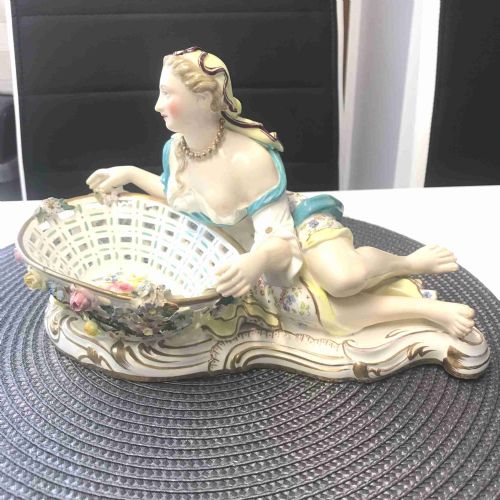
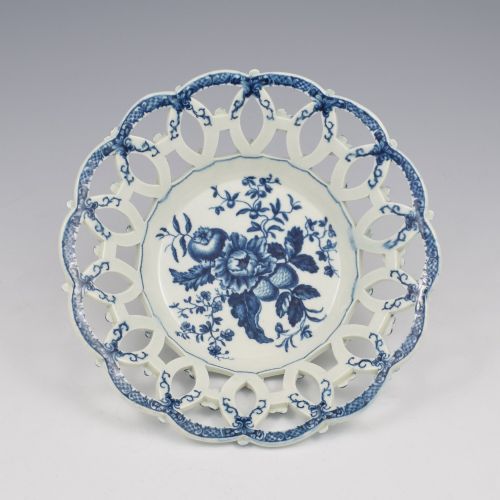


Reticulated Ceramic Basket
A reticulated ceramic basket brings intricate pierced openwork and delicate form to a table, combining decorative ambition with functional heritage.
Reticulated Ceramic Basket
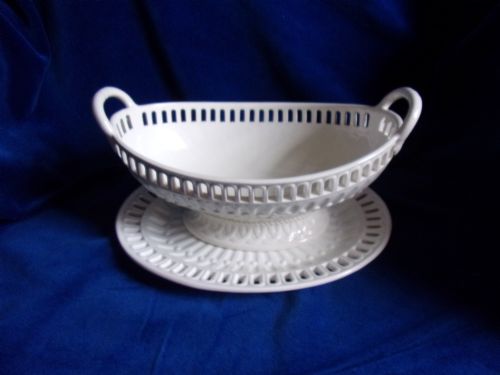
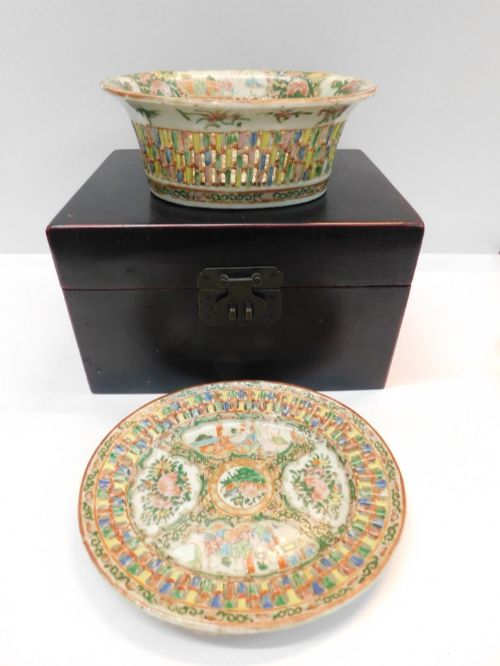
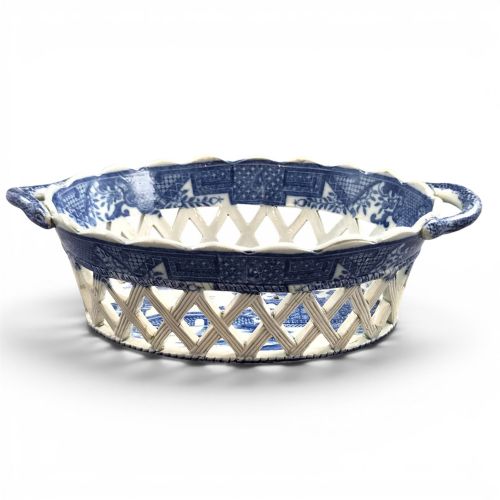
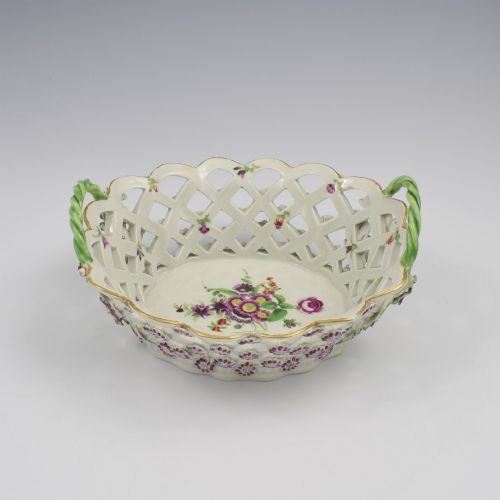
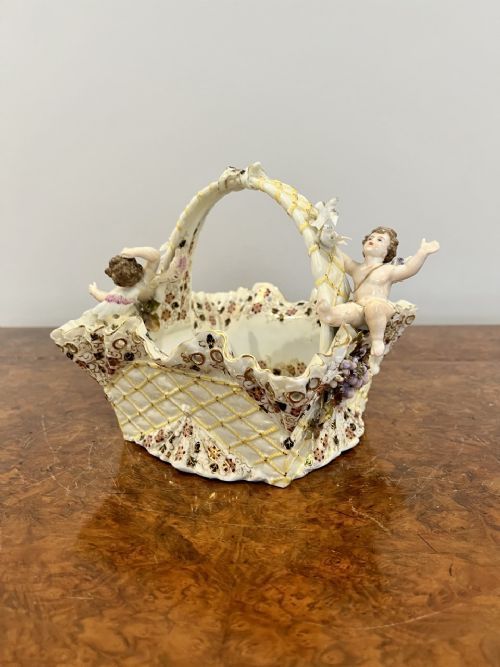
A reticulated ceramic basket serves as a decorative centrepiece or fruit holder, featuring open pierced walls designed to display contents elegantly. When searching for a reticulated ceramic basket, buyers encounter substantial chestnut baskets, sweetmeat dishes, and floral centrepieces originating from English, continental, and Chinese kilns.
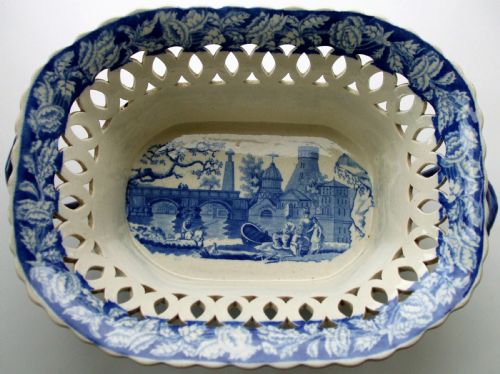
The selection spans from the eighteenth century into the Victorian era, encompassing Georgian creamware, transfer-printed pearlware, and porcelain wares. Pieces often include matching stands or undertrays designed to catch drips from fresh fruit or to support the pierced bowl.
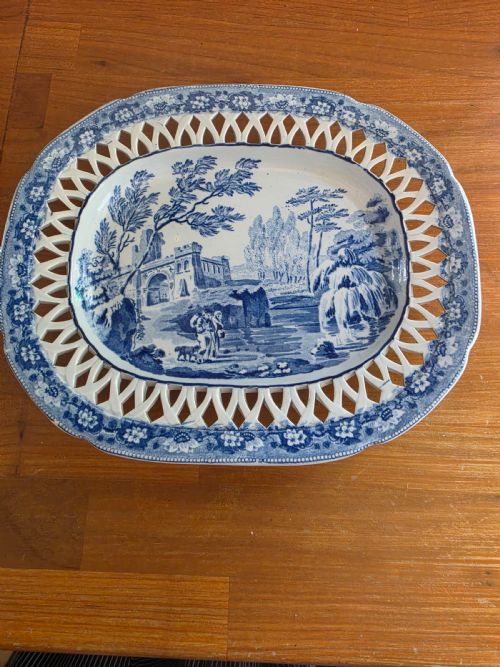
English factories such as Worcester, Spode, and Wedgwood feature prominently alongside Chinese export wares and German porcelain works. These vessels range from blue and white transfer-printed designs to polychrome enamel finishes and figural arrangements.
Evaluating quality and execution
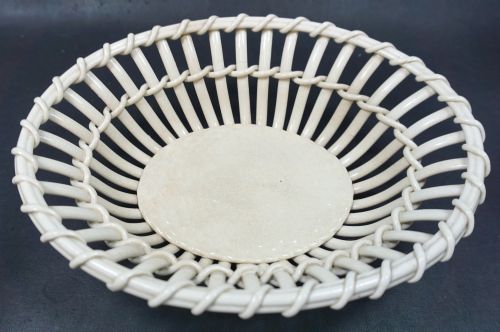
Quality rests upon the crispness of the pierced reticulation and the precision of the underlying ceramic form. Sharp, clean lattice openings without glaze pooling or distortion indicate superior craftsmanship in the raw clay stage.
Painted decoration and transfer-printing clarity further separate standard domestic production from high-status commissions. Finer pieces maintain alignment in complex patterns and delicate hand-painted floral motifs across both basket and stand.
Chestnut baskets often feature tiny pierced holes designed specifically to keep roasted nuts warm while confusing table insects.
Davenport·Wedgwood·Spode·Dr Wall Worcester·J. & R. Clews·Meissen·Schierholz·Mason’s·Sevres
The Reticulated Ceramic Basket Glossary
- Reticulated
- Pierced or net-like openwork pattern cut into the ceramic body. This technique creates decorative lattice walls that lighten the vessel's appearance.
- Chestnut basket
- A specialised lidded or open serving vessel designed for holding roasted chestnuts at the dining table. These often include an integral stand or matching undertray.
- Pearlware
- A refined earthenware developed in the late eighteenth century featuring a subtle bluish glaze that pooled in recesses to mimic Chinese porcelain. It frequently carried blue and white transfer-printed patterns.
- Creamware
- A fine earthenware developed in England with a warm, pale yellow lead glaze. Wedgwood and other potteries utilised this body extensively for pierced tablewares.
- Transfer printing
- A mechanical method of applying complex designs to ceramics by pressing paper tissue inked from an engraved copper plate onto the bisque body. This allowed intricate blue and white scenes to be replicated consistently.
Reticulated Ceramic Basket: Frequently Asked Questions
How were reticulated ceramic baskets used historically?
These baskets primarily served on dining tables as centrepieces for holding fruit, sweetmeats, or roasted chestnuts during dessert courses. Their pierced walls allowed air circulation around fresh produce while presenting an ornamental display for guests.
Over time, many transitioned into pure cabinet pieces or sideboard decorations as dining customs evolved away from elaborate multi-course dessert spreads.
How do I distinguish eighteenth-century porcelain from later revival pieces?
Examining the paste, glaze pooling, and hand-painted touches helps reveal the period of manufacture. Eighteenth-century pieces often exhibit distinctive footrim wear and softer glaze textures characteristic of early firing methods.
Later Victorian revivals frequently display brighter, more uniform machine-assisted transfers or heavier porcelain bodies influenced by nineteenth-century tastes.
Do these baskets usually include their original stands?
Many chestnut baskets and centrepieces were originally produced with matching undertrays or stands to catch debris and support the pierced bowl. Survival rates for complete matched pairs vary significantly depending on usage and handling over the centuries.
Listings specify whether a stand accompanies the main basket, as complete sets command greater interest from collectors.