


Retail Shop Display
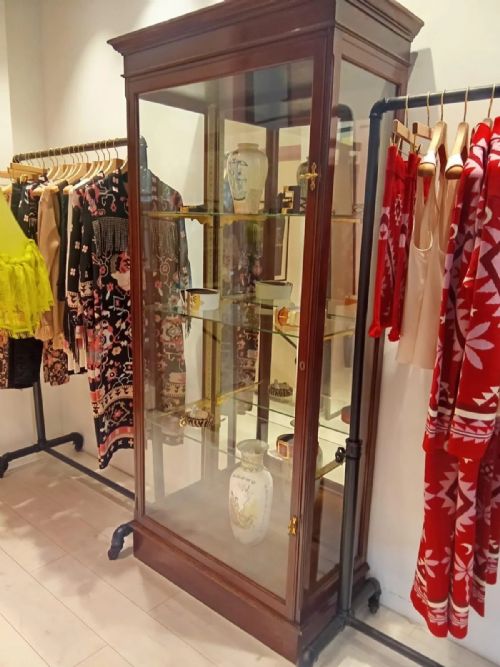
When you select retail shop display pieces, you invite functional commercial history into domestic spaces through glazed cabinets, timber counters and specialised fittings.
Retail Shop Display
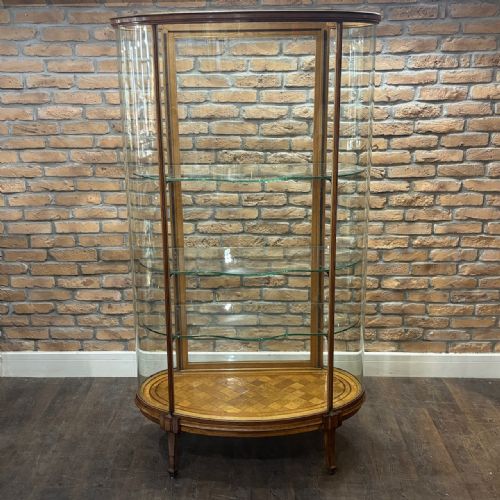
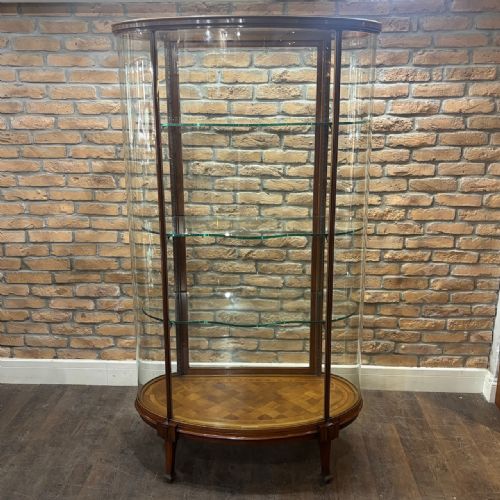
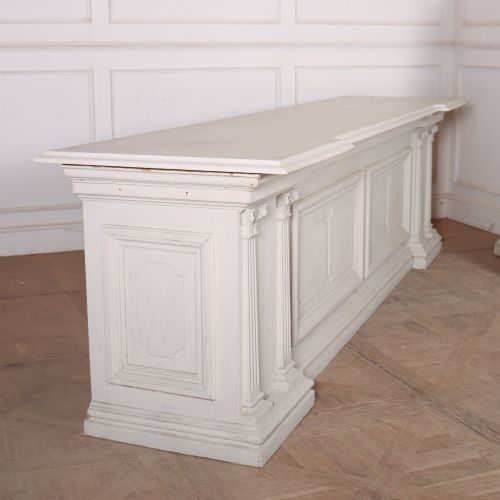
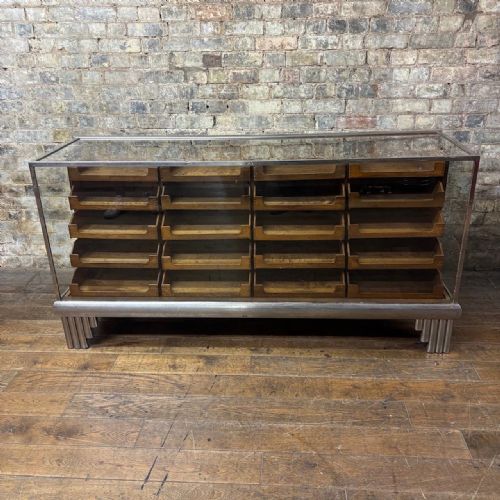
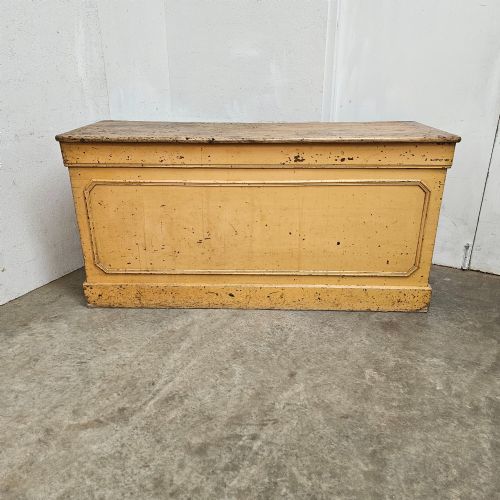
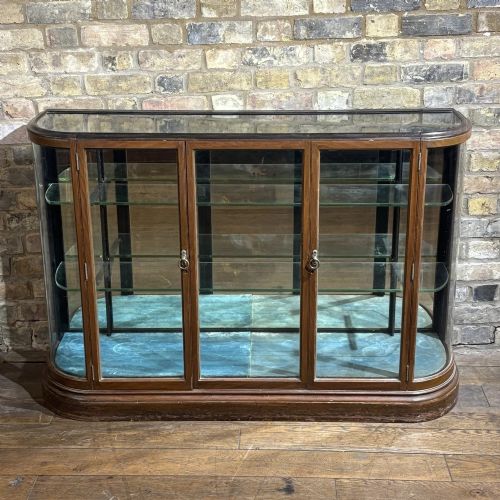
A retail shop display search reveals heavy-duty commercial furniture originating from nineteenth and early twentieth-century mercantile environments. Buyers encounter timber-framed display cabinets, expansive shop counters, countertop display cases and specialised haberdashery fittings designed to showcase merchandise to the public.
The most common examples on this page date from the Victorian, Edwardian and Art Deco periods, encompassing robust mahogany and oak cabinetry alongside painted pine fixtures. These pieces range from large freestanding architectural display cases down to modest brass stands and tabletop units.
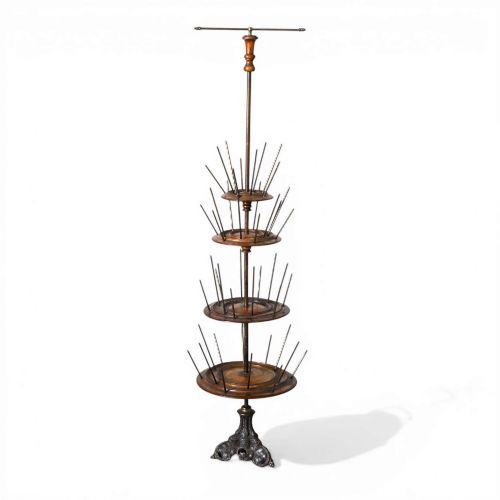
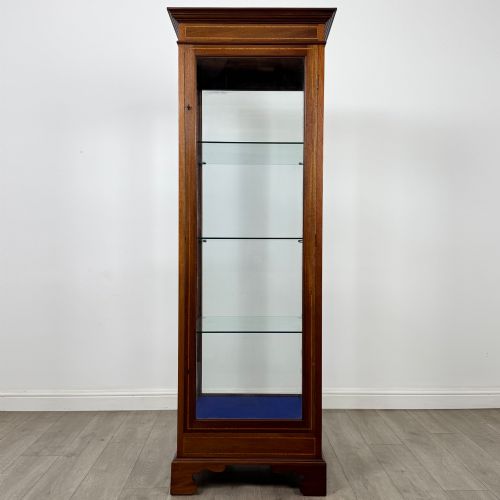
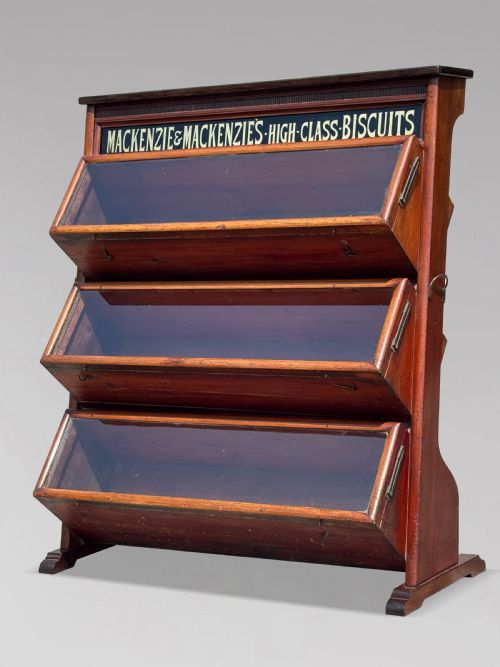
Commercial origins dictate the form of these items, often incorporating adjustable glass shelves, mirrored interiors and glazed panels to maximise visibility. Specialised iterations include apothecary cabinets, cotton reel display trees, and confectionery advertising units originally built for chemists and grocers.
How they were made
Construction relies heavily on dense hardwoods such as mahogany and oak, selected for their structural integrity when supporting large expanses of heavy plate glass. Joinery is robust, designed to withstand the daily friction of a busy Victorian or Edwardian high street shop.
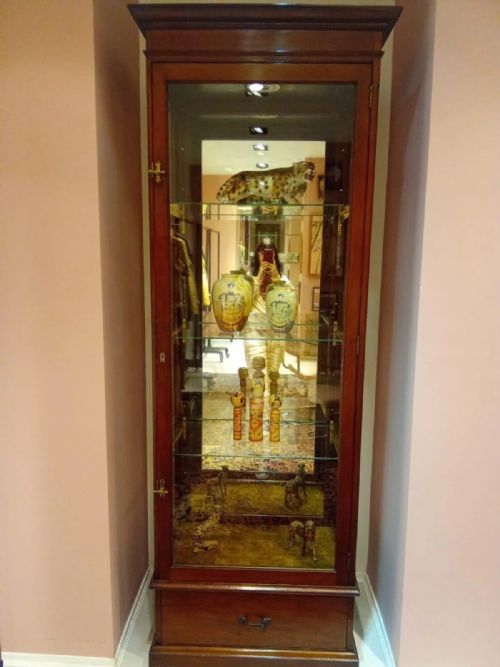
Metal components such as brass, cast iron, chrome and aluminium provide structural bracing, decorative trim and adjustable hardware for internal shelving. Mirrors are frequently integrated into the backboards to bounce light through the glazed enclosures and illuminate the goods within.
Surfaces receive various finishes depending on the commercial application, from polished mahogany and ebonized timber to utilitarian painted pine and specialised advertising transfers. Original leaded, etched or clear glass panes are commonly held within rebated timber frames or metal profiles.
Cotton reel display trees once stood on drapery counters, spinning multiple tiers of colourful threads to catch the eye of Victorian seamstresses.
What varies in quality
Quality separates mass-produced utilitarian shop fittings from bespoke joinery commissioned by high-end London outfitters or specialised department stores. Finer pieces display sophisticated timber selection, such as figured mahogany or quarter-sawn oak, alongside integrated brass maker plaques and complex curved bow-end glass.
Hardware sophistication dictates the upper tier of these pieces, seen in heavy brass hinges, functioning original locks with working keys, and smoothly operating drawers with hand-cut dovetails. The survival of original painted signage, etched advertising glass, and unaltered mirrored interiors preserves the historical integrity and elevates the standard.
F. Sage & Co·Dudley & Co·John Stow Ltd
The Retail Shop Display Glossary
- Haberdashery counter
- A long shop counter typically fitted with numerous small drawers, often featuring glass fronts to display buttons, ribbons and small textiles. These units were standard in Victorian and Edwardian drapery shops.
- Advertising cabinet
- A countertop or wall-mounted display case branded with enamel plaques, painted text or frosted glass lettering to promote specific commercial goods like chocolate, tobacco or medicine.
- Bow end
- A curved glass or timber end to a display cabinet or counter, designed to soften sharp corners and allow visibility from multiple angles within a shop interior.
- Countertop display case
- A smaller, portable glazed showcase designed to sit directly on top of a shop counter for close inspection of jewellery, small curiosities or delicate merchandise.
- Shop fitting
- The trade and style of bespoke interior fixtures built specifically for commercial retail premises during the nineteenth and early twentieth centuries.
Retail Shop Display: Frequently Asked Questions
What were retail shop display cabinets originally used for?
These large cabinets and counters housed and protected high-value or delicate merchandise in nineteenth and early twentieth-century shops. Merchants used them to keep goods clean while allowing customers a clear view.
Items ranged from confectionery and pharmaceuticals to textiles and jewellery, keeping stock secure behind locked glass doors while remaining visible on the shop floor.
How do I style a shop display counter at home?
A large commercial counter or glazed cabinet makes a striking focal point in a modern kitchen, living room or hallway. The generous proportions provide practical surface space and deep storage.
Use the internal glass shelves and glazed panels to exhibit collections, glassware or books while keeping dust away. The original commercial character adds immediate architectural weight to domestic interiors.
How can I tell an Edwardian display cabinet from a Victorian one?
Victorian display cases often feature heavier proportions, darker timber tones, and elaborate carved architectural details reflecting nineteenth-century taste. Mahogany and oak dominate these earlier pieces.
Edwardian examples frequently lean towards lighter timbers, cleaner lines, and slightly more restrained classical or Adam revival influences. The introduction of mass-produced curved plate glass also becomes more common in the Edwardian period.
Are shop display cabinets suitable for heavy items?
Commercial shop fittings were engineered to support dense inventories of heavy goods day after day. The sturdy oak or mahogany frames and thick timber bases provide exceptional load-bearing capacity.
Many pieces feature adjustable glass shelving, which should be loaded with consideration for its age and thickness, but the main carcass is built for rigorous mercantile use.