
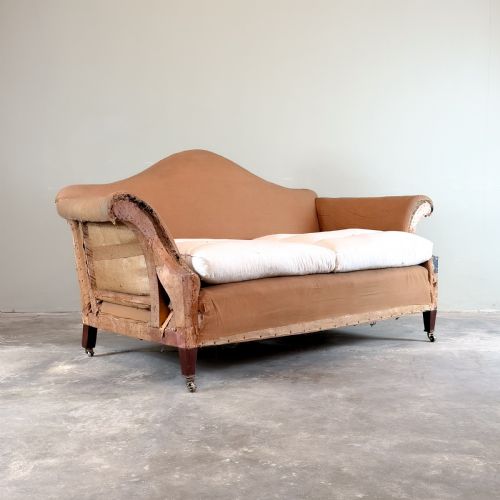


Restored Settee
A restored antique settee brings historic character and deep comfort to a room, uniting period woodwork with supple leather.
Restored Settee
A restored antique settee represents a seating form designed for multiple occupants, emerging across periods from the Regency era through to the 1930s. Buyers searching for a restored antique settee will most frequently encounter nineteenth-century Chesterfield designs, along with camel back, highback, and serpentine-fronted variants.
These pieces encompass diverse formats including club sofas, snooker hall benches, chaise longues, and complete lounge suites. Woods such as mahogany, walnut, and general hardwood frame the structures, whilst traditional upholstery methods utilise horsehair fill and jute support.
Origins span formal English country house aesthetics, George II revival styles, Art Deco sensibilities, and Edwardian craftsmanship. The intervention of restoration brings these historic seating forms back to structural soundness while preserving their original character.
How they were made
Makers constructed the foundational frames from sturdy timbers like mahogany, walnut, and general hardwood, often incorporating hand-carved details such as lions or herms statues. These wooden skeletons provided the durable architecture necessary to support heavy daily use over centuries.
Traditional upholstery relied on natural materials including horsehair fill and jute webbing to build resilient, supportive cushioning. Leather hides, applied in smooth finishes or tufted designs, formed the visible exterior surface, occasionally complemented by buttoned velvet.
Listings demonstrate a strong representation of Victorian and nineteenth-century pieces, alongside Regency, Edwardian, and 1930s examples.
What varies in quality
The standard of a piece rests heavily on the integrity of the underlying timber frame and the skill of the hand-carved ornamentation. Pieces featuring intricate details like carved herms or lions demonstrate a superior level of artisan input compared to plain structures.
The depth and execution of the leather work also dictate the grade of the item, particularly where hand-dyed finishes and traditional tuffing are concerned. Original structural preservation combined with sympathetic restoration separates exceptional examples from standard repairs.
Howard & Sons
The Restored Settee Glossary
- Chesterfield sofa
- A deep-buttoned, upholstered sofa traditionally featuring arms and back of the same height. This form remains a staple of nineteenth-century seating.
- Camel back sofa
- A seating style characterised by a graceful, undulating curved backline resembling a camel's hump. Edwardian makers frequently utilised this elegant profile.
- Chaise longue
- An upholstered long chair designed for reclining, combining the functions of a chair and a day bed. Drop-arm variations offer adjustable comfort.
- Horsehair fill
- A traditional stuffing material gathered from the mane and tail of horses, prized for its springiness and durability in antique upholstery.
- Serpentine front
- A furniture front characterised by a wavy contour with a central convex curve flanked by concave sections. This shape adds visual movement to heavy settees.
Restored Settee: Frequently Asked Questions
How do I care for antique leather?
Antique leather requires regular feeding with appropriate conditioning balms to prevent the hide from drying and cracking over time. Avoid placing these pieces in direct sunlight or near direct heat sources.
Gentle dusting with a soft, dry cloth is sufficient for routine maintenance. Professional treatment is recommended for deeper cleaning or restoration work.
What is horsehair fill?
Horsehair fill is a traditional stuffing material harvested from horses and used extensively in high-grade antique upholstery. It provides a resilient, breathable internal structure that maintains its shape.
Because synthetic foams did not exist, this natural material allowed makers to build supportive cushions that lasted for generations without packing down permanently.
How are different periods identified?
Period identification relies on examining the primary wood species, construction techniques, and stylistic ornamentation visible on the frame. Regency pieces often display classical motifs like carved herms, while Victorian items lean towards robust tufted leather.
Comparing the upholstery support materials, such as jute webbing and hand-tied springs, also helps date the piece accurately.