


Vintage Serpentine Settee
A vintage serpentine settee brings curvaceous elegance and deep historical character to a room, offering both luxurious seating and striking focal presence.
Vintage Serpentine Settee
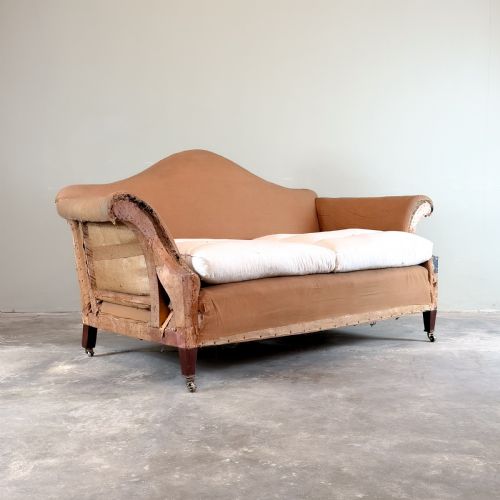
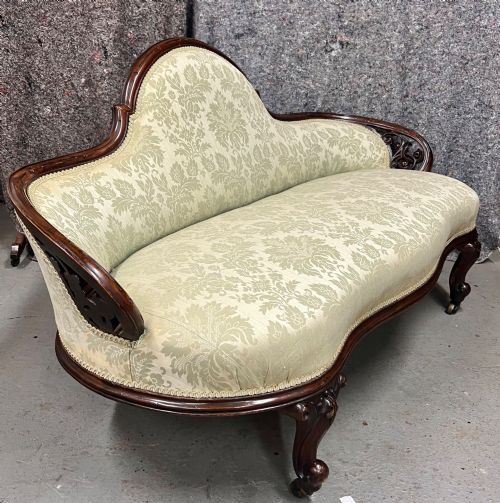
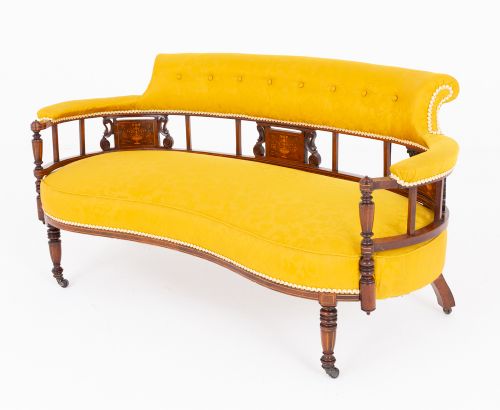
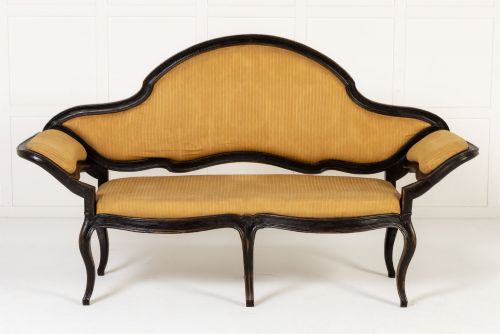
When you search for a vintage serpentine settee, you are looking at upholstered seating defined by an undulating, wave-like front rail or backrest. The pieces appearing here span from the eighteenth century through the Edwardian period, capturing centuries of evolving seating design.
The versions you are most likely to encounter on this page range from Victorian and Edwardian camel back sofas to eighteenth-century Italian ebonised pieces and nineteenth-century Chinese Chippendale revivals. These forms appear under object types such as sofas, settees, and canape sofas.
Makers and designers across these eras embraced continental influences, resulting in styles that stretch from Georgian proportions to Louis XV revivals and Italian Rococo. Each piece balances decorative woodwork with substantial upholstered comfort.
Materials and construction methods
The frames of these settees rely on traditional timber construction, utilising woods such as mahogany, walnut, rosewood, and ebonised wood to build sturdy structural foundations. Carved details and exposed wooden elements showcase the joinery and cabinet-making skills of their respective periods.
Upholstery materials play a defining role, featuring traditional coverings like damask, jute, and fabric, alongside hand-dyed brown leather finishes. Internal support structures incorporate traditional stuffing and webbing methods appropriate to each era.
Whisky brown leather brings a distinct warmth to nineteenth-century frames, inviting you to imagine centuries of relaxed lounging.
Distinguishing quality across pieces
Quality in these settees rests upon the precision of the timber carving and the integrity of the undulating frame shape. Finer examples display crisp lines in the serpentine curves and harmonious proportions that reflect their specific stylistic period.
The treatment of materials also dictates the standing of a piece, from the richness of the polished mahogany or walnut to the calibre of the fabric or hand-dyed leather upholstery. Original structural cohesion and the survival of period details elevate certain pieces above standard production.
The Vintage Serpentine Settee Glossary
- Serpentine
- A wave-like shape curving inward and outward, frequently seen along the front rail or crest of these settees. This profile requires skilled carpentry to execute smoothly.
- Camel back
- A distinctive upholstered sofa back that rises in a gentle, continuous convex curve resembling a camel's hump. It is a defining feature of many eighteenth-century and revival pieces.
- Ebonised wood
- Timber treated with a chemical or dark finish to simulate costly ebony. This technique was popular for achieving a sleek, dramatic contrast against colourful upholstery.
- Canapé
- A French-style decorative sofa with an exposed wooden frame, often upholstered on the back and seat. These pieces frequently draw upon Louis XV design vocabularies.
Vintage Serpentine Settee: Frequently Asked Questions
What is a serpentine settee?
A serpentine settee is an upholstered seat characterised by a distinctive undulating front rail or backrest that curves in and out in a wave-like motion.
These seating pieces appear across various historical periods, combining sculptural wooden frames with comfortable upholstered surfaces to serve as both functional furniture and decorative statements.
Where were these settees placed?
Historically, settees occupied principal reception rooms, parlours, and drawing rooms where homeowners entertained guests and displayed their taste. Their decorative backs and carved wooden frames meant they often sat away from walls rather than pushed directly against them.
In modern interiors, they function effectively as statement seating in living rooms, large hallways, or master bedrooms.
How do I care for leather upholstery?
Leather upholstery requires regular dusting with a soft, dry cloth and protection from direct sunlight to prevent the hide from drying and cracking over time. Conditioning treatments help maintain the suppleness of hand-dyed leathers.
Avoiding harsh chemical cleaners ensures the natural patina and colour depth of vintage leather remain preserved for years to come.