

Restoration Period Oak
Restoration period oak brings sturdy seventeenth-century craftsmanship and rich timber into a room, offering genuine character and utility.
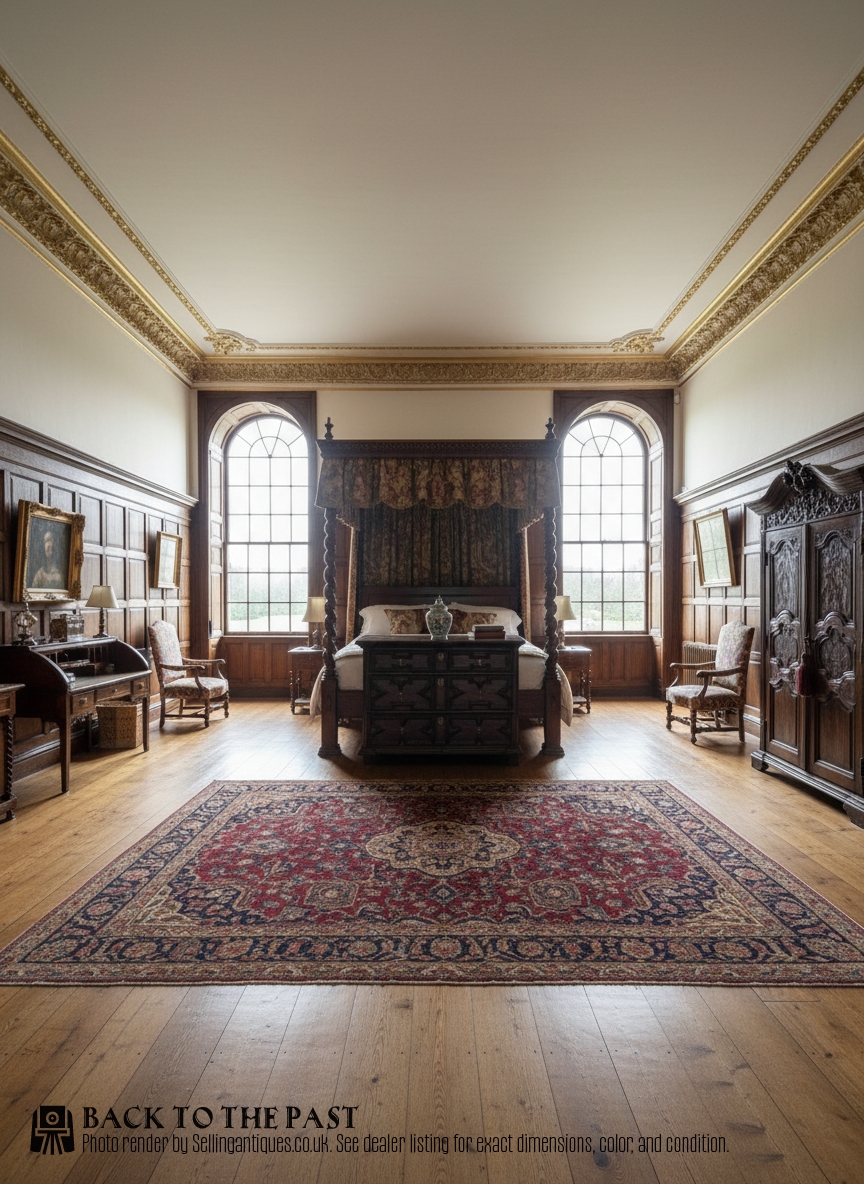
Restoration Period Oak
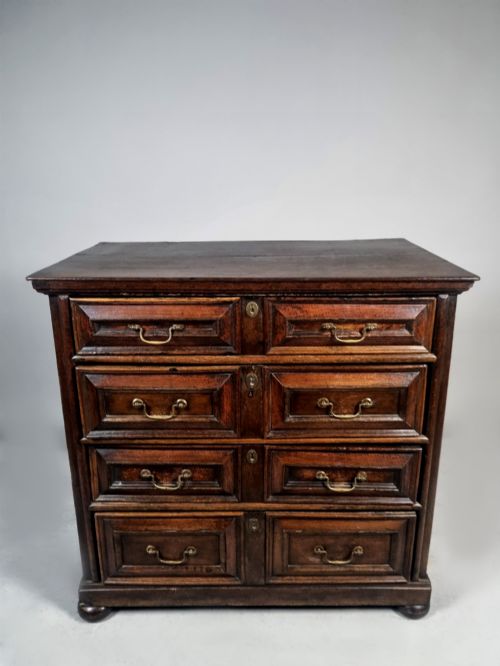
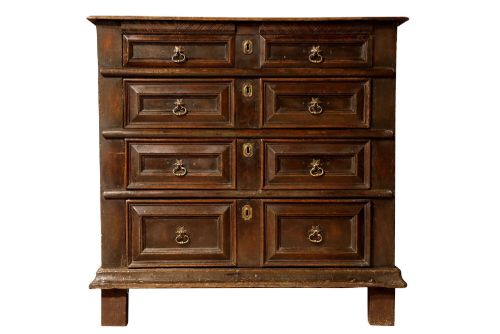
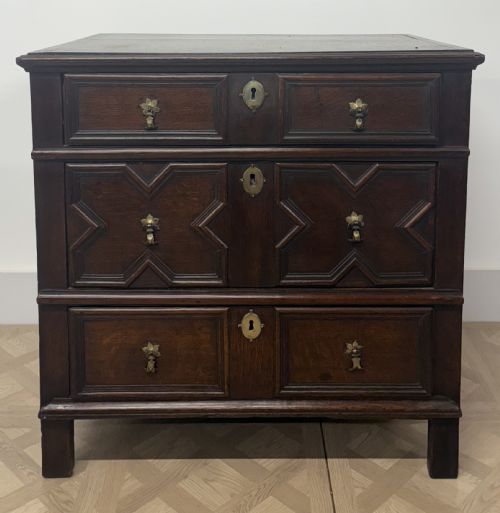
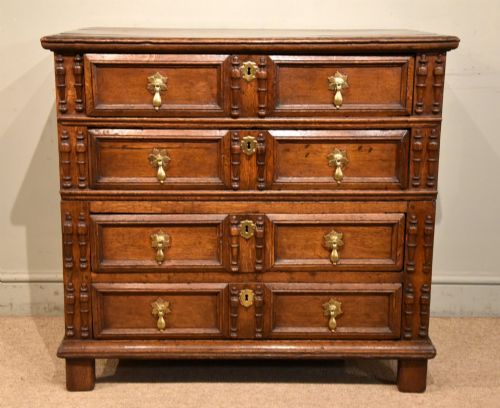
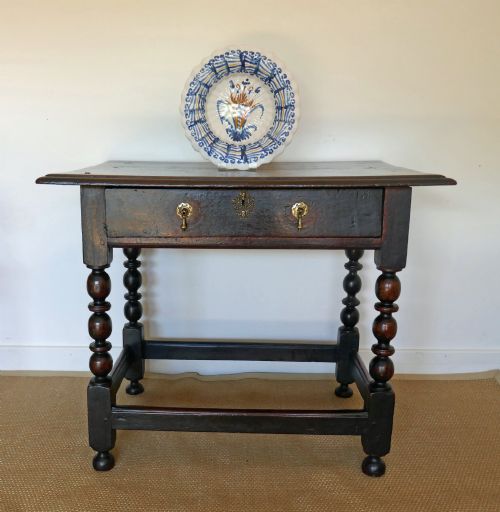
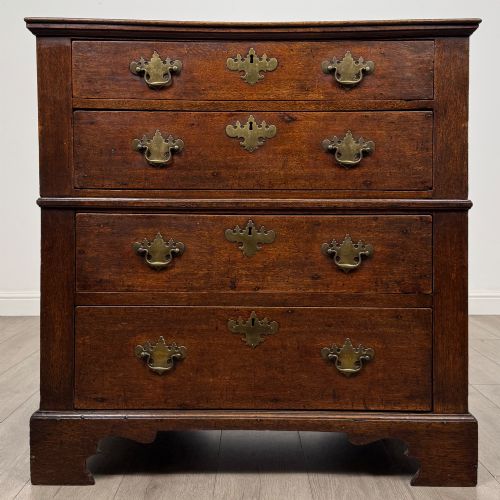
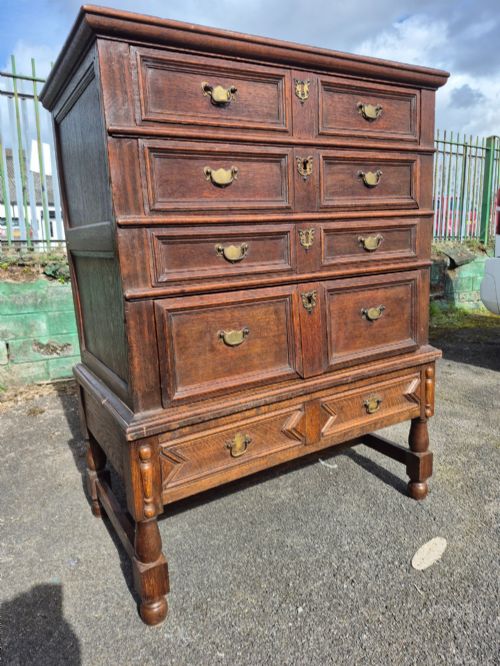
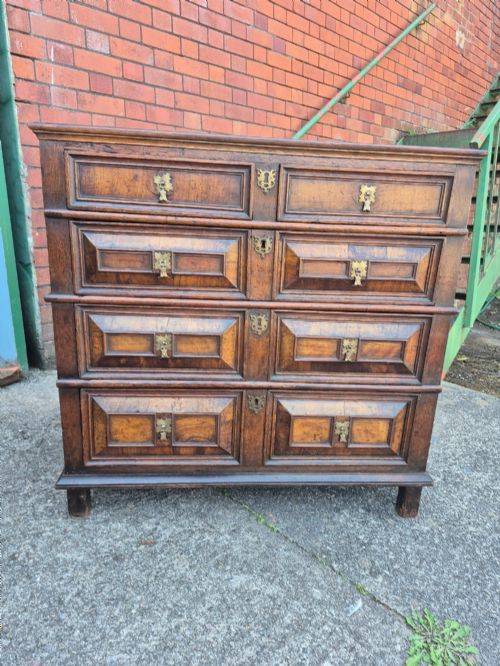
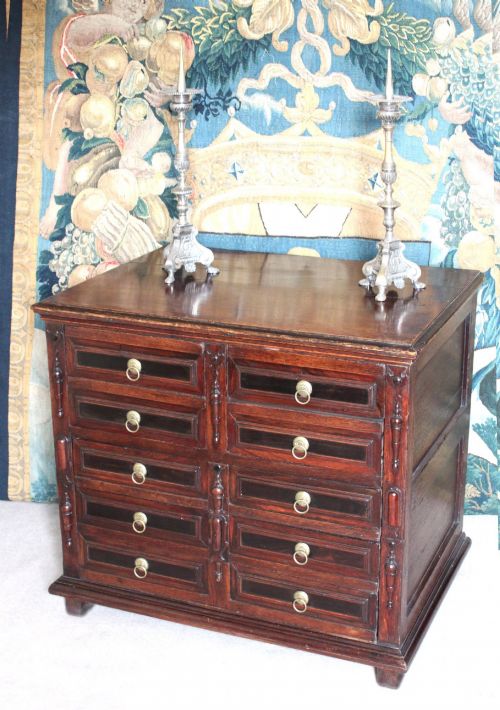
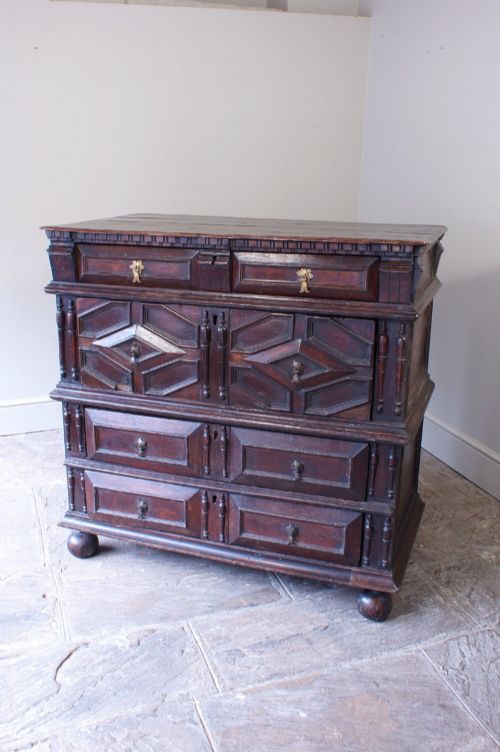
When you search for restoration period oak, you encounter items dating predominantly from the seventeenth century, spanning the reigns of Charles II and William and Mary. The form most commonly met on this page is the oak chest of drawers, often constructed with geometric mouldings or applied panels.
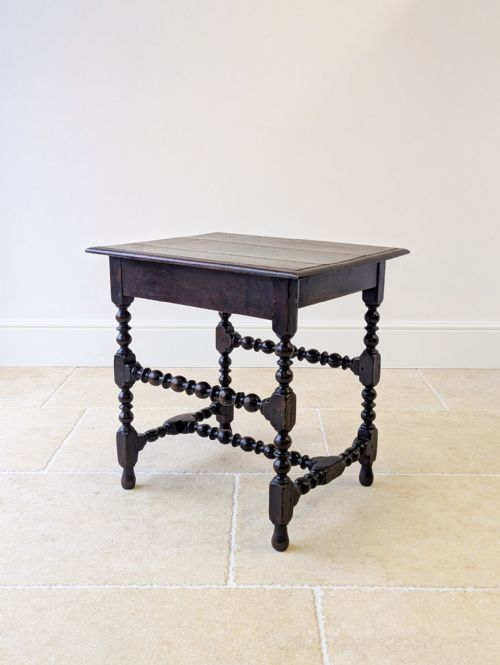
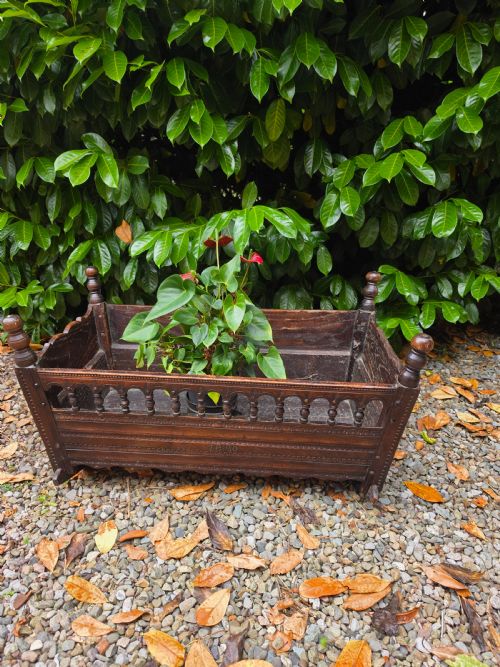
Beyond chests of drawers, the selection encompasses side tables, side chairs, dining chairs, cupboards, stools, and rocking cradles. These objects originate from seventeenth-century English workshops, reflecting the robust joinery typical of the period.
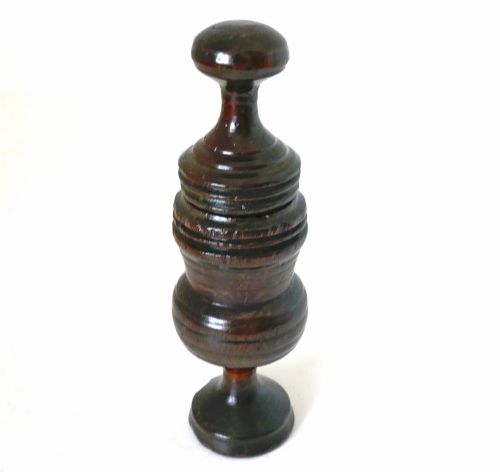
The inventory also includes smaller domestic items such as spice grinders and coffers, alongside upholstered seating and needlework. Pieces from this era establish a distinct historical presence in an interior through their straightforward utility and time-worn timber.
What varies in quality
The refinement of the carved ornament and the crispness of the geometric mouldings separate simpler pieces from more ambitious examples. Timber selection also dictates the visual appeal, where carefully matched grain patterns or decorative oyster veneers display superior craftsmanship.
Proportion and structural integrity define the standing of a piece, with bolder proportions and intact original surfaces commanding greater appreciation. The integration of secondary woods like fruitwood or walnut alongside the primary oak indicates the maker's skill level.
Restoration Period Oak Retail Price Guide 2026
Typical asking prices for restoration period oak among the pieces listed under this phrase on Sellingantiques today, from the lower quarter to the upper quarter. They describe what is for sale here now, not the wider market.
Stumpwork embroidery depicts King Charles II alongside his favourite mistress in a needlework panel.
The Restoration Period Oak Glossary
- Oyster veneer
- Circular slices cut across small branches of wood to create an intricate, undulating pattern resembling oyster shells. This technique appeared frequently on seventeenth-century drawer fronts.
- Geometric moulding
- Raised wooden strips applied in repeating angular patterns to drawer fronts and door panels. They created depth and shadow on otherwise plain surfaces.
- Bobbin-turning
- A lathe-working method that produced a series of rounded, spool-like shapes along chair legs and table supports. It defined the turned furniture of the later seventeenth century.
- Coffer
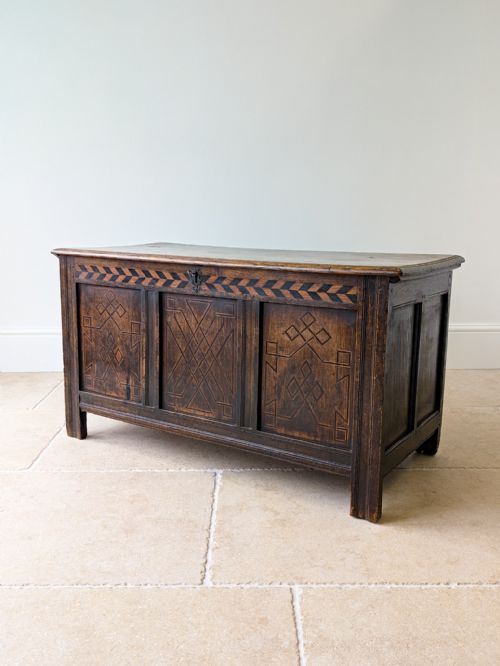
- A large rectangular wooden chest used primarily for storage. Early examples featured heavy plank construction and hinged lids.
- Carolean
- Pertaining to the reign of King Charles II, describing furniture styles characterised by richer ornamentation and scrolling woodwork.
Restoration Period Oak: Frequently Asked Questions
How do I identify a seventeenth-century oak chest?
Look for hand-cut dovetails, pegged joints, and drawer fronts featuring geometric mouldings or applied panels. Oak boards display distinct medullary rays, often called silver grain, running across the timber.
Examine the backboards and interior drawer linings to confirm secondary woods like sycamore or fruitwood were used. Hand-wrought iron nails and brass drop handles further support seventeenth-century origins.
Where should I place an oak side table?
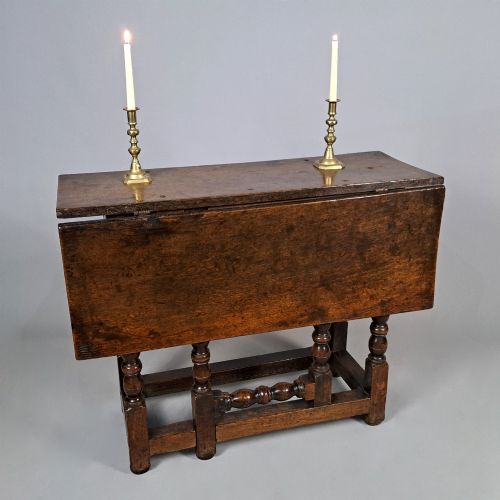
Position a side table in a hallway or living space where its bold proportions and turned legs remain visible. The sturdy oak surface accommodates lamps, books, or decorative objects easily.
Keep the piece away from direct heat sources and strong sunlight to protect the aged finish and prevent the timber from drying out.
How do I care for antique oak furniture?
Dust the surfaces regularly with a soft, dry cloth to prevent grit accumulation in the carved details and mouldings. Apply natural beeswax sparingly to nourish the dry timber and maintain a soft sheen.
Avoid liquid polishes and silicone sprays, which can penetrate open oak pores and damage the historic patina over time.
What distinguishes Charles II chairs from later styles?
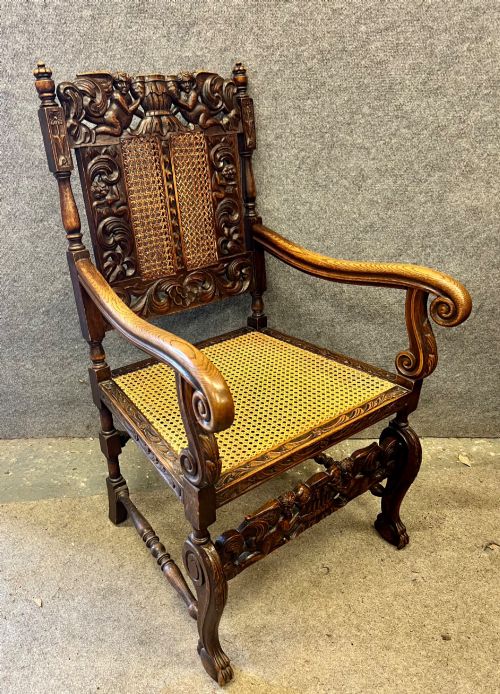
Charles II chairs feature turned or carved frames made of oak or walnut, often incorporating upholstered seats and backs. Bobbin-turned stretchers and upright posts provide structural stability.
Later nineteenth-century revival pieces often imitate these Carolean forms but utilise machine-cut elements and different timber preparation methods.