
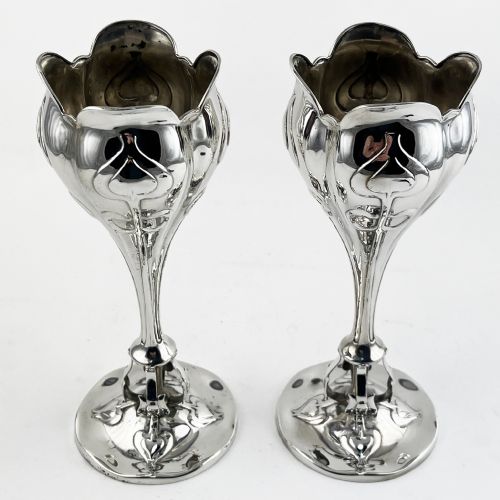


Repousse Silver Vessel
A repousse silver vessel brings tactile depth to a room, formed through hammerwork that pushes metal outward into relief.
Repousse Silver Vessel
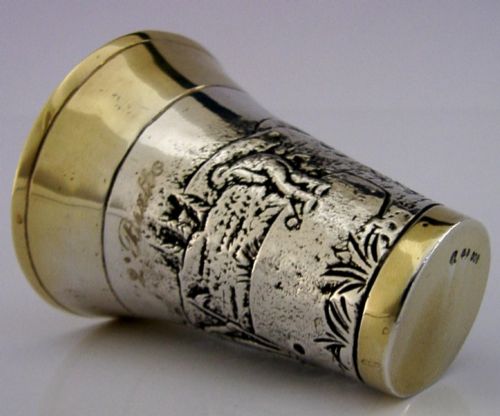
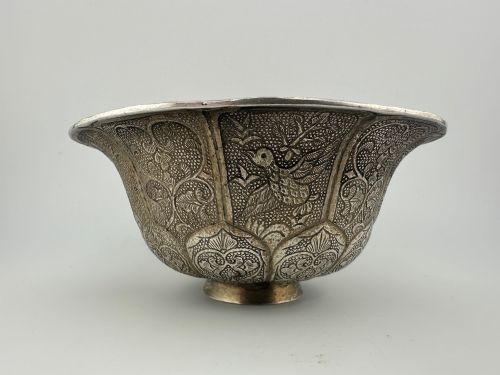
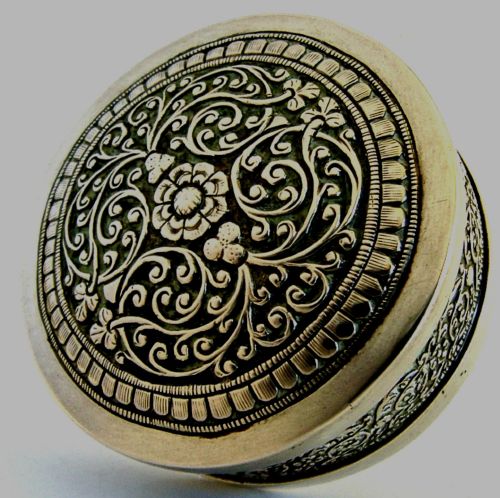
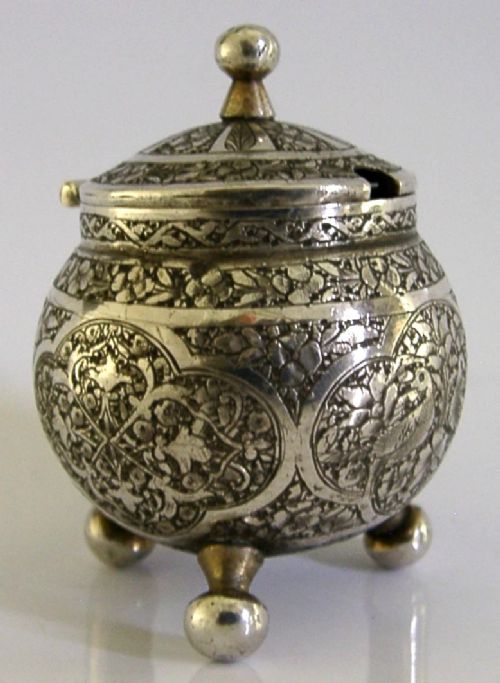
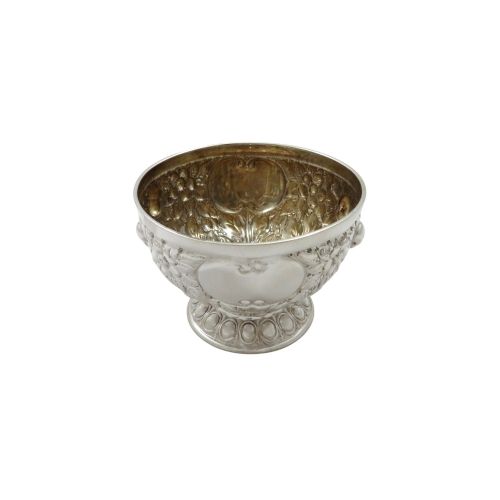
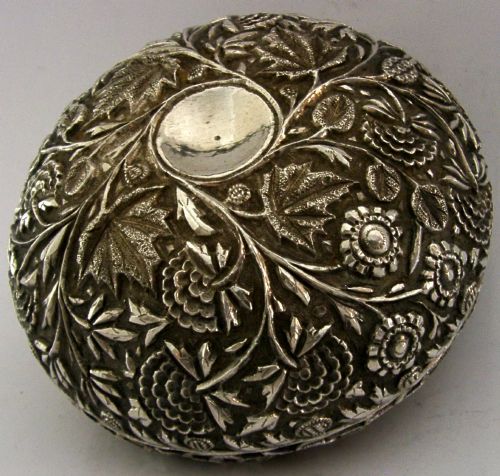
When you search for a repousse silver vessel, you find hollowware shaped by hammering from the reverse side to create raised ornament. The selections span decorative bowls, trinket boxes, vases, beakers, cups, and tankards from various global workshops and periods.
The pieces on this page lean heavily toward nineteenth-century production, alongside pieces from the eighteenth and early twentieth centuries. You encounter British sterling, German silver, Chinese export white metal, and Anglo-Indian colonial work.
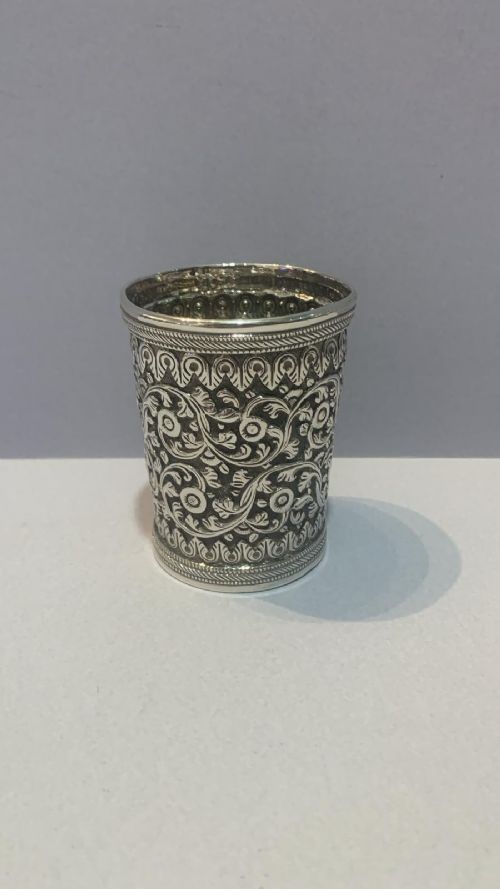
Forms vary from heavy Indian ceremonial bowls and Kutch beakers to Georgian sauce boats and Edwardian tea caddies. Most examples rely on detailed floral, bird, or figurative motifs chased into the surface by hand.
How they were made
Makers shaped these objects using sterling silver, standard silver, 800 silver, coinage metal, white metal, and occasionally silver plate. Parcel-gilt highlights and cherry wood additions appear on specific export and presentation pieces.
The primary technique combines repoussé work with chasing, where craftsmen hammer the metal from behind while it rests in a pitch bowl, then refine the details from the front using small punches. This dual method allows for high relief and crisp surface texture.
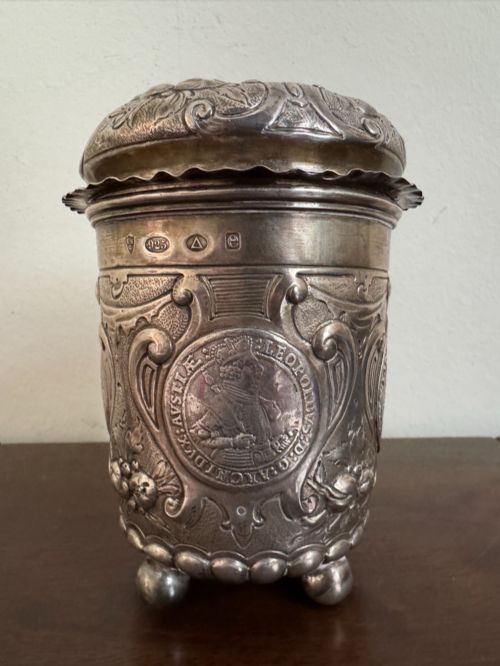
One German silver beaker incorporates an actual historical coin into its base.
What varies in quality
Quality rests in the crispness and depth of the hammerwork rather than mere weight or scale. Superior examples display sharp undercut relief where the design stands clear from the body without thinning the metal walls too severely.
The precision of the chasing matters greatly, as well-defined lines separate the background from floral or figurative elements. Hand-chased figures with distinct expressions and detailed plumage distinguish master workshops from routine production.
Wang Hing & Co·Hodsoll Collection
The Repousse Silver Vessel Glossary
- Repoussé
- A metalworking technique where the artisan hammers a design from the reverse side to create a raised pattern in relief. This method is often paired with chasing on the front face.
- Chasing
- Working metal from the front using punches and hammers to sink the background or refine details on a repoussé piece. It sharpens the contours established during the initial hammering.
- Sterling silver
- An alloy of silver containing 92.5 percent silver by mass, with the remainder typically copper. It provides the standard metal quality for British and many European domestic items.
- Chinese Export
- Silver items made in China during the nineteenth and early twentieth centuries, typically for Western markets. These pieces often feature traditional local motifs executed in Western forms.
- Parcel-gilt
- Silver objects that feature partial gilding, where selected areas such as the interior or specific decorative elements are coated in a thin layer of gold.
Repousse Silver Vessel: Frequently Asked Questions
How do I clean a repousse silver vessel?
Clean these items gently with a soft cloth and mild soap to avoid wearing down the high points of the relief work. Avoid harsh dips that strip the natural patina accumulated over the centuries.
Store them away from direct sunlight and damp environments to prevent tarnishing or corrosion, especially on pieces with wooden components or mixed metals.
Are these vessels safe for daily use?
While historical vessels like tankards, beakers, and sauce boats were made for consumption or serving, many delicate antique pieces function best as decorative objects today. Items with complex repoussé work require careful handling during use.
Consider the interior condition and material purity, particularly with unmarked white metal or foreign silver, before using them for food or drink.
How can I tell the period of a piece?
Look for hallmarks, maker marks, and stylistic indicators such as Baroque Revival scrolls or Art Nouveau lines. British items often carry date letters and town marks that pinpoint the exact year of assay.
Regional styles, such as Kutch Indian work or Chinese export dragon motifs, provide cultural context that helps narrow down the decade of manufacture.
What is the difference between sterling and white metal?
Sterling silver adheres to a strict legal standard of purity containing 925 parts per thousand of silver. It usually carries official hallmarks when originating from Britain or structured European markets.
White metal generally refers to unmarked or non-standard silver alloys common in Asian export trades, which may contain varying ratios of silver and other base metals.