



Repousse Fire Screen
A repousse fire screen shields a room from sudden hearth heat while bringing hand-worked metal into the interior.
Repousse Fire Screen
When you search for a repousse fire screen, you are looking at functional hearth furniture designed to block radiant heat and hide an unlit grate during warmer months. These pieces range from simple metal panels to framed architectural screens incorporating decorative metalwork.
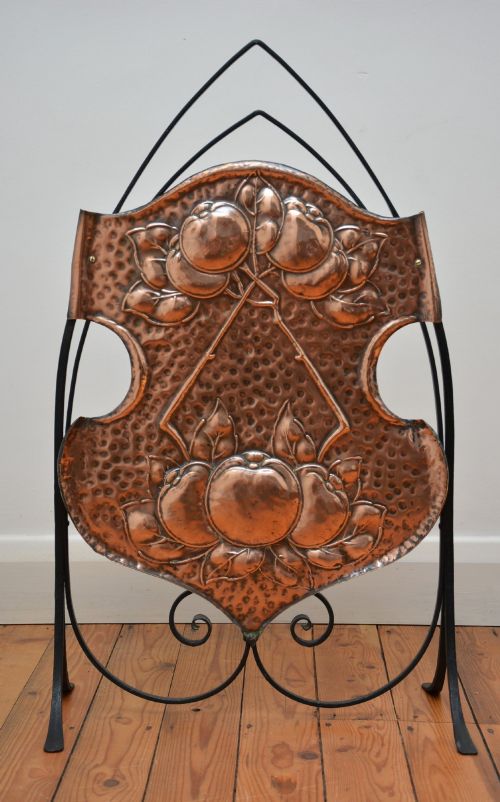
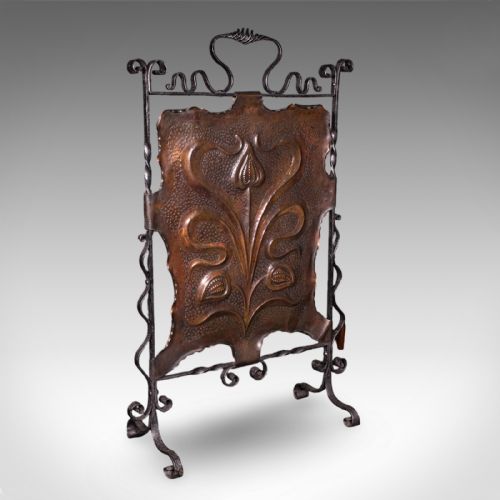
The versions you are most likely to meet on this page hail from the nineteenth and early twentieth centuries, spanning the Victorian, Edwardian, and Arts and Crafts periods. They frequently combine hand-beaten metal panels with supportive frames of iron, oak, or brass.
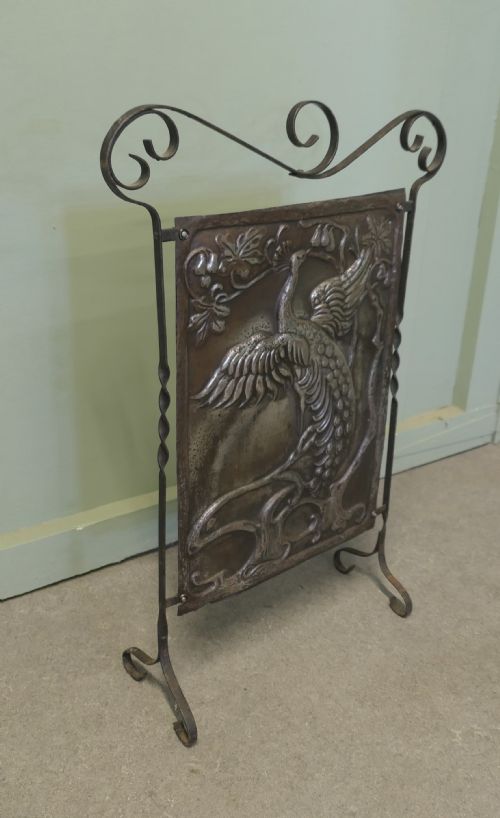
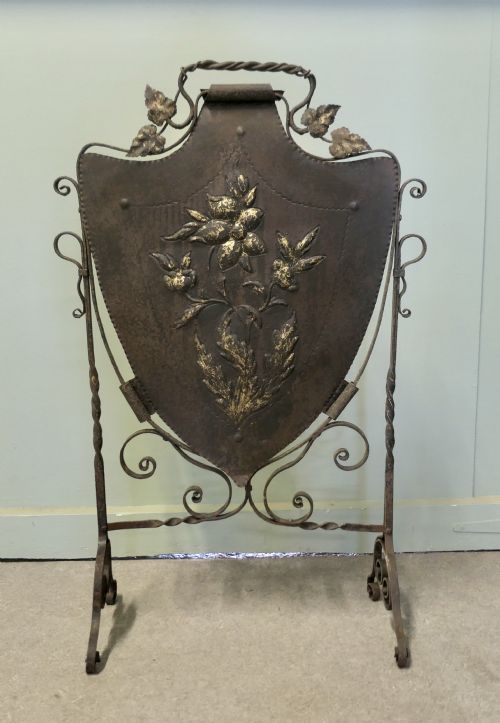
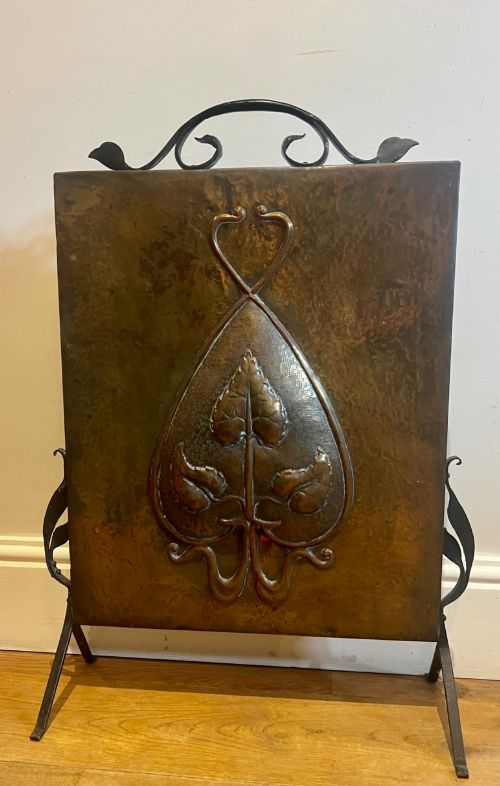
Stylistically, the selection leans heavily into Arts and Crafts and Art Nouveau aesthetics, alongside occasional Gothic Revival and Dutch Renaissance Revival influences. Motifs range from botanical peacock designs and heraldic coats of arms to embossed cannons and geometric shields.
How they were made
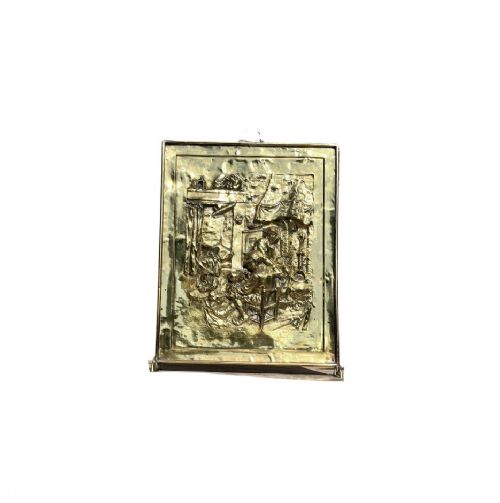
Makers utilised sheet copper and brass for the central decorative panels, shaping the metal by hammering it from the reverse side to create raised relief designs. This technique, known as repousse, was often combined with chasing, where details are refined from the front using punches and small hammers.
The decorative metal panels are typically mounted within sturdy structural frames made of wrought iron, cast iron, or oak. Some examples incorporate additional materials such as mirror glass or wire mesh to alter how light reflects around the hearth.
Listings feature items from the seventeenth century through to the Edwardian era, with copper and brass dominating the metalwork.
What varies in quality
Quality in these items rests primarily on the depth and crispness of the metalwork itself. A skilled hand creates sharp contours and subtle transitions in the raised relief, whereas lesser pieces show flat, shallow hammering with little definition in the motifs.
The choice of framing materials and the integrity of the joinery also distinguish better examples. Oak frames and heavy wrought iron supports provide substantial weight and durability compared to thinner, stamped metal alternatives.
The Repousse Fire Screen Glossary
- Repousse
- A metalworking technique where the design is hammered into relief from the reverse side of the sheet. This creates a three-dimensional decorative surface.
- Chasing
- Working metal from the front side using punches and hammers to refine lines and add surface texture. It frequently accompanies repousse work.
- Arts and Crafts
- A design movement valuing handcraftsmanship, traditional materials, and vernacular styles over mass production. It heavily influences the metal panels seen here.
- Gothic Revival
- An architectural and decorative style drawing inspiration from medieval forms. Pieces in this style often feature pointed arches and heavy shielding motifs.
Repousse Fire Screen: Frequently Asked Questions
What is a repousse fire screen?
A repousse fire screen is a decorative hearth accessory featuring a metal panel hammered into raised relief designs. It stands before an empty fireplace to block drafts and conceal the ash.
These pieces combine utility with decorative metalwork, serving as focal points in period reception rooms.
How do I date a brass fire screen?
Dating relies on observing stylistic markers, construction methods, and materials recorded in the piece. Arts and Crafts and Art Nouveau examples typically date from the late nineteenth or early twentieth centuries.
Heavier cast brass frames often point to Victorian production, while lighter sheet copper mounted in oak aligns with the nineteen-hundreds.
Can I use these near an active fire?
These screens are primarily intended to shield rooms from radiant heat or to dress an unlit hearth during summer months. Placing them too close to leaping flames may damage wooden frames or discolour delicate metal surfaces.
Ensure the freestanding legs or heavy iron bases are stable on your hearth before positioning them.
What metals are typically used?
Copper and brass form the primary panels for these decorative screens, chosen for their malleability in repousse work and warm tones. These sheets are usually mounted within sturdy iron or oak frames.
Some examples also incorporate wire mesh or reflective mirror glass within the metal framework.