


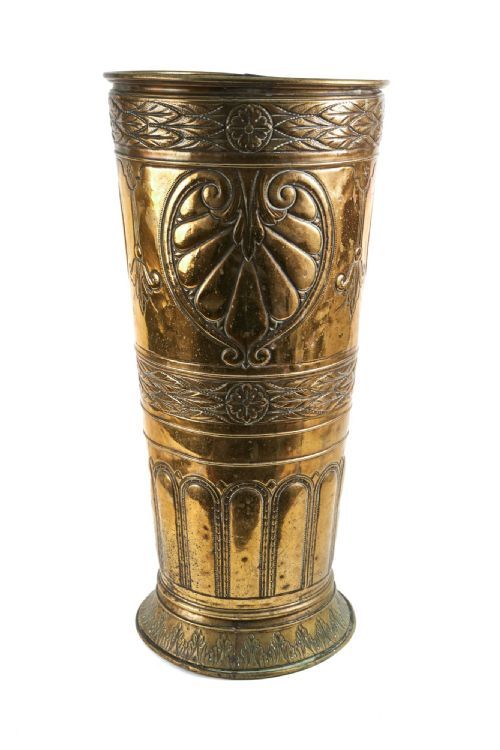


Repousse Brass Holder
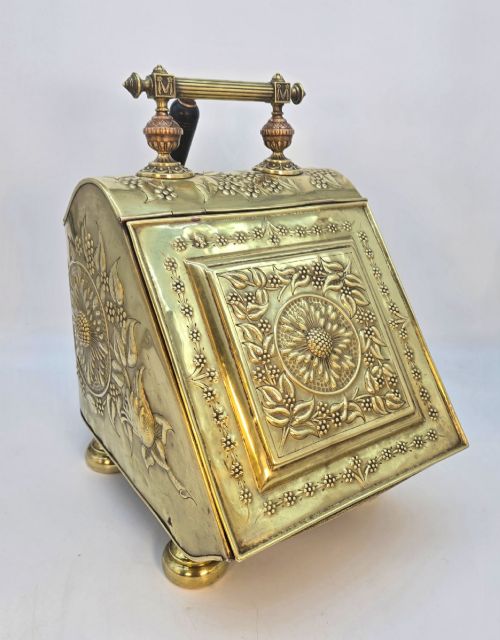
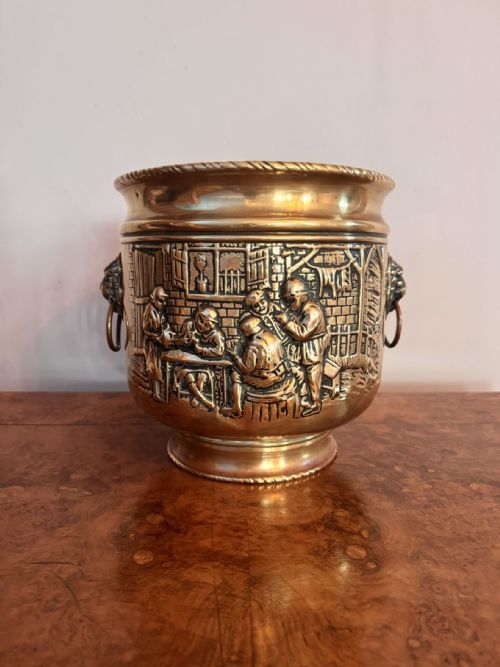
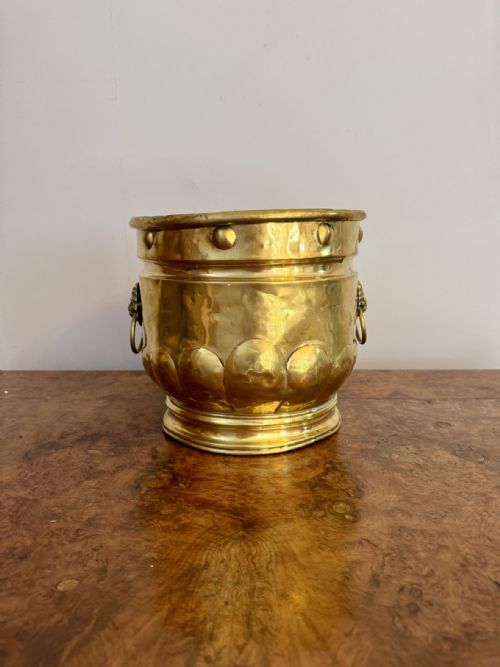
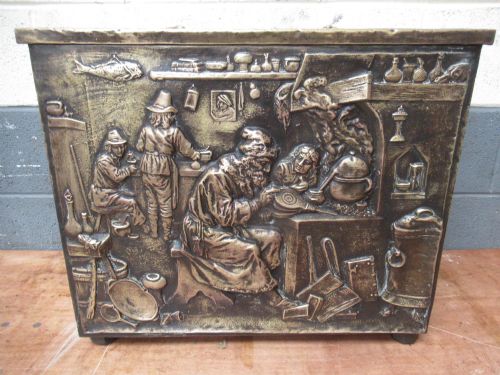
These repousse brass holder items are metal vessels and hearth fittings that bring heavy texture and warmth to a room.
Repousse Brass Holder
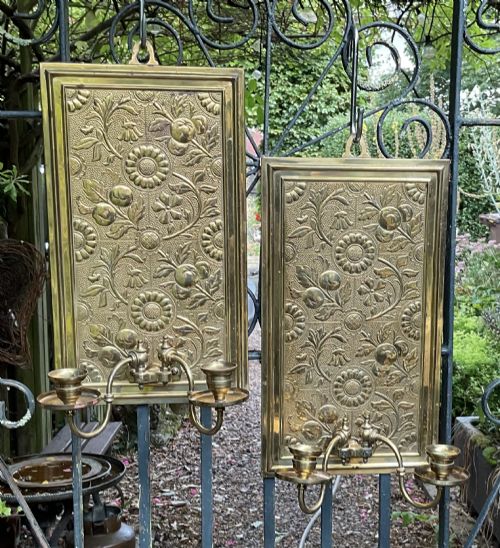
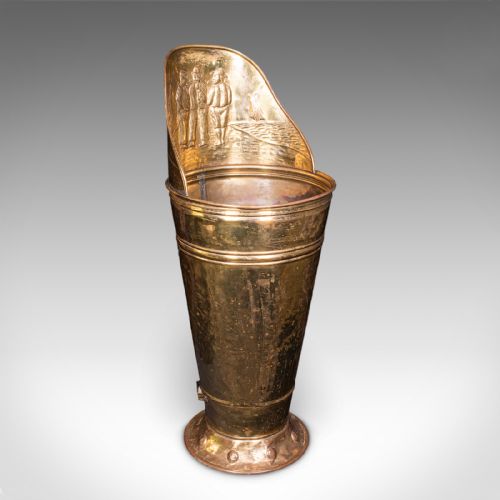
A repousse brass holder encompasses functional metal containers and wall fittings spanning the Victorian period, the Edwardian era, and the early twentieth century. The selection ranges from domestic fireside pieces like log bins, coal buckets, and coal scuttles to wall-mounted sconces, mirrors, and umbrella stands.
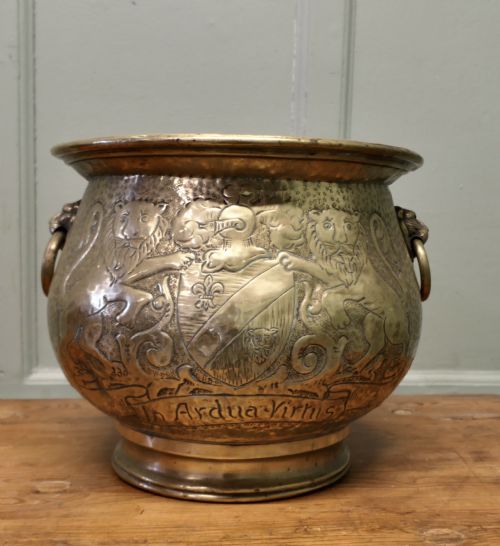
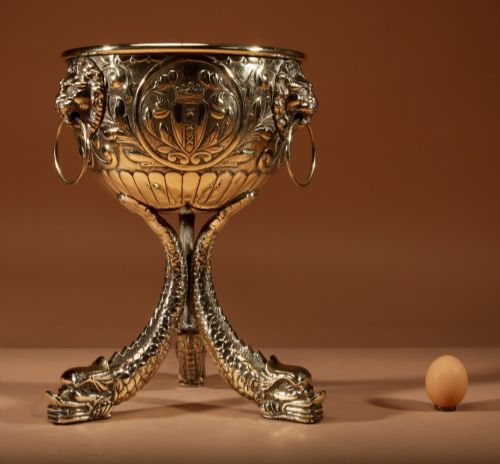
Jardinieres and planters form a large portion of the available forms, often featuring animal heads, lions mask handles, or shields. The styles stretch from Gothic Revival and Renaissance Revival to Arts and Crafts, Art Nouveau, and Dutch Traditional designs.
Pieces frequently combine brass with copper, mirror glass, wood, or velvet to create varied surface textures. Origin markings and regional traits point toward English, French, and Dutch workshops.
Materials and construction
Makers shaped these items primarily from sheet brass and copper, employing manual hammering and repousse techniques to push designs out from the reverse side. Cast brass components, such as handles, feet, and decorative mounts, were joined to the beaten bodies.
Inner containers of wood, iron, or additional metal liners often supported the outer decorative shell, particularly in coal buckets and jardiniere forms. Rivets, solder, and dovetail joints secured the seams and structural bands.
Repousse Brass Holder Retail Price Guide 2026
Typical asking prices for repousse brass holder among the pieces listed under this phrase on Sellingantiques today, from the lower quarter to the upper quarter. They describe what is for sale here now, not the wider market.
Listings feature items spanning the nineteenth century through to the nineteen-twenties, including Edwardian and Victorian examples.
Judging quality and execution
The depth, crispness, and hand-worked detail of the repousse hammering set finer examples apart from simpler pressed or stamped items. Skilled workshop execution shows in the integration of cast details like animal masks and handles with the hammered body.
The preservation of original surface patination, liners, and structural integrity without excessive thinning of the metal defines the better surviving specimens from this group.
Henry Loveridge·Bruce Talbert·Petrus Ramus·J Sankey and Sons
The Repousse Brass Holder Glossary
- Repousse
- A metalworking technique where the artisan hammers the design from the reverse side to create a raised relief on the front. This method gives decorative metalwork its tactile depth.
- Dinanderie
- A term for medieval and later brass or copper objects, often applied to decorative vessels and containers. It honours the Belgian town of Dinant, historic centre of brass production.
- Jardiniere
- An ornamental pot or stand designed to hold plants and flowers. These vessels often feature waterproof liners to protect the surrounding metal.
- Sconce
- A wall-mounted bracket fixture designed to hold candles or lamps. Examples in this category frequently incorporate reflective brass or copper backplates.
- Aesthetic Movement
- A late nineteenth-century design style that emphasised visual beauty and artistic expression over strict historical revival or utilitarian function.
Repousse Brass Holder: Frequently Asked Questions
What were repousse brass holders used for?
These items served practical domestic functions around the hearth and home, functioning as coal buckets, log bins, umbrella stands, and plant containers.
Their decorative embossed surfaces allowed utilitarian storage items to double as ornamental room furnishings in period interiors.
How do I clean repousse brass?
Dust gently with a soft brush and avoid aggressive metal polishes that remove historic patination and wear down raised relief details.
Preserving the aged surface tone maintains the visual depth created by the original hammer work.
Are these pieces English or continental?
The inventory includes items originating from English workshops, French makers, and Dutch traditional manufacturers.
Specific design motifs, such as Dutch floral repousse or English Arts and Crafts styling, often indicate the region of production.
How can I tell Art Nouveau from Victorian pieces?
Victorian designs tend to draw on historical revivals like Gothic and Renaissance styles with formal symmetry and heraldic motifs.
Art Nouveau pieces introduce flowing, organic lines, stylised plant forms, and asymmetric plant motifs typical of the turn of the twentieth century.