





Renaissance Style Carving
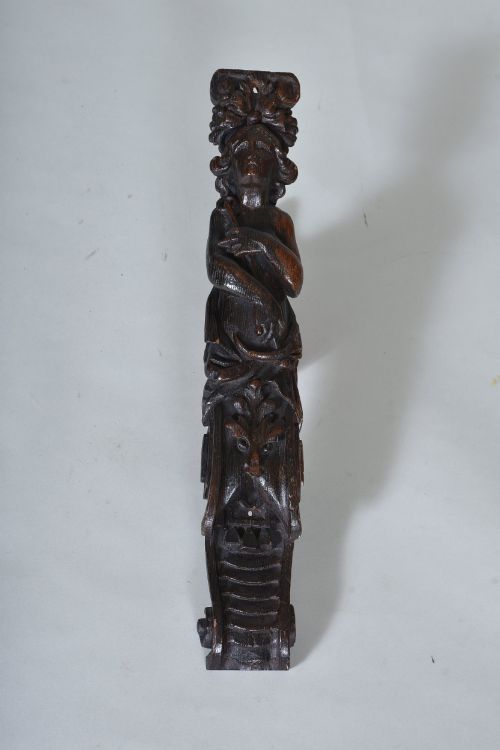
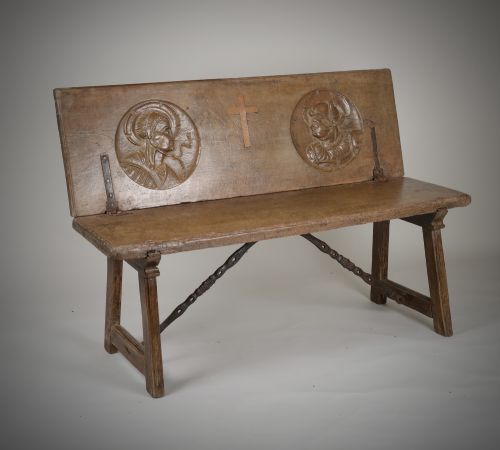
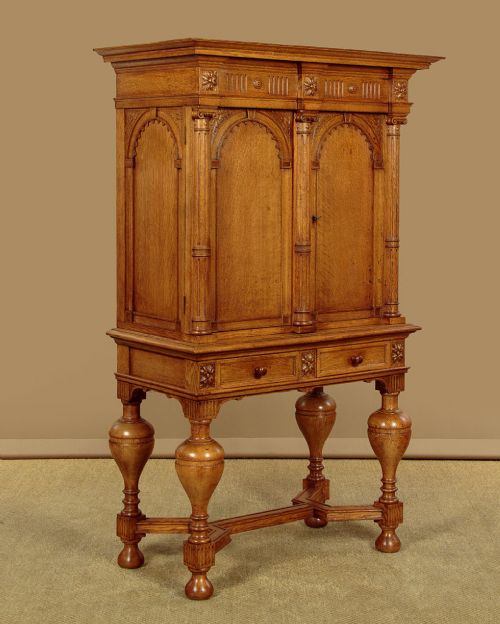
Renaissance style carving brings substantial historic form into a room, taking the shape of heavy oak cabinets, walnut seating and giltwood frames.
Renaissance Style Carving
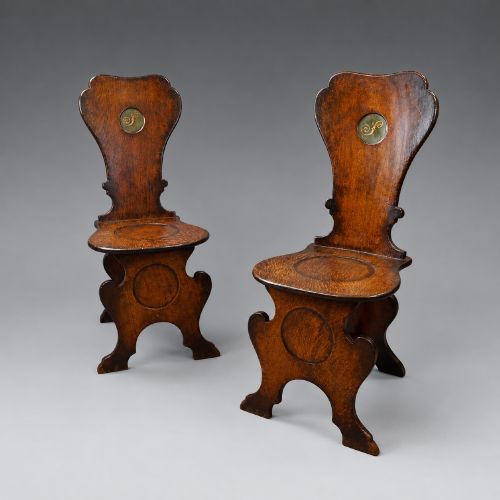
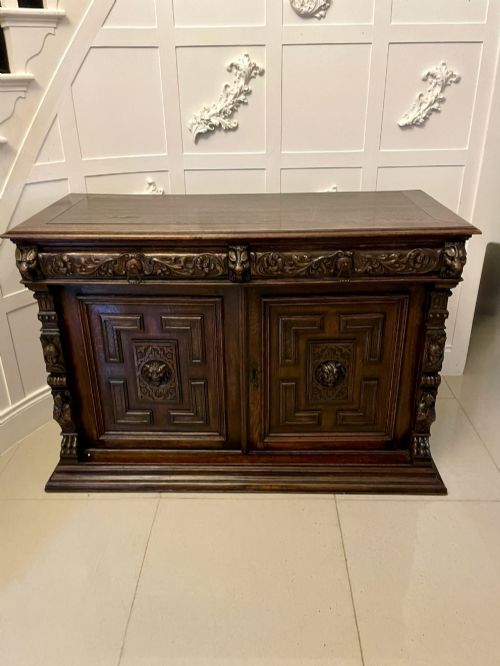
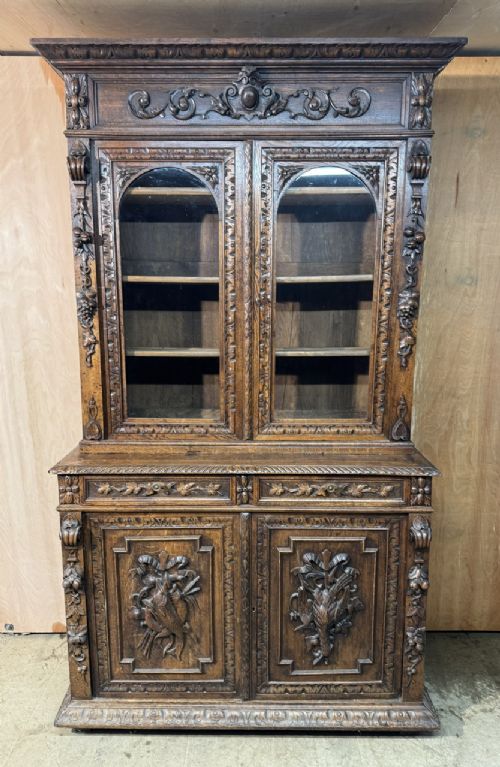
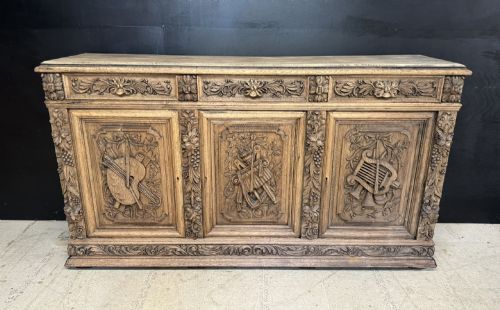
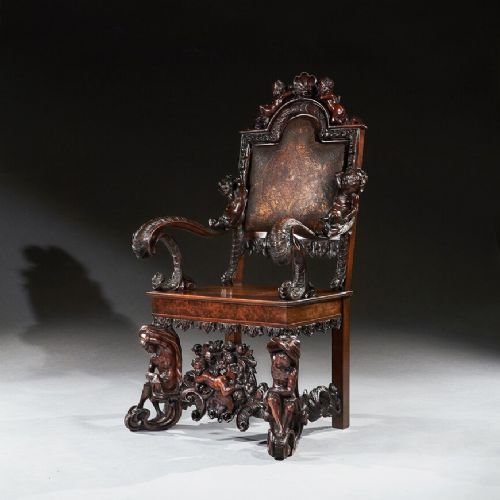
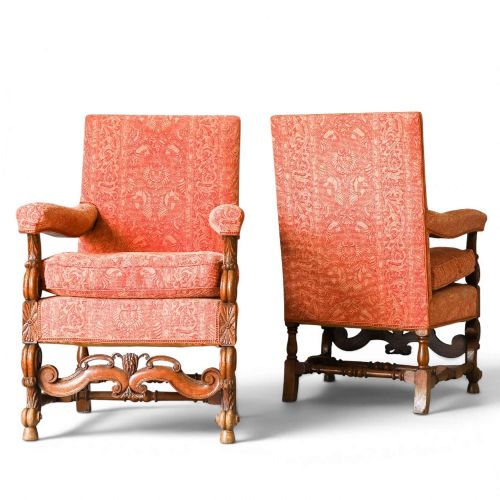
When you search for renaissance style carving, you encounter pieces that draw directly on sixteenth and seventeenth-century design vocabulary, executed largely in the nineteenth century alongside genuine period survivals. These objects range from monumental sideboards and hunting cabinets to sgabello hall chairs, armchairs, and coffer chests.
The version you are most likely to meet on this page is the nineteenth-century revival piece, often rendered in solid oak or walnut with deep relief panels, figural medallions, and architectural columns. Alongside furniture, the selection includes oil portraits, giltwood frames, and devotional wood carvings spanning several centuries.
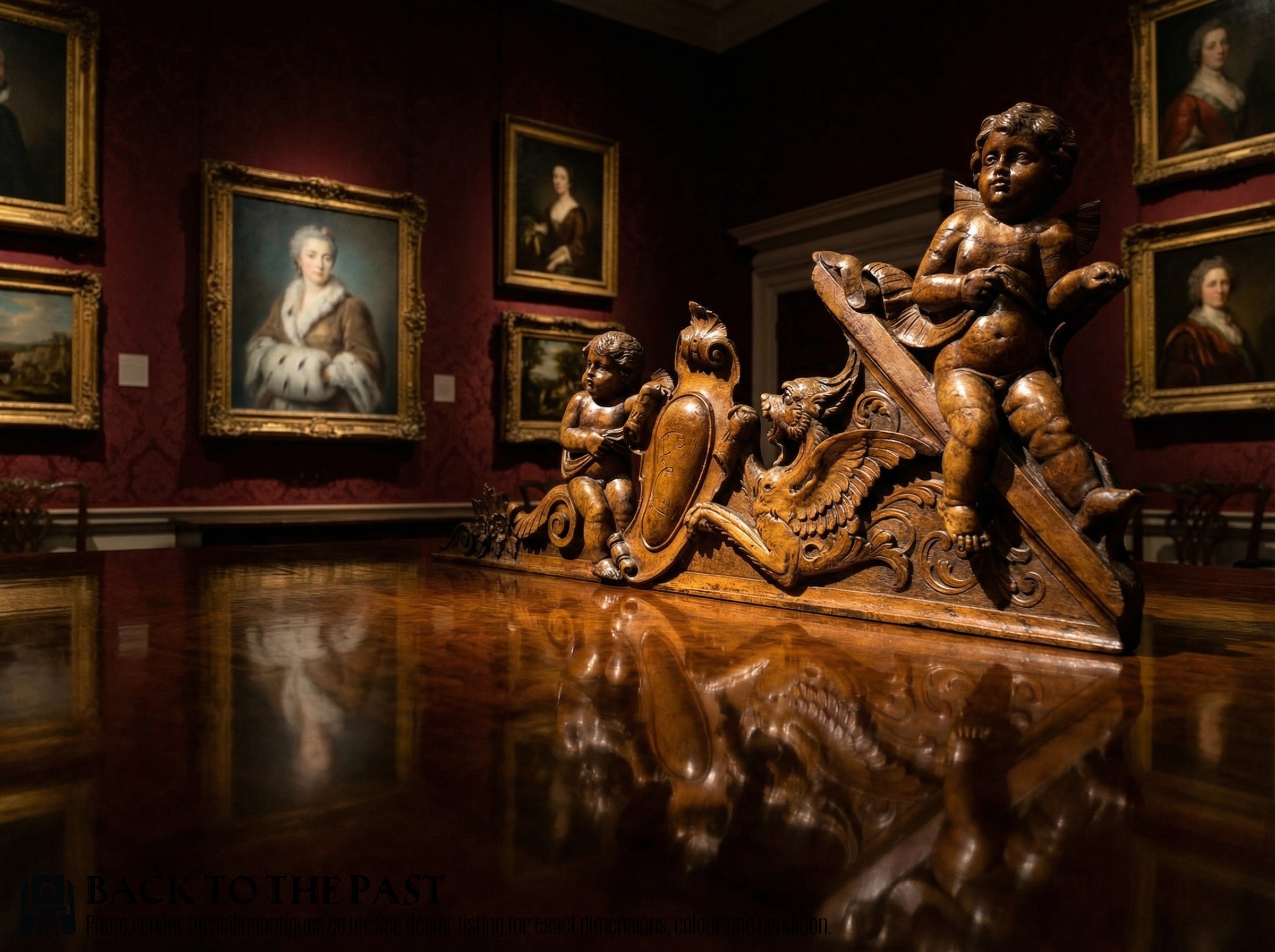
Earlier examples from the sixteenth and seventeenth centuries appear alongside nineteenth-century interpretations influenced by French, Italian, Dutch, and Flemish workshops. This mix of periods and regional revivals gives the category its distinctive architectural weight.
Assessing quality in carved pieces
The choice and preparation of the timber also determine the standard of the piece, with choice quarter-sawn oak and figured walnut providing stability and visual depth. Construction methods, such as traditional joinery in cabinets and armchairs, separate standard commercial output from exhibition-quality works.
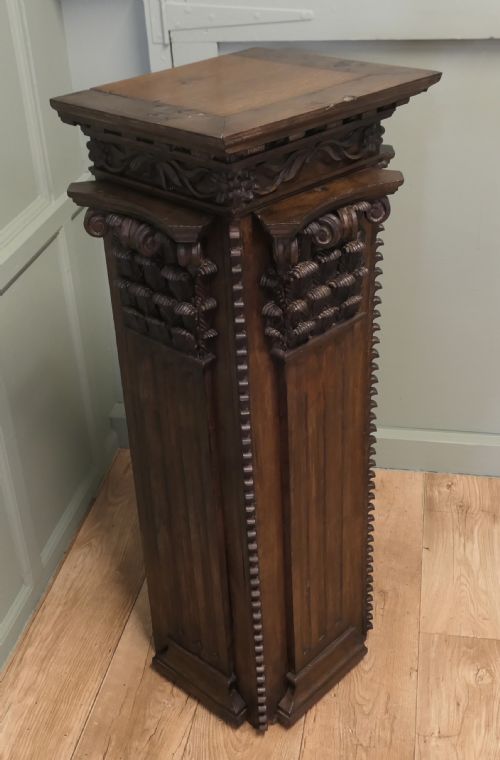
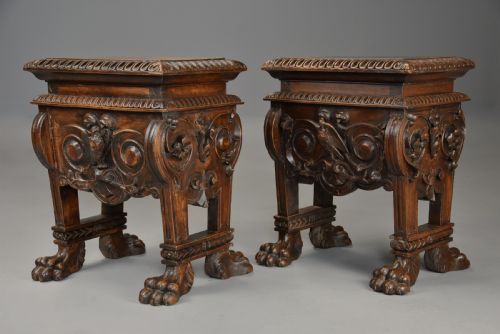
The listings feature seventeenth-century oak carvings alongside nineteenth-century French and Italian revival sideboards, armchairs, and display pedestals.
Valentino Besarel·Andrea Brustolon·Gian Paolo Pace·Benvenuto Tisi·Raphael Conestabile
The Renaissance Style Carving Glossary
- Sgabello
- A light wooden chair with a high back and a base formed of solid boards rather than legs. These pieces were typical of the Italian Renaissance and often placed in halls.
- Giltwood
- Timber that has been coated with a thin layer of gold leaf over a prepared gesso ground. This finish appears frequently on Renaissance style frames and mirrors.
- Coffer
- A large wooden chest used for storage, frequently decorated with carved panels, figural medallions, or linenfold motifs. They served as seating as well as storage in early interiors.
- X Framed Stool
- A folding or rigid stool constructed with intersecting diagonal supports forming an X shape. These chairs draw heavily on sixteenth-century Italian forms.
- Polychrome
- Painted in several colours, typically applied to wood or gesso sculptures. This technique was widely used on religious figures and architectural carvings.
Renaissance Style Carving: Frequently Asked Questions
How do I spot a true sixteenth-century piece?
Authentic sixteenth-century pieces display genuine tool marks, consistent timber shrinkage, and historic wear patterns accumulated over centuries of use.
Revival pieces from the nineteenth century often show machine-cut elements or uniform patination that distinguishes them from early work.
Where should I place a heavy oak sideboard?
These large sideboards require a room with sufficient scale and solid flooring to support their considerable weight and height.
They work well against blank walls in dining rooms or hallways, paired with minimal contemporary decor to balance the dark wood.
How do I care for antique carved walnut?
Dust the deep recesses of the carving regularly with a soft brush to prevent dirt accumulation in the grain.
Apply a microcrystalline wax sparingly once or twice a year to nourish the walnut without building up a heavy, sticky residue.
What is the difference between French and Italian styles?
French Renaissance revival pieces often feature architectural symmetry, hunting motifs, and robust carved cabinets influenced by Henri II designs.
Italian examples tend to focus on figurative panels, walnut sgabello chairs, and refined classical ornamentation inspired by sixteenth-century models.