





Renaissance Style Bronze
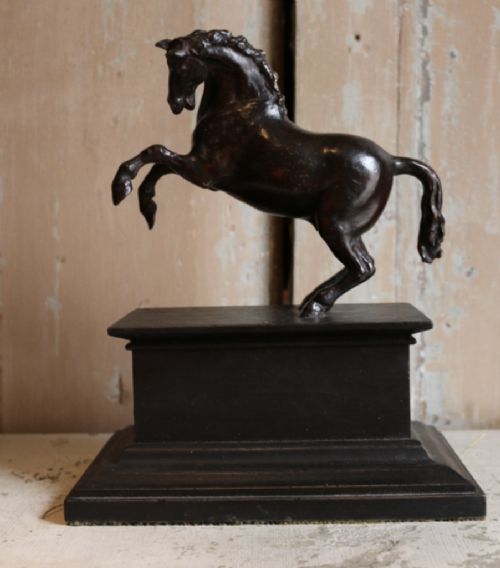
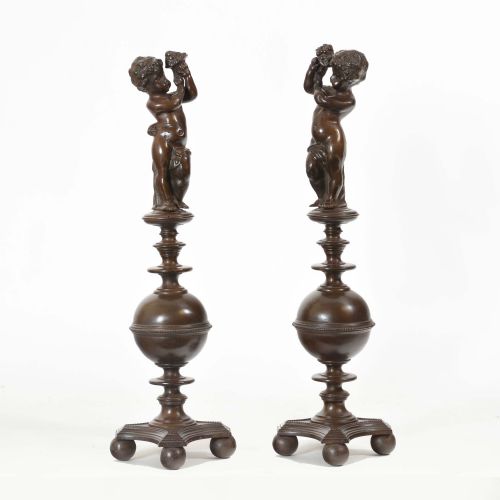
When you search for renaissance style bronze, you find sculptural objects and metalwork drawing on classical revival aesthetics from the nineteenth century back to the seventeenth.
Renaissance Style Bronze
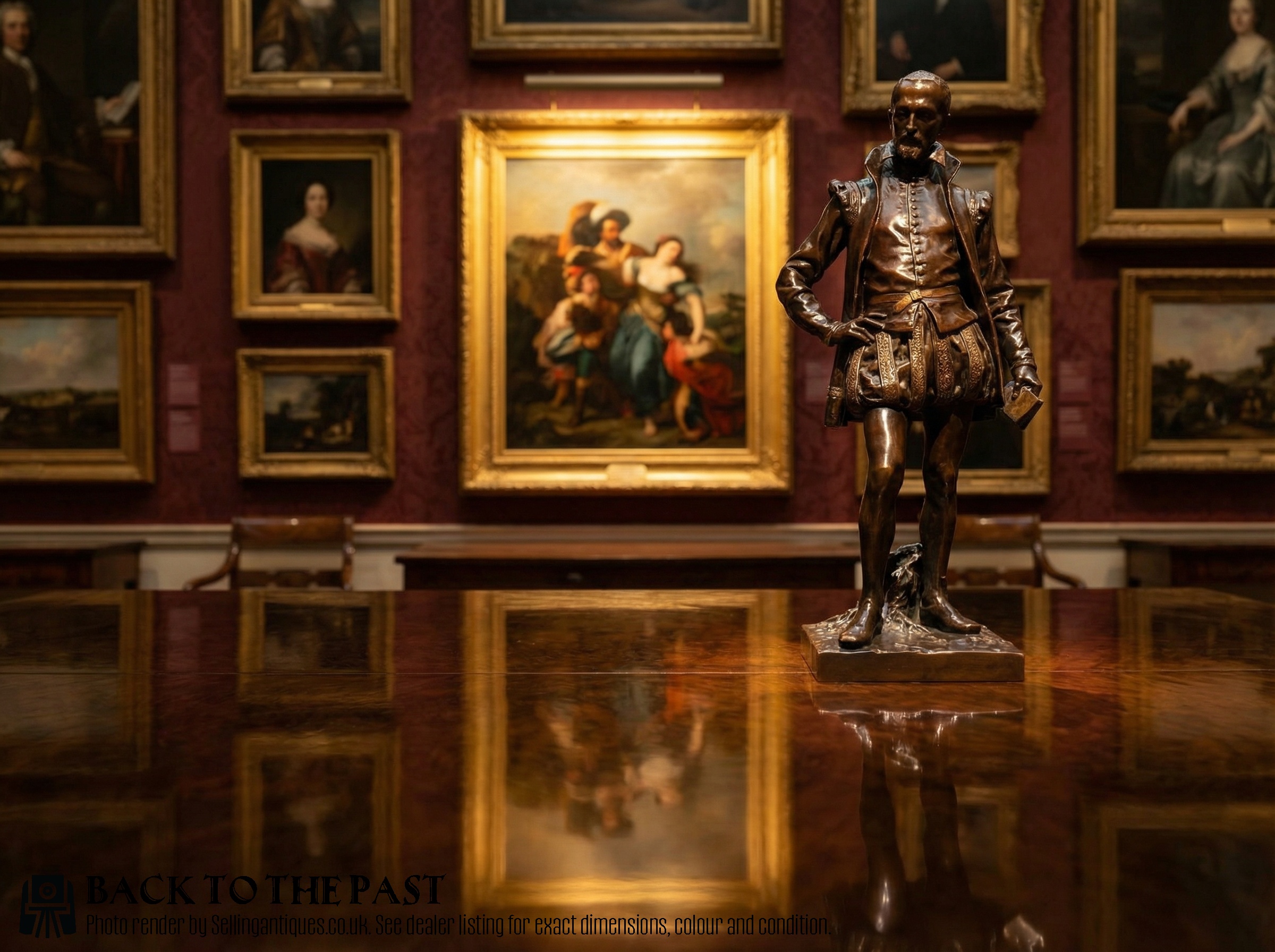
When you search for renaissance style bronze, you encounter decorative objects and sculptures spanning the seventeenth to the twentieth centuries. The selection includes ewers, candlesticks, inkwells, and figural sculptures shaped by Renaissance Revival and Mannerist influences.
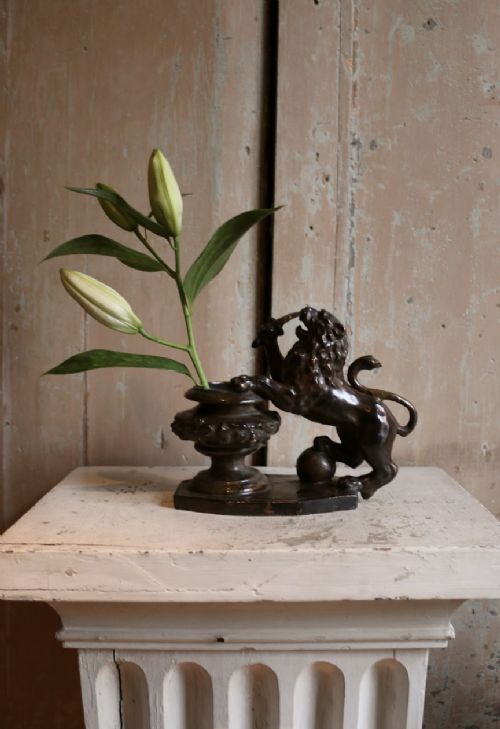
You are most likely to meet nineteenth-century French and Italian interpretations on this page, often cast in patinated bronze or spelter. These pieces frequently replicate earlier forms, such as Medici lions or figural mantel pieces.
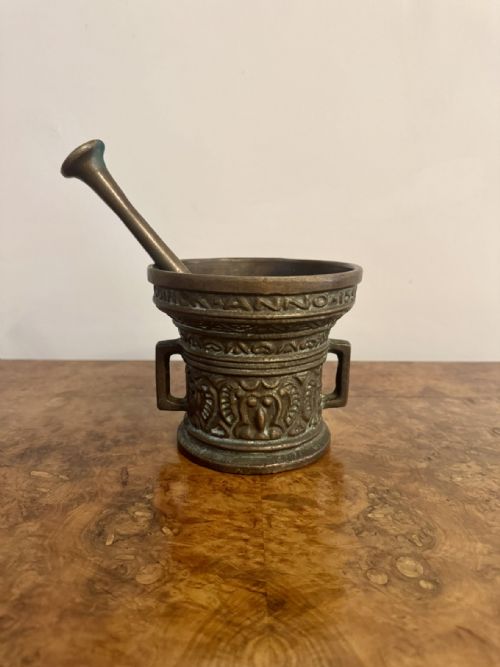
The inventory ranges from small domestic items like mortars and pestles to monumental garden bronzes and fire dogs. Makers and founders utilised classical motifs, adapting sixteenth-century ideals for Victorian interiors.
Materials and methods of production
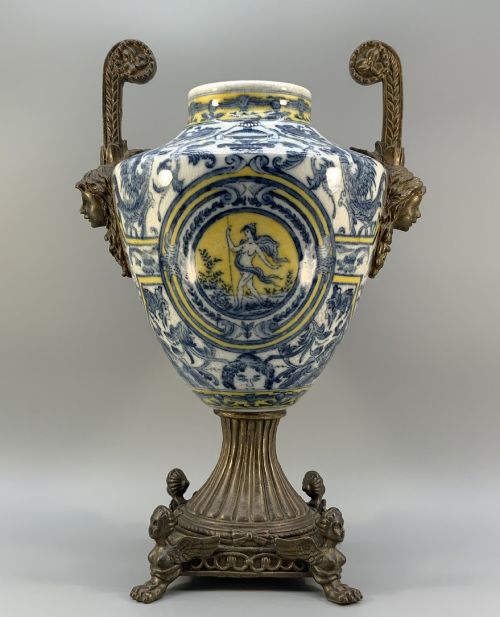
The physical evidence relies heavily on cast bronze, patinated bronze, and gilt bronze, alongside alternative metals like white metal and spelter. Many works incorporate marble bases or faience bodies fitted with bronze mounts.
Foundries employed traditional casting techniques to achieve high relief and detailed figures, sometimes finishing surfaces with applied gilding or dark patination. Artisans also combined cast iron and steel elements in larger hearth pieces such as andirons and fire dogs.
Listings feature 19th-century French and Italian items alongside authentic 17th-century works in bronze, spelter, and marble.
Distinctions in craftsmanship
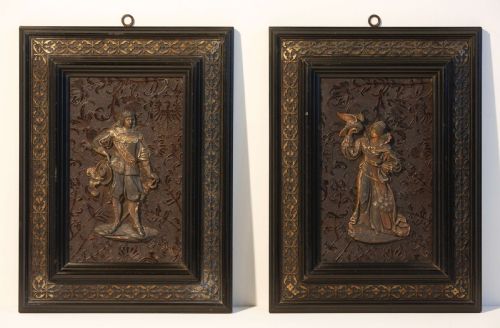
Quality rests in the crispness of the chase work and the subtlety of the surface patination. Superior casts retain fine facial expressions and garment details on figural subjects, whereas weaker examples lose definition in the secondary elements.
The integrity of the material and the sophistication of the architectural or sculptural proportions dictate the standing of a piece. Original seventeenth-century works differ fundamentally in surface wear and tool marks from nineteenth-century revival interpretations.
Clodion·Leofanti Adolphe·Paul Fournier·Jean Baptiste Germain
The Renaissance Style Bronze Glossary
- Patinated bronze
- Bronze that has been chemically or naturally treated to alter its surface colour. This process enhances shadow and depth on sculptural reliefs.
- Ormolu
- Gilded bronze produced by applying a mercury-gold amalgam to a base bronze object. It creates a bright golden finish popular in decorative furnishings.
- Spelter
- A zinc or lead-tin alloy used as a cheaper substitute for bronze. It is softer and often painted or bronzed to imitate genuine metalwork.
- Ewer
- A large jug with a wide spout and curved handle. Renaissance examples were primarily decorative rather than functional.
- Mannerist
- An artistic style following the High Renaissance characterised by elongated proportions and dynamic tension. It appears in several listed candlesticks and figures.
Renaissance Style Bronze: Frequently Asked Questions
How do I identify a reproduction?
Examine the casting quality, surface finish, and weight of the object. Nineteenth-century revivals often display distinct patination methods and tool marks differing from modern replicas.
Look closely at the underside and mounting points for clues regarding manufacturing age and original function.
What is the difference between bronze and spelter?
Bronze is a durable copper alloy that takes a deep, stable patination and holds fine chisel work. Spelter is a softer, lighter zinc-based metal frequently found in nineteenth-century decorative figures.
Tap the metal gently or check wear areas where the darker surface coating may reveal a greyish base.
Where were these decorative objects placed?
Owners displayed ewers, urns, and candlesticks on mantelpieces, side tables, and desks within formal nineteenth-century rooms. Larger pieces like fire dogs and bronze lions anchored grand hearths and entrance halls.
Their primary function was visual display, echoing the aesthetic tastes of the Grand Tour.
Are these pieces from the actual Renaissance?
While the inventory includes seventeenth-century items, the majority date from the nineteenth century as Renaissance Revival or Grand Tour pieces. Makers during this later period deliberately copied sixteenth-century classical forms.
Context and casting characteristics usually clarify whether an item is period or revival.