




Bronze Musician Sculpture
A bronze musician sculpture captures performers from harlequins to minstrel players in solid metal, bringing timeless cultural figures into domestic spaces.
Bronze Musician Sculpture
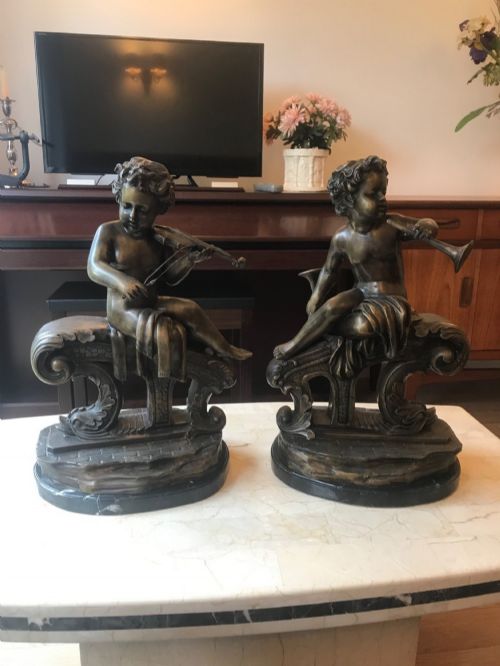
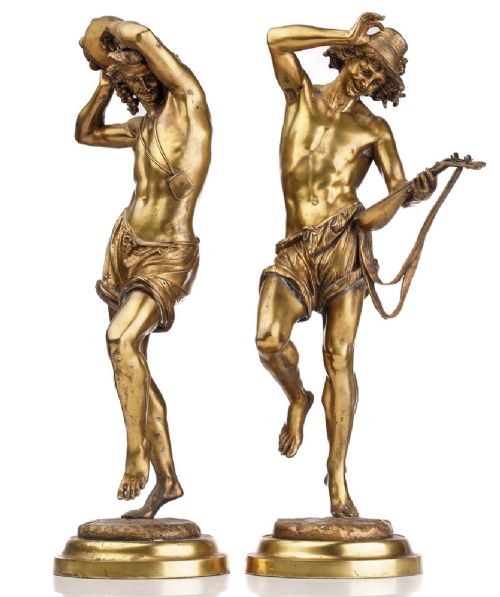
A bronze musician sculpture depicts figures engaged in performance, frequently holding instruments such as harps, flutes, lutes, and mandolins. These works span periods from the nineteenth century through the art deco era, showing subjects ranging from classical figures to Venetian and Neapolitan players.
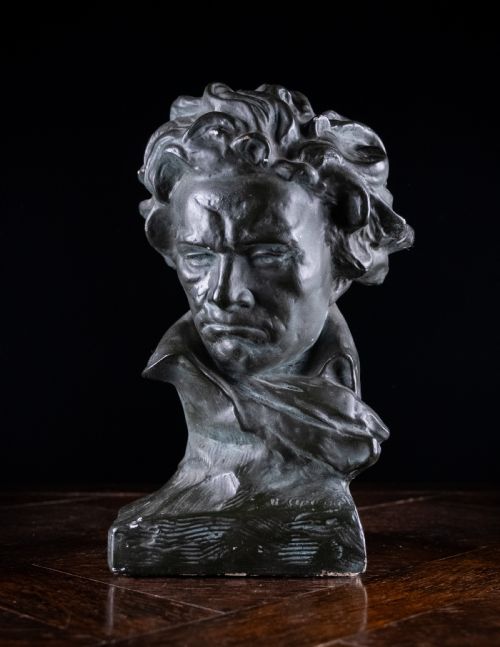
The most common formats on this page include single standing figures, pairs of musicians, and busts. Materials extend beyond pure metal to incorporate patinated bronze, gilt bronze, marble bases, onyx, and painted plaster.
Origins stretch across European and Japanese workshops, with nineteenth century French styles and art deco pieces appearing frequently. Buyers encounter both small cabinet figures and larger decorative statues.
Materials and construction methods
Foundries utilised traditional casting techniques to shape molten metal into complex figures of performers and their instruments. Finished pieces often received patination treatments to create dark or textured surfaces, while others featured gilt bronze highlights.
Many sculptures incorporate sturdy bases of marble or onyx to anchor the heavy metal figures securely. Plaster and paint also appear as alternative mediums for sculptural busts of composers and performers.
Listings span the nineteenth century through the 1960s, uniting bronze, patinated metal, marble, onyx, and plaster.
Distinctions in quality and execution
Finely rendered pieces show meticulous attention to the intricate details of instruments, drapery, and facial expressions. The sharpness of the casting and the depth of the patina distinguish superior works from simpler productions.
Signatures from established founders or notable sculptors elevate the standing of a piece within the range. The integration of high quality mounting bases, such as carved marble or onyx, further marks the ambition of the work.
Edouard Drouot·Carrier Belleuse·Alfred Grevin·Justo de Gandarias·Aug Moreau·Paul Fournier·Albert Ernest Carrier Belleuse·Miyao·Josef Lorenzl·Marcel Debut·Renzo Colombo·Barbedienne
The Bronze Musician Sculpture Glossary
- Patinated bronze
- Bronze treated with chemical solutions to produce a specific surface colour and tone. This finish protects the metal and adds visual depth.
- Gilt bronze
- Bronze coated with a thin layer of gold or gold leaf for a decorative metallic sheen. It appears frequently on nineteenth century decorative figures.
- Art deco
- A design style from the early twentieth century characterised by stylised geometric forms and streamlined shapes. Works from this era often depict dancers and musicians.
- Lost wax casting
- A metal casting method where a molten alloy is poured into a mould created from a wax model. This technique allows for exceptional detail in sculptural work.
Bronze Musician Sculpture: Frequently Asked Questions
How do I identify an art deco musician sculpture?
Art deco pieces typically date from the 1920s and 1930s, displaying stylised geometry and modern lines. They often feature figures like mandolin players rendered in distinct twentieth century forms.
Such works contrast sharply with the elaborate ornamentation of nineteenth century French and rococo revival pieces found in other listings.
Where were these sculptures made?
The pieces originate from various European centres, with significant representation from French workshops and foundries. Japanese Meiji period examples also appear among the selections.
Foundries like Barbedienne produced many of the detailed nineteenth century bronzes seen today.
What materials accompany the bronze?
Many sculptures incorporate bases made from solid marble or onyx to provide stability and visual contrast. Some listings also feature painted plaster for portrait busts of composers.
Surface treatments include patinated finishes and gilt highlights to accentuate the musical instruments and clothing.
How do I care for a bronze sculpture?
Bronze requires minimal maintenance, needing only gentle dusting with a soft dry cloth to remove particles. Avoid using chemical polishes that can strip the original patination.
Keeping the piece away from excessive moisture preserves both the metal surface and any attached marble or onyx bases.