



Renaissance Revival Table
These pieces of renaissance revival table design bring 19th century historical grandeur to a room through heavy carving and rich woods.
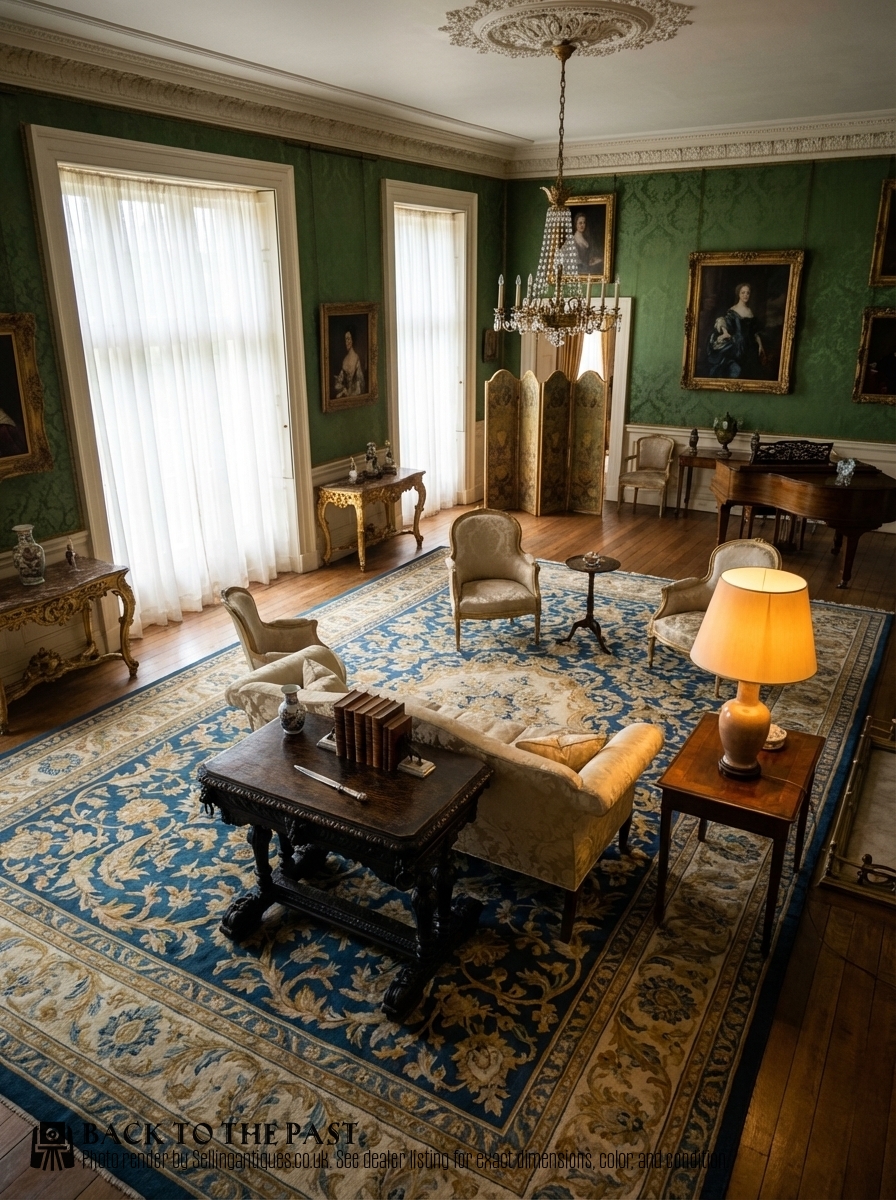
Renaissance Revival Table
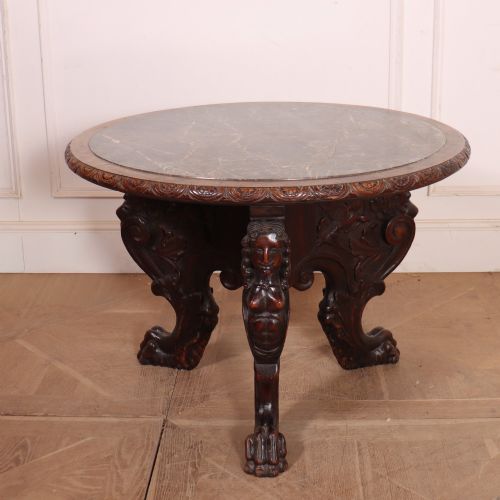
When you search for a renaissance revival table, you are looking at nineteenth-century interpretations of sixteenth-century forms, primarily constructed during the Victorian era. These pieces draw heavily on Italian, French, and Flemish design vocabulary, translating grand architectural motifs into domestic furniture.
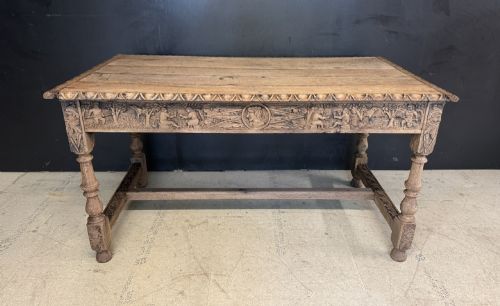
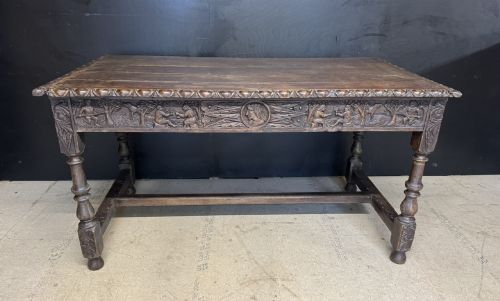
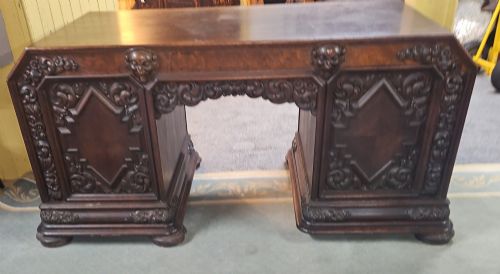
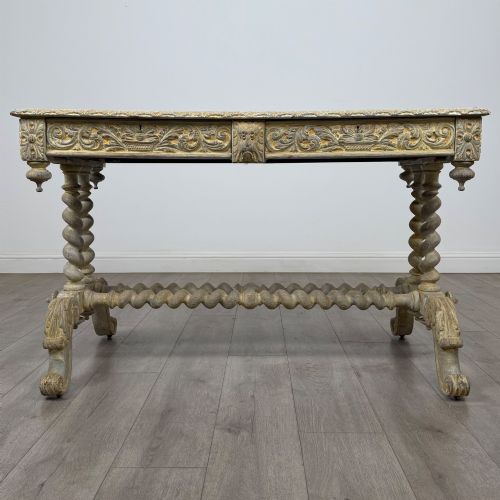
The most common forms you will meet on this page are centre tables, writing desks, and side tables, alongside occasional dining tables. Many incorporate deep relief carving, figural supports, and robust timbers suited to formal reception rooms.
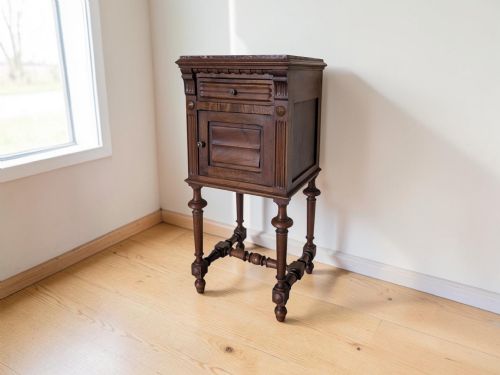
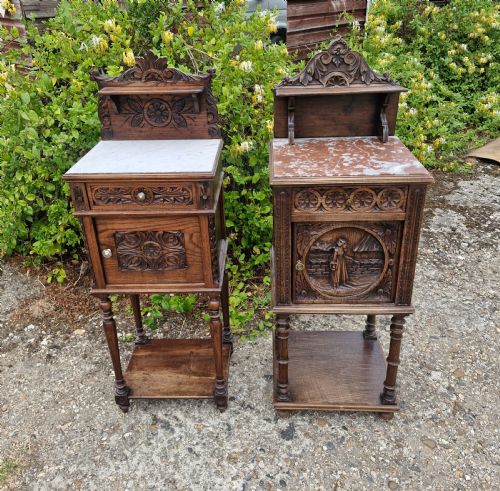
Regional variations shape what appears in the inventory, from French walnut examples with fluid carved details to English golden oak pieces featuring prominent Green Man masks. Italian versions frequently incorporate contrasting inlay work, utilising bone, ebony, and fruitwood to build intricate geometric patterns.
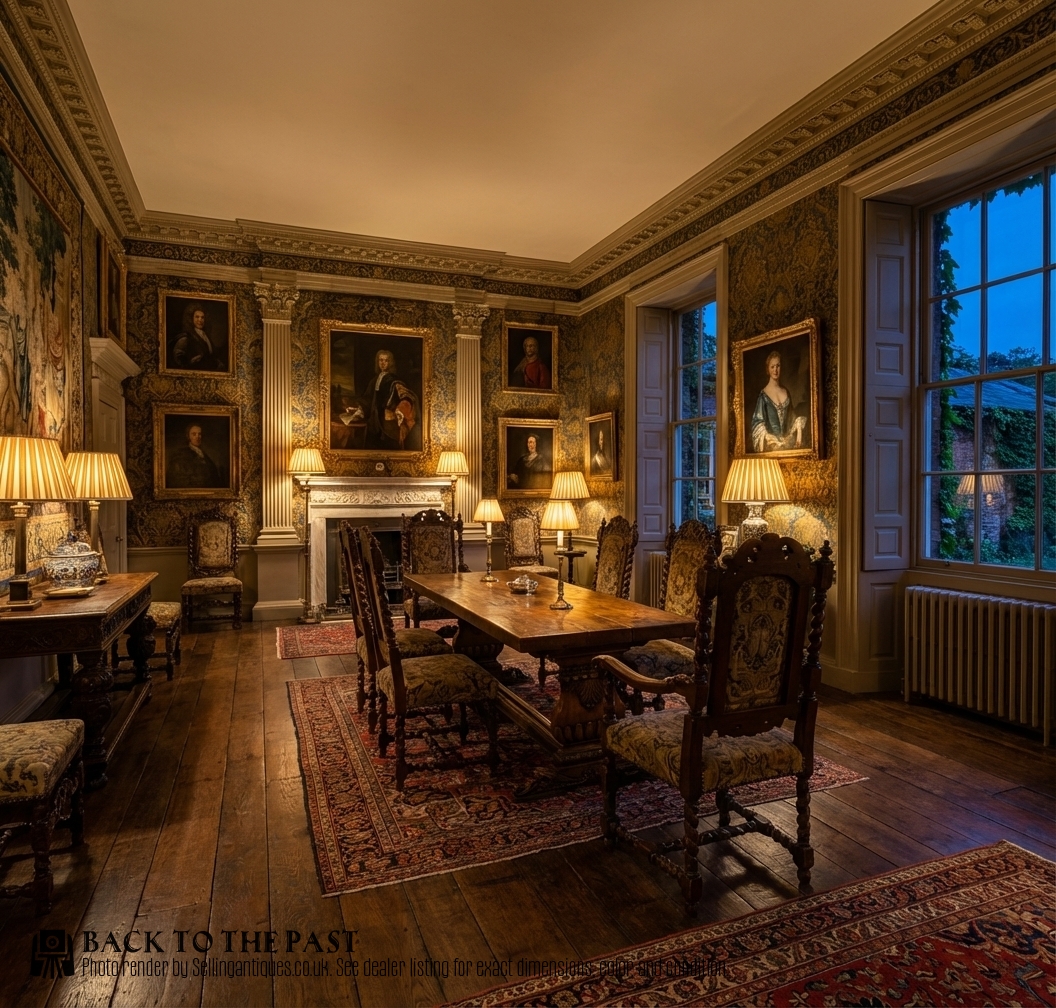
Judging quality in revival furniture
The depth and clarity of the hand carving separate standard production pieces from exceptional examples. Superior items display crisp undercut details in the foliage, figures, and masks rather than soft, mechanical moulding.
Material selection and inlay precision dictate the upper tier of the range. Tables featuring dense marquetry, finely engraved bone, and high-grade walnut demonstrate superior workshop execution compared to simpler oak constructions.
Renaissance Revival Table Retail Price Guide 2026
Typical asking prices for renaissance revival table among the pieces listed under this phrase on Sellingantiques today, from the lower quarter to the upper quarter. They describe what is for sale here now, not the wider market.
Stare long enough into a Green Man table carving and the oak leaves start chewing the furniture.
Edwards and Roberts
The Renaissance Revival Table Glossary
- Marquetry
- The art of applying decorative pieces of veneer to a structure to form intricate designs. This technique appears on tabletops and caskets to create geometric or figural patterns using contrasting woods and bone.
- Green Man
- A sculptural motif representing a human face surrounded by or disgorging foliage and vines. It frequently peers out from the carved oak friezes and table bases in this category.
- Refectory table
- A long, narrow dining table traditionally used in monasteries and large halls. Nineteenth-century revival versions adopt this sturdy format with heavily carved central pedestals or stretchers.
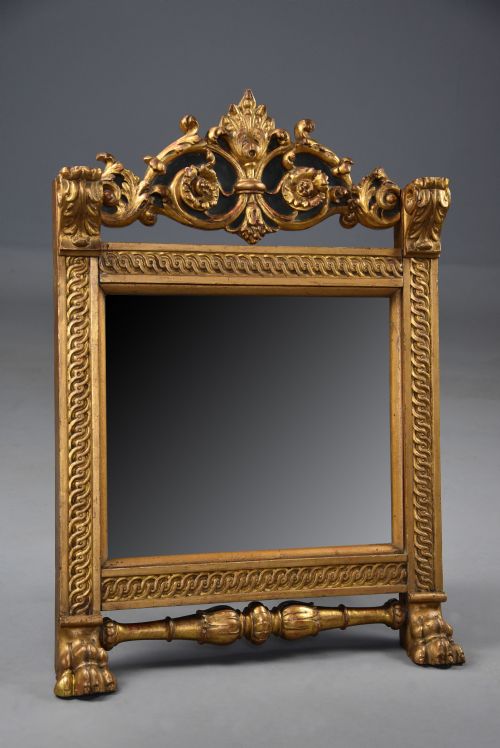
- Giltwood
- Wood that has been treated with gold leaf or gold paint to give a metallic surface finish. It appears on accent mirrors and decorative table frames within the revival style.
Renaissance Revival Table: Frequently Asked Questions
What is a renaissance revival table?
A renaissance revival table is a nineteenth-century piece of furniture that mimics the architectural forms, heavy proportions, and decorative motifs of the sixteenth century.
These items were produced during the Victorian period as part of a wider interest in historical design, translating museum-quality European styles into practical household furnishings.
How do I care for antique oak and walnut?
Maintain these timbers by keeping them away from direct heat sources and sudden humidity changes that can cause the wood to split or warp.
Apply a traditional beeswax polish sparingly and buff with a soft cloth to protect the finish without building up a heavy, dull residue.
Where were these tables made?
Production spanned across Europe, with distinct workshops operating in England, France, Italy, and Flanders during the nineteenth century.
French pieces often utilised walnut with refined carving, while English and Flemish makers favoured sturdy oak with deep figural decoration.
How do I distinguish Italian from English styles?
Italian examples frequently incorporate contrasting bone inlay, fruitwood, and ebony geometric patterns set into walnut surfaces.
English and Flemish versions tend to rely on heavier carved oak structures featuring figurative elements like Green Man masks and bold panelled stretchers.