



Renaissance Revival Furniture
Renaissance revival furniture brings heavy carved timber, grand architectural lines, and bold historic ornament directly into domestic rooms.
Renaissance Revival Furniture
Renaissance revival furniture draws heavily on sixteenth-century motifs, interpreting classical architectural forms for nineteenth-century interiors. Buyers seeking this aesthetic will find substantial seating, cabinetry, and tables rooted in historic revival movements.
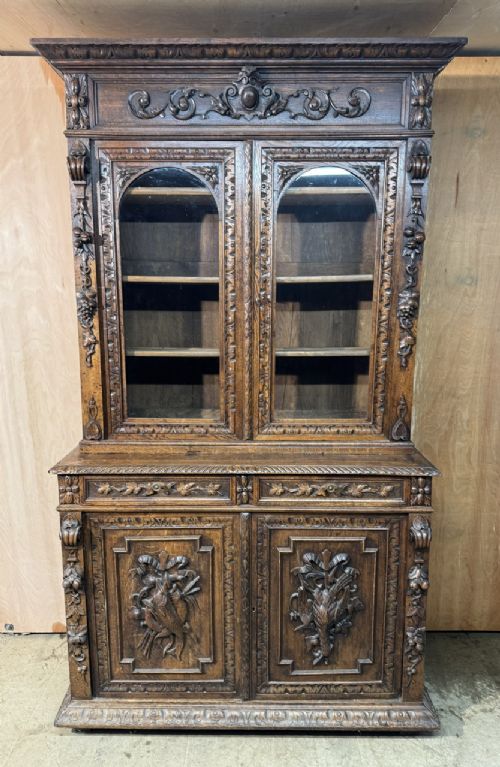
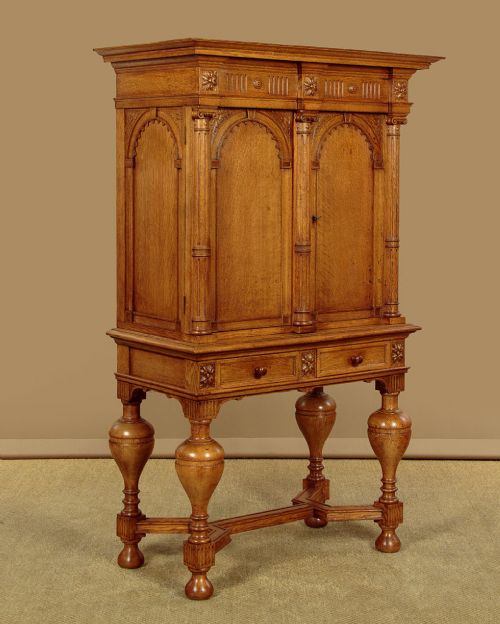
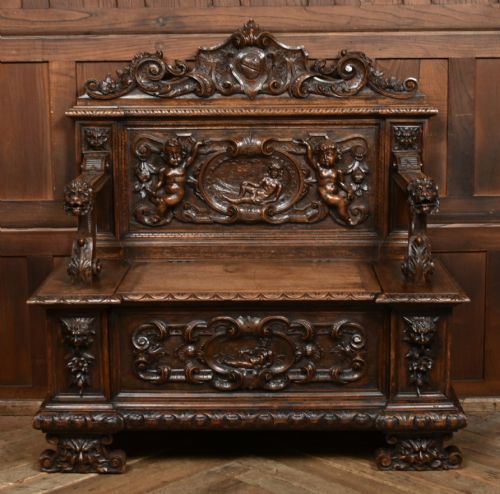
The pieces appearing most frequently on this page span the nineteenth century, including Victorian interpretations and specific continental movements. Oak and walnut dominate the inventory, shaped into imposing hall benches, cabinets on stand, and substantial sideboards.
Makers of these large items utilised varied regional influences, producing Flemish, Italian, and French interpretations. From sturdy hall settles to elaborately carved cabinets, each object reflects a Victorian appetite for historicism and domestic grandeur.
How they were made
Carpenters constructed these items using dense hardwoods like oak, walnut, and fruitwood, often selecting thick planks to support deep relief carving. Structural stability required robust joinery to bear the weight of heavy cornices, protruding mounts, and substantial timber panels.
Carvers applied manual chisel work to create elaborate details, including caryatids, lion masks, and mythological figures. Secondary materials such as brass fittings, velvet upholstery, and marble inserts completed the opulent composition of cabinets and seating.
Renaissance Revival Furniture Retail Price Guide 2026
Typical asking prices for renaissance revival furniture among the pieces listed under this phrase on Sellingantiques today, from the lower quarter to the upper quarter. They describe what is for sale here now, not the wider market.
Stare closely into the oak foliage of a Victorian hall bench and a carved green man stares right back from the ivy.
What varies in quality
Depth and crispness of the hand carving distinguish finer examples from mass-produced commercial output. Master carvers achieved anatomical precision and deep undercut relief, whereas lesser pieces display shallow, mechanical stamping.
Timber selection and structural integrity also dictate the standing of an item. Dense, well-figured walnut or quarter-sawn oak combined with stable, traditional joinery separates superior architectural seating and cabinetry from simpler vernacular attempts.
White, Allom And Co
The Renaissance Revival Furniture Glossary
- Cassapanca
- A traditional Italian wooden bench featuring a back and arms, often incorporating a storage chest beneath the seat. This form frequently appears in nineteenth-century revival interiors.
- Caryatid
- A sculpted female figure serving as an architectural support in place of a column or pilaster. These figures frequently support cornices on large cabinets and pedestals.
- Green Man
- A decorative architectural motif depicting a human face disgorging foliage, vines, or branches. This pagan symbol saw a major revival in Victorian and Flemish furniture carving.
- Savonarola
- An X-framed folding armchair originating in the Italian Renaissance, constructed from multiple curved wooden slats. Nineteenth-century makers reproduced these distinctive seats in walnut.
- Marquetry
- The art of applying decorative veneer pieces in various woods to form geometric or pictorial patterns. Italian makers utilised this technique on chests and tabletops.
Renaissance Revival Furniture: Frequently Asked Questions
What is renaissance revival furniture?
Renaissance revival furniture comprises nineteenth-century interpretations of sixteenth-century classical and Mannerist design. These items adapt historic architectural motifs for contemporary Victorian homes.
Craftsmen drew inspiration from Italian, French, and Flemish sources, producing heavy timber seating, cabinets, and tables with dense carving.
How do I identify a green man carving?
A green man carving depicts a face surrounded by or sprouting foliage from the mouth and cheeks. This symbolic motif represents rebirth and nature in historic woodworking.
Victorian makers applied these carvings prominently to oak hall benches, sideboards, and architectural bookcases.
Where were these heavy oak pieces used?
Large cabinets, hall stands, and settles served primarily in grand entrance halls and formal dining rooms. Their imposing scale suited large Victorian and continental interiors.
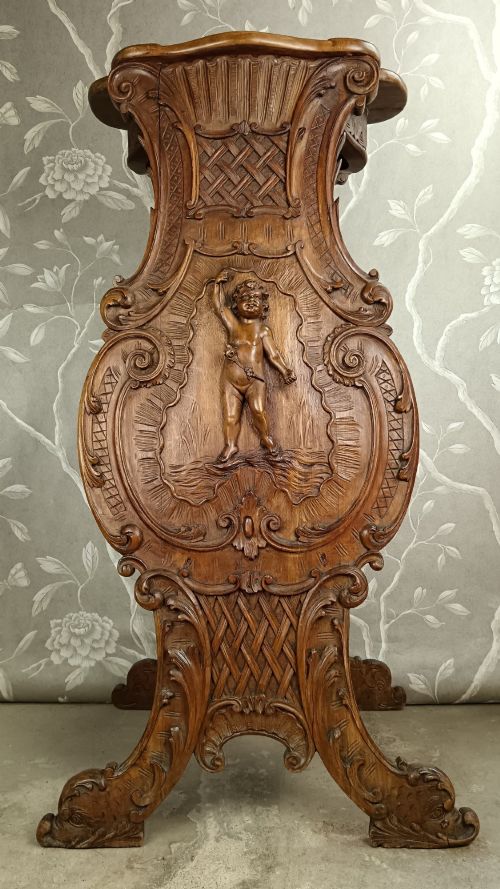
Smaller items like pedestal stands and hall chairs functioned as practical seating and display surfaces in domestic hallways.
How do I distinguish Italian from Flemish styles?
Italian revival pieces typically feature refined walnut surfaces, marquetry inlay, and classical architectural proportions. Carving tends towards balanced symmetry and humanist figures.
Flemish revival items often utilise heavy carved oak, incorporating lion masks, caryatids, and dramatic depth inspired by northern baroque traditions.