
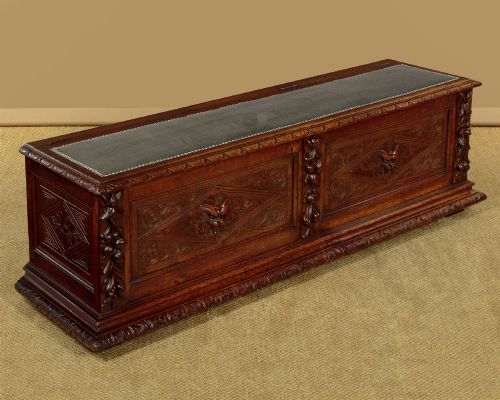
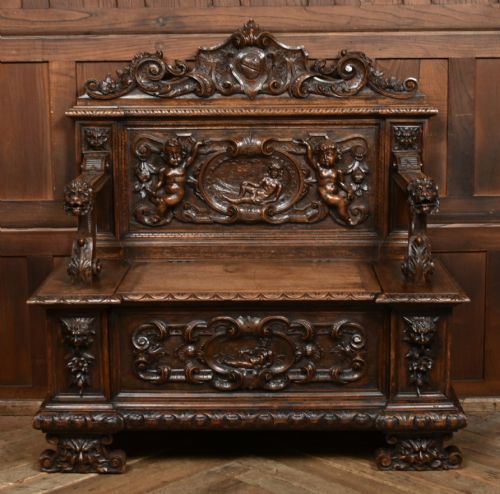
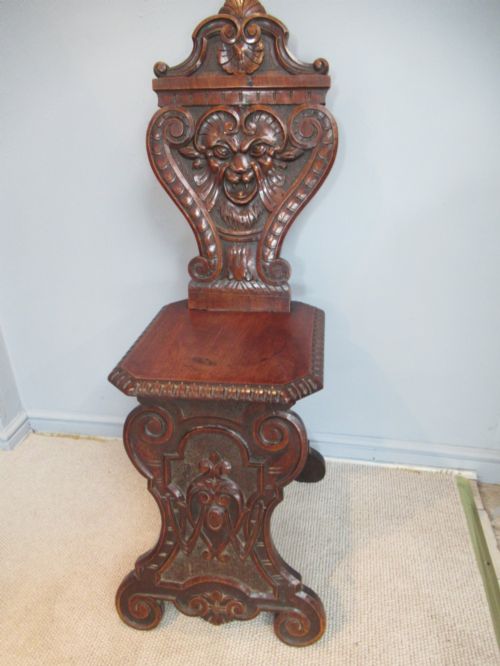


Renaissance Revival Bench
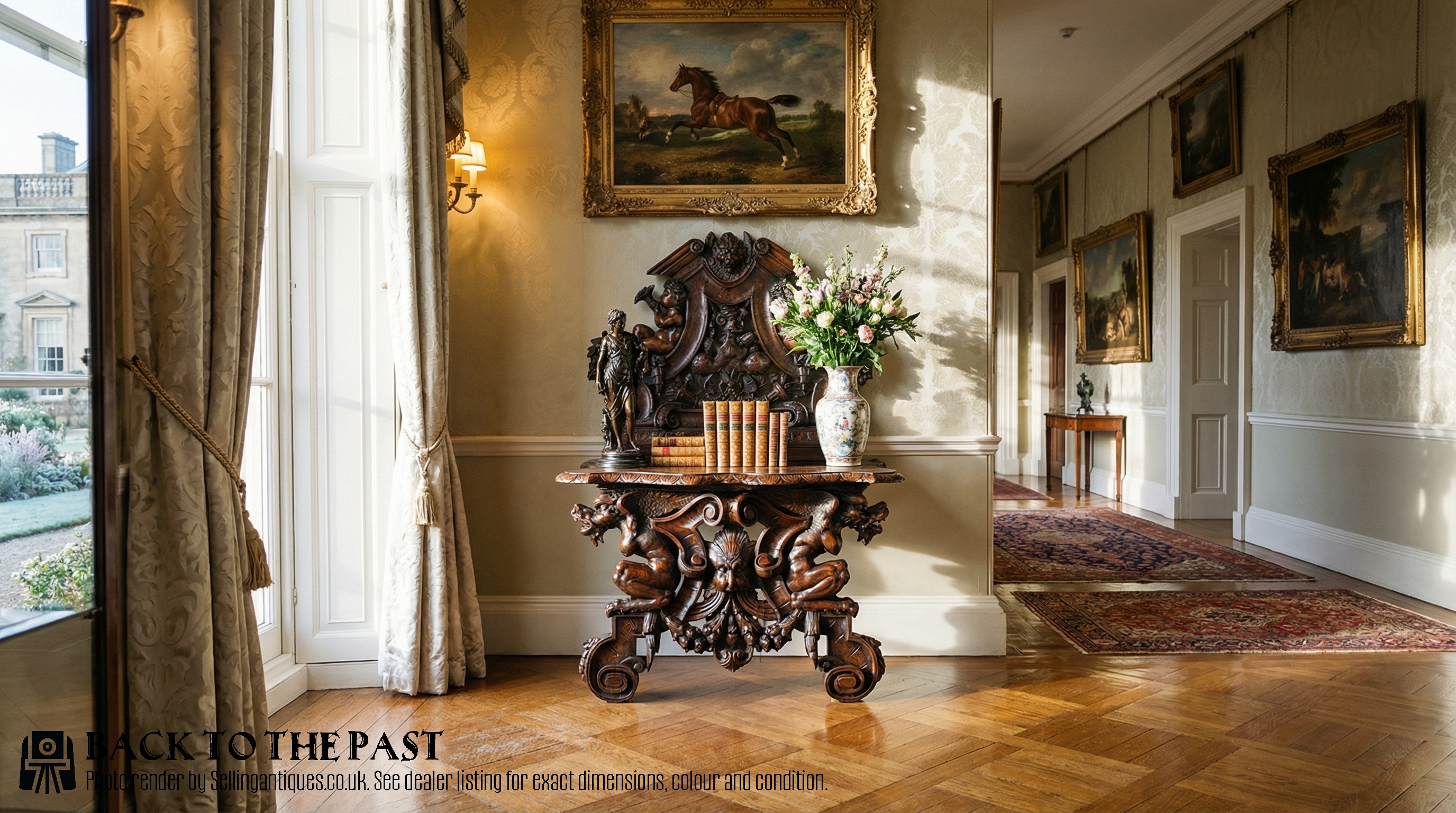
These pieces of renaissance revival bench bring grand historical architecture into domestic spaces through heavy carving and dark timbers.
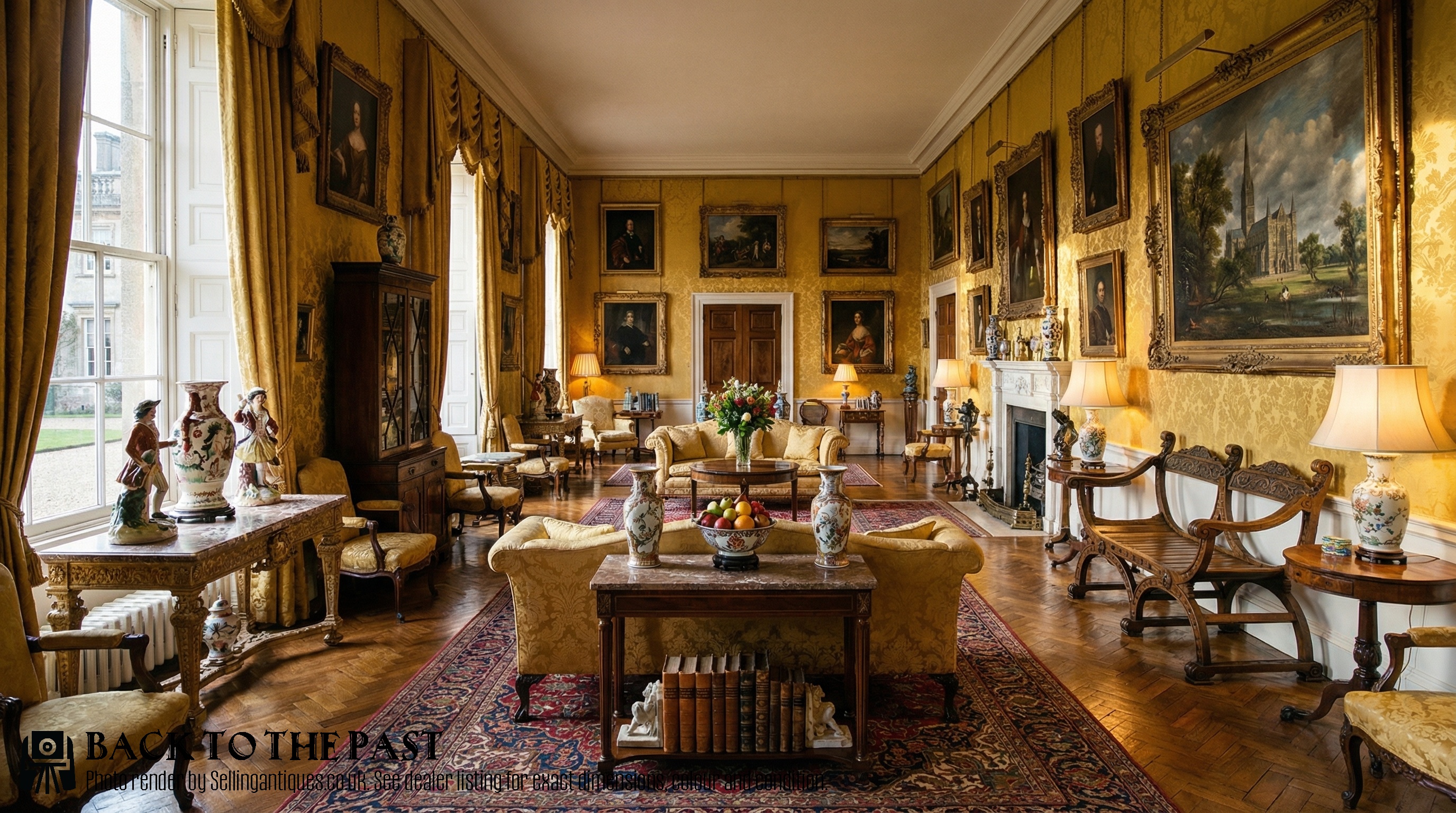
What these benches are
A renaissance revival bench draws on historical Italian and Gothic forms to create imposing hallway seating. The inventory contains pieces spanning the eighteenth century through to the early twentieth century, including Victorian interpretations and specific Italian regional works.
Buyers encounter forms such as the cassapanca, hall settle, monks bench and pew. These heavy wooden items function as practical seating whilst anchoring a hallway or grand interior with architectural presence.
Origins stretch between British workshop traditions and Italian craftsmanship, particularly Lombardy. Oak and walnut dominate the selection, often accompanied by fruitwood, pine, and mixed wood inlay.
How they were made
Joiners relied on solid hardwoods like oak and walnut, alongside secondary timbers such as pine and fruitwood. Structural integrity relied on traditional mortise and tenon joints to support heavy loads.
Carving defines the surface treatment, utilising deep relief work to depict classical motifs, heraldry, and architectural scrolls. Inlayers incorporated mixed woods to add geometric contrast to flat panels.
Retail Price Guide 2026
Typical UK retail prices for renaissance revival bench, calculated from the Sellingantiques database of over a million retail prices indexed since 2003. This retail price guide relies exclusively on Sellingantiques data; no external sources or auction records are used, so the figures do not describe the wider market.
The listings span the eighteenth, nineteenth, and early twentieth centuries, featuring oak, walnut, pine, fruitwood, and iron.
What varies in quality
The depth and fluidity of the hand carving dictate the aesthetic standing of each example. Crisp, spirited chisel work by skilled hands separates standard joinery from exceptional artistic output.
Timber selection dictates the longevity and visual weight of the piece, with dense, highly figured walnut commanding greater presence than plainer pine or mixed woods. Regional provenance also influences desirability, particularly with documented Italian workshop origins.
The Renaissance Revival Bench Glossary
- Cassapanca
- A large wooden chest with a back and arms, functioning as both a seat and storage box. This form originated in Renaissance Italy.
- Settle
- A wooden bench with a high solid back, solid arms, and often a storage box beneath the seat. It shielded occupants from draughts in large halls.
- Monks bench
- A convertible piece of furniture with a hinged top that tilts to transform the seat back into a table. These appeared in various revival iterations.
- Relief carving
- A sculptural technique where figures and patterns project from a flat background. Renaissance revival pieces use this to create heavy shadow and depth.
Frequently Asked Questions
Where should I place a hall bench?
These large seats suit wide hallways, entrance lobbies, or large reception rooms where their heavy proportions anchor the space. They provide both a practical place to sit and immediate visual impact upon entering a home.
Because of their depth and high backs, they require sufficient wall space and clear floor area to sit comfortably without dominating a smaller room.
How do I care for antique oak furniture?
Maintain the timber by applying a traditional beeswax polish occasionally to nourish the grain and protect the surface from drying out. Avoid placing the wood near direct heat sources or in strong sunlight.
Dust regularly with a soft, dry cloth to prevent dirt accumulation within the deep crevices of the hand carving.
What is a cassapanca?
A cassapanca is an Italian bench featuring an integrated chest base beneath the seat, enclosed by a backrest and armrests. Historically used in grand palazzos, it served dual purposes for seating and storing valuables.
Revival examples replicate this imposing Italian Renaissance form using dense walnuts and heavy architectural carving.
How do I distinguish Victorian revival from older pieces?
Examine the timber preparation, tool marks, and construction methods used on the underside and interior panels. Nineteenth-century makers often combined revival styles freely, referencing Gothic and Renaissance motifs together.
Earlier eighteenth-century pieces display different joinery wear patterns and distinct regional seasoning compared to later Victorian workshop interpretations.