




Religious Wood Relief Carving
These pieces of religious wood relief carving offer devotional depth and rich sculptural detail, bringing centuries of sacred history into your interior.
Religious Wood Relief Carving
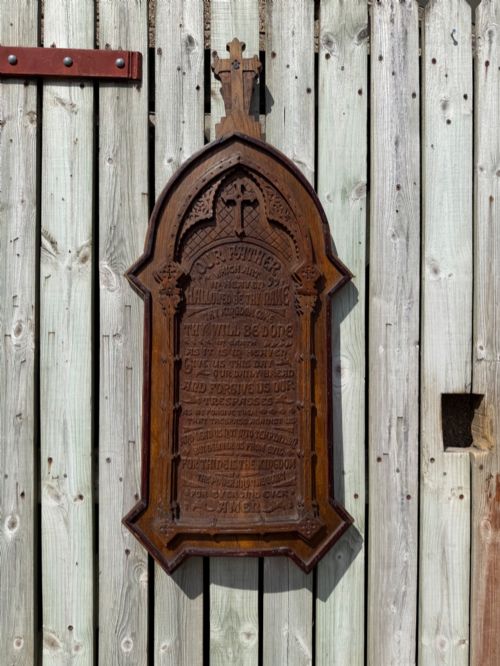
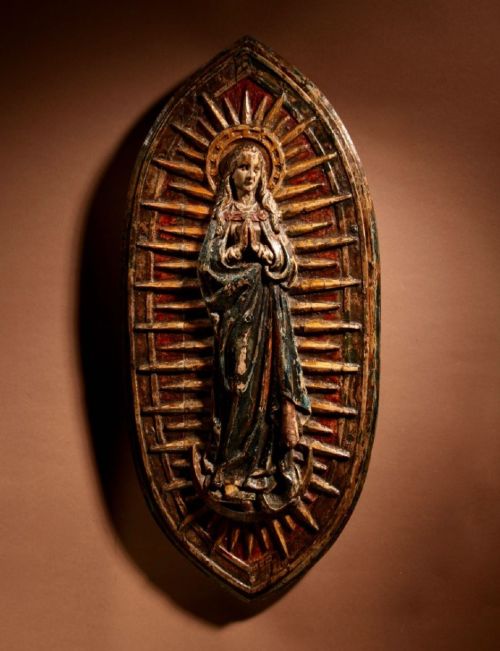
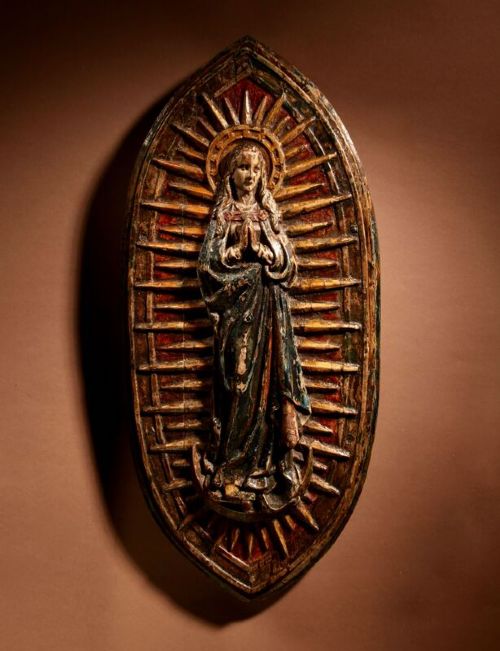
When you search for religious wood relief carving, you encounter devotional panels, wall sculptures, and architectural fragments created for sacred spaces. The selections span from pre-sixteenth century medieval works to nineteenth-century interpretations, capturing centuries of faith in timber.
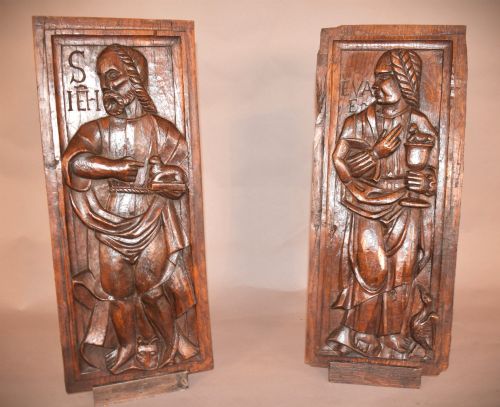
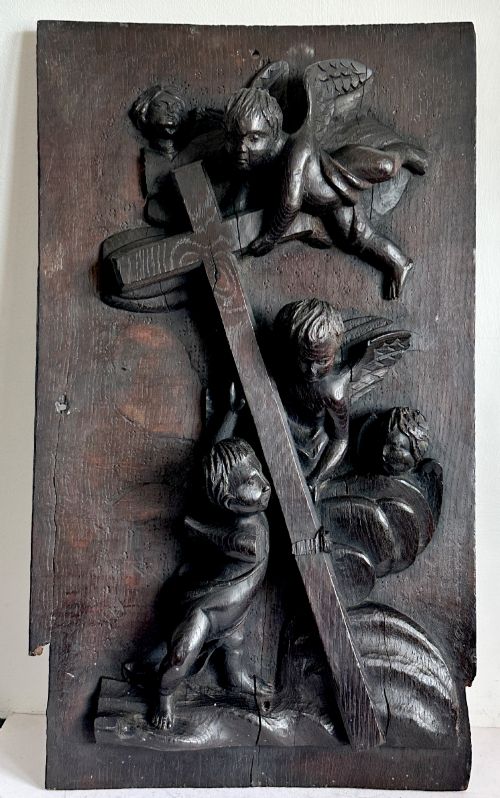
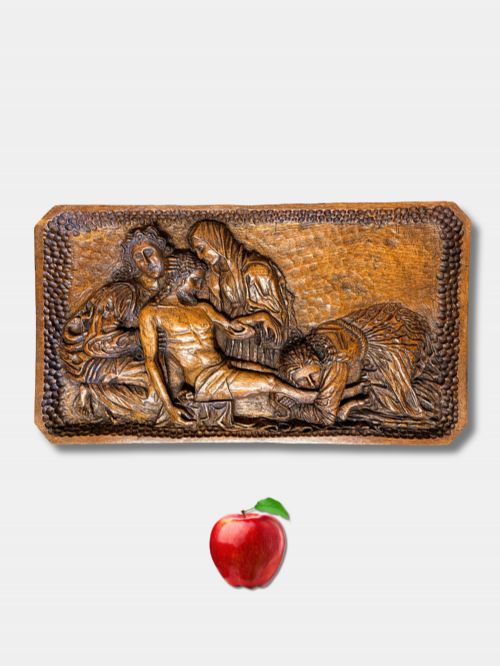
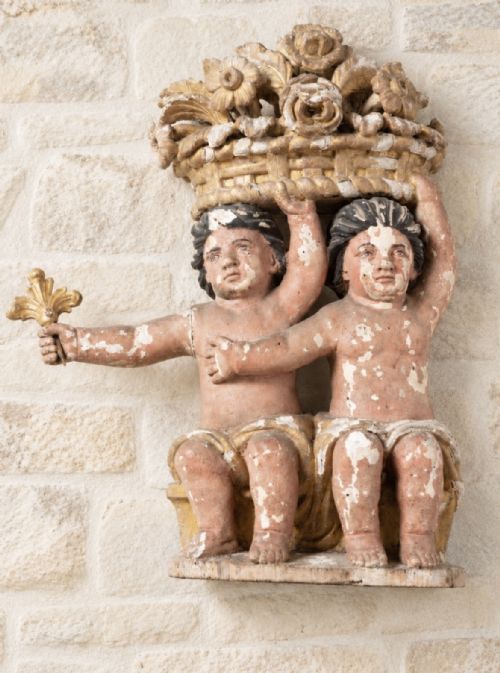
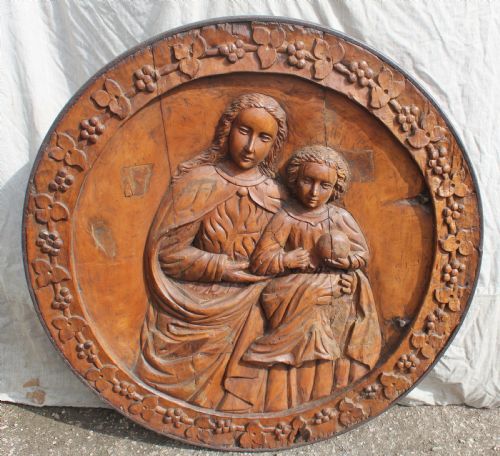
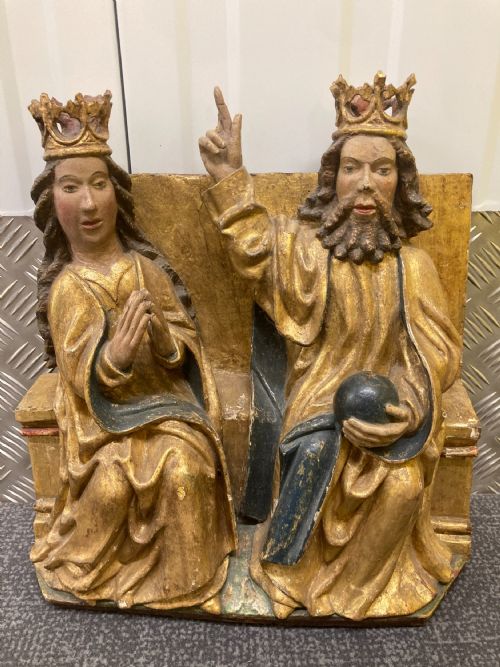
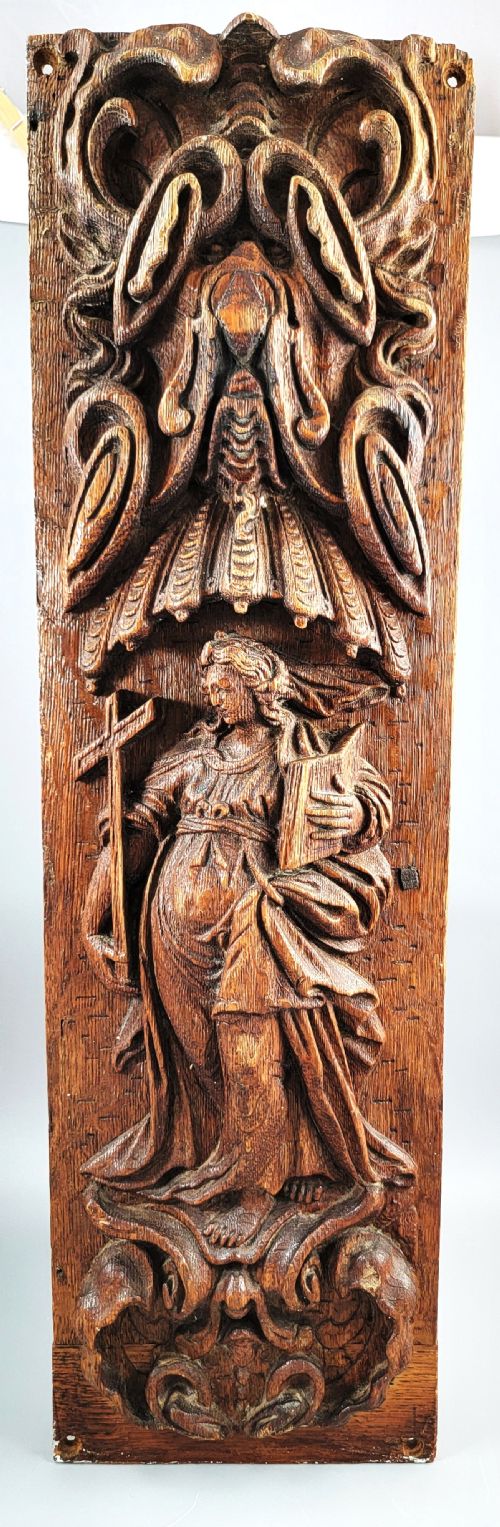
You are most likely to meet seventeenth-century oak panels and sixteenth-century giltwood groups on this page. These examples frequently depict biblical scenes, allegories, and celestial figures designed for altarpieces or private chapels.
How they were made
Carvers shaped these works primarily from dense timbers such as oak, walnut, and chestnut, using gouges and chisels to build up dramatic depth. The grain of the wood dictates the strength and longevity of the intricate undercutting seen in these panels.
Many surfaces received layers of gesso, gold leaf, and polychrome paint to enhance the theatricality of the sacred narratives. These applied finishes interact with the carved timber beneath to create subtle plays of light across the figures.
Several panels feature modest serpents winding near the feet of holy figures, offering a surprisingly vivid touch of medieval drama.
What varies in quality
The preservation of original surface treatments, including traces of polychrome paint and gold leaf, significantly influences the integrity of a piece. Sensitivity to the historic timber and the survival of distinct sculptural volume determine the standing of each example.
The Religious Wood Relief Carving Glossary
- Relief
- A sculptural technique where the figures project from a flat background. High relief means the forms stand out substantially from the plane.
- Polychrome
- Decorated in a variety of colours. This paintwork often defines garments and flesh tones on early wooden sculptures.
- Gesso
- A plaster-like mixture applied to wood as a base for gilding or painting. It provides a smooth ground for delicate surface ornamentation.
- Altarpiece
- A structured work set above an altar. Central panels often feature carved biblical narratives designed to instruct the faithful.
Religious Wood Relief Carving: Frequently Asked Questions
Where did these carvings originally hang?
These carvings typically formed parts of large altarpieces, choir stalls, or wall panels inside churches, abbeys, and private domestic chapels. They served as visual aids for prayer and contemplation.
Over the centuries, many fragments were detached from their larger architectural settings and repurposed as standalone wall art or cabinet panels.
How do I care for antique wood panels?
Keep wooden panels away from direct heat sources, strong sunlight, and sudden fluctuations in atmospheric humidity. Stable indoor conditions prevent the timber from warping or splitting.
Dust the carved surfaces gently with a dry, soft brush rather than using chemical polishes or damp cloths that might harm fragile historic finishes.
What subjects are usually depicted?
The imagery draws heavily from biblical narratives, including the life of Christ, the Virgin Mary, and various saints. Common themes feature scenes like the circumcision, the lamentation, and allegories of faith.
Celestial figures such as angels and cherub putti also appear frequently among the architectural woodwork and panels.