






Gothic Wooden Wall Plaque
A gothic wooden wall plaque brings architectural weight and heavy timber grain directly into a room.
Gothic Wooden Wall Plaque
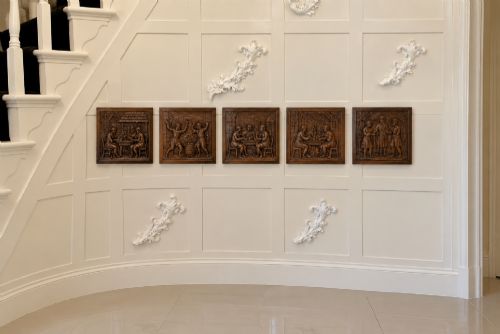
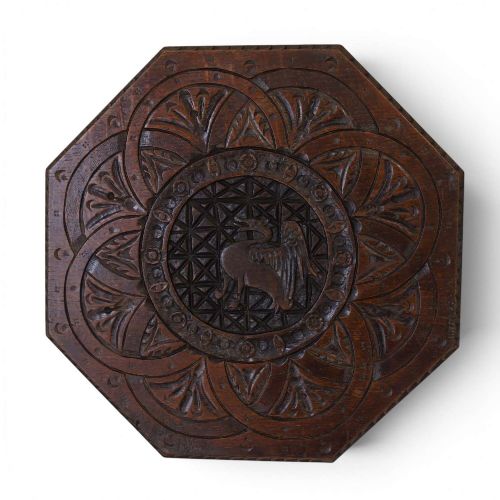
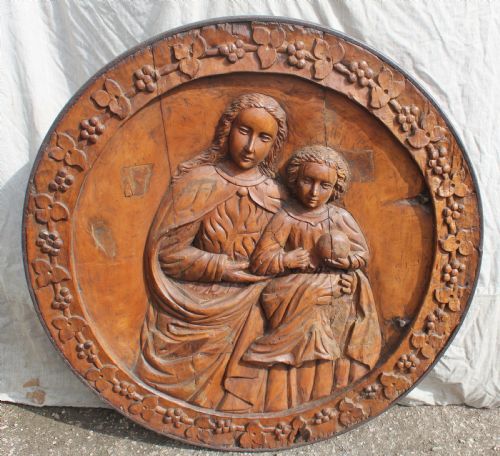
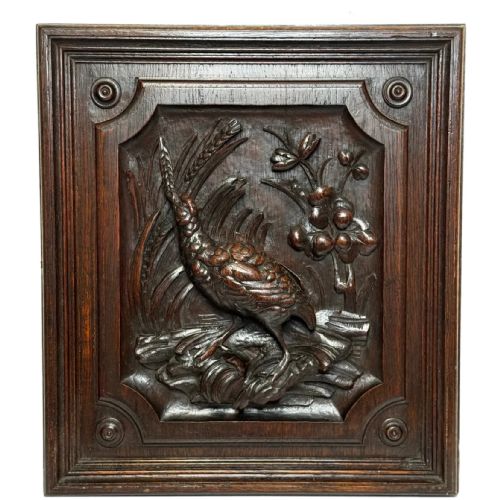
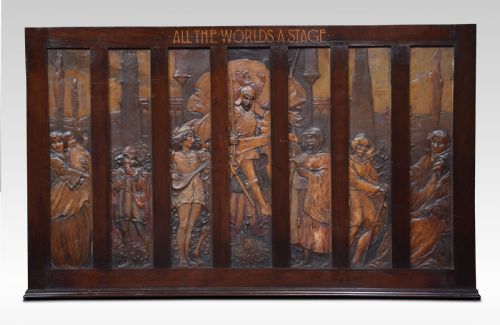
A gothic wooden wall plaque combines medieval architectural motifs with timber carving designed for interior display. These pieces range from architectural salvage panels to dedicated wall reliefs created in later revivals.
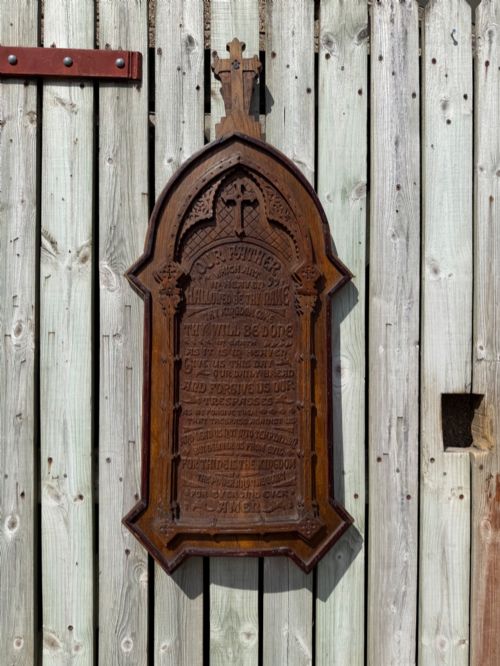
The versions most commonly met on this page span the nineteenth century, drawing heavily on Gothic Revival, Victorian, and Tudor styles. Buyers encounter armorial crests, religious texts, and portrait plaques among these forms.
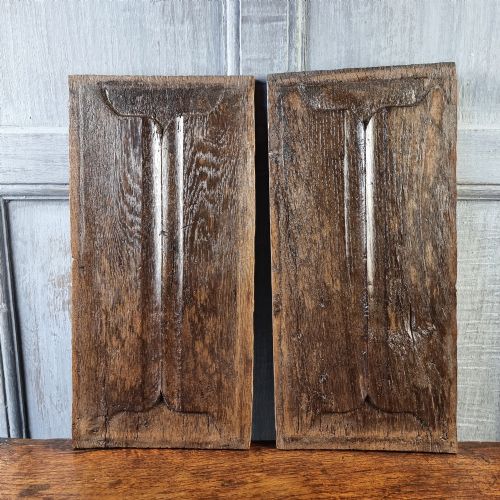
Many items originate as panels adapted from larger furniture or architectural settings, such as linenfold panels or former tabletops turned to wall display. Their wooden construction grounds them firmly in historical interior decoration.
How they were made
Makers utilised dense timbers such as oak, walnut, and fruitwood to achieve sharp, durable relief carving. Quarter-sawn oak and burr walnut provided stable surfaces with pronounced grain patterns for deep chisel work.
Techniques relied on hand carving, turning flat boards into high relief sculptures, lion masks, and heraldic shields. Inlaid hardwoods and specialised tunbridge ware surface treatments also appear across these panels.
Listings feature oak, walnut, fruitwood, and inlaid hardwoods across the nineteenth and sixteenth centuries.
What varies in quality
The selection and seasoning of the timber determine how well the panel ages and holds its carved edges over centuries. Well-chosen grain alignment prevents warping and accentuates the natural tones of walnut and oak.
The Gothic Wooden Wall Plaque Glossary
- Linenfold
- A style of wood carving that mimics folded parchment or linen, popular in medieval and Tudor interiors. It gives flat panels a textured, rhythmic surface.
- Pugin Design
- Decorative work inspired by the architect Augustus Pugin, champion of the Gothic Revival. This style employs strict medieval geometries and rich heraldic motifs.
- Quarter-sawn oak
- Timber cut radially from the log, producing a stable board with distinctive ray fleck patterns. Makers favoured this cut for furniture and panels requiring durability.
- Armorial panel
- A carved wooden plaque displaying a family coat of arms or heraldic shield. These pieces often marked lineage and nobility in domestic halls.
Gothic Wooden Wall Plaque: Frequently Asked Questions
How do I hang a heavy wooden wall plaque safely?
These dense timber pieces require secure wall anchors fixed directly into studs or solid masonry.
Use heavy-duty picture wire or steel mounting brackets rated well above the weight of the specific panel.
Where were these plaques originally placed in buildings?
Many began as structural elements in churches, great halls, or libraries, integrated into wall panelling or furniture.
Others served as dedicated devotional objects or decorative armorial displays in domestic spaces.
How do I clean antique carved wood?
Dust the carvings gently with a soft, dry brush to prevent debris from settling in the deep recesses.
Avoid liquid cleaners and modern polishes that can build up a residue and dull the historic timber surface.
How do I tell sixteenth-century work from nineteenth-century revivals?
Sixteenth-century panels show tool marks, wood shrinkage, and wear consistent with early hand-tool joinery and centuries of use.
Nineteenth-century Gothic Revival pieces often display machine-assisted precision alongside deliberate medieval styling.