

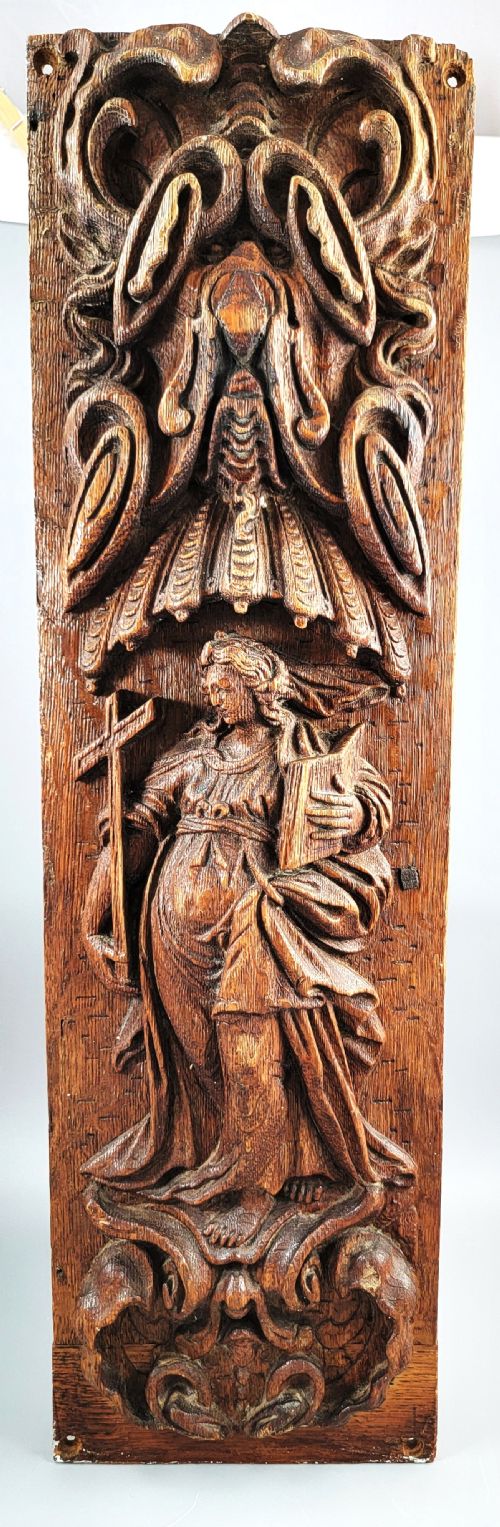



Carved Timber Religious Plaque
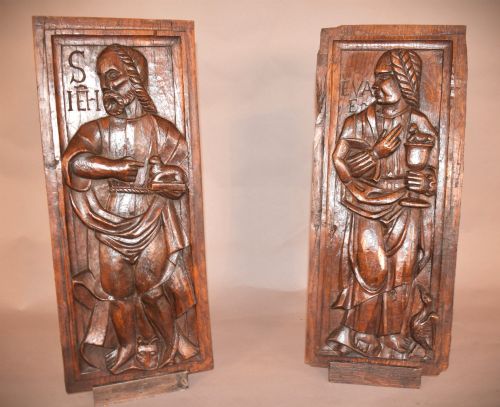
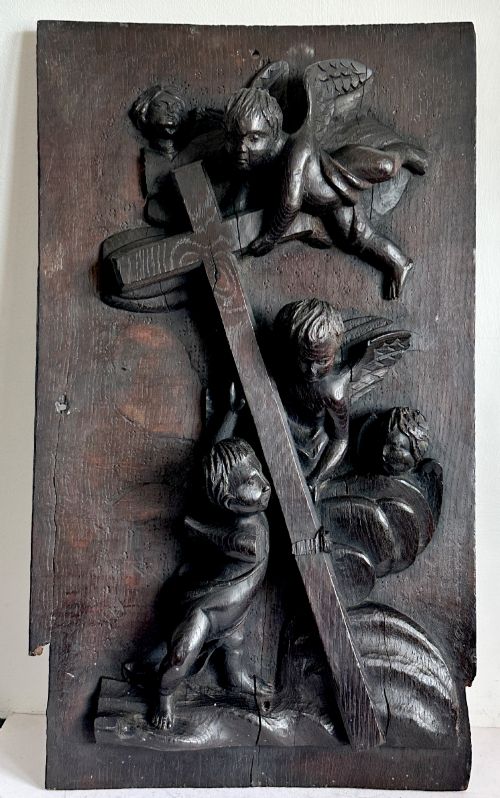
These carved timber religious plaques are devotional wall reliefs wrought in oak, chestnut, and walnut from the sixteenth and seventeenth centuries onwards.
Carved Timber Religious Plaque
A carved timber religious plaque represents sacred scenes and figures executed in relief for wall mounting. When exploring carved timber religious plaque examples, buyers encounter sixteenth and seventeenth-century panels alongside nineteenth-century Gothic Revival pieces.
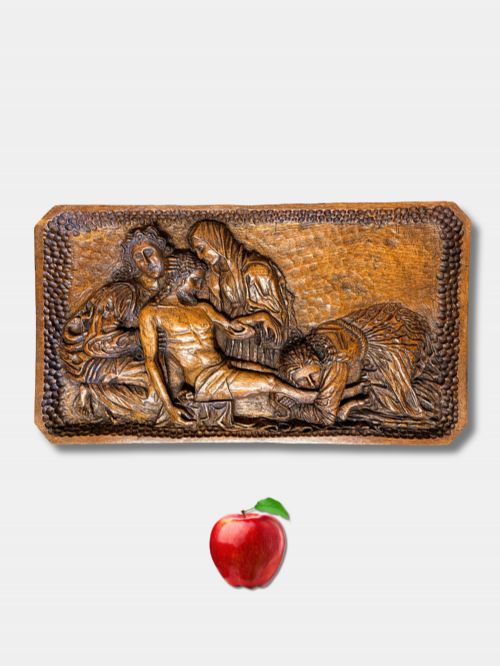
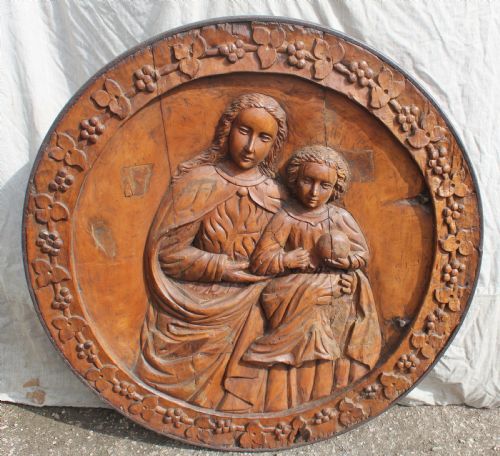
The objects take the form of wall plaques, reliefs, and icons depicting subjects such as Christ's lamentation, the circumcision of Christ, and the allegory of faith. Oak and chestnut dominate the surviving wall panels and reliefs.
Continental European workshops produced the majority of these works, spanning Flemish, German, and Italian traditions. Pieces range from intimate devotional carvings to large wall sculptures.
Materials and construction
Carvers shaped heavy hardwoods including oak, chestnut, and walnut, utilising the natural grain to give depth to drapery and figures. Artisans built these wall panels using thick timber boards suited to deep relief carving.
Select pieces incorporate polychrome decoration such as tempera paint and gold leaf applied directly over the wood. Iron fixings and structural elements occasionally support the heavier timber reliefs.
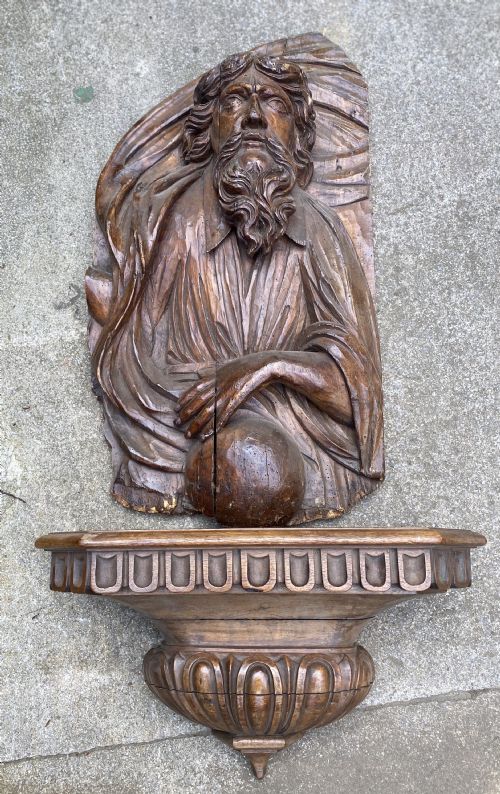
God the Father keeps an eye on your room with an orb in hand.
Assessing quality and execution
Depth of relief and anatomical confidence distinguish superior carvings from simpler folk art production. The handling of facial expressions and the drape of fabric reveal the competence of the workshop.
Surface preservation dictates the visual impact of each panel, particularly where traces of original tempera paint or gold leaf remain intact. The choice of dense timber, such as walnut or mature oak, provides a sharper definition to intricate details.
The Carved Timber Religious Plaque Glossary
- Polychrome
- The practice of painting wood surfaces in multiple colours. Artisans applied tempera and gold leaf to enhance devotional imagery.
- Gothic Revival
- An architectural and artistic style from the nineteenth century that revived medieval forms. Makers mimicked earlier fifteenth and sixteenth-century aesthetics.
- Baroque
- An ornate artistic style spanning the seventeenth century. Works from this period display dynamic movement and theatrical composition.
Carved Timber Religious Plaque: Frequently Asked Questions
How were these plaques displayed?
Devotional panels hung on interior walls in domestic rooms, private chapels, or churches to inspire contemplation. Owners mounted them securely using integrated hanging points or structural framing.
Larger wall reliefs served as focal points for prayer within domestic settings or ecclesiastical spaces, integrating religious narratives into daily life.
What subjects do they show?
The carvings depict key biblical narratives, saints, and theological allegories. Common themes include scenes from the life and passion of Christ.
Specific subjects recorded include St George, the circumcision of Christ, and allegorical representations of faith created by European artisans.
How do I date a panel?
Dating relies on stylistic markers, tool marks, and timber shrinkage patterns. Sixteenth and seventeenth-century works display distinct regional carving traits associated with Flemish, German, and Italian workshops.
Later nineteenth-century pieces often reflect historical revivals, imitating earlier periods through stylised ornament and mechanical assistance.
How do I care for antique wood?
Maintain stable indoor humidity levels and keep wooden reliefs away from direct heat sources to prevent timber splitting. Dust gently with a dry, soft cloth without applying modern chemical polishes.
Avoid exposure to direct sunlight, which degrades remaining traces of tempera paint and gold leaf over time.