





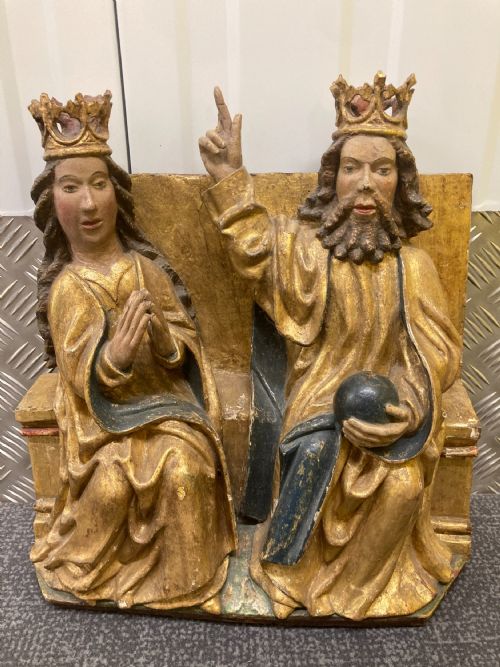


Religious Timber Carving
Religious timber carving brings centuries of devotion into a room, offering tactile connection to sacred subjects through the work of historical hands.
Religious Timber Carving
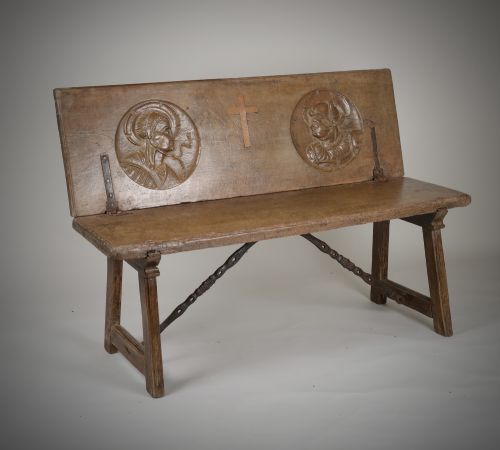
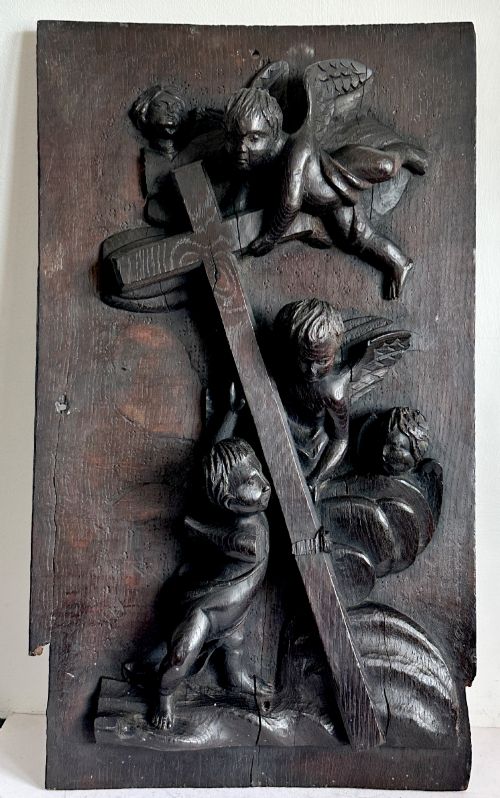
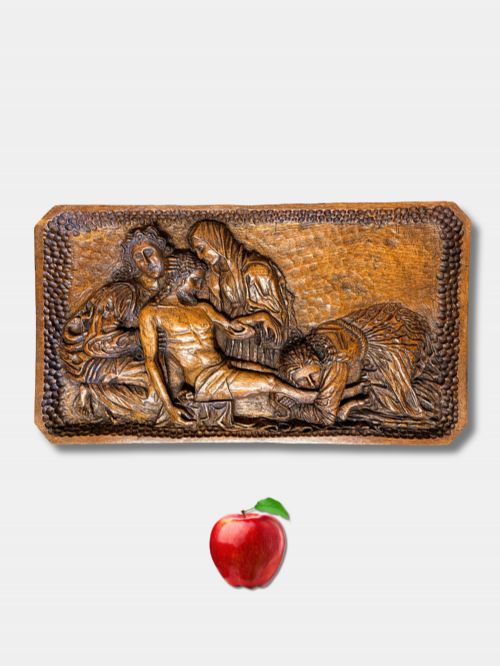
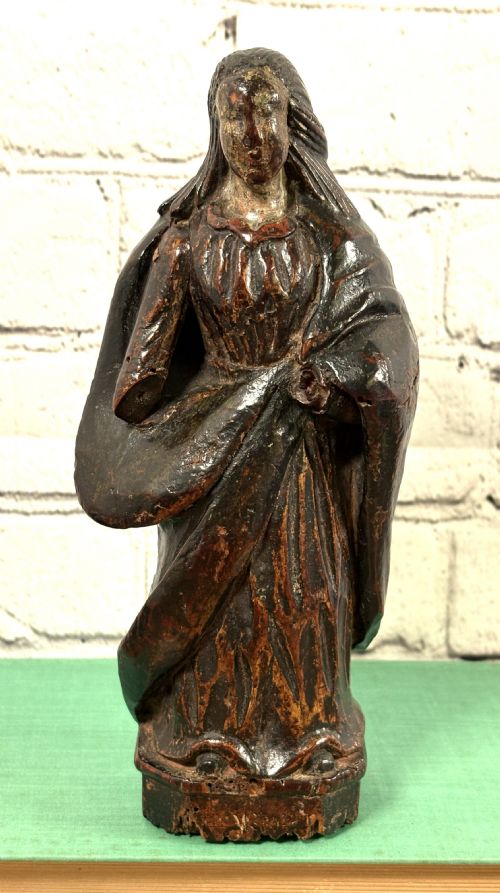
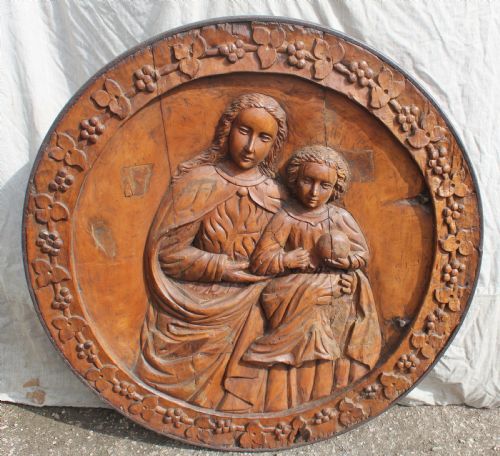
Religious timber carving encompasses devotional sculptures, wall reliefs, and architectural fragments created to honour sacred figures across multiple centuries. Collectors seeking these pieces encounter figures of saints, panels depicting biblical scenes, and crucifixes spanning from the late medieval period through the nineteenth century.
Oak remains the predominant material seen in these listings, frequently shaped into robust panels and statues by makers in northern and western Europe. Alongside oak, examples executed in limewood, walnut, pine, chestnut, and applewood appear, demonstrating the diverse timber choices available to historical carvers.
The aesthetic of these items shifts through distinct eras, moving from the austere forms of late medieval and Renaissance workshops to the ornate flourishes of Baroque and Gothic Revival movements. Buyers most often meet Continental European origins, particularly Flemish, German, Italian, and French pieces created for ecclesiastical settings or domestic prayer.
Materials and construction
Historical artisans shaped these objects using dense hardwoods like oak, walnut, and chestnut, which held intricate chisel work while supporting structural integrity over centuries. Softer timbers such as limewood and pine also provided responsive mediums for deep relief work and delicate facial expressions.
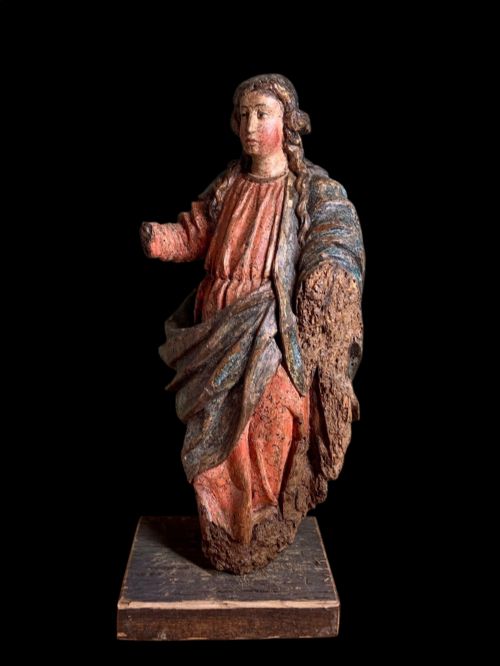
Many surfaces received layers of gesso to smooth the wood grain before painters applied polychrome pigments and gold leaf. These applied finishes brought vitality to figures of saints and angels, though centuries of handling often left the surviving paint worn or fragmentary.
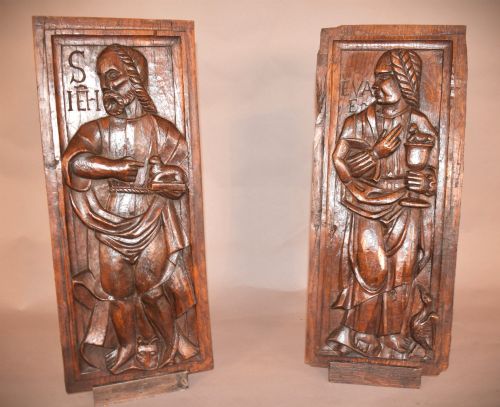
St. John frequently appears carrying an eagle, reminding beholders of the soaring theological heights attributed to his gospel.
Assessing quality and execution
The preservation of original surface treatments, whether unpainted timber patinated by age or intact traces of early polychrome and gilding, dictates the historical integrity of the piece. Integrated construction where figures and panels are carved from single blocks rather than assembled from multiple fragments also denotes higher craftsmanship.
Franz Keller
The Religious Timber Carving Glossary
- Polychrome paint
- Pigments applied to the surface of wood sculpture to add colour to garments, flesh, and hair. This technique was widely utilised in medieval and Renaissance ecclesiastical art to create lifelike devotional figures.
- Corpus Christi
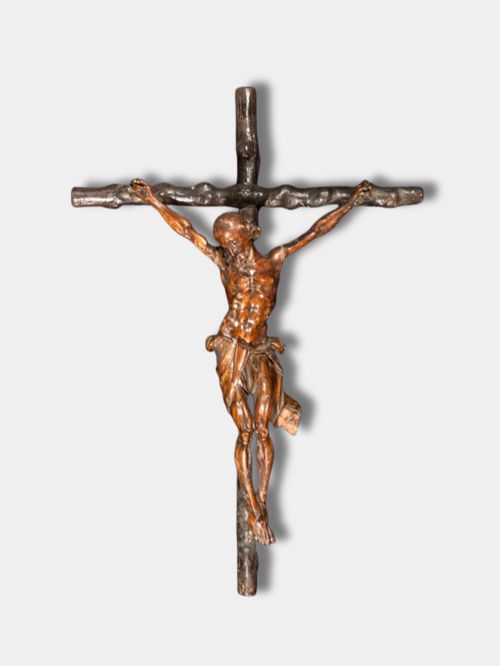
- A representation of the body of Jesus Christ on the cross. These figures form the central focus of devotional crucifixes.
- Gesso
- A plaster mixture applied to wood surfaces as a preparation for painting and gilding. It creates a smooth white ground that holds pigments securely.
- Giltwood
- Timber decorated with thin sheets of beaten gold applied over a prepared ground. It is frequently found on altarpieces and significant church figures.
- Relief
- Sculpture where figures project from a flat background rather than existing in the round. Wall panels and plaques utilise this technique to depict narrative scenes.
Religious Timber Carving: Frequently Asked Questions
What periods do these carvings come from?
The pieces span from the late medieval period and the sixteenth century through the Baroque and nineteenth centuries. Different eras introduced distinct stylistic choices in posture and garment design.
Earlier items often display Gothic or Renaissance characteristics, while later works include nineteenth-century Gothic Revival pieces and twentieth-century interpretations.
How were these figures used originally?
Most of these carvings served devotional purposes within churches, monastic settings, or private domestic chapels. Figures of saints and panels depicting biblical narratives aided contemplation and prayer.
Larger statues stood in ecclesiastical niches, while smaller reliefs and crucifixes functioned as focal points for personal worship.
How do I identify the wood type?
Examining the grain, weight, and colour helps determine the timber utilised by the carver. Oak displays prominent medullary rays and high durability, while limewood offers a pale tone with a very fine, subtle grain.
Walnut and chestnut present darker hues and distinct growth ring patterns, though layers of old paint or gesso can sometimes obscure the underlying wood.
How should I care for a wooden sculpture?
Maintaining stable indoor humidity levels and keeping pieces away from direct heat sources protects the timber from splitting or warping. Gentle dusting with a dry, soft cloth is usually sufficient for cleaning.
Avoid applying modern waxes or polishes, particularly on surfaces with traces of historic polychrome paint or gold leaf.