




Religious Oak Wood Carvings
Religious oak wood carvings bring centuries of devotion into a room, offering tactile connection to medieval and later European faith through the sculptor's chisel.
Religious Oak Wood Carvings
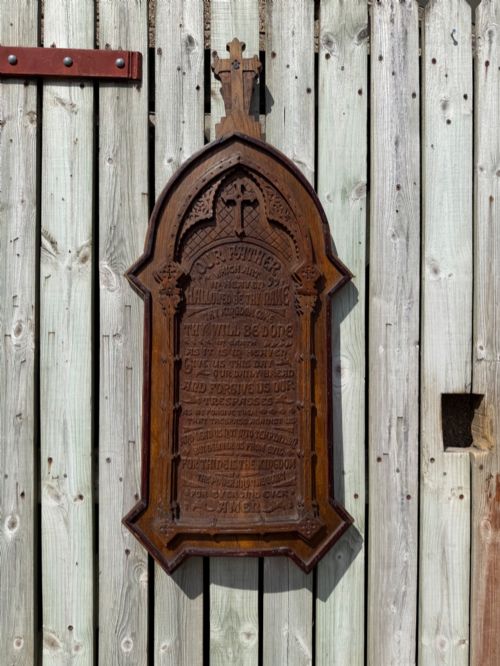
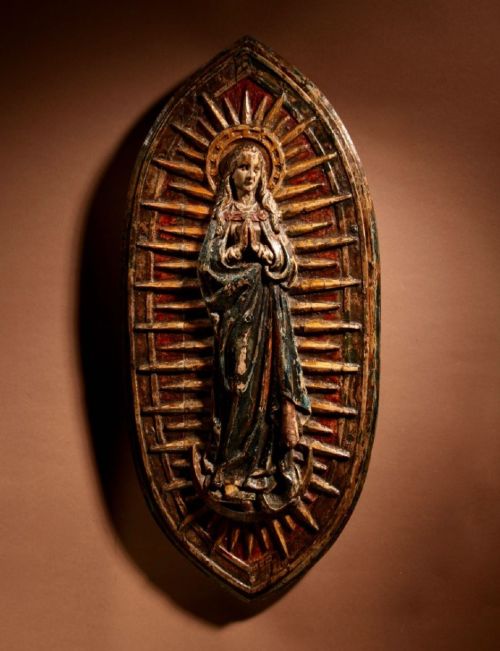
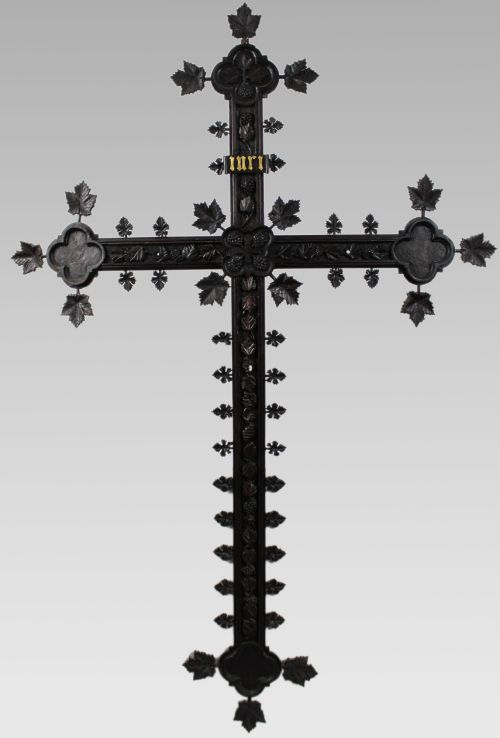
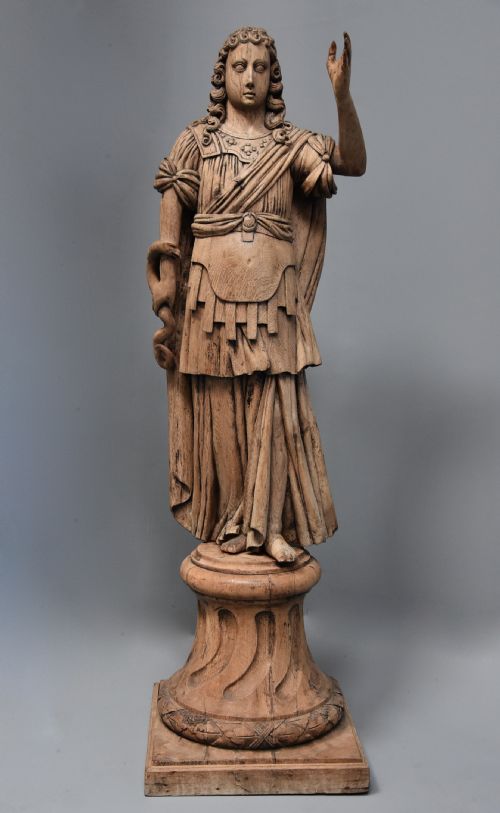
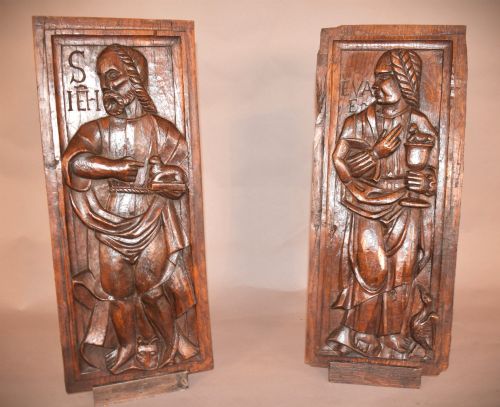
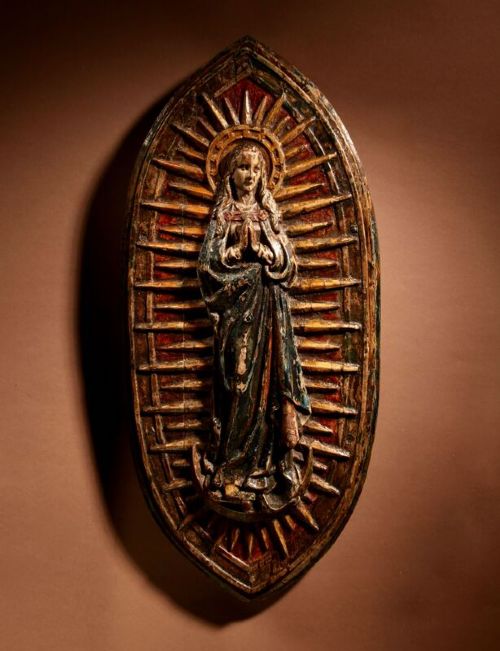
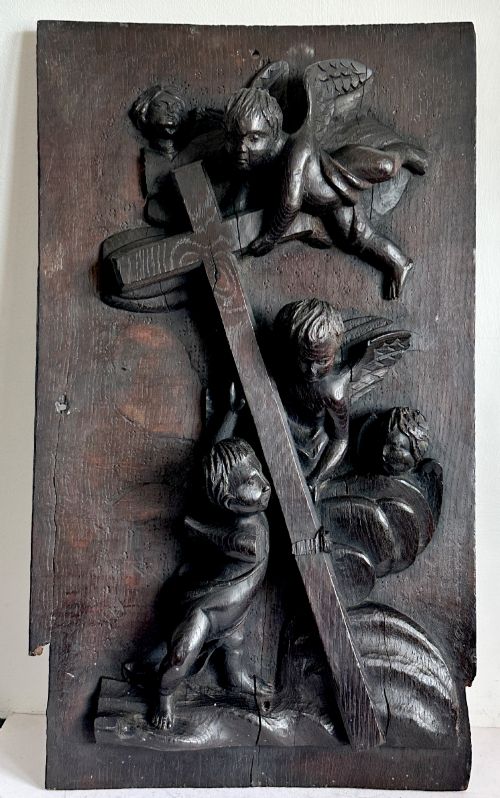
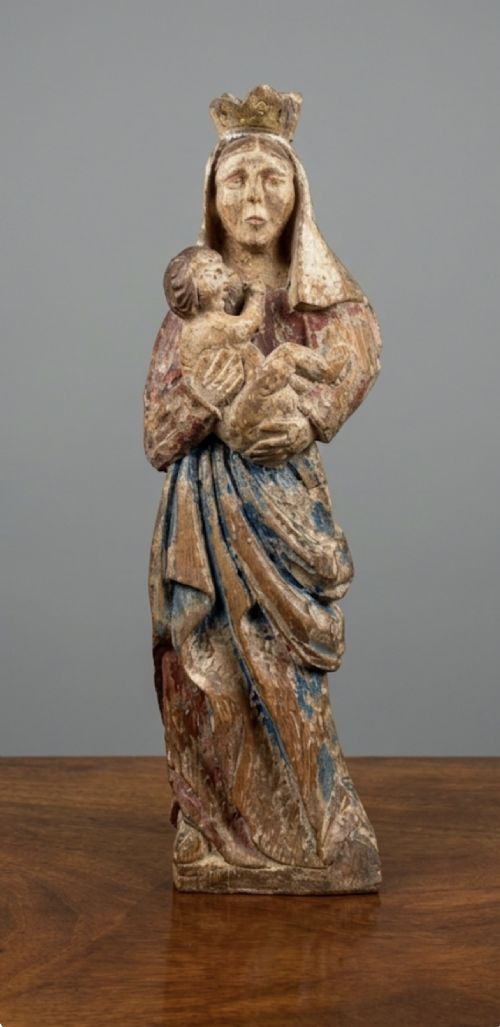
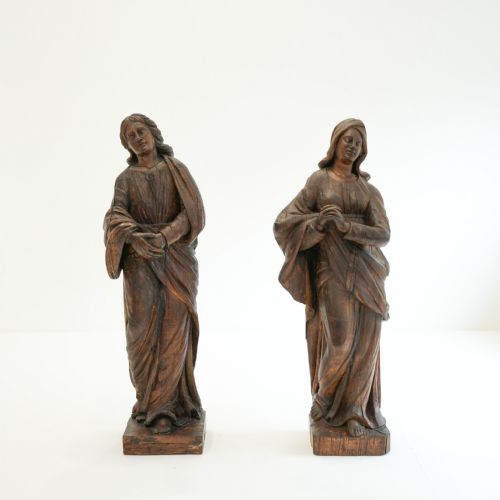
Religious oak wood carvings encompass medieval panels, Renaissance figures and Gothic saints shaped for European churches and domestic altars. These works manifest in the form of standing statues, wall plaques, and relief panels depicting biblical figures and saints.
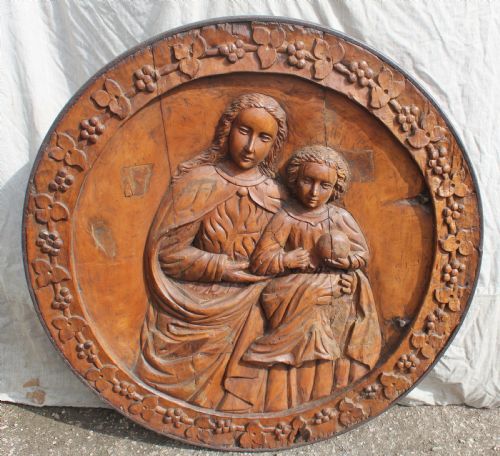
The pieces appearing most frequently span the pre-sixteenth century through the seventeenth century, alongside nineteenth-century Gothic revival items. Collectors encounter standing figures of the Virgin and Child, panels depicting scenes such as the Passion, and individual representations of apostles.
Originating largely from workshops in Germany, France, and Flanders, these sculptures range from intimate devotional reliefs to life-size figures. Each object records the changing stylistic currents of Northern Renaissance, Baroque, and Late Gothic traditions.
Materials and methods
Carvers shaped these pieces primarily from solid oak, utilising its dense grain to achieve deep undercut reliefs and durable figures. Wood was seasoned carefully before cutting to minimise splitting over centuries in domestic environments.
Many surfaces received layers of gesso preparation before application of polychrome paint and gold leaf, adding rich colour to the wooden substrate. Surviving traces of paint and gilding reveal the original vibrancy intended for ecclesiastical interiors.
Listings feature oak as the primary material, alongside supplemental use of gesso, gold leaf, and polychrome paint across multiple centuries.
Judging quality
The preservation of the original wood surface and any remaining polychrome or gesso layers significantly affects the integrity of the piece. Intact structural joinery and minimal replacement of constituent parts separate superior examples from heavily restored works.
Franz Keller
The Religious Oak Wood Carvings Glossary
- Polychrome paint
- Decoration applied using multiple colours to wooden sculptures, often laid over a gesso ground to enhance realism. Surviving pigment offers vital evidence of original appearance.
- Gesso
- A plaster mixture applied to wood surfaces to provide a smooth base for gilding and paint. This preparation seals the grain before decoration.
- Relief sculpture
- Carving where figures project from a flat background panel rather than existing in the round. These wall pieces frequently depicted narrative biblical scenes.
- Corpus Christi
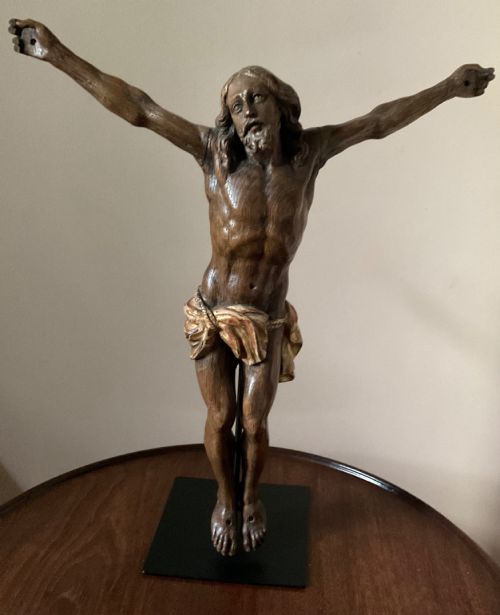
- A representation of the body of Jesus Christ on the cross. These figures focus attention on the central imagery of the crucifixion.
- Gothic
- A medieval art style characterised by pointed arches, naturalistic drapery and solemn expressions. This aesthetic dominated European church carving before the Renaissance.
Religious Oak Wood Carvings: Frequently Asked Questions
How old are these religious carvings?
These sculptures span from pre-sixteenth-century medieval pieces up to nineteenth-century revival works. The majority originate in the sixteenth and seventeenth centuries.
Specific dating relies on stylistic analysis of the carving techniques, costume details, and the treatment of wood grain by European workshops.
Were these pieces originally painted?
Many of these wooden sculptures received coatings of gesso, polychrome paint, or gold leaf to enhance their visual impact in churches. Over centuries, much of this pigment wore away or was stripped off, leaving bare oak.
Traces of original colour often survive in recessed folds of drapery or protected areas of the carved surface.
Where were these carvings displayed?
Original locations included altarpieces, church walls, and domestic devotional spaces across regions like Flanders, Germany, and France. Wall reliefs and panels formed parts of larger architectural church schemes.
Smaller figures served private prayer within homes before entering the antique market as portable sculptures.
How do I care for antique oak carvings?
Maintain stable humidity and temperature away from direct sunlight and heat sources to prevent the oak from drying and splitting. Avoid harsh chemical cleaners or water on older wooden surfaces.
Dust gently with a soft, dry brush to protect delicate carved details and any remaining traces of historic paint or gesso.