
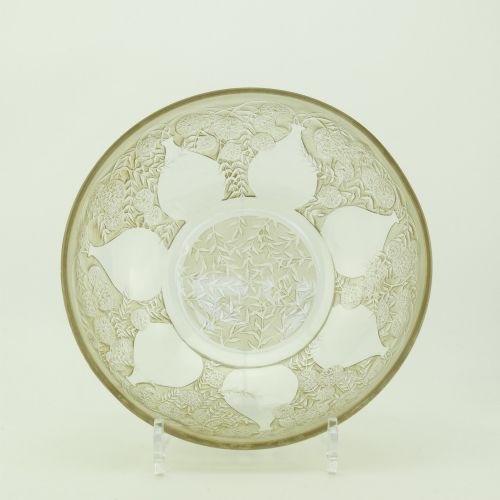
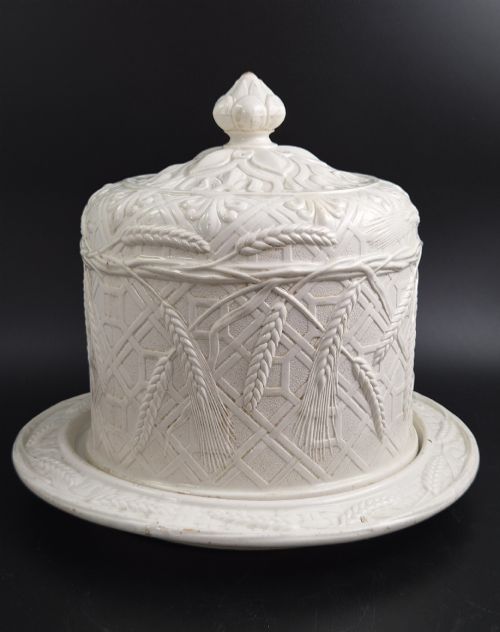
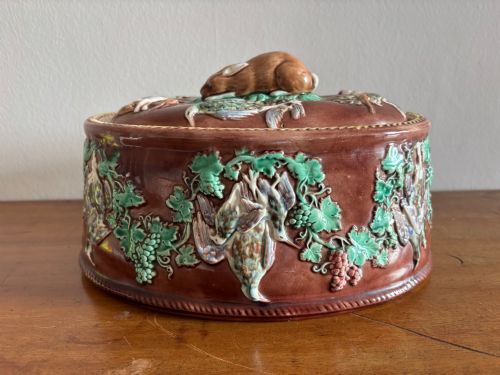
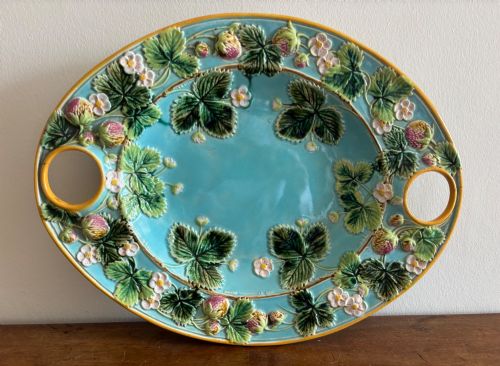



Relief Moulded Dish
These relief moulded dish examples bring sculptural depth and tactile interest to any table, offering substantial forms across Victorian earthenware and pressed glass.
Relief Moulded Dish
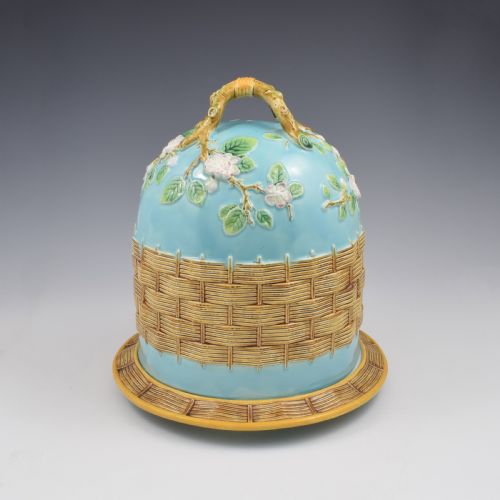
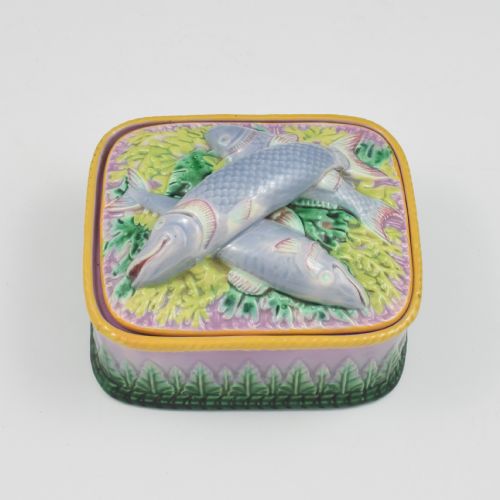
A relief moulded dish presents raised ornamental patterns across its surface, creating a tactile design that catches the eye and the hand alike. Buyers seeking a relief moulded dish typically encounter substantial Victorian earthenware pieces, including elaborate cheese domes, game pie dishes, and decorative plates.
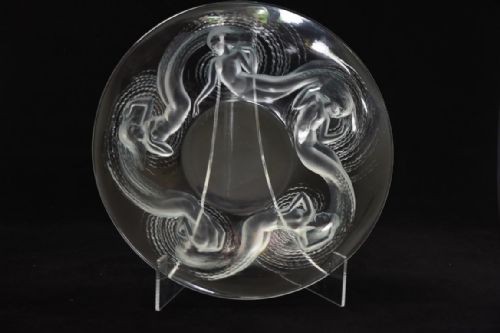
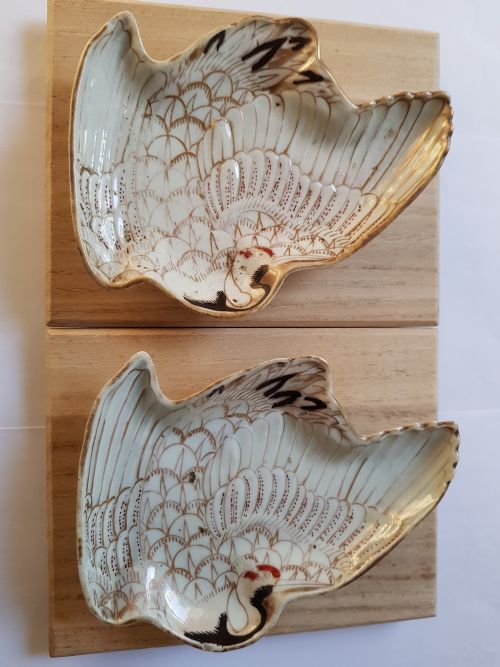
The selection ranges from large nineteenth-century caneware and white ironstone to vibrant majolica sardine boxes and strawberry dishes. Alongside these earthenware forms, twentieth-century pressed glass bowls and seventeenth-century Japanese crane-shaped dishes demonstrate how makers utilised mould-pressed techniques across diverse eras.
Materials and construction
Makers produced these pieces using specialised moulds that shaped earthenware, caneware, or stoneware while simultaneously pressing decorative motifs into the clay body. Glazes such as lead glaze or colourful majolica coatings were then applied to highlight the raised details before firing.
Glass pieces relied on pressing molten metal into intricately carved metal moulds to achieve sharp, frosted or clear relief patterns. This technique allowed workshops to produce complex sculptural designs consistently across large bowls and vases.
Materials recorded across current items include earthenware, stoneware, caneware, lead glaze, and frosted or clear glass.
Assessing quality and execution
Quality in a relief moulded dish rests upon the crispness of the impression and how sharply the raised details stand out from the background body. Superior examples maintain clean, well-defined motifs where the moulding process has not softened the edges of leaves, lattice work, or figural scenes.
The application of glaze or colour further separates standard production from finer work, as skilled application ensures pools do not obscure the delicate undercuts of the design. The weight, balance, and structural integrity of large covers and matching stands also indicate the care taken during manufacture.
George Jones·Wedgwood·Rene Lalique
The Relief Moulded Dish Glossary
- Caneware
- A fine, unglazed stoneware body with a warm buff or yellowish tone resembling bamboo. It gained popularity in the nineteenth century for utilitarian tableware and game dishes.
- Majolica
- A type of earthenware covered with an opaque tin glaze and painted with metallic oxide colours. It is known for vivid hues and rich, glossy surfaces.
- Ironstone
- A heavy, durable earthenware patented in the nineteenth century to imitate porcelain. It provides a sturdy white body well-suited to large kitchen and dining vessels.
- Coupe
- An open bowl or shallow vessel form lacking a distinct rim. The term often describes French art glass pieces with moulded exterior decoration.
Relief Moulded Dish: Frequently Asked Questions
What are relief moulded dishes used for?
These vessels served various dining and display functions, ranging from serving cheese and game pies to holding sardines or strawberries at the Victorian table.
Today, they function as striking centrepieces, decorative bowls, or practical storage lidded boxes that bring historic character to modern interiors.
How do I care for majolica dishes?
Majolica pieces require gentle cleaning with warm water and mild soap, avoiding harsh scrubbing that might damage the glossy glaze surface.
Display them away from direct sunlight and extreme temperature changes to protect the colourful earthenware body over time.
How can I date my piece?
Dating relies on identifying the ceramic body, glaze type, and stylistic markers such as Victorian Gothic or Art Deco moulding motifs.
Maker marks stamped into the underside or registration numbers can also narrow down the exact decade of manufacture.
Are glass and ceramic dishes made differently?
Ceramic examples involve pressing wet clay into plaster or metal moulds and firing them in a kiln before glazing.
Glass versions utilise molten metal pressed into heavy iron moulds under mechanical pressure to create sharp, three-dimensional surface designs.