
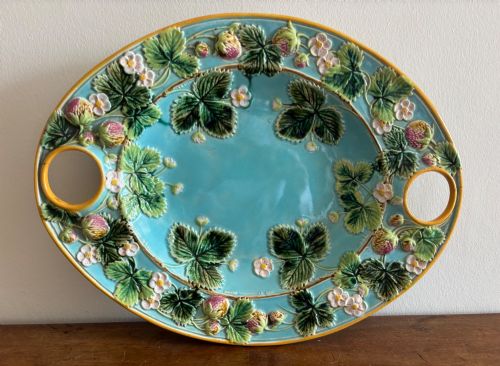


Blue Glazed Ceramic Tray
These blue glazed ceramic tray pieces bring hand-painted patterns and rich tin glazes directly into daily domestic service.
Blue Glazed Ceramic Tray
A blue glazed ceramic tray encompasses various serving dishes, inkstands, and trinket dishes produced across the eighteenth and nineteenth centuries. These items serve both ornamental and utilitarian functions in domestic settings.
Buyers frequently encounter English earthenware meat platters alongside continental tin-glazed faience and Dutch Delft pieces. These objects display characteristic blue and white colour schemes derived from historical ceramic traditions.
The selection spans Georgian and Victorian periods, reflecting diverse regional manufacturing centres in England, France, and the Netherlands. Forms range from large platters to small pin trays and desktop inkwells.
Materials and construction methods
Potters shaped these items from earthenware bodies before applying opaque tin or lead glazes to create smooth working surfaces. Pigments containing cobalt produced the characteristic deep blue tones fired beneath or over the glaze.
Decoration relied on hand-painted brushwork or early transfer printing techniques to transfer intricate landscape and floral scenes onto the clay. Firing took place in traditional kilns where temperature variations produced subtle pooling within the glazes.
An inkstand sits patiently on the desk, waiting for a quill that vanished a century ago.
Assessing quality in historical ceramics
Quality rests upon the crispness of the blue pigment application and the uniformity of the glaze surface across the piece. Superior examples exhibit precise brushwork or clean transfer printing without blurring or running.
The refinement of the underlying earthenware body and the complexity of moulded details distinguish standard utility items from finer cabinet pieces. Potteries achieved greater artistic expression through careful control of firing atmospheres.
George Jones·Spode·HR Quimper
The Blue Glazed Ceramic Tray Glossary
- Earthenware
- Porous pottery fired at lower temperatures than stoneware or porcelain. It requires a glaze to hold liquids effectively.
- Faience
- European tin-glazed earthenware, often associated with French and Dutch production centres. The opaque white glaze provides a ground for painted decoration.
- Transfer print
- A decorative technique using a paper impression to transfer an engraved design onto ceramic surfaces prior to glazing and firing.
- Vide-poche
- A small shallow dish designed for emptying pockets of small items. These catch-all trays often appear in French ceramics.
- Tin-glazed
- Pottery coated with a glaze containing tin oxide, turning the surface white and opaque. This method mimics the appearance of imported Chinese porcelain.
Blue Glazed Ceramic Tray: Frequently Asked Questions
What were these trays used for?
These ceramic pieces functioned across various domestic spaces for serving food, holding inkstands, or collecting small personal items.
Larger platters handled meat service at the dining table, while smaller dishes served as desk accessories or trinket holders in private rooms.
How do I date a blue glazed tray?
Dating relies on identifying the underlying ceramic body, glaze composition, and stylistic markers specific to periods like the Georgian or Victorian eras.
Examining the foot ring, potting weight, and pigment characteristics helps narrow down the decade of production.
Are Dutch Delft trays waterproof?
Tin-glazed earthenware is slightly porous if the glaze sustains chips or deep fractures over centuries of handling.
Most antique pieces function best as decorative objects or dry service trays rather than active kitchenware.
How should I clean antique pottery?
Gentle dusting with a soft dry cloth preserves the fragile tin glaze and painted blue pigments.
Submerging antique earthenware in water or using modern detergents risks damaging the historical glaze matrix.