
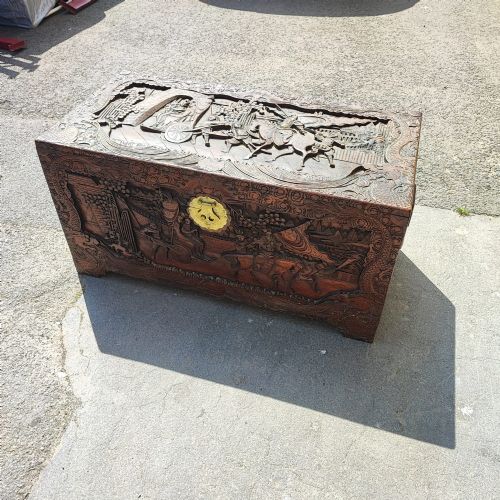
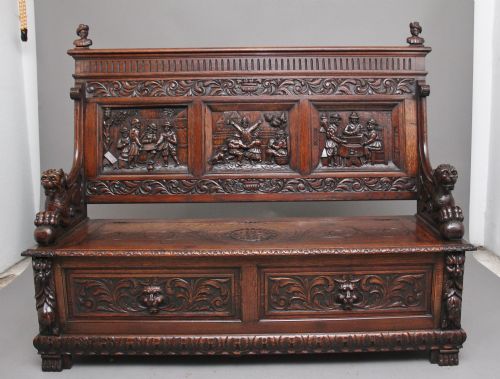


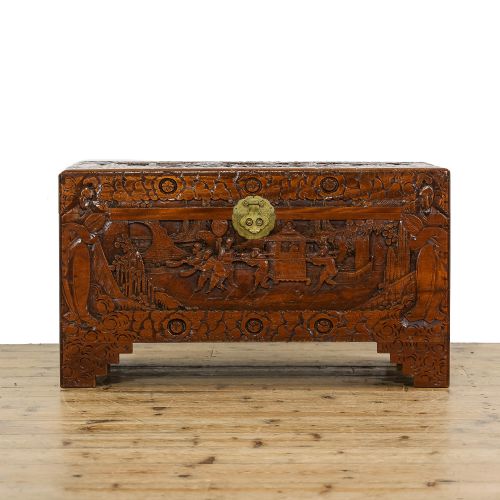


Relief Carved Storage Box
A relief carved storage box is a timber chest bearing deep chisel work, built to hold linens or valuables while anchoring a room with dense texture.
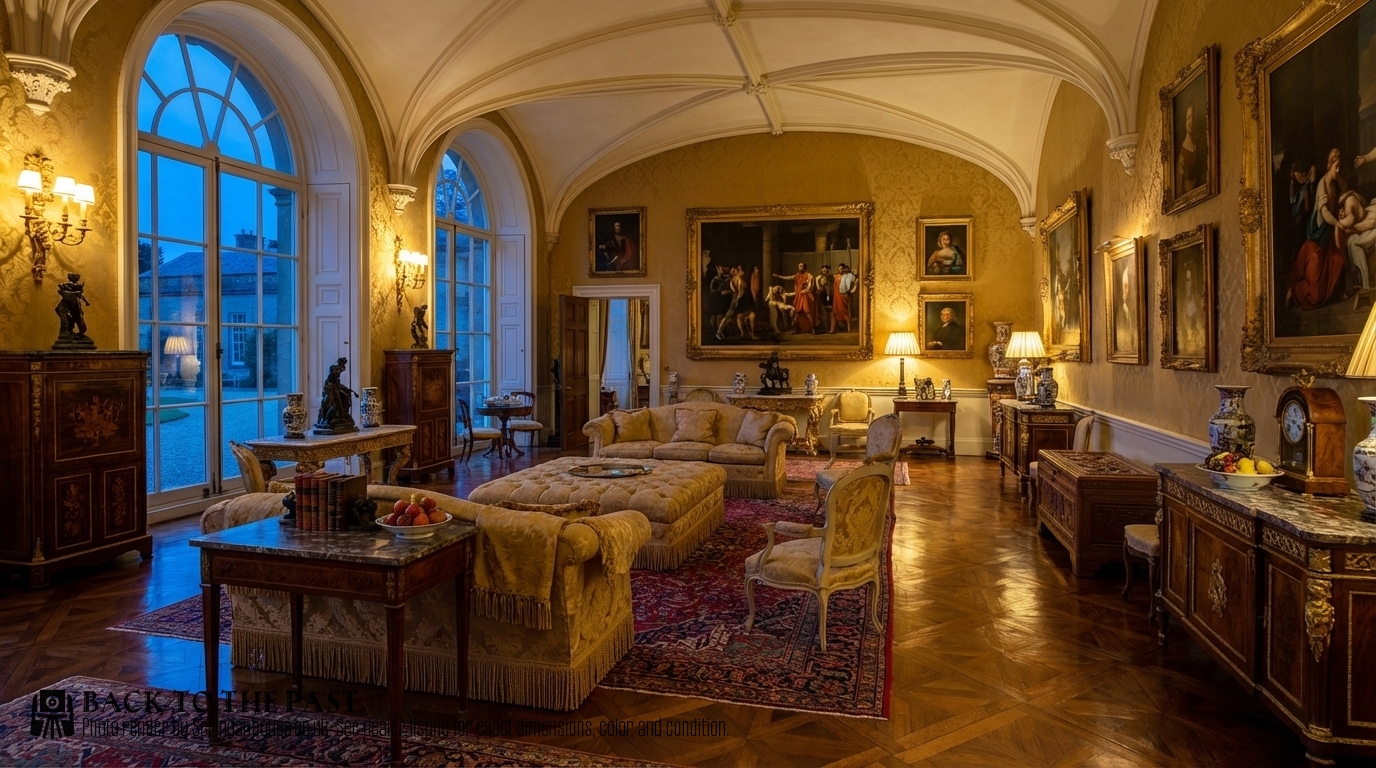
Relief Carved Storage Box
A relief carved storage box combines utility with deep chisel work, spanning robust blanket chests, tea caddies, and small cabinets. These pieces emerge in styles like Chinese Export, Jacobean Revival, and Victorian, functioning as practical storage across domestic interiors.
Camphor wood trunks from the nineteenth and early twentieth centuries dominate the selection, often featuring Oriental motifs. Alongside these, buyers encounter oak boxes, teak chests, and walnut hall seats spanning from the mid-eighteenth century to the interwar period.
Materials and construction methods
Wood selection prioritises durable timbers such as oak, teak, walnut, and fragrant camphor wood, paired occasionally with brass hardware or lacquer finishes. Artisans shape these dense materials using traditional joinery before applying hand-chiselled decoration.
Carving techniques vary from geometric panels and regimental coats of arms to elaborate Oriental foliage and biblical scenes. This manual incision creates the characteristic three-dimensional depth across lids, panels, and friezes.
A British Army officer carried a campaign box into the field bearing hand-carved regimental arms.
Assessing quality in carved boxes
Quality rests upon the crispness of the chisel work and the integrity of the timber joints, distinguishing competent workshop production from master carving. Superior examples maintain balanced proportions and sharp, undercut details that retain their clarity across decades of handling.
The choice of primary wood also dictates standard, with aromatic camphor or dense quarter-sawn oak representing higher material investment than plain secondary conifers. Original brass mounts, working locks, and untampered surfaces further separate standard utility chests from finer specimens.
The Relief Carved Storage Box Glossary
- Relief carving
- A sculptural technique where figures or patterns project from a flat background. This method creates depth and shadow across the front panels and lids of storage chests.
- Camphor wood
- An aromatic hardwood native to Asia, prized for insect-repellent properties. It forms the primary body of many export trunks found in this category.
- Tea caddy
- A small lidded box designed to store loose tea leaves securely. These containers often feature internal compartments and fine internal joinery.
- Box settle
- A high-backed wooden bench incorporating a concealed storage compartment beneath the seat. This form combines seating with heavy trunk construction.
Relief Carved Storage Box: Frequently Asked Questions
What were relief carved storage boxes used for originally?
These containers served primarily to protect textiles, valuable garments, and documents from dampness and insects. Camphor wood variants were especially favoured for safeguarding woollens and linens during maritime transit.
Smaller iterations, such as tea caddies and caskets, held precious provisions or personal valuables on tabletops and desk surfaces. Larger blanket chests and box settles remained in domestic chambers and halls for everyday utility.
How do I care for an antique camphor wood chest?
Keep the timber away from direct heat sources and sudden temperature shifts to prevent the wood from splitting. Dust the carved surfaces gently with a dry, soft cloth rather than applying modern chemical polishes.
Maintain stable indoor humidity to preserve the structural integrity of the joints and the natural fragrance of the camphor. Avoid placing heavy, damp objects directly onto the unsealed interior surfaces.
How do I distinguish Chinese Export chests from other regional styles?
Chinese Export chests frequently utilise camphor wood and feature distinct Oriental landscapes, maritime motifs, or dense floral carving. These pieces were tailored for Western markets during the nineteenth and early twentieth centuries.
In contrast, European variants such as Jacobean Revival or Victorian oak boxes display geometric strapwork, linenfold, or biblical scenes rooted in domestic vernacular traditions.
Can I use these chests as coffee tables?
Many sturdy storage chests and blanket boxes adapt well as coffee tables while providing practical concealed space for living room clutter. Ensure the lid remains flat and stable enough to support books or trays without rocking.
Protect the antique surface from liquid rings by using coasters and mats across the aged timber or lacquer finish.