
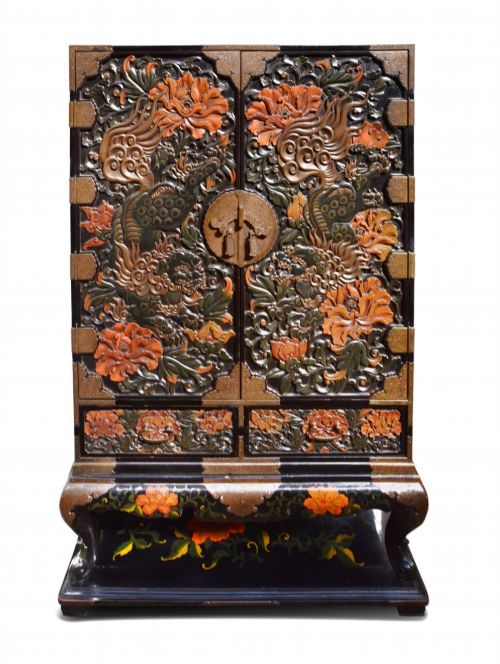
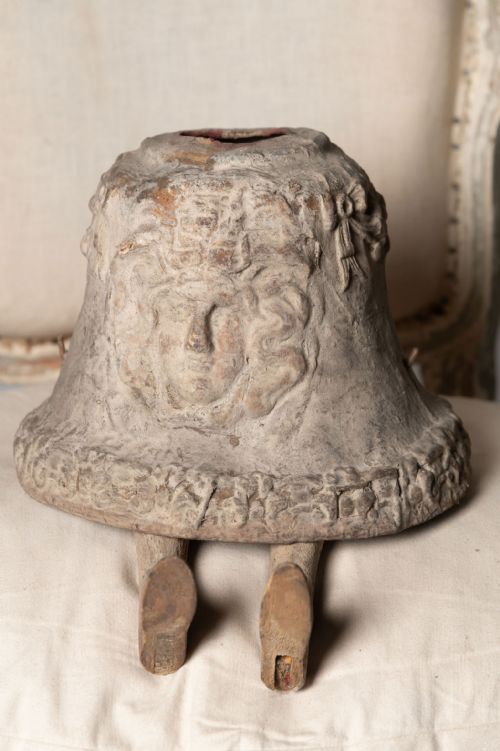


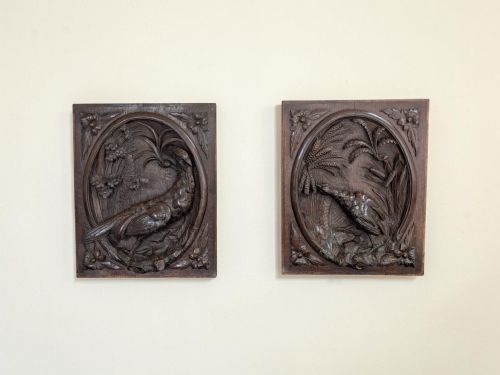
Relief Carved Cabinet
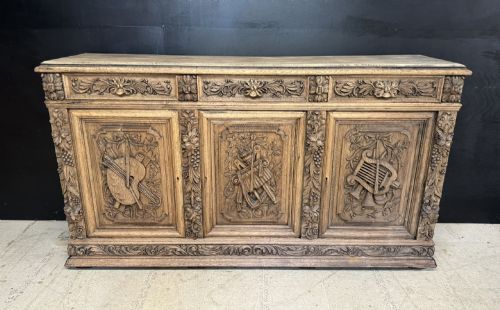
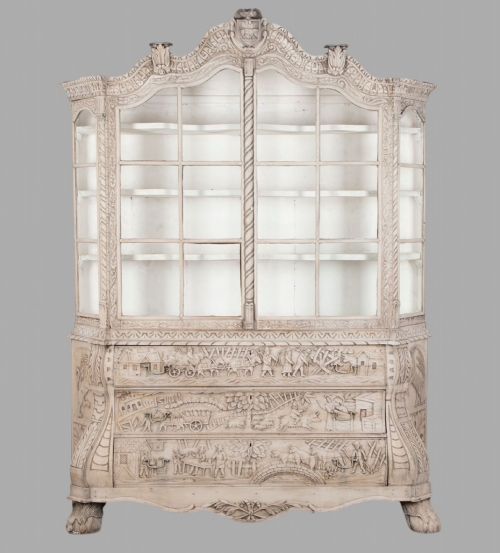
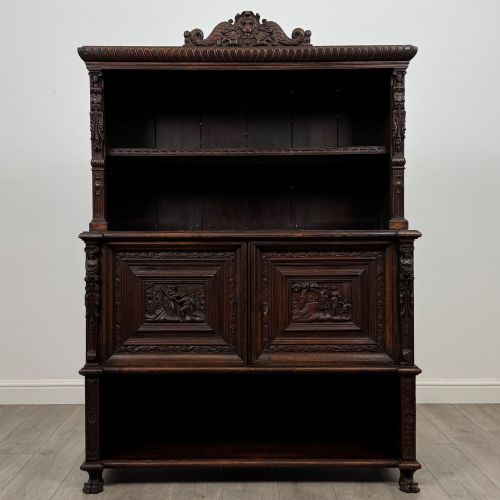
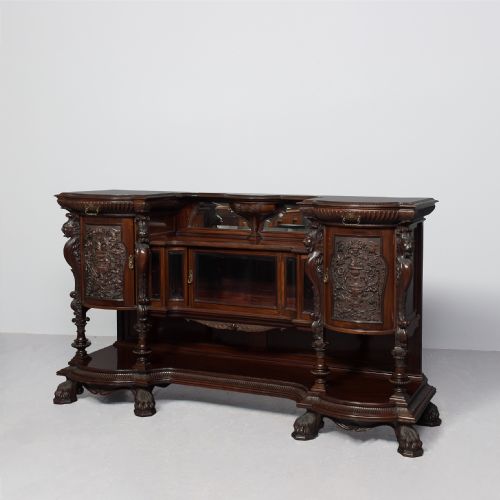
A relief carved cabinet brings heavy texture and deep architectural depth into a room through carved wooden panels.
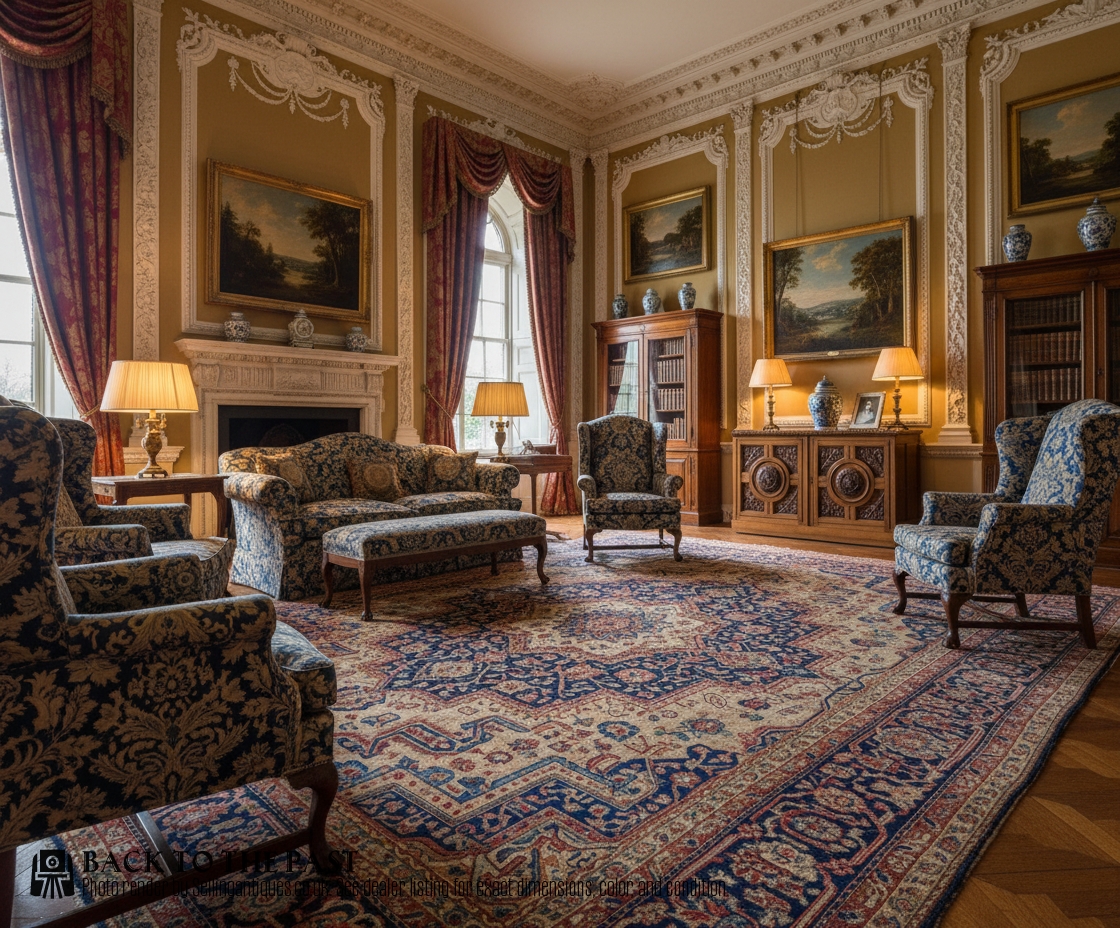
Relief Carved Cabinet
A relief carved cabinet is a storage piece defined by sculptural wooden surfaces projecting from a flat background. When searching for a relief carved cabinet, you encounter forms ranging from imposing sideboards and cupboards to delicate cabinets on stands and corner units. Most examples appearing here date from the nineteenth century, reflecting a Victorian appetite for rich surface ornamentation.
The aesthetic vocabulary draws heavily from revival styles and regional traditions. Pieces frequently display Gothic Revival, Renaissance Revival, or continental influences alongside Chinese export and Anglo-Indian designs. Buyers find utilitarian hall cupboards alongside theatrical props and monumental Flemish or French buffets.
Internal layouts vary according to the original function of the piece, encompassing linenfold panels, glass-fronted display sections, and lower chests of drawers. Oak and walnut dominate the European examples, while exotic hardwoods and lacquer mark the Asian pieces.
Evaluating craftsmanship and proportion
Quality rests upon the depth and clarity of the chisel work across the panels. Superior examples exhibit undercut carving where figures and foliage detach visibly from the background plane, whereas lesser pieces rely on shallow surface incisions.
Proportion and structural integrity dictate the standing of a piece within its period. Well-balanced cornices, tight joinery at the corners, and harmonious integration of carved doors with the main carcase distinguish master furniture from utilitarian workshop output.
Relief Carved Cabinet Retail Price Guide 2026
Typical asking prices for relief carved cabinet among the pieces listed under this phrase on Sellingantiques today, from the lower quarter to the upper quarter. They describe what is for sale here now, not the wider market.
Listings feature items spanning from the sixteenth century to the early twentieth century, utilising oak, walnut, lacquer, camphor wood, and padouk.
Gillows
The Relief Carved Cabinet Glossary
- Linenfold
- A style of wood carving representing folded vertical strips of linen. This motif appears frequently on sixteenth and nineteenth century panels.
- Bombé
- A swelling, outward-curving contour found on the front and sides of certain cabinets. It requires advanced timber-bending techniques.
- Zitan
- A dense, heavy Asian hardwood prized for dark tones and fine grain. It supports extremely crisp hand carving.
- Mirror-back
- A wooden cabinet backing set with a mirror plate to reflect light through displayed items. This feature gained popularity during the late Victorian era.
- Buffet de Corps
- A substantial two-tier French dining room cupboard with enclosed storage. These pieces often feature prominent sculptural doors.
Relief Carved Cabinet: Frequently Asked Questions
How do I date a relief carved cabinet?
Dating relies on examining the timber species, construction joints, and stylistic revival cues. Nineteenth-century pieces often blend historical motifs like Gothic tracery with machine-sawn internal secondary woods.
Earlier sixteenth-century examples display hand-split boards and pegged mortise and tenon joints without modern fasteners. Comparing the hardware and locking mechanisms to known period styles helps narrow the decade.
Where should I place a heavy oak cabinet?
Solid oak and walnut cabinets require a stable wall and even floor surfaces to support their substantial weight. Keep them away from direct heat sources and strong sunlight to prevent timber shrinkage and splitting.
Allow enough clearance around doors and drop-front drawers for unhindered operation in living spaces or hallways.
How do I clean carved wooden panels?
Dust the deep recesses regularly using a soft-bristled brush to prevent particulate buildup in the carved details. Avoid standard liquid polishes that leave sticky silicone residues inside the grain.
Apply a microcrystalline wax sparingly once or twice a year to nourish the timber surface without clouding the dark finish.
What is the difference between a cupboard and a cabinet?
Cupboards traditionally denote enclosed storage spaces behind solid wooden doors, often utilised for linens, provisions, or general household goods. Cabinets frequently incorporate display elements, specialised compartments, or raised stands.
Relief carving appears on both forms, though display cabinets often add glass panels or mirrored backs to showcase contents.