



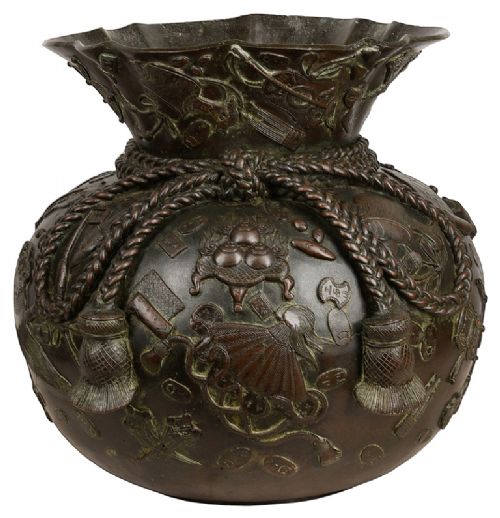


Relief Carved Bronze Pot
These relief carved bronze pot pieces bring tactile depth and rich patination to a room, offering distinct historical character for your mantel or desk.
Relief Carved Bronze Pot
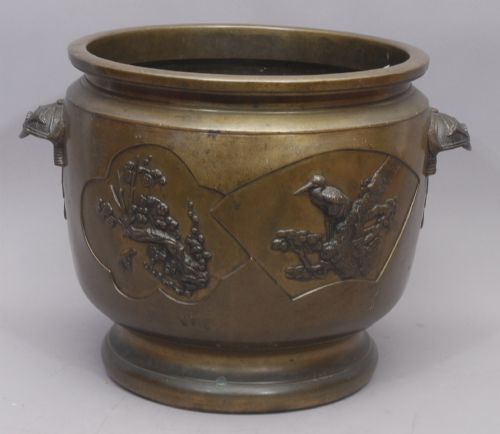
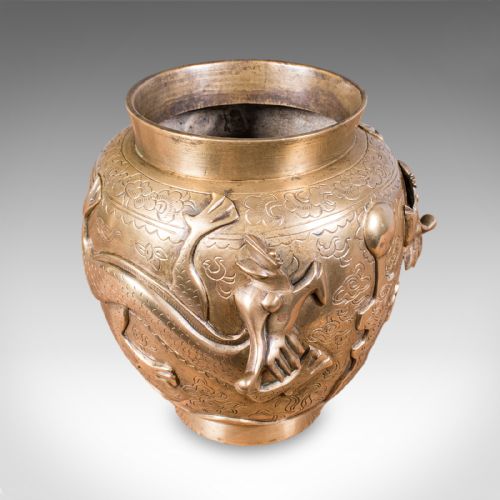
A relief carved bronze pot unites sculptural depth with metallic weight, presenting vessels that serve as jardinières, planters, and decorative vases. These items range from Chinese export and Qing dynasty works to Japanese Meiji period creations.
Buyers seeking a relief carved bronze pot will frequently encounter large jardinières and planters alongside smaller desk bowls, posy vases, and censers. The forms draw heavily on Asian and Oriental aesthetics, spanning the Georgian era through the Victorian period and into the early twentieth century.
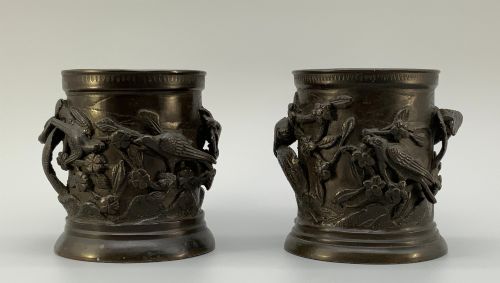
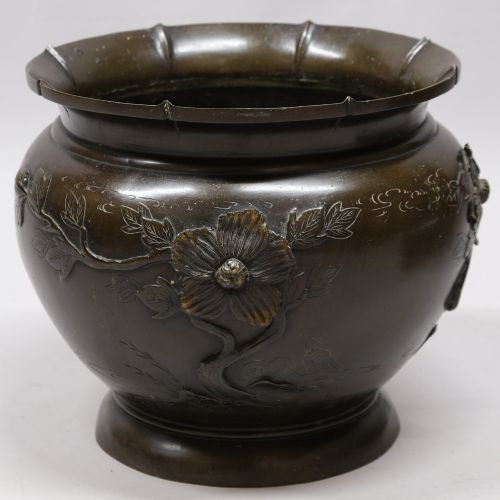
The dominant offerings on this page reflect the nineteenth century, particularly Japanese Meiji period examples featuring birds and blossom motifs. These vessels combine functional utility as plant holders with intricate surface decoration carved in high relief.
Materials and construction
Makers utilised cast bronze and patinated bronze as the primary medium for these vessels, occasionally incorporating brass elements. The metal was cast to form heavy bowls, urns, and vases capable of holding water and plants.
Surface ornamentation relies on relief carving and chiselling directly into the bronze, creating tactile motifs of birds, blossoms, and traditional scenes. Patination techniques were applied to alter the surface colour, producing rich dark tones that highlight the raised details of the design.
Relief Carved Bronze Pot Retail Price Guide 2026
Typical asking prices for relief carved bronze pot among the pieces listed under this phrase on Sellingantiques today, from the lower quarter to the upper quarter. They describe what is for sale here now, not the wider market.
Object forms span large jardinières and planters alongside compact desk bowls, posy vases, and incense burners in cast bronze.
Assessing quality in bronze vessels
Quality in a relief carved bronze pot rests on the crispness and depth of the chisel work within the metal. Superior pieces display sharply defined motifs where the relief work stands out with clear separation from the background texture.
Weight and wall thickness also distinguish finer examples from standard production, as heavier castings provide greater structural stability. The subtlety of the patination contributes further, with superior surfaces showing tonal variation rather than a flat, uniform coating.
The Relief Carved Bronze Pot Glossary
- Bronze
- An alloy consisting primarily of copper, traditionally combined with tin, used to cast durable vessels and decorative objects. It accepts patination and relief carving exceptionally well.
- Jardiniere
- A large ornamental pot or stand designed to hold plants and flowers. These vessels often feature heavy bronze construction to support soil and moisture.
- Patinated Bronze
- Bronze that has been treated with chemical solutions or heat to alter its surface colour. This process enhances the visual depth of relief carved designs.
- Meiji Period
- A Japanese historical era spanning from eighteen sixty-eight to nineteen twelve, noted for exceptional metalwork exported to the West. Pieces from this time frequently display detailed naturalistic motifs.
Relief Carved Bronze Pot: Frequently Asked Questions
What are bronze jardinières used for?
These large vessels were originally designed to hold potted plants and floral arrangements within domestic interiors. Their heavy bronze construction made them stable platforms for substantial greenery.
Today, they function effectively as standalone decorative objects or as cachepots for modern houseplants. Their waterproof metal bodies protect surfaces while adding historical presence to a room.
How can I tell a Meiji period bronze apart?
Japanese Meiji period bronzes frequently feature naturalistic subjects such as birds, blossoms, and intricate flora executed in high relief. The casting quality is typically very crisp, reflecting the high standards of nineteenth-century metalworkers.
Many pieces from this era also exhibit deliberate patination shading that accentuates the carved details. Comparing the subject matter to known Japanese design motifs helps confirm the origin.
Are these bronze pots suitable for daily use?
These pieces were built from durable bronze alloys designed to withstand regular handling and utility. Their substantial weight prevents accidental tipping when used as desk pots or posy vases.
Careful placement away from heavy moisture ensures the patination remains stable over time. They integrate easily into contemporary spaces while retaining their original decorative purpose.