


Oriental Bronze Jardinieres
Oriental bronze jardinieres are heavy vessels for holding plants, forged in diverse Asian traditions to anchor a room with distinct historical presence.
Oriental Bronze Jardinieres
Oriental bronze jardinieres encompass heavy vessels, bowls, and planters designed to hold plants or display floral arrangements within interior spaces. These items originate predominantly from Japanese and Chinese workshops, spanning periods from the Edo and Meiji eras to the late Qing Dynasty. Buyers encounter various forms, ranging from traditional Japanese Suiban and Buddhist tearai vessels to large Chinese sectional planters.
The objects take the form of deep bowls, decorative desk pots, and substantial planters weighing upwards of two kilograms. Many examples integrate handles or wide rims suited for housing potted greenery or aquatic displays. Their presence bridges utilitarian horticulture and decorative artistry, reflecting centuries of metalwork traditions across East Asia.
How they were made
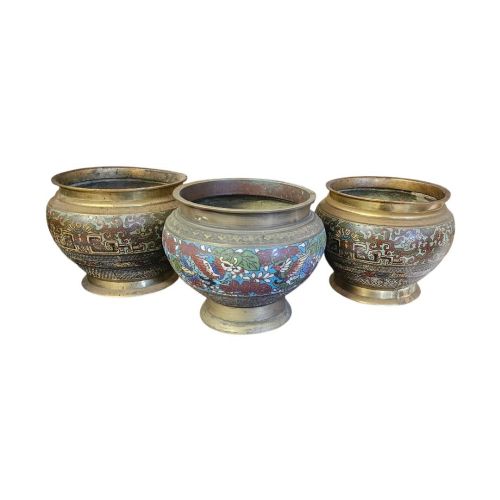
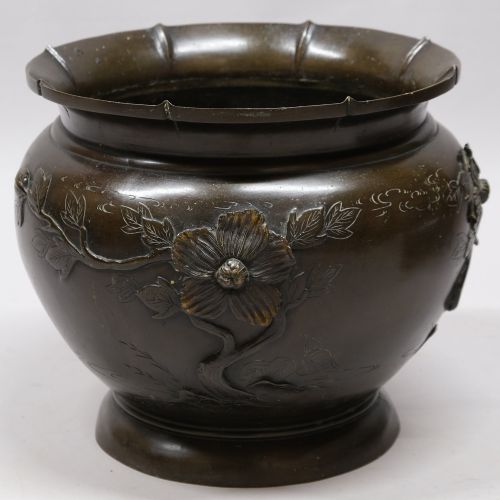
Maker workshops utilised cast bronze and brass, applying patinated finishes to achieve deep, dark surface tones on the metal. Artisans frequently incorporated detailed champlevé and cloisonné enamel work, fusing vitreous pastes within wire cells or recessed troughs across the exterior body. These techniques required precise temperature control during firing to bond the colourful enamels securely to the bronze substrate.
Construction methods involved both single-piece casting and sectional assembly for larger vessels, allowing workshops to produce heavy, durable containers. Craftsmen then hand-finished the surfaces, adding chased or engraved motifs that highlighted the natural grain and texture of the bronze.
Materials represented across the inventory combine traditional bronze and brass with vibrant cloisonne and champleve enamel decorations.
What varies in quality
The standard of execution in champlevé and cloisonné enamel work sets apart finer examples from simpler production, visible in the precision of the wire cells and the smoothness of the polished surface. Heavier weight and substantial wall thickness indicate robust casting practices typical of master workshops.
The complexity and depth of the patination and surface chasing further distinguish individual pieces, with superior vessels showing crisp, deliberate detailing rather than flat or uniform finishes.
The Oriental Bronze Jardinieres Glossary
- Jardiniere
- An ornamental pot or bowl designed to hold a plant or floral display. These vessels sit on tables or stands within domestic interiors.
- Cloisonne
- A decorative metalwork technique where fine metal wires form compartments on the surface to hold enamel paste. The piece is then fired and polished smooth.
- Champleve
- A method of enamel decoration where troughs or cells are hollowed directly into the bronze metal and filled with enamel. This creates colourful patterns flush with the surrounding surface.
- Meiji Period
- A Japanese historical era lasting from 1868 to 1912, known for prolific metalwork and decorative arts produced for domestic and export markets.
- Suiban
- A shallow Japanese basin traditionally used for holding water and supporting arrangements of cut flowers or stones in Ikebana. These vessels lack drainage holes.
- Patinated Bronze
- Metal treated with chemicals, heat, or natural agents to produce a deliberate surface coloration or protective oxide layer. This finish enhances the visual depth of the bronze.
Oriental Bronze Jardinieres: Frequently Asked Questions
What is a jardiniere used for?
These vessels function primarily as decorative containers to house potted plants or floral arrangements inside the home. Their sturdy construction holds soil and moisture while adding a distinct historical element to interior spaces.
Historically, specific variations like Japanese Suiban served specialised roles in holding water for Ikebana displays or Buddhist rituals. Today, they remain versatile objects for interior decoration and plant display.
How do I identify a Meiji period piece?
Japanese items from the Meiji period frequently exhibit distinct artistic styles associated with late nineteenth and early twentieth-century metalwork production. Workshops during this era utilised advanced casting techniques and intricate surface decoration.
Examining the specific motifs, patination style, and association with Japanese eras helps determine the approximate age of the vessel. Many pieces bear stylistic hallmarks characteristic of late nineteenth-century Japanese craftsmanship.
Are these pots waterproof?
Most antique bronze and enamel vessels hold water adequately, but checking the interior for old hairline cracks or historical repairs is advisable before direct planting. Many buyers utilise a plastic or ceramic liner inside the heavy bronze bowl to protect the antique surface from moisture and soil acidity.
Ensuring the vessel remains dry on the inside prevents mineral deposits from accumulating on the interior patina over time.
How do I clean a bronze planter?
Cleaning requires only a soft, dry cloth to remove dust from the surface and crevices of the metalwork. Avoid harsh chemical cleaners or abrasive polishes that can strip away the historical patination or damage delicate enamel sections.
Preserving the natural surface finish maintains the character and visual integrity of the bronze over years of display.