
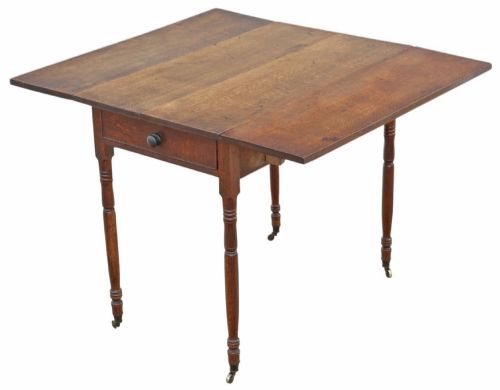
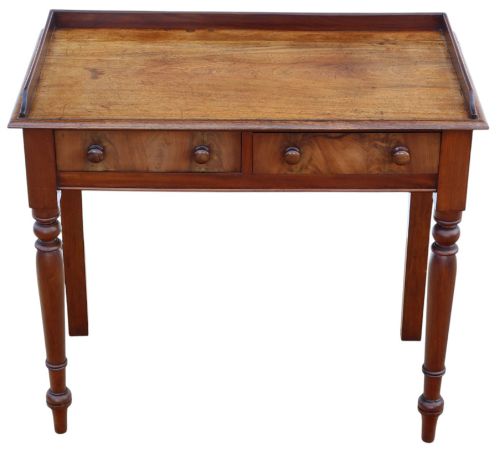
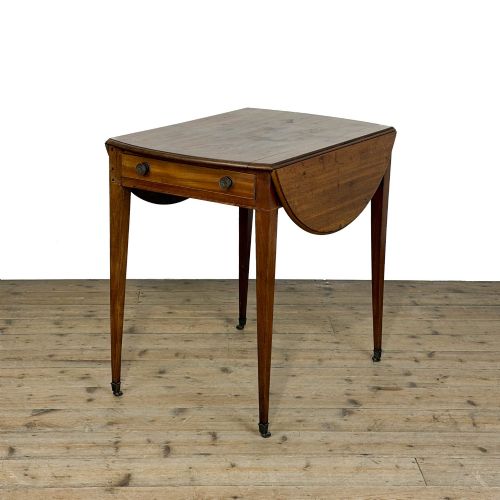

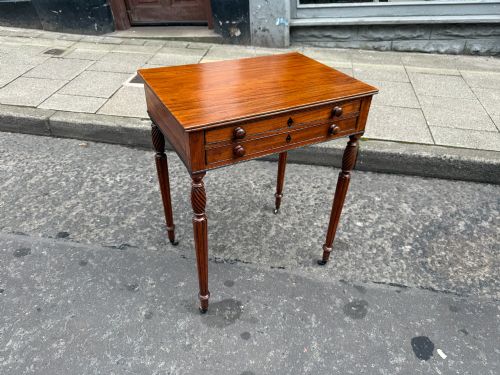
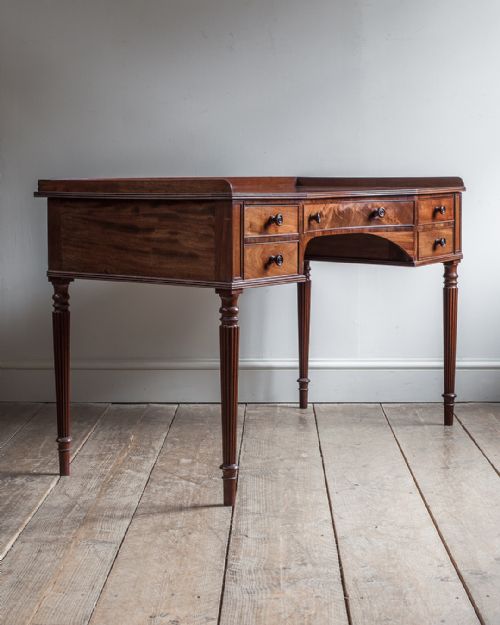
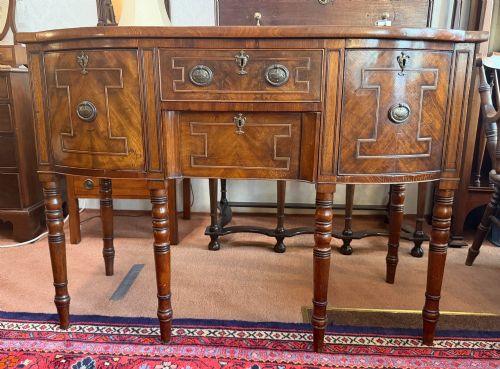
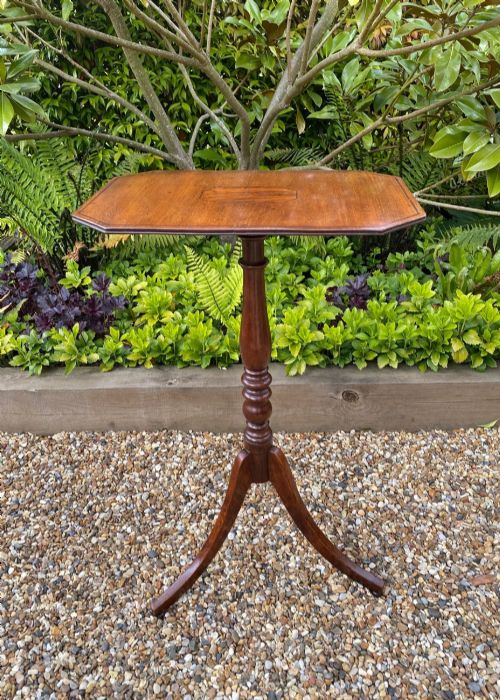
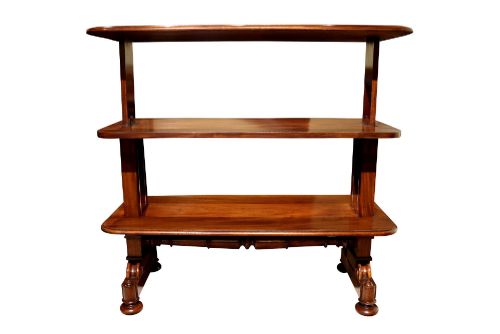
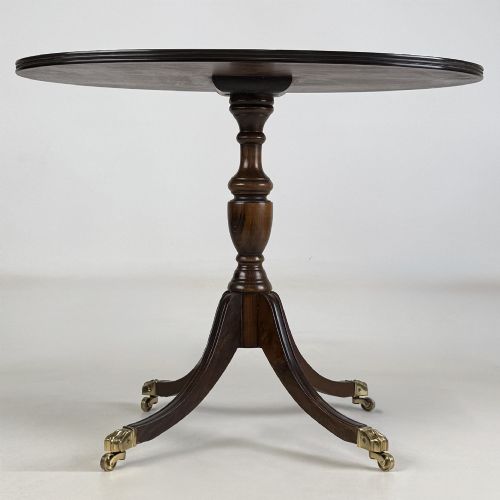
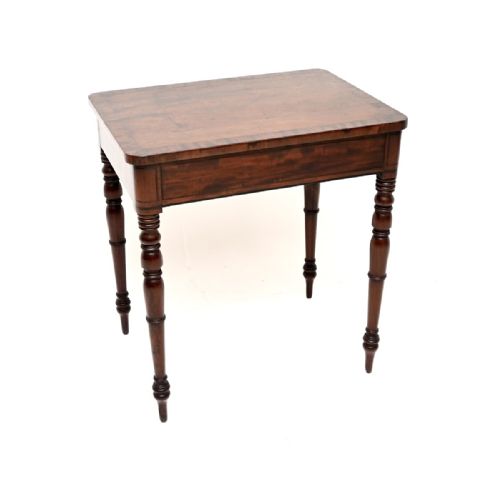
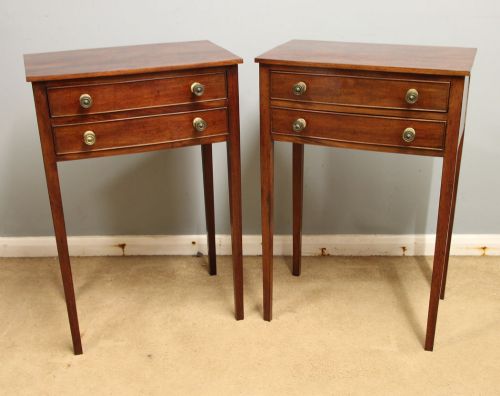
Regency Wooden Side Table
These pieces give a room a firm surface and solid proportions, bringing the useful practicality of a regency wooden side table into daily service.
Regency Wooden Side Table
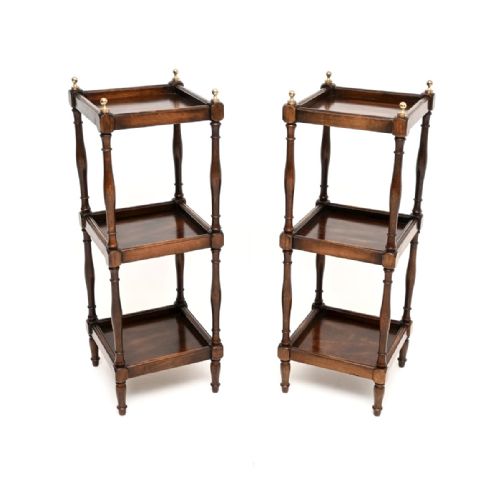
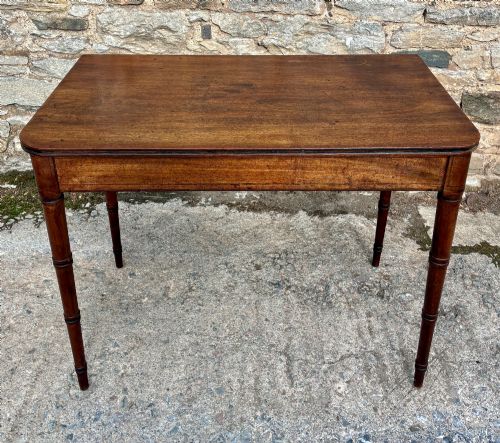
A regency wooden side table answers a need for compact, stable surfaces in sitting rooms and hallways, drawing on Georgian and nineteenth-century forms. The selection includes drop-leaf pembroke tables, occasional tables, console tables, and nests of tables designed for flexible placement.
Most examples meet the eye in mahogany, oak, or fruitwood, reflecting the common timbers of the period alongside later revivals. Buyers encounter everything from simple lamp tables to sofa tables and washstands built for specific household duties.
Makers of the original period worked within classical proportions, while later revival pieces from the twentieth century often adopt the same vocabulary. The forms range from D-shaped tea tables to small wine tables and quartetto nests.
Materials and construction
Joiners relied heavily on solid mahogany, oak, and fruitwood, often selecting figured veneers for tops and drawer fronts to catch the light. Brass castors, handles, and occasional inlay details appear regularly to finish the structural framework.
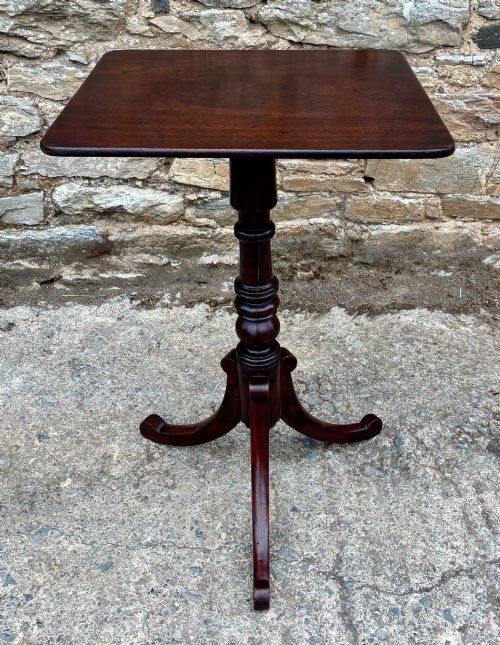
Tables utilise traditional frame construction with turned or pillar supports, drop-leaf hinges, and tilt-top mechanisms where movement was required. Timber movement was managed through careful seasoning and panel framing by the cabinetmaker.
Object types span side tables, console tables, pembroke tables, wine tables, nests of tables, writing tables, and washstands.
Quality differences
The choice of timber grain dictates much of the visual weight, with well-figured flame mahogany or satinwood marking out superior examples. Crisp turning on the legs and precise fit in the drawers separate standard utility pieces from finer parlour furniture.
Proportion and the handling of edge mouldings determine how well a table sits in a room. Original brass fittings and smooth mechanical actions for leaves and tilt-tops also distinguish better-made workshops.
The Regency Wooden Side Table Glossary
- Pembroke table
- A small rectangular table with hinged drop leaves on two opposing sides. These tables were easily moved and often placed beside chairs or against walls.
- Sofa table
- A rectangular occasional table designed to stand in front of a sofa, typically featuring drop leaves and end supports joined by a stretcher.
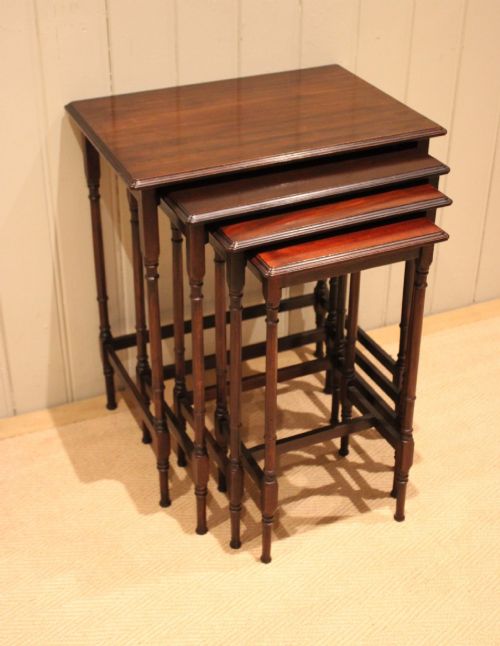
- Quartetto nest
- A set of four graduating tables that slide one beneath another. They became popular in the nineteenth century for serving tea or holding small items.
- Tilt-top action
- A mechanism allowing the table top to pivot to a vertical position when not in use. This saved floor space in smaller rooms.
- Washstand
- A utilitarian piece designed to hold a basin and jug for washing. They frequently include shelves or small drawers for toiletries.
Regency Wooden Side Table: Frequently Asked Questions
How were these tables used originally?
These tables served specific domestic functions such as holding lamps, writing letters, or serving tea in principal rooms. Pembroke and occasional tables moved easily where extra surface space was needed.
Larger console and sofa tables stayed anchored against walls or near seating arrangements to display decorative objects or books.
What is the difference between an occasional table and a side table?
An occasional table denotes a movable piece brought out for specific tasks or placed beside seating as required. A side table generally stayed against a perimeter wall.
Both forms share similar heights and structural proportions across nineteenth-century and revival periods.
How do I spot a later revival piece?
Revival pieces often show twentieth-century construction methods, machine-cut joints, or timber finishes that differ from nineteenth-century surfaces. Examination of the underside and drawer linings usually reveals the age of the timber.
Stylistic cues also point to revival dates when proportions or secondary woods do not match the primary period.
Are these tables suitable for daily use?
Solid timber construction and sturdy leg assemblies mean these tables tolerate normal everyday placement in modern homes. Using coasters and wax polish protects the polished wood surfaces from moisture.
Their compact footprints make them practical additions to hallways, bedrooms, and sitting rooms alike.