


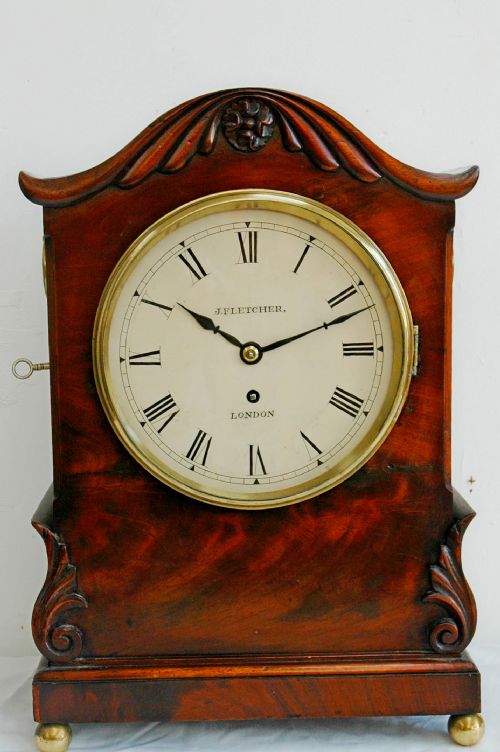


Regency Wooden Mantel Clock
A regency wooden mantel clock brings precision mechanics and rich cabinet timbers together on the shelf.
Regency Wooden Mantel Clock
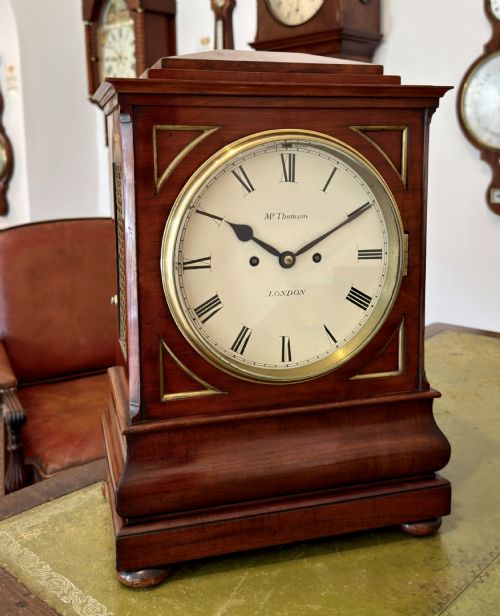
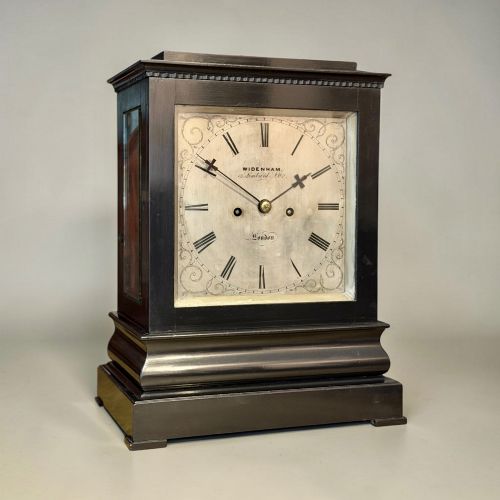
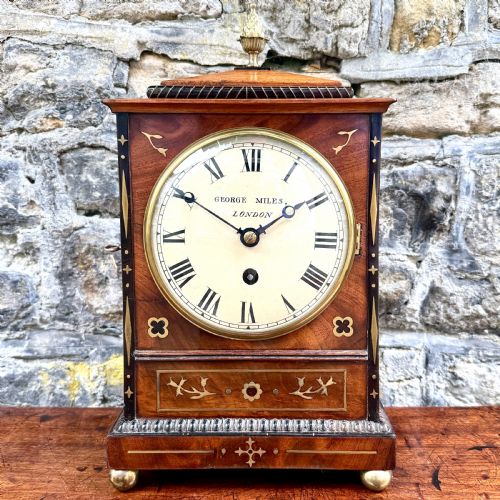
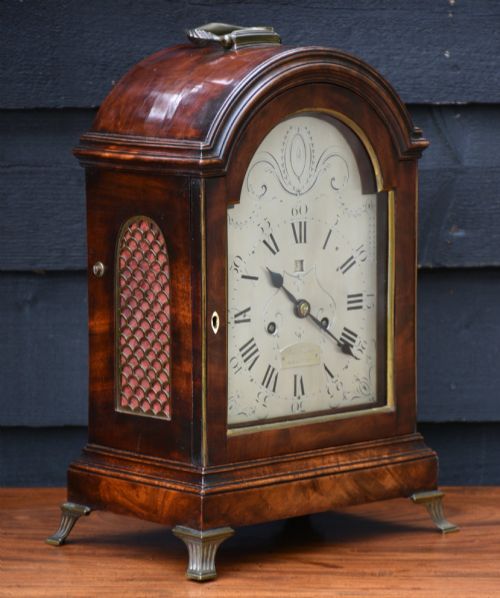
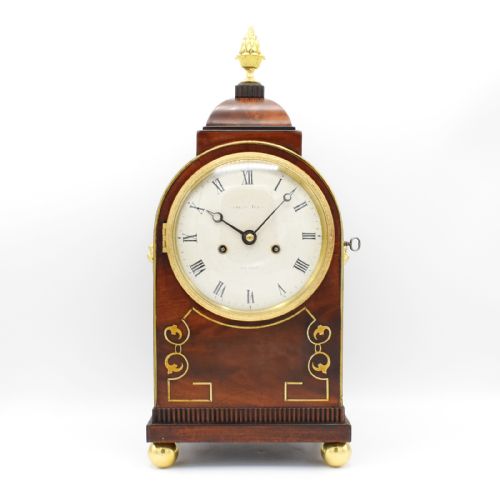
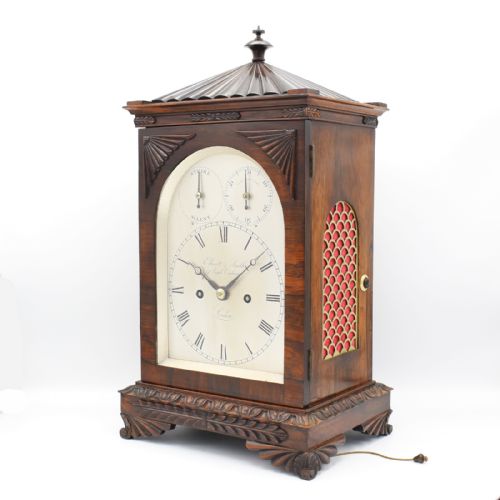
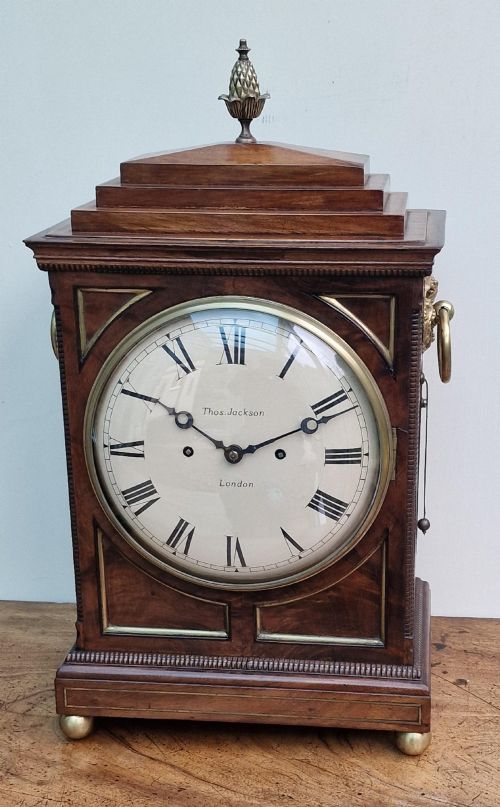
When searching for a regency wooden mantel clock, a buyer looks at sophisticated timepieces housed in architectural timber cases. The pieces most commonly met on this page date from the Regency and Georgian eras, taking the form of bracket clocks, library clocks, and table clocks.
Makers housed these movements in compact, portable cases designed to sit upon a mantelpiece, sideboard, or bracket shelf. The selection spans straightforward timepieces alongside striking and repeating mechanisms built by provincial and metropolitan horologists.
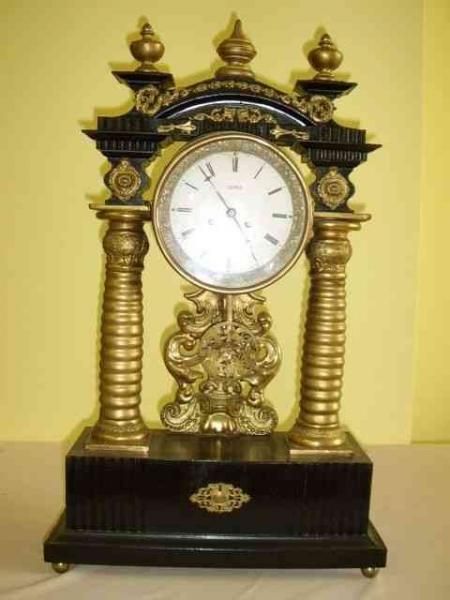
The dominant aesthetic draws upon classical restraint, utilising rich mahogany, rosewood, and ebonised wood. Alongside standard rectangular and bell-top profiles, collectors encounter lancet, balloon, pad top, and Gothic revival forms.
How they were made
Cabinetmakers constructed the architectural cases primarily from solid mahogany and rosewood, frequently incorporating brass inlay, ormolu mounts, and delicate ebony stringing to accentuate the timber grain. Glass protected the delicate dials while permitting a clear view of the hands.
The internal mechanics relied upon brass fusee driven movements, which used a chain or cord and a conical pulley to equalise the pull of the mainspring as it wound down. Dials were formed from enamelled white or silvered metal, marked with crisp black numerals and fitted with finely pierced hands.
Listings feature mahogany, rosewood, and ebonised wood cases, spanning Georgian, Regency, and Victorian periods.
What varies in quality
Quality reveals itself in the crispness of the cabinetmaker's joinery and the selection of the timber veneers, where highly figured mahogany or pollard oak elevates a simple geometric case. The integration of brass inlay and cast ormolu mounts demonstrates the artisan's investment in decorative detail.
On the mechanical side, the sophistication of the movement dictates the standing of the piece. Simple timepieces sit below twin fusee striking mechanisms, repeating clocks, and complex year-going movements produced by master watchmakers.
Thomson of London·Widenham of London·Charles Pratt London·Ellicott and Smith·Thomas Jackson·Bush of London·L. Vick of Stroud·Thomas Moss·Cording of London·Des Granges of London·Wilkinson Leicester·J. Kingerley Manchester·Hyde of Salisbury·Hampson and Son·J. Condliff Liverpool·Pennington of Camberwell·Walker and Hall·McCabe London·John Leroux·Purvis of London
The Regency Wooden Mantel Clock Glossary
- Fusee
- A conical pulley used in spring-driven clocks to equalise the driving force as the mainspring unwinds. This mechanical device ensures consistent timekeeping throughout the running cycle.
- Bracket clock
- A portable household clock originally designed to rest upon a wall bracket or a table. These domestic timepieces feature robust spring-driven movements housed in decorative wooden cases.
- Silvered metal
- A brass dial plate treated with a silver solution to create a matte, reflective white finish. Engraved numerals and maker signatures are typically filled with black wax for legibility.
- Lancet top
- A clock case profile featuring a pointed, arched top resembling a lancet window. This architectural silhouette gained popularity during the Regency period.
- Twin fusee
- A movement utilising two separate fusee cones and spring barrels, one powering the going train and the other driving the striking or chiming mechanism.
Regency Wooden Mantel Clock: Frequently Asked Questions
What is a fusee movement?
A fusee movement uses a conical pulley and a chain to regulate the power delivered from the mainspring to the gear train. This clever mechanical device ensures the clock maintains steady tension as the spring loses power, resulting in more accurate timekeeping.
Most high-quality British clocks from the Georgian and Regency periods rely on this system. Collectors prize fusee movements for their superior engineering and enduring reliability.
How do I wind my bracket clock?
Bracket clocks are typically wound using a specialised winding key inserted into small arbors on the dial face. Care must be taken not to overwind the mainspring, stopping as soon as resistance is felt.
Many of these older mechanisms require an eight-day wind. Consulting a professional horologist for an initial service and demonstration is recommended before winding an antique movement for daily use.
Where should I place a wooden mantel clock?
A mantel clock requires a stable, level surface away from direct sunlight, drafts, and fluctuating heat sources like radiators. Wooden cases and delicate internal oils are sensitive to rapid environmental changes.
Placing the clock on a sturdy mantelpiece or sideboard ensures the pendulum or balance wheel operates evenly. A level base is essential for the escapement to maintain an even beat.