



Regency Wooden Hall Chairs
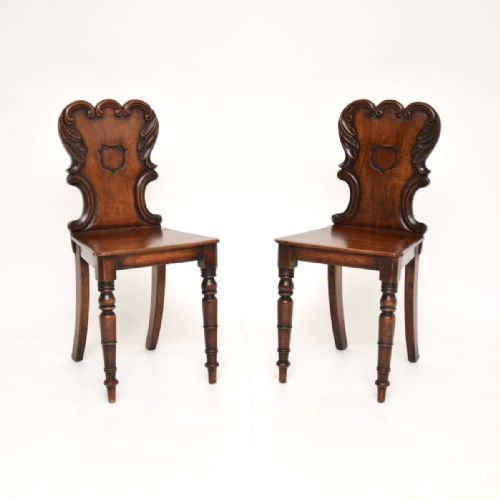
Regency wooden hall chairs are formal reception seats crafted to anchor grand entranceways with sculptural timber backs and rigid upright proportions.
Regency Wooden Hall Chairs
Regency wooden hall chairs are rigid, upright reception seats designed to occupy grand entranceways rather than domestic living spaces. These pieces date predominantly from the Regency era, with related examples spanning the Georgian, William IV, and Victorian periods.
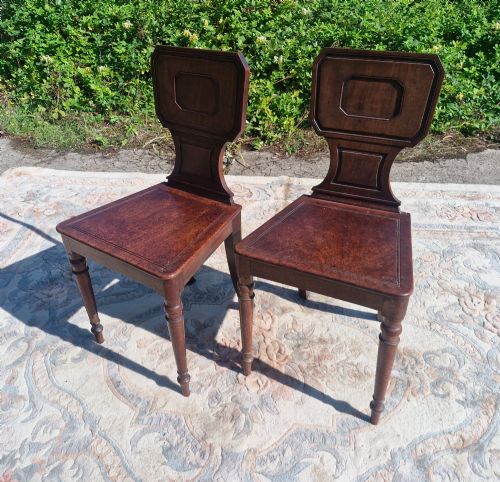
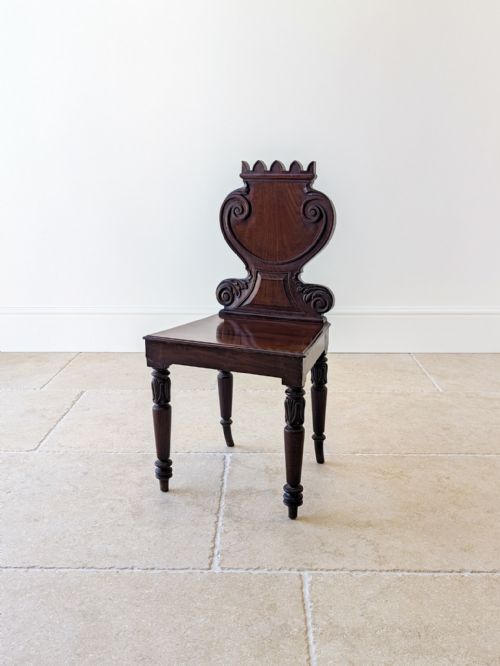
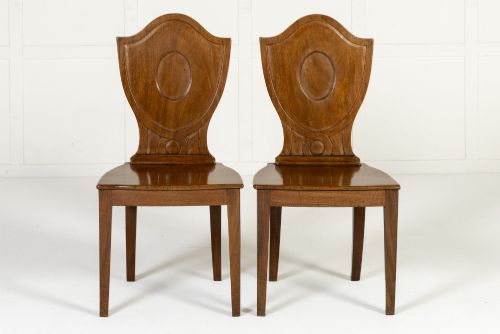
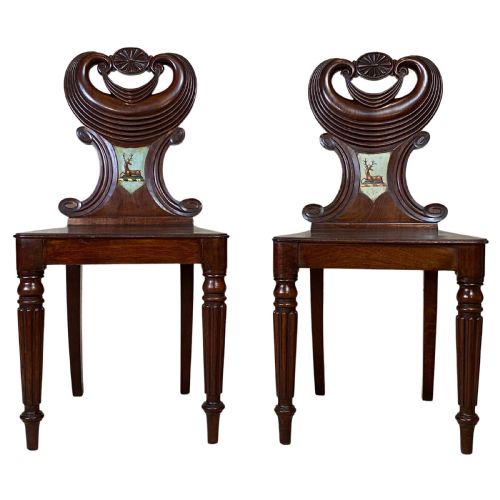
The form relies on solid timber construction paired with carved backrests, which frequently incorporate heraldic shields, painted crests, or pelta and shell motifs. The version most commonly encountered on this page is the single chair or matched pair rendered in dense mahogany.
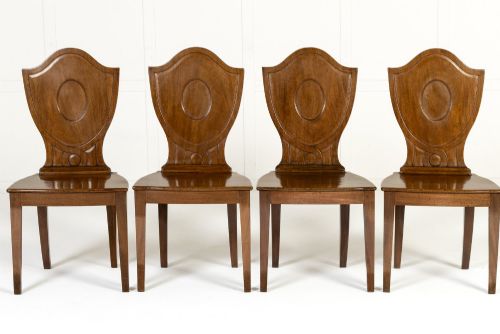
Makers utilised various timber species beyond standard mahogany, including oak, walnut, and ebonised woods. Alongside pairs, buyers will locate sets of four or five chairs designed to line hallway walls.
Construction and Materials
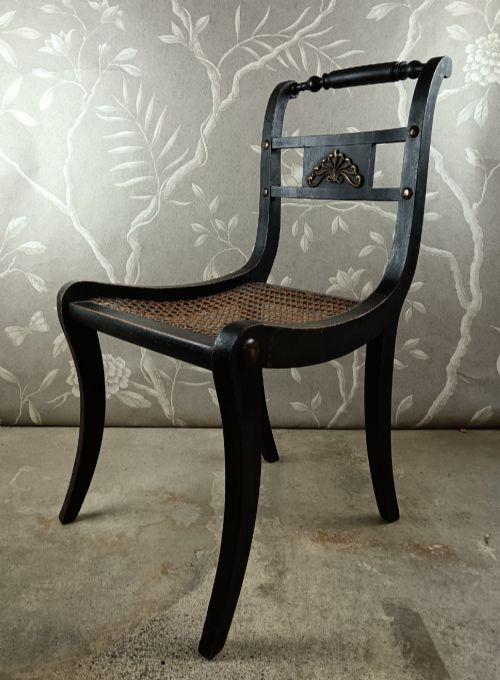
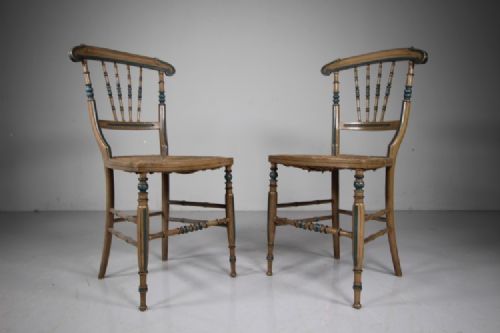
Cabinetmakers constructed these reception seats primarily from dense hardwoods, with mahogany, oak, and walnut forming the structural foundation. Timber surfaces frequently received ebonised finishes, simulated graining such as rosewood, or hand-painted and gilded armorial decoration.
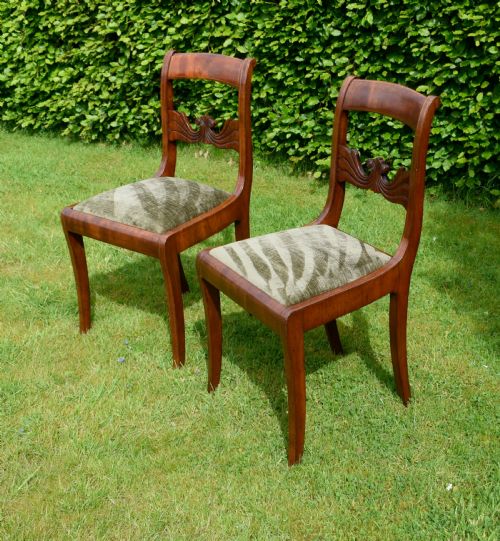
Backrests were typically carved from solid timber boards rather than upholstered, displaying shield, pelta, or shell shapes in relief. Joinery methods relied on sturdy pegged joints to withstand the heavy wear expected in entrance halls, occasionally complemented by turned or sabre legs.
Many of these chairs bear the painted crests of families who expected visitors to admire the family coat of arms while waiting in the drafty hall.
Judging Quality
Quality rests primarily on the depth and crispness of the carved ornament on the solid wood backrest, separating standard production from workshop-attributed pieces. Sharp relief work on armorial crests and moulded shell backs indicates superior hand-tooling by skilled artisans.
The choice of timber grain and structural integrity also define the upper tier of examples. Dense, well-figured mahogany combined with robust leg construction and original surface treatments distinguishes finer seating from later or simpler provincial work.
Gillows
The Regency Wooden Hall Chairs Glossary
- Armorial
- Bearing a heraldic crest, coat of arms, or family badge painted or carved onto the chair back. These details often denote the lineage of the original commissioning estate.
- Pelta
- A crescent-shaped decorative motif derived from ancient shields, frequently utilised in the openwork carvings of Regency backrests. This classical shape lends architectural weight to the timber silhouette.
- Ebonised
- Timber treated with a dark stain or finish to imitate expensive ebony wood. This technique was popular for creating high-contrast profiles during the Regency period.
- Sabre leg
- A concave, outwardly curving leg tapering towards the foot, reminiscent of a cavalry sword. This form provides structural stability while lightening the visual weight of the chair.
- Shield back
- A chair back shaped in the outline of a heraldic shield, popularised during the Georgian and Regency eras. It provides a flat canvas for painted armorials or carved central splats.
Regency Wooden Hall Chairs: Frequently Asked Questions
What is a hall chair?
A hall chair is a rigid wooden seat designed historically for the entrance hall of a grand country house or townhouse. They were seldom used for long periods of sitting, serving instead as architectural furniture for waiting visitors or servants.
The seats feature solid timber construction and upright backs carved with crests or heraldic motifs. Their compact footprint allowed them to line hallway walls without obstructing passage.
Are these chairs comfortable to sit on?
These seats were built for formality and display rather than ergonomic lounging, featuring solid wood or cane seats without upholstery. Their upright posture encourages an erect seating position suited to brief moments in an entryway.
While original examples remain sturdy, modern users often add loose squabs or cushions if utilising them for extended dining or desk work.
How do I identify a Regency period piece?
Regency pieces typically display classical revival motifs such as sabre legs, reeded frames, and classical shield or pelta backrests. The timber is heavily weighted towards dense mahogany, sometimes finished with ebonised and gilt highlights.
Construction traits from this era include hand-cut joinery and solid timber panels without modern adhesives. Examining the wear patterns on the seat edges and feet also helps confirm period authenticity.
Where should I place a hall chair at home?
These pieces function naturally in entranceways, hallways, or narrow corridors where deep seating would block movement. Their striking carved backs make them effective as standalone accent pieces against a plain wall.
They also serve well in bedrooms or studies as occasional seats when paired with a small desk or console table.