


Regency Wine Cellarette
A regency wine cellarette is a substantial timber chest designed to store and cool bottles beside the dining table.
Regency Wine Cellarette
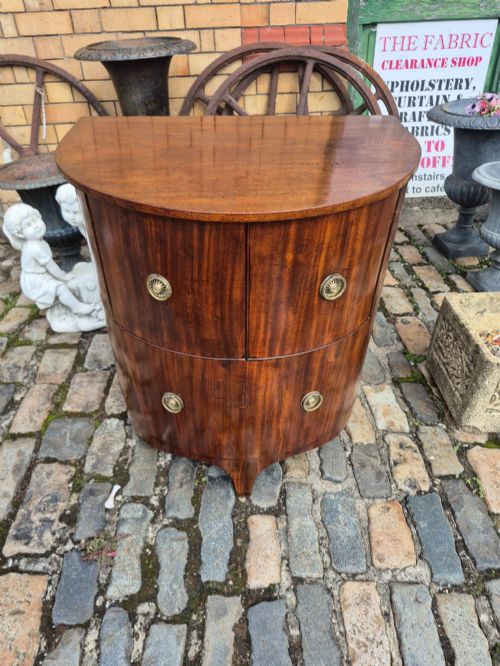
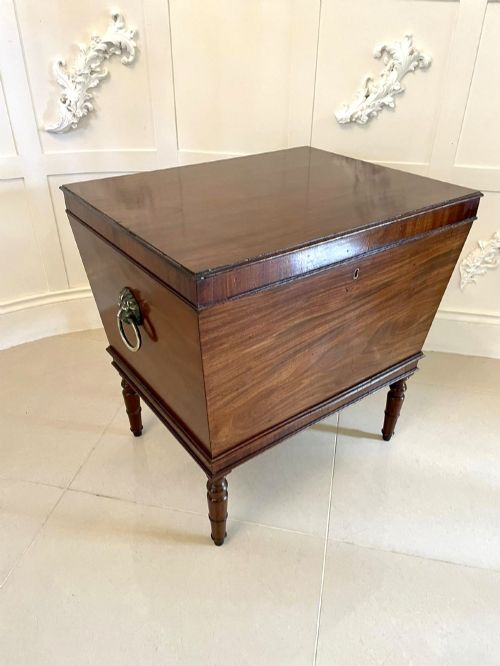
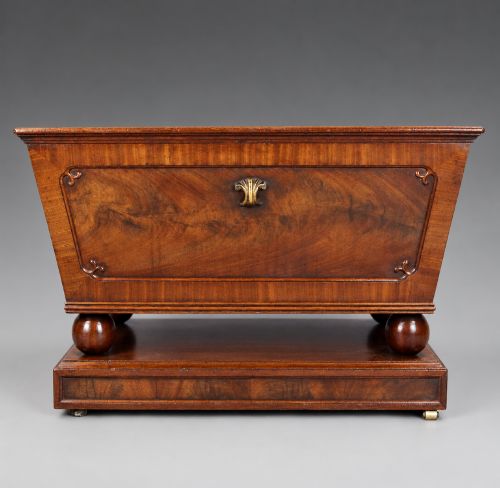
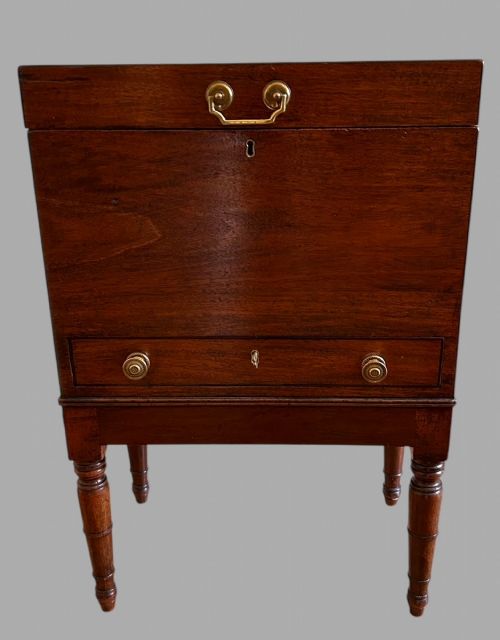
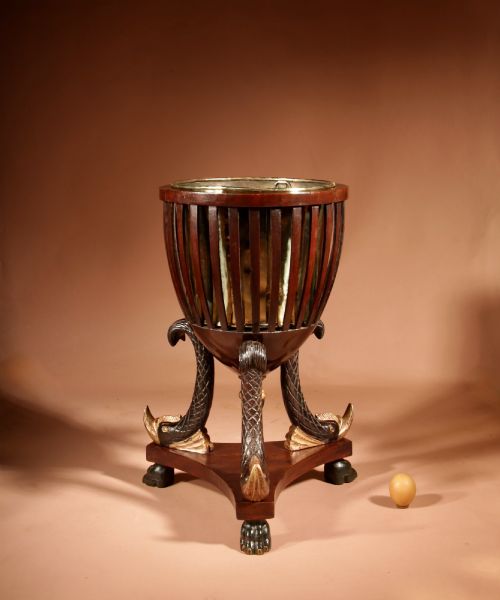
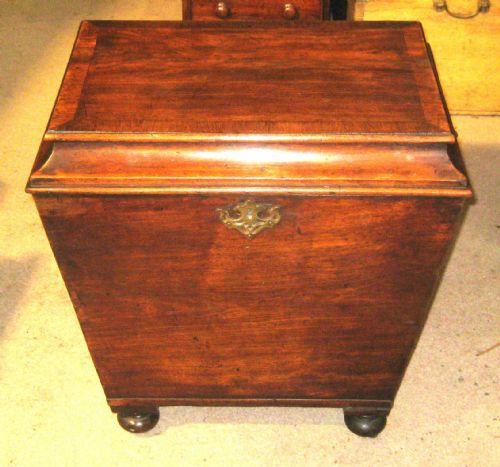
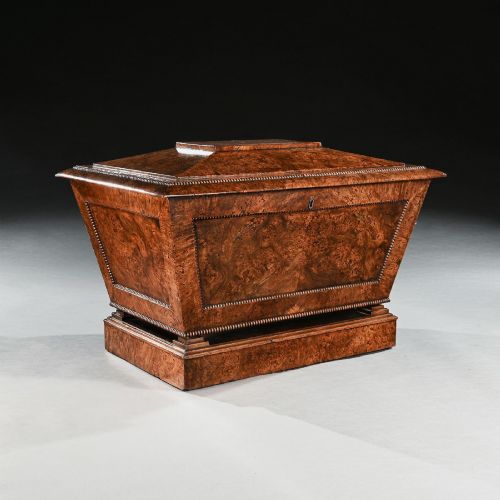
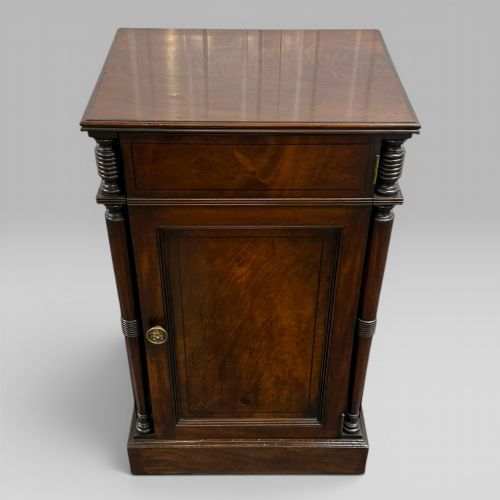
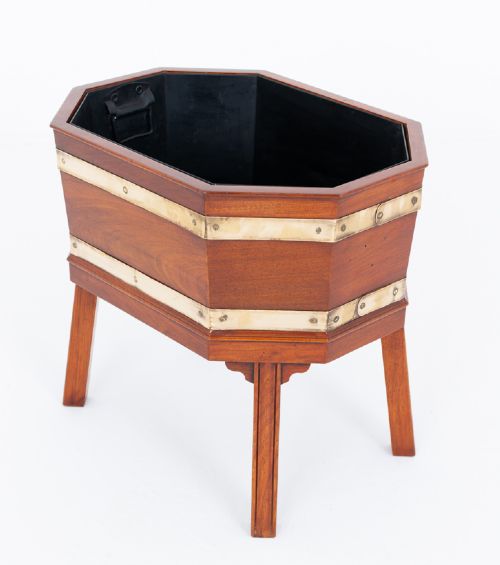
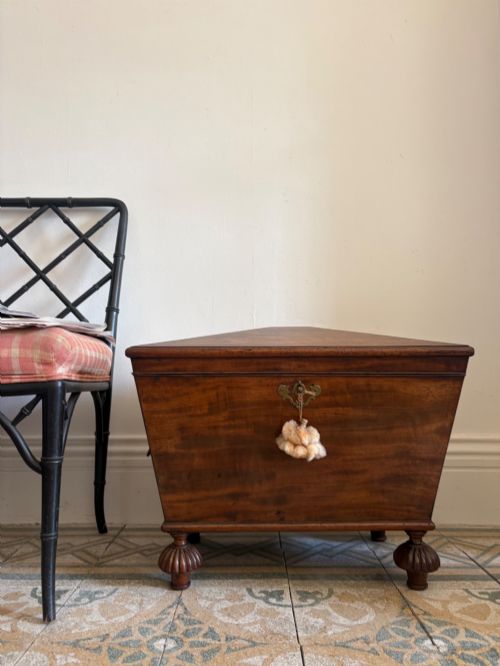
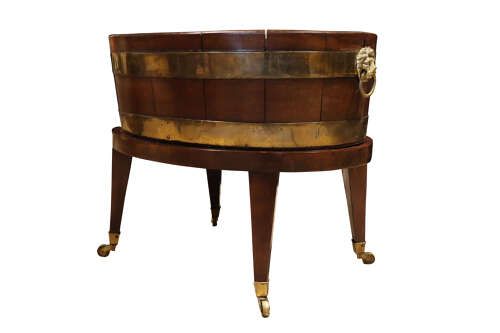
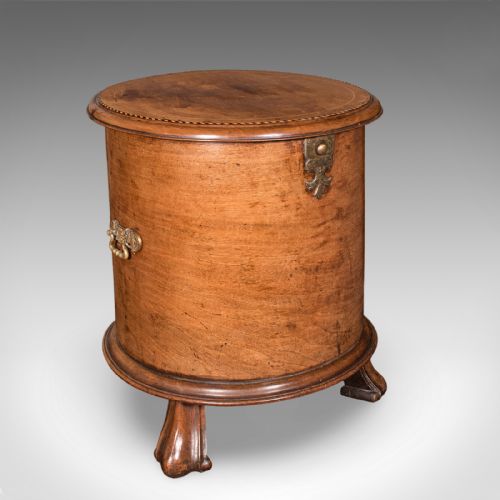
A regency wine cellarette typically takes the architectural form of a classical sarcophagus, standing on paw feet, castors, or a dedicated plinth base. These pieces date predominantly from the Georgian, Regency, and William IV periods of the early nineteenth century.
The primary function of these boxes was to hold glass bottles and ice beneath the dining table, though many examples later double as plant jardinieres or planters. Sarcophagus and box shapes dominate the available selection, frequently lined internally with lead or zinc to retain moisture and temperature.
Makers of the era drew heavily on classical revival motifs, producing tapered rectangular bodies, stepped lids, and panelled sides that echo ancient monumental tombs.
Materials and Construction
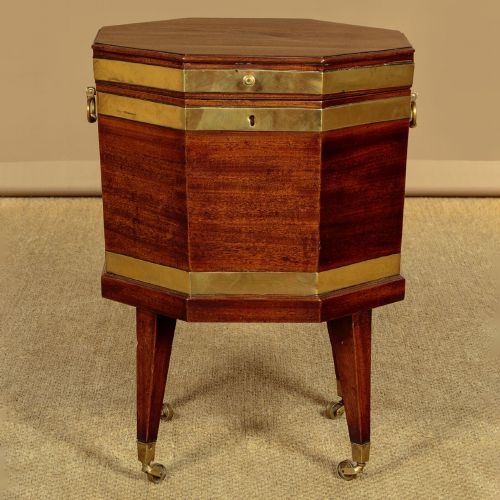
Makers relied heavily on solid and veneered mahogany, often selecting flame mahogany, figured timber, or pollard oak to achieve deep, rich grain patterns across wide surfaces. Walnut, burr maple, and ebonised wood also appear among the listed pieces, providing darker contrasts or distinct colouration.
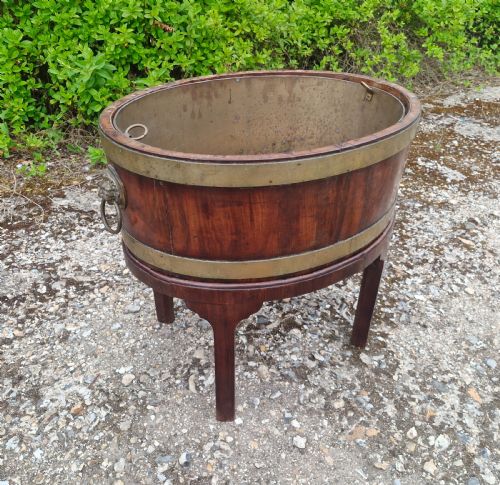
Metal components form an integral part of the construction, utilising brass for heavy carrying handles, lion-paw mounts, binding strips, and escutcheons. Internal compartments frequently incorporate lead or zinc linings, sometimes coopered like miniature barrels to hold liquid safely against the timber.
Several examples retain their original heavy lead linings, having spent centuries guarding claret before pivoting to host potted ferns.
Craftsmanship and Proportion
The distinction between ordinary and exceptional pieces lies in the choice of timber and the precision of the joinery. Highly figured flame mahogany and pollard oak veneers require consummate skill to lay evenly across curved sarcophagus lids without buckling.
Carved details such as paw feet, scrolling side handles, and classical mouldings separate standard workshop output from pieces bearing attribution to notable makers like Gillows. Original internal lead linings and operational brass castors further distinguish well-preserved examples from altered ones.
Gillows·Gillingtons·T Feetham
The Regency Wine Cellarette Glossary
- Cellarette
- A lockable timber chest or box used for storing wine bottles near the dining table. They frequently include internal divisions for individual bottles.
- Sarcophagus
- A monumental coffin-shaped design featuring a steep, gabled or domed lid and a tapered body. This silhouette became the defining shape for large wine coolers during the Regency period.
- Coopered
- Built using wooden staves joined tightly together with metal bands, much like a traditional cask or barrel. This technique kept internal lead linings secure.
- Escutcheon
- A protective metal plate surrounding a keyhole. On these pieces, they are typically cast in brass to match the side handles and mountings.
- Patina
- The deep surface sheen and mellow colour developed by aged timber over decades of handling and polishing. It serves as an indicator of genuine age.
Regency Wine Cellarette: Frequently Asked Questions
What is a regency wine cellarette?
A regency wine cellarette is a heavy timber storage chest built to hold wine bottles and ice in dining rooms during the early nineteenth century. These pieces usually feature classical sarcophagus proportions and heavy wooden or metal handles.
Craftsmen constructed them primarily in mahogany, often highlighting the grain with flame veneers and brass mountings. Today, they function as striking statement pieces or alternative plant stands.
How were they used originally?
Dining companions placed these boxes on the floor beside the dining table during formal meals. Servants filled the internal lead or zinc compartments with ice and water to chill wine before serving.
The lockable lids ensured expensive imported wines remained secure between courses and throughout long dinner parties.
How do I identify a Regency period piece?
Regency pieces typically display classical revival motifs, such as carved paw feet, bold brass ring handles, and architectural mouldings. The timber is predominantly solid mahogany or finely figured veneer over oak secondary woods.
Construction methods reflect early nineteenth-century workshop practices, including hand-cut dovetails and heavy cast brass hardware without modern screw types.
Can I use an antique cellarette as a planter?
Many surviving cellarettes feature original lead or zinc linings designed to hold moisture, making them practical for housing potted plants indoors. Historical examples frequently served this secondary purpose as interior styles changed.
Gardeners should still protect vulnerable antique timber from standing water by placing saucer inserts inside the historical metal lining.