
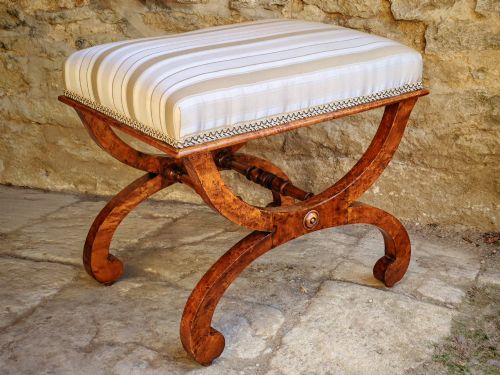


Regency Upholstered Ottoman
Regency upholstered ottomans are seating forms spanning stools, benches, and window seats rooted in the nineteenth century, prized for rich timber frames and plush textiles.
Regency Upholstered Ottoman
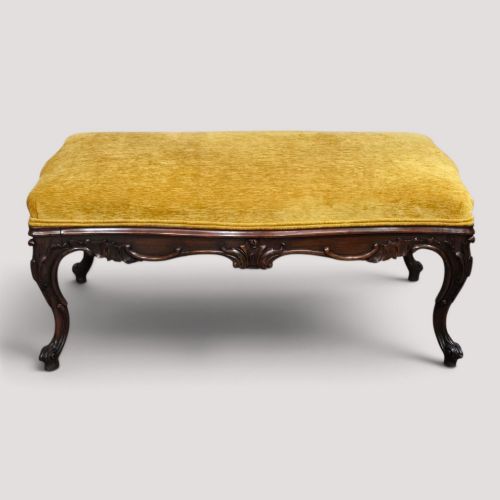
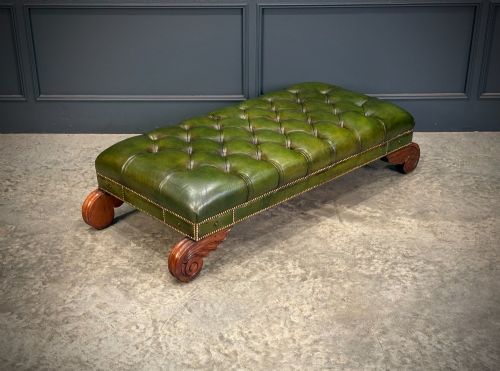
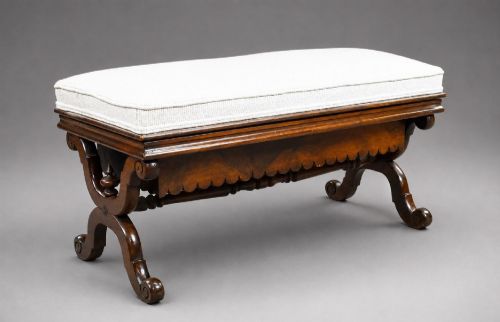
A regency upholstered ottoman encompasses a diverse selection of low seating forms, including footstools, long benches, window seats, and box ottomans designed for domestic comfort. The pieces on this page span the Regency, Georgian, William IV, and Early Victorian periods, alongside nineteenth-century interpretations.
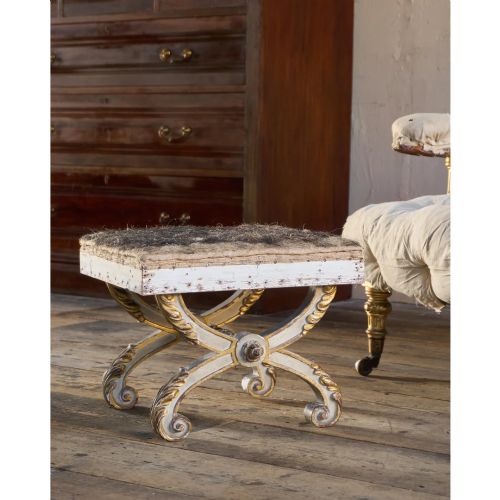
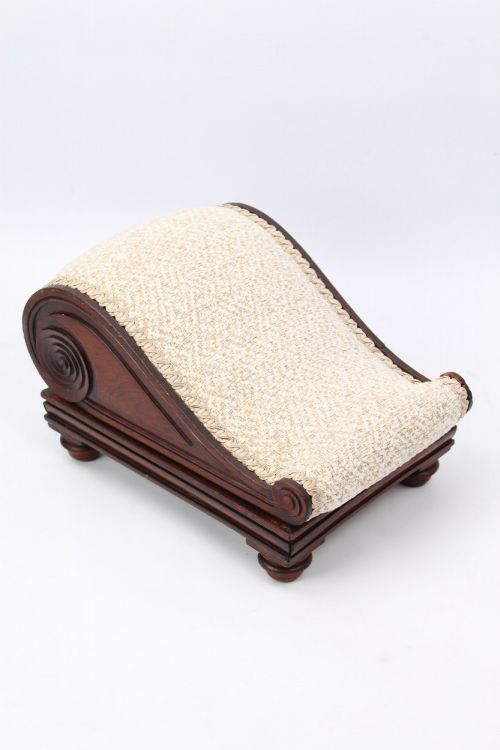
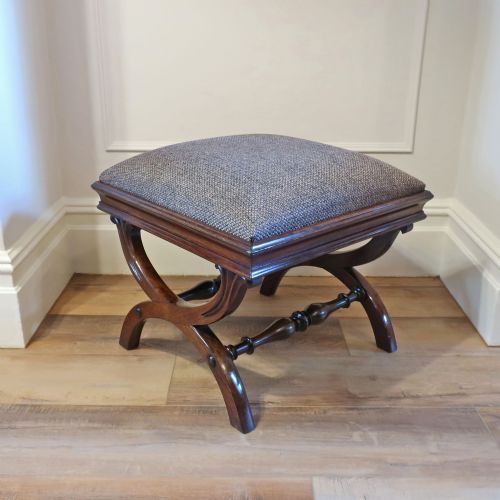
Makers and workshops of the era produced these forms in variations like the X-frame curule stool, scroll-top footstool, and waisted window seat. Mahogany and rosewood dominate the structural framework, paired with distinct upholstered surfaces.
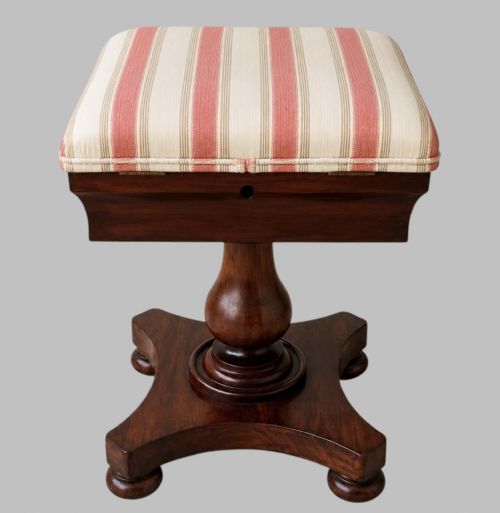
Origins stretch across English, Irish, French Empire, and Anglo-Indian traditions, showing variety in leg configurations such as sabre, cabriole, and fluted designs. Many items function dually as sewing box stools or work tables alongside traditional footrests.
Evaluating Quality and Execution
The distinction between tiers rests upon the choice of timber and the precision of the carved details, such as lions paw feet or fluted legs. Rosewood and figured mahogany examples with complex joinery command greater attention than plain wooden frames.
Upholstery finish and the preservation of original textiles, whether buttoned leather or tapestry, influence the overall character of the piece. Well-balanced proportions in specialised forms like X-frame curule stools and box ottomans separate standard output from superior examples.
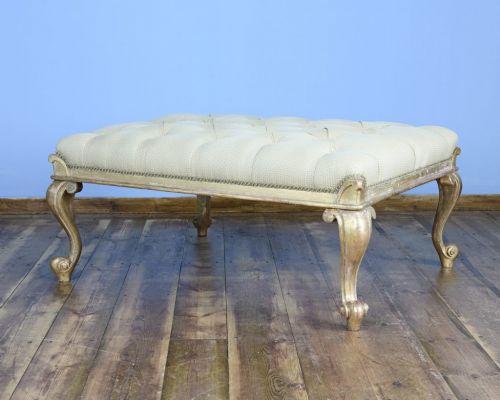
Listings feature rosewood and mahogany predominantly, complemented by leather, velvet, and giltwood finishes across nineteenth-century forms.
Miles & Edwards·Mathew Gregson
The Regency Upholstered Ottoman Glossary
- Regency
- A stylistic period spanning the early nineteenth century defined by classical restraint and revivalism. It draws heavily from ancient Roman, Greek, and Egyptian motifs.
- Curule stool
- An ancient Roman magistrate chair design characterised by intersecting curved legs forming an X-shape. These pieces often feature folding or fixed cross-frame construction.
- Ottoman
- A low upholstered seat or bench without a back or arms, sometimes featuring internal storage. In nineteenth-century contexts, it frequently doubles as a footstool or work box.
- Giltwood
- Wood that has been coated with gold leaf or gold paint for decorative effect. This technique highlights carved details on high-status frames.
- Sabre leg
- A concave curving leg that tapers toward the foot, typical of furniture from the Regency era. It mirrors the sweep of a cavalry sabre.
Regency Upholstered Ottoman: Frequently Asked Questions
What is a regency upholstered ottoman?
A regency upholstered ottoman is a low seat designed during the early nineteenth century, functioning as a footstool, window seat, or bench.
These pieces combine timber frames in mahogany or rosewood with padded surfaces upholstered in leather, velvet, or fabric.
How do I use an ottoman in a room?
These pieces fit easily at the foot of a bed, beneath a window, or beside a fireside chair as a functional footrest.
Box variations also provide discreet storage for small domestic items while offering secondary seating.
How can I tell a Regency piece from a Victorian one?
Regency items typically display clean classical lines inspired by ancient Greco-Roman design, often utilising rosewood or polished mahogany.
Later Victorian pieces introduce heavier proportions, revival styles like Rococo, and darker walnut or varied wood framing.
Are these ottomans comfortable for daily seating?
Most forms function primarily as footstools, window seats, or occasional benches rather than deep lounging chairs.
Their firm padding and compact dimensions suit short periods of sitting or resting the feet.