




Regency Upholstered Bench
A regency upholstered bench brings architectural poise to a room, offering low-slung seating fashioned from rich timber and fine textiles.
Regency Upholstered Bench
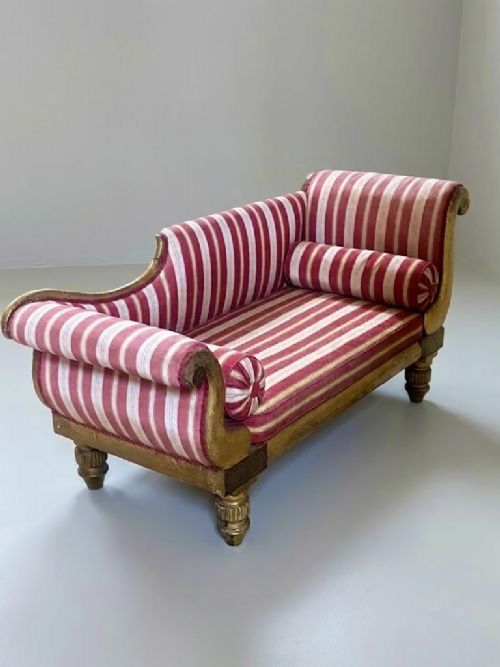
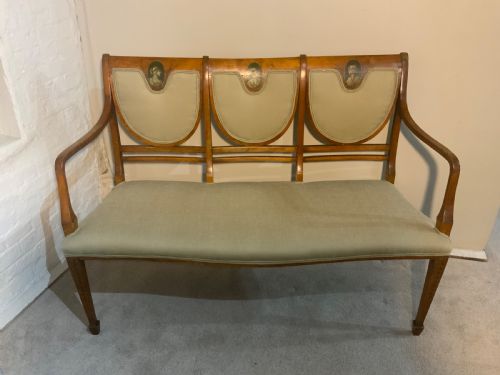
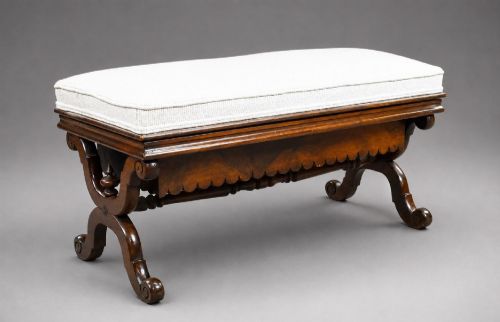
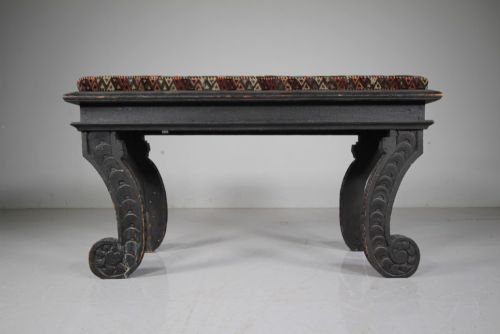
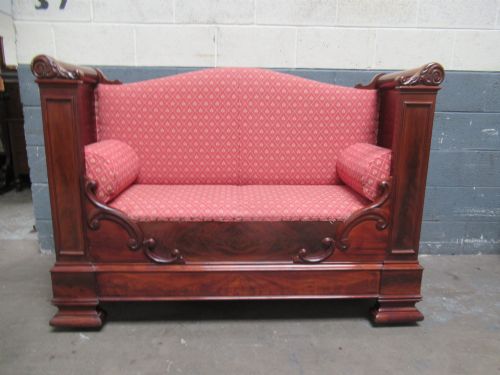
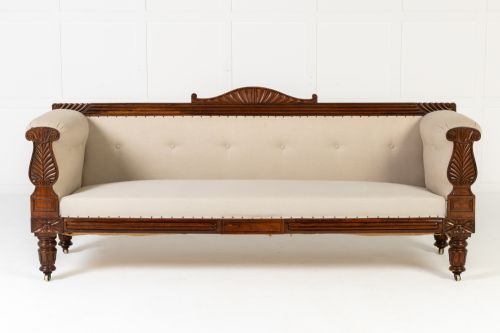
When searching for a regency upholstered bench, buyers encounter a varied selection of long seats, window seats, stools, and daybeds originating primarily from the early nineteenth century. These pieces bridge the gap between architectural seating and movable furniture, often featuring scroll ends, X-frames, or clean linear profiles designed to sit beneath tall windows or along hallways.
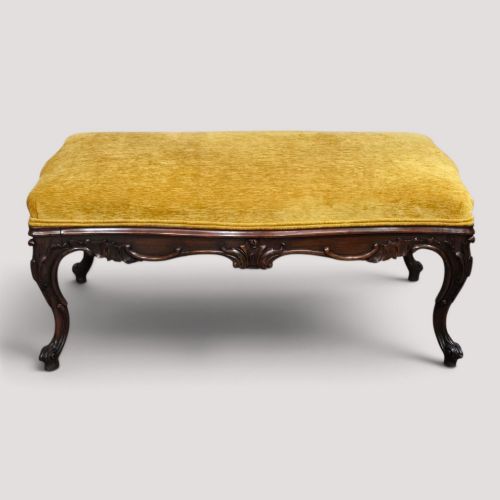
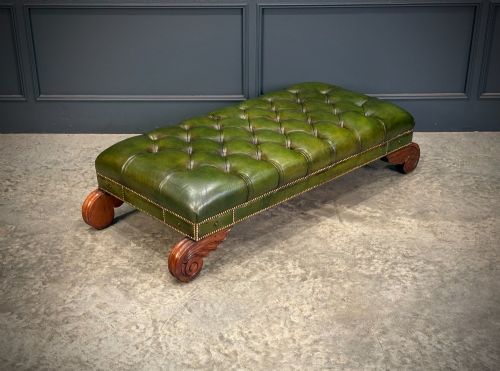
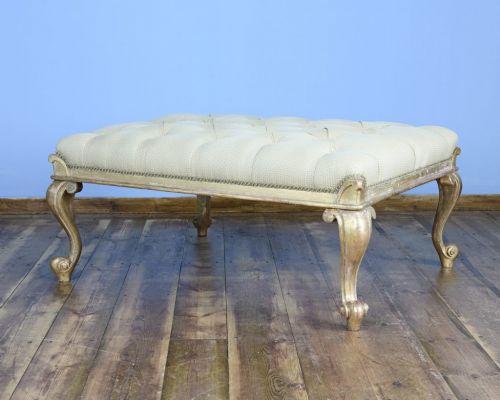
The selections on this page span the Regency period itself as well as later revivals, incorporating related forms such as William IV settees, French Empire-style sofas, and footstools. Mahogany and rosewood form the backbone of the timber choices, frequently accompanied by giltwood frames and upholstered pads finished in leather, velvet, or antique silk.
How they were made
Cabinet makers of the era relied heavily on dense hardwoods like mahogany and rosewood, alongside decorative options such as satinwood, burr maple, and parcel giltwood. Timbers were turned, carved, or simulated to achieve the classical lines demanded by the style, often incorporating brass mounts or fluted legs.
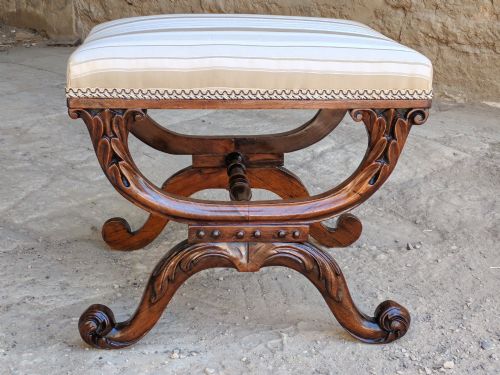
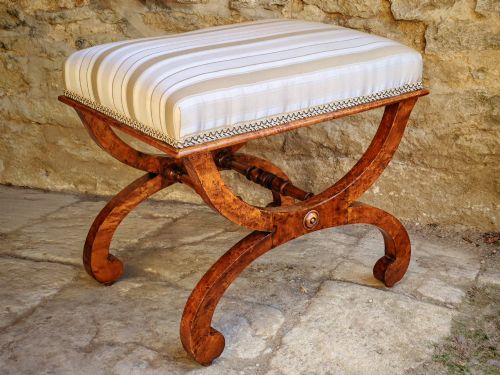
Upholstery techniques involved traditional stuffing secured over webbed frames, finished with antique striped silk, velvet, leather, or plain textiles. Frames frequently employed mortise and tenon joinery, particularly visible in structural forms like X-frame curule stools and double scroll-ended daybeds.
Several listings feature X-frame stools historically designed so dignitaries could fold them up and carry them between rooms.
What varies in quality
The degree of hand-carving on the wooden frame distinguishes standard joinery from exceptional cabinet work, particularly around scroll ends, cabriole legs, and parcel-gilt details. Timber selection also dictates value, with figured rosewood, burr maple, and solid giltwood sitting at a different level of craftsmanship than painted pine or simpler mahogany variants.
The integrity of the structural frame, especially in weight-bearing pieces like long benches and daybeds, determines longevity. Pieces retaining their original configuration, joinery, and appropriate period textile coverings hold greater integrity than heavily altered examples.
Miles & Edwards
The Regency Upholstered Bench Glossary
- Curule stool
- A form of X-framed seat based on ancient Roman magistrate chairs, prized for its balanced structural geometry.
- Giltwood
- Wood that has been coated with a thin layer of gold leaf, frequently seen on formal Regency and French Empire frames.
- Window seat
- A long, narrow bench designed specifically to fit within the architectural recess of a period window.
- Scroll end
- A sweeping, upward-curving wooden terminal found at one or both ends of a sofa, daybed, or settee.
- Ottoman
- A padded, upholstered seat without a back or arms, often built as a box or large footstool.
Regency Upholstered Bench: Frequently Asked Questions
Where should a regency upholstered bench go?
These pieces suit entrance halls, foot-of-the-bed placements, or beneath large windows where their low profiles maintain sightlines.
Their elongated forms also anchor living spaces when paired against larger sofas or country house seating groups.
Were these benches used as daybeds?
Certain variations featuring single or double scroll ends function explicitly as daybeds, chaises longues, or extended window seats.
Their construction allows for reclining while maintaining the structural rigidity of a formal wooden frame.
What fabrics were originally used?
Period pieces frequently utilised durable leathers, woven textiles, velvet, and patterned silks such as antique stripes.
many surviving examples have been reupholstered multiple times across their operational lifespan to match changing interior tastes.