





Brown Wooden Couch
These brown wooden couch options bring substantial presence to a room, offering period seating crafted from rich timbers like mahogany and walnut.
Brown Wooden Couch
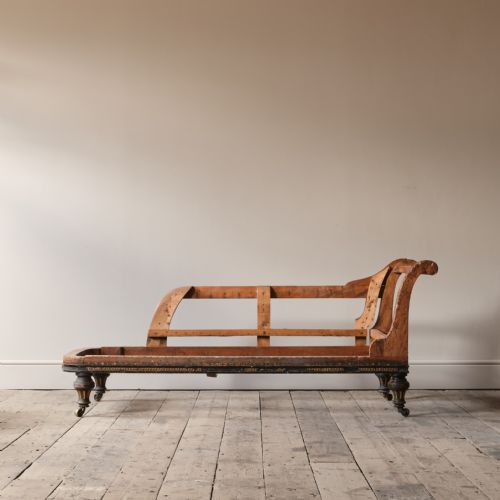
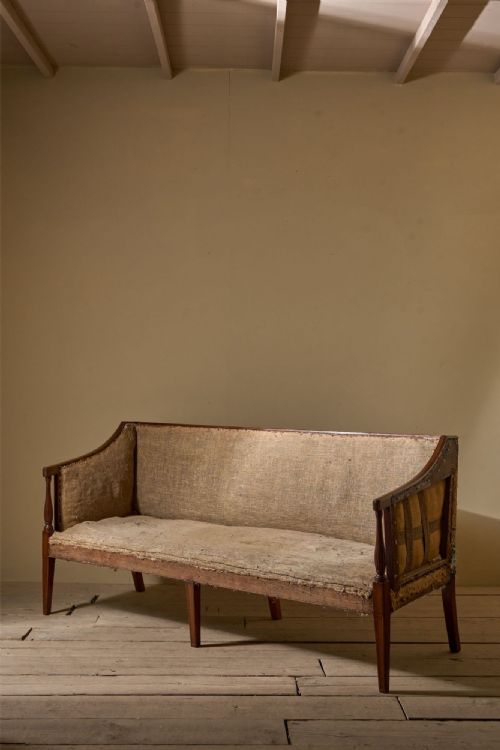
A brown wooden couch encompasses formal settees, chaise longues, and grand sofas spanning the eighteenth, nineteenth, and early twentieth centuries. These seating forms originate from diverse stylistic traditions, including Georgian, Regency, and Victorian design.
The most likely versions encountered here include nineteenth-century chaise longues and mahogany framed sofas alongside walnut and ebonised frames. Makers such as Holland & Sons contribute to the selection of substantial seating.
Makers fashioned these pieces for principal reception rooms and drawing rooms, employing robust hardwoods to support extensive upholstery and decorative carving.
How they were made
Carpenters utilised solid timbers like mahogany, walnut, and simulated rosewood to construct sturdy structural frames, often incorporating brass details and marquetry inlay for decorative contrast.
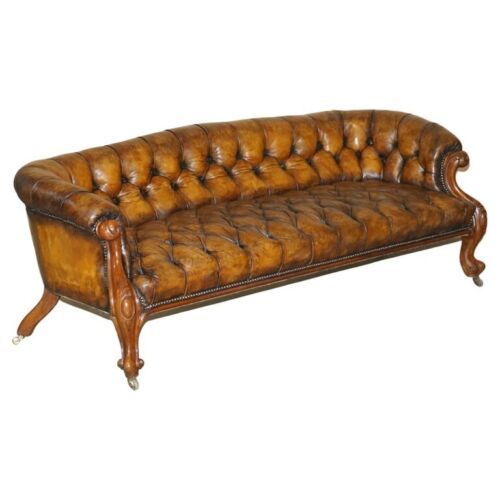
Upholstery techniques involved traditional fillings secured with Hessian and finished with various fabrics, or occasionally brown leather as seen on Chesterfield models.
Carvers shaped wood into elaborate show frames and intricate styles ranging from French Rococo Revival to Edwardian Art Nouveau and Queen Anne proportions.
Brown Wooden Couch Retail Price Guide 2026
Typical asking prices for brown wooden couch among the pieces listed under this phrase on Sellingantiques today, from the lower quarter to the upper quarter. They describe what is for sale here now, not the wider market.
A country house sofa from the early nineteenth century brings aristocratic lounging directly into your modern sitting room.
What varies in quality
The sophistication of timber selection and the precision of hand-carved details define the upper tier of these seating pieces. Finer examples display meticulous marquetry inlay and well-balanced proportions across triple-back settees and show frames.
Structural integrity depends on the original joinery within the hardwood frame and the fidelity of revival styles to earlier Georgian or Queen Anne precedents. Workshop attribution, such as work by Holland & Sons, distinguishes notable pieces from standard production.
Holland & Sons
The Brown Wooden Couch Glossary
- Chaise Longue
- An upholstered long chair designed for reclining, featuring an armrest at one end. These pieces date across the nineteenth century.
- Marquetry Inlay
- Decorative patterns formed by fitting contrasting veneer pieces into the wooden surface. This technique appears on specific mahogany settees.
- Show Frame
- A wooden structural frame left partially exposed around the upholstered elements to display the carved timber. Walnut and mahogany frequently form these surrounds.
- Chesterfield
- A deep-buttoned sofa traditionally upholstered in leather or fabric with arms and back of the same height. Victorian examples often utilise this form.
Brown Wooden Couch: Frequently Asked Questions
What periods do these brown wooden couches span?
The listings span from the eighteenth century through the Victorian era and up to nineteen-ten. This covers Georgian, Regency, and Edwardian periods.
Specific dates within titles indicate Victorian production alongside eighteenth-century pieces and nineteenth-century variants.
How do I identify a chaise longue?
A chaise longue combines a chair with an extended seat for reclining. Nineteenth-century examples often feature carved wooden frames.
They function as standalone daybeds or long seating forms within principal rooms.
What woods were used for these frames?
Makers predominantly employed mahogany and walnut for structural frames. Ebonised wood and simulated rosewood also appear across the selection.
Inlay work and brass details frequently accompany these primary timbers.
How do styles differ between pieces?
Styles range from Queen Anne and Chippendale to French Rococo Revival and Edwardian Art Nouveau. Each reflects the aesthetic preferences of its specific period.
Revival pieces from eighteen-ninety reinterpret earlier Georgian or seventeenth-century proportions.