


Regency Turned Column Stand
A regency turned column stand offers compact display surface, bringing classical proportions and upright timber grain into a period room.
Regency Turned Column Stand
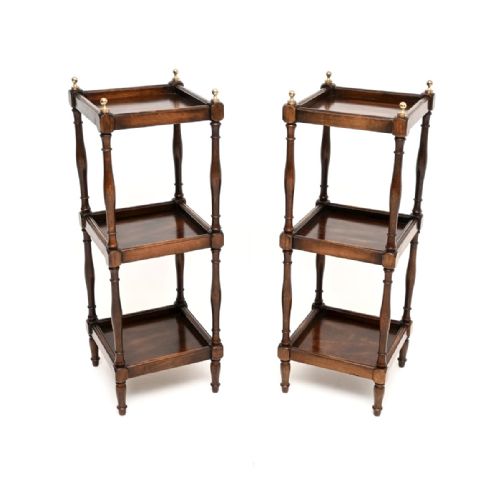
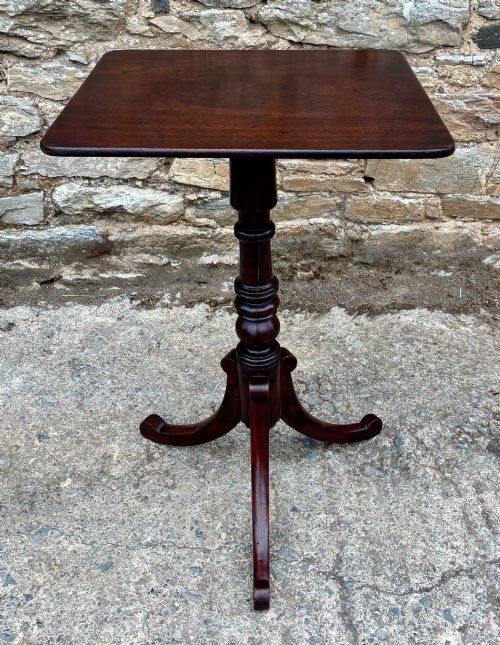
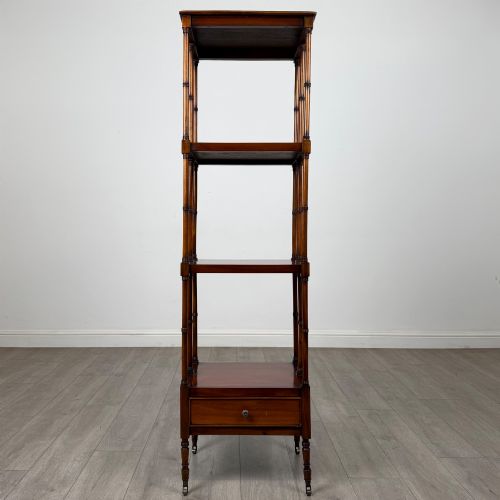
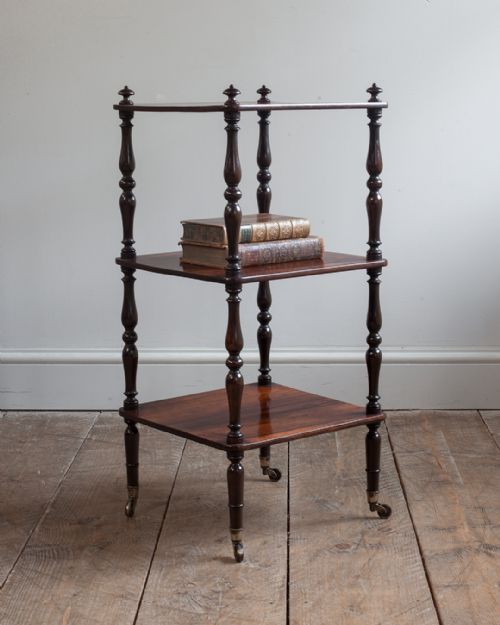
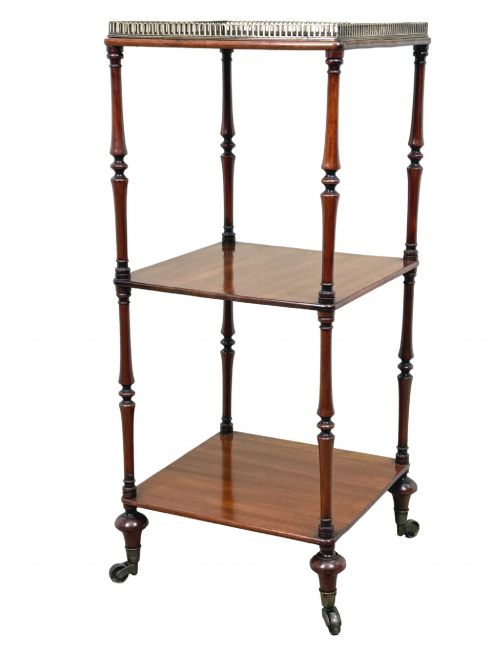
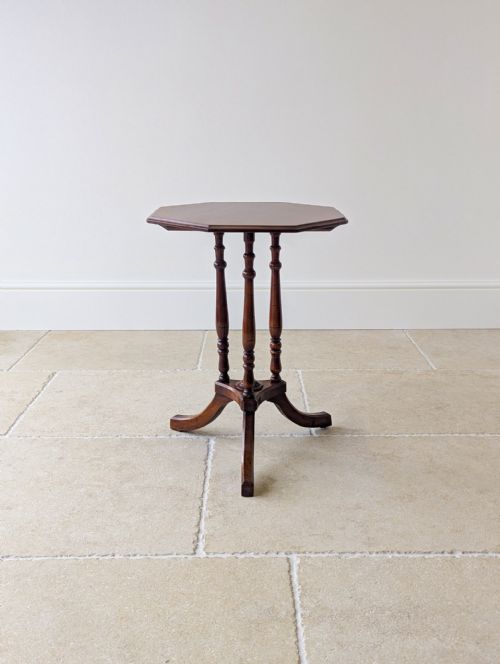
A regency turned column stand encompasses occasional tables, side tables, whatnots, etageres, bookcases, and sculptural display pedestals spanning the Georgian, Regency, William IV, and Edwardian eras. Buyers searching for a regency turned column stand typically encounter tripod wine tables, small multi-tiered etageres, and tall torchere stands designed for domestic display.
The prevailing forms on this page date from the early nineteenth century, particularly the Regency and George IV periods, alongside later revivals stretching into the twentieth century. These pieces serve practical functions as lamp tables, kettle stands, and sculpture supports while maintaining slender vertical profiles.
How they were made
Cabinetmakers utilised dense hardwoods such as mahogany, rosewood, and yew, frequently incorporating contrasting timbers like boxwood stringing and birdseye maple veneers on table tops and tiers. Structural integrity relies on turned central columns rising from tripod legs or stable square bases.
Secondary decorative elements include ebonised wood details and cast brass mounts, fixed with traditional joinery appropriate to the period from the eighteenth to the early twentieth century.
The listings span from the 18th century through the Georgian and Regency periods up to the Edwardian era and 1920.
What varies in quality
Quality in a regency turned column stand depends upon the selection of timber grain, the crispness of the column turning, and the balance of the tripod or base. Pieces utilising finely figured mahogany, rosewood, or birdseye maple with sharp boxwood stringing represent the superior tier.
Proportion and stability separate standard utility pieces from finer examples, with well-balanced tripod bases and harmonious tier spacing demonstrating superior workshop execution.
The Regency Turned Column Stand Glossary
- Étagère
- A French term for a piece of furniture with open shelves for displaying small objects or books. These multi-tiered stands frequently appear in Regency interiors.
- Tripod table
- A small occasional table supported by a central pillar resting on three legs. This form provides stable placement on uneven period floorboards.
- Torchere
- A tall stand designed to support a lamp or candle. These elevated supports showcase turned columns and compact top surfaces.
- Whatnot
- An open shelving unit used for ornaments and books. Examples from the nineteenth century often feature multiple graduated tiers.
- Stringing
- A narrow inlay of contrasting wood used to outline table edges and panels. Boxwood stringing provides a crisp linear border against dark mahogany.
Regency Turned Column Stand: Frequently Asked Questions
What is a regency turned column stand used for?
These versatile stands serve primarily as display surfaces for table lamps, sculptures, small clocks, and decorative ceramics. Their compact footprints allow them to occupy tight corners and narrow spaces between seating.
Historically, specific variations functioned as wine tables, kettle stands, or tiered etageres for holding books and ornaments within the principal reception rooms of a house.
How do I identify a Regency period stand?
Authentic Regency pieces exhibit characteristic classical revival motifs, including reeded or turned cylindrical columns, sabre or tripod legs, and dense native or exotic hardwoods. Cabinetmakers of this era favoured figured mahogany and rosewood.
One must also examine the construction methods, such as hand-cut joinery and period fixings, which distinguish genuine early nineteenth-century production from later Edwardian or twentieth-century revivals.
What is the difference between an etagere and a whatnot?
While both terms describe multi-tiered open shelving units, etagere often denotes French-influenced decorative display pieces, whereas whatnot refers to English vernacular shelving from the Georgian and Victorian eras. Both serve identical storage and display purposes.
On this marketplace, these terms frequently overlap in descriptions for tiered furniture featuring turned vertical supports.