
Regency Shelf Unit
A regency shelf unit brings architectural grace to a room, offering open display and storage through tiered timber tiers.
Regency Shelf Unit
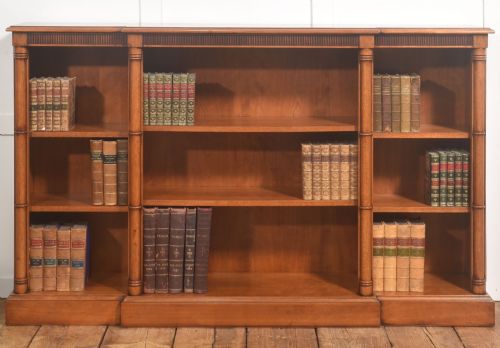
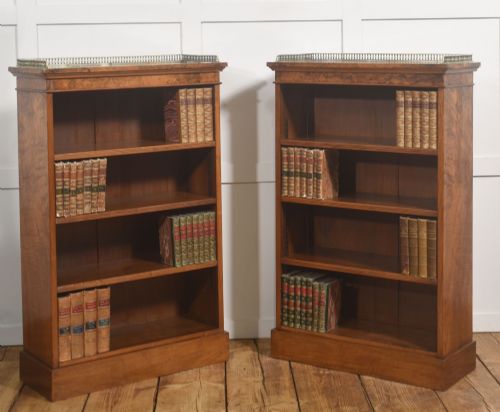
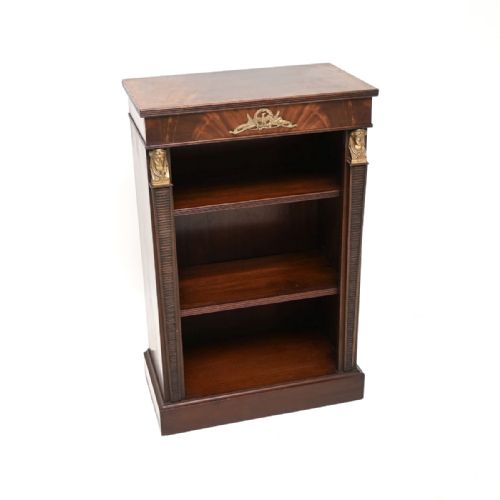
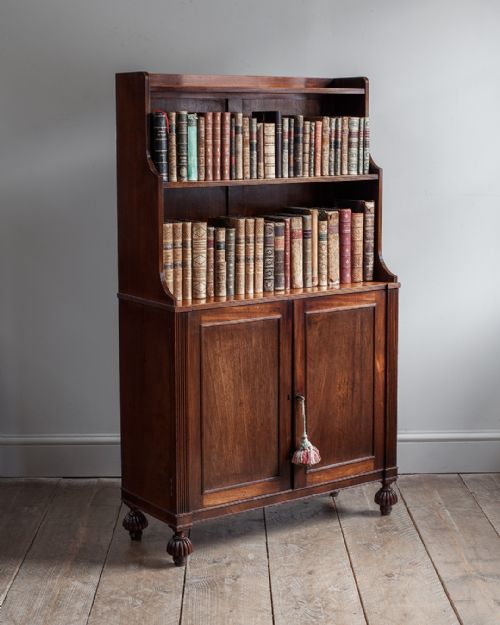
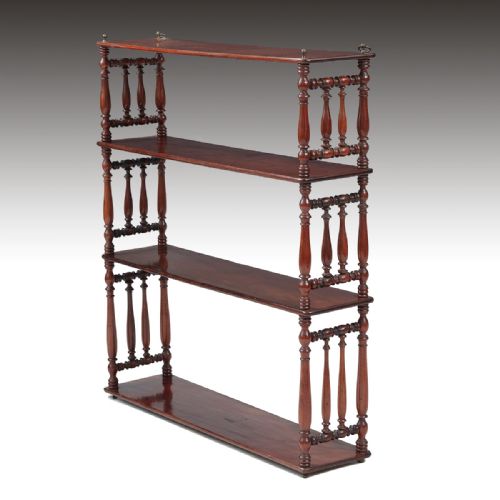
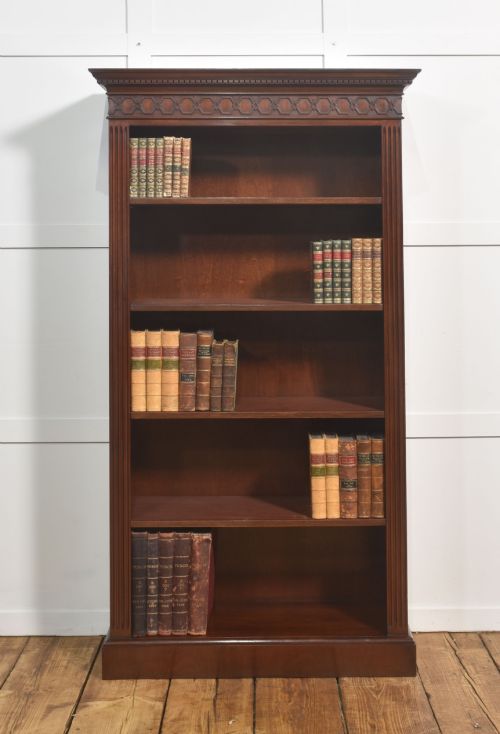
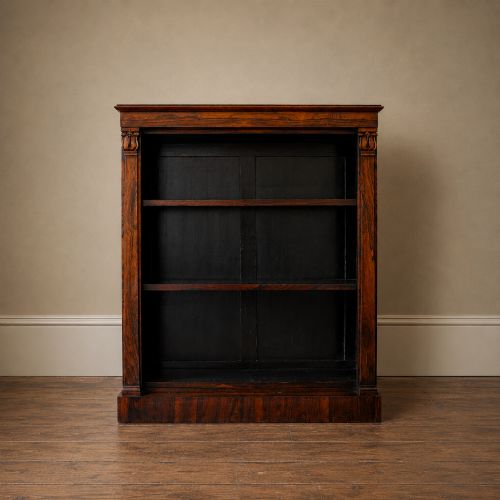
A regency shelf unit encompasses bookcases, whatnots, and etageres designed to hold books and display objects. Buyers seeking a regency shelf unit commonly find mahogany and rosewood constructions from the nineteenth century, alongside later revival pieces.
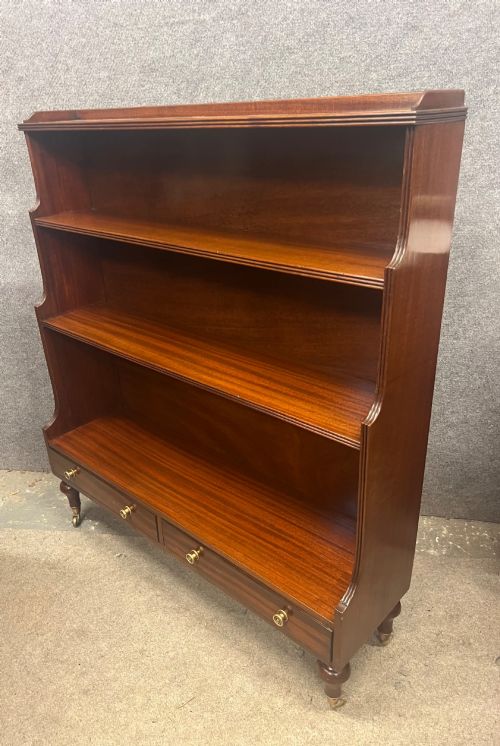
The selections span freestanding open bookcases, tiered whatnots, dwarf bookcases, and hanging shelves. Pieces emerge from periods including the Georgian, Regency, William IV, and Victorian eras, stretching into early twentieth-century revivals.
How they were made
Cabinet makers utilised dense hardwoods such as mahogany and rosewood, often veneered over secondary timbers, with select items incorporating birdseye maple or oak. Construction frequently involved graduated tiers for waterfall bookcases, or multi-tiered open formats for whatnots.
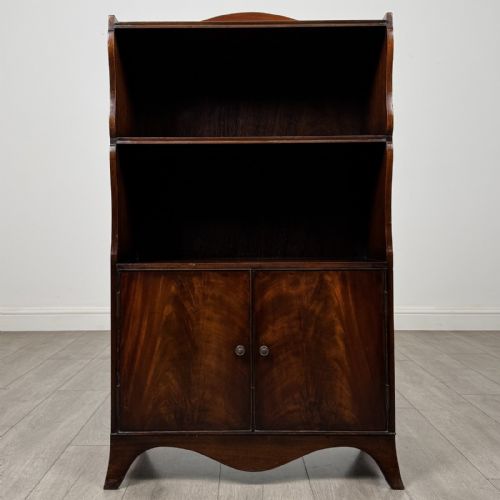
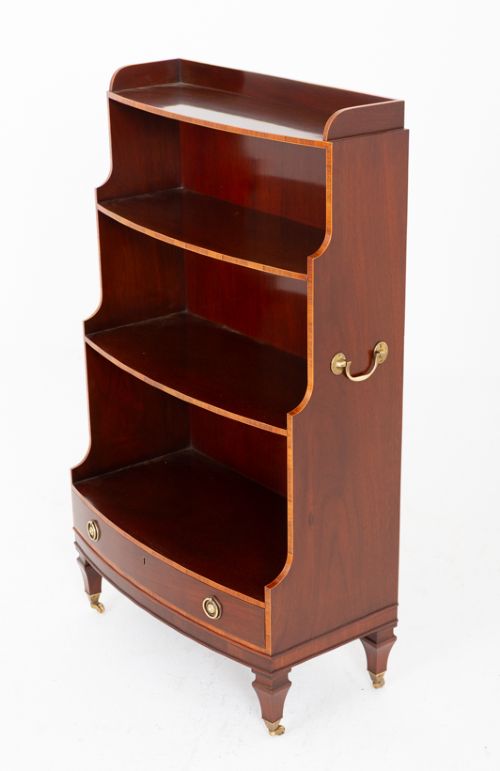
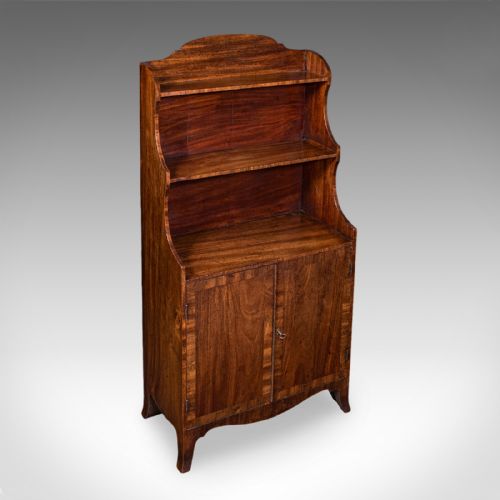
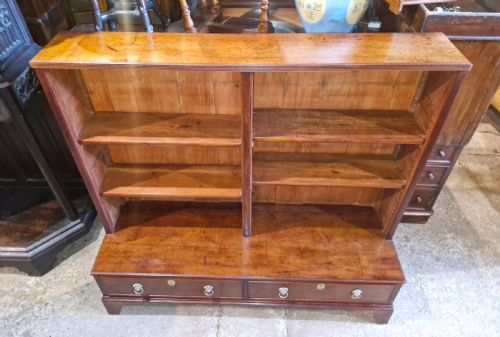
Detailing relied on brass inlays, adjustable shelving mechanisms, and freestanding or wall-hung frameworks. Some pieces combined open display shelves with lower cupboards or cellarettes for enclosed storage.
Listings feature woods spanning mahogany, rosewood, oak, pine, and marble alongside brass details.
What varies in quality
Construction fidelity and timber selection dictate the standing of a piece, distinguishing restrained vernacular examples from master cabinet work. Finer items display carefully figured rosewood or mahogany veneers and thoughtful proportions.
Refinement in structural elements, such as integrated brass inlay work, adjustable shelf mechanics, and solid tier supports, separates standard utilitarian shelving from exceptional display furniture.
Gillows
The Regency Shelf Unit Glossary
- Waterfall bookcase
- A tiered shelving unit where each successive shelf steps back from the one below it. This form creates a descending profile popular in the nineteenth century.
- Whatnot
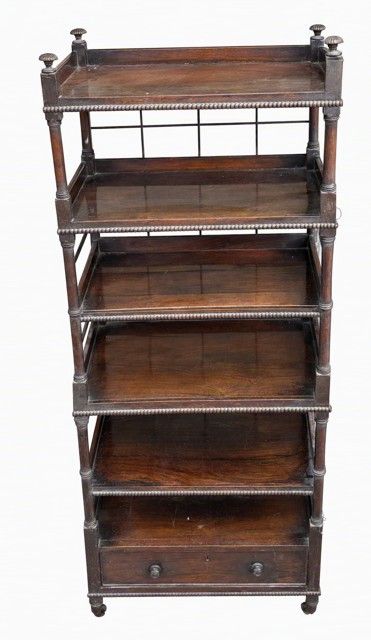
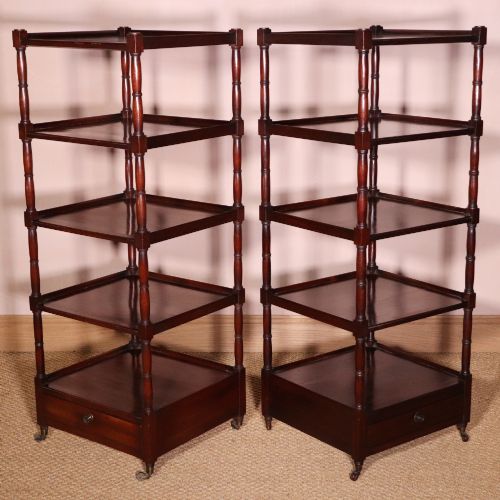
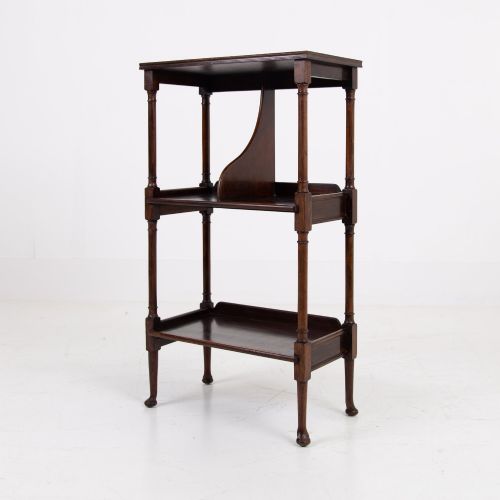
- An open multi-tiered piece of freestanding furniture designed for displaying ornaments or books. Examples often feature three or more levels supported by upright columns.
- Étagère
- A French term for a piece of furniture with open shelves for displaying small objects. These often align closely with English whatnot designs.
- Chiffonier
- A low cabinet, frequently combined with shelving or a raised superstructure. It often incorporates cupboard doors beneath upper display space.
- Breakfront
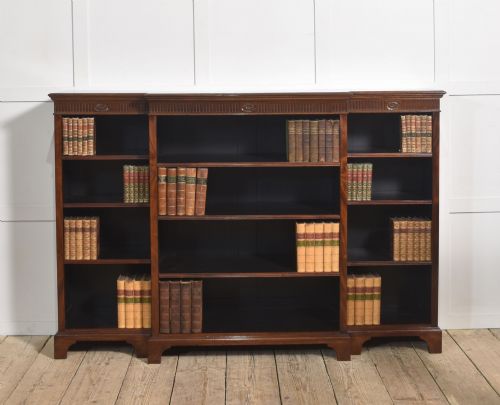
- A piece of furniture where the central section projects forward from the flanking wings. This configuration adds architectural depth to large bookcases.
Regency Shelf Unit: Frequently Asked Questions
How do you use a whatnot?
A whatnot serves as an open tiered stand for displaying ornaments, books, or small collections. Its multiple levels provide vertical display space without heavy bulk.
These pieces suit corners or freestanding positions within principal rooms.
What woods were used?
Cabinet makers predominantly utilised mahogany and rosewood for these shelving units. Selected pieces also feature oak, pine, satinwood, or birdseye maple veneers.
Brass hardware frequently provides structural or decorative accenting across the timber surfaces.
Are shelves adjustable?
Many open bookcases and shelving units incorporate adjustable shelf mechanisms to accommodate books of varying heights. This flexibility distinguishes utilitarian library pieces from fixed display tiers.
Original adjustable systems rely on traditional wooden ratchets or peg supports.