

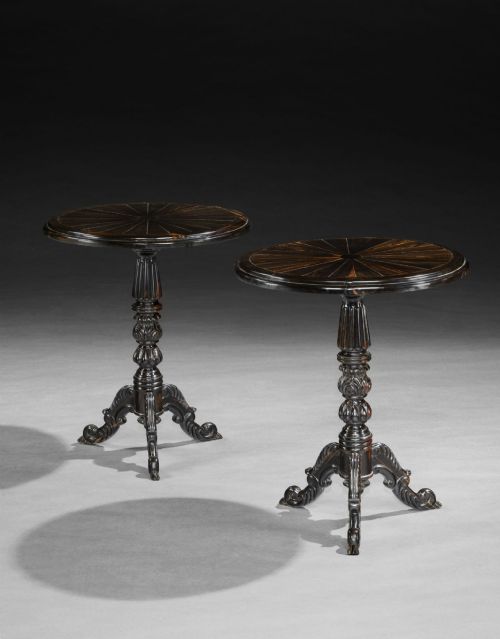
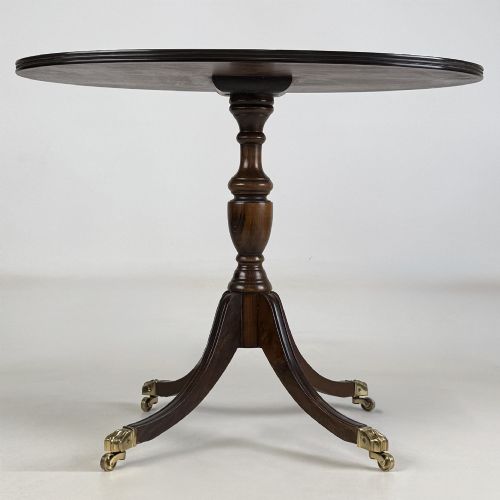
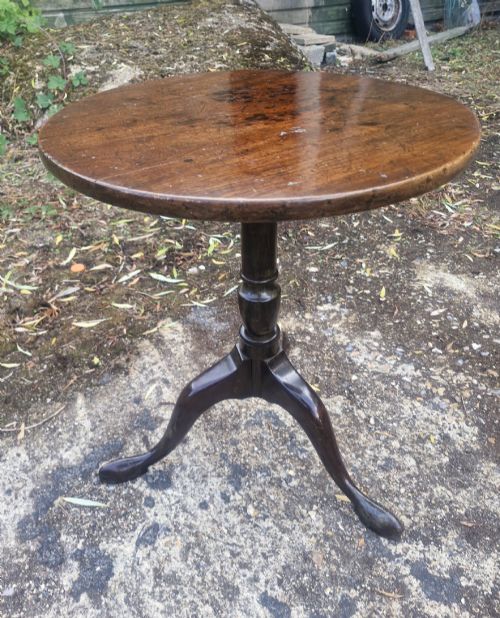
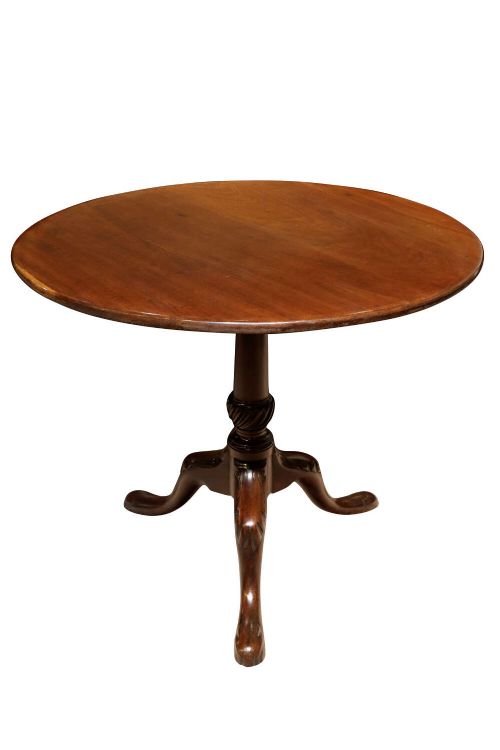
Regency Tripod Pedestal Table
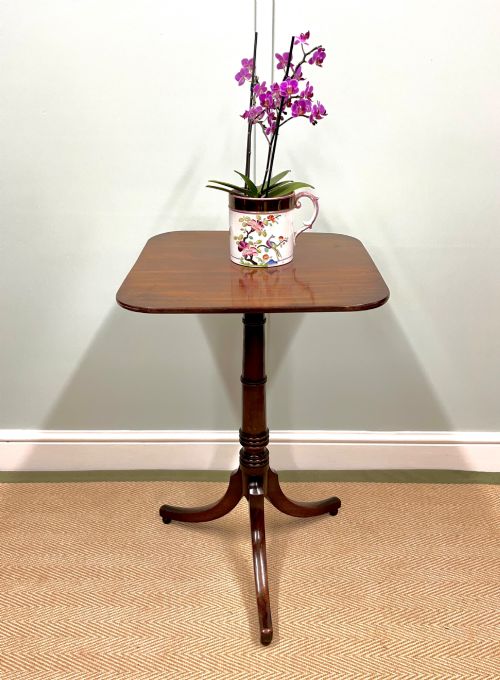
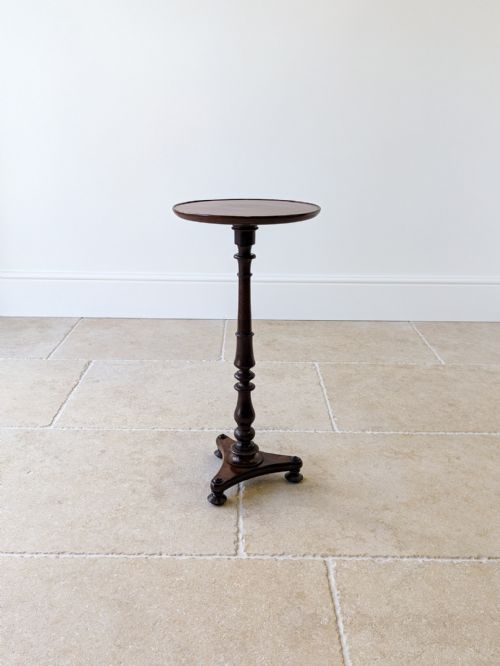
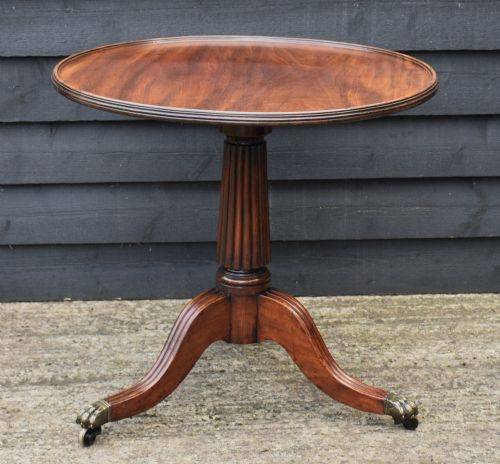
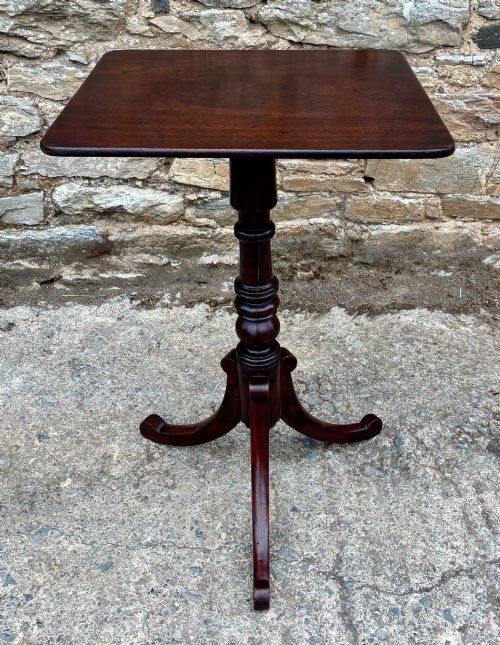
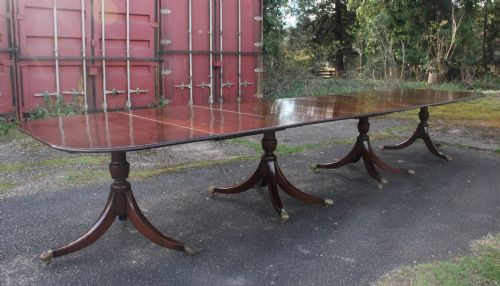
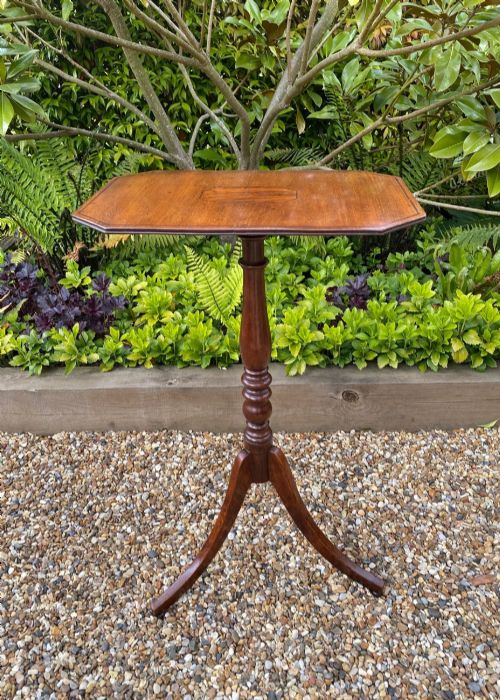
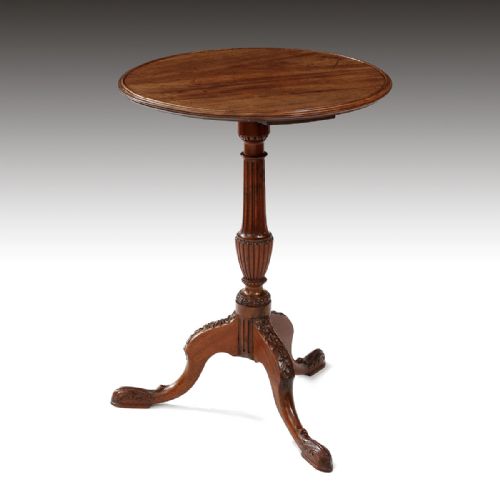
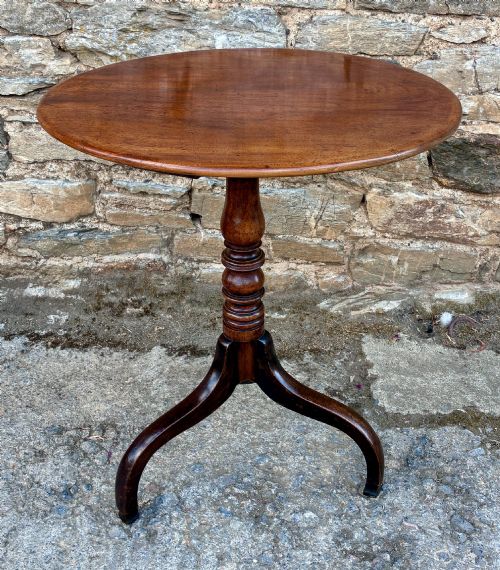
A regency tripod pedestal table balances weight on a single central column supported by three splayed legs.
Regency Tripod Pedestal Table
A regency tripod pedestal table encompasses a variety of forms including wine tables, occasional tables, side tables, games tables, and small dining tables. These pieces originate from periods such as the 19th Century, Regency, Georgian, and Edwardian eras, reflecting styles from George III, William IV, and later Regency Revivals.
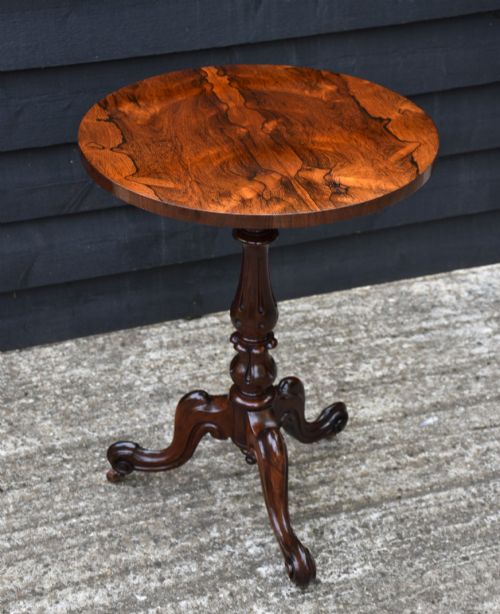
Buyers frequently encounter mahogany and rosewood examples alongside occasional pieces in oak, burr oak, ebony, and fruitwood. Many retain functional historical mechanisms like tilt-top actions or operate as compact lamp and plant stands within domestic interiors.
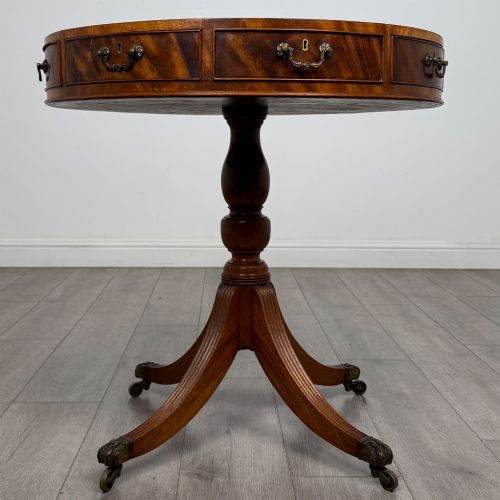
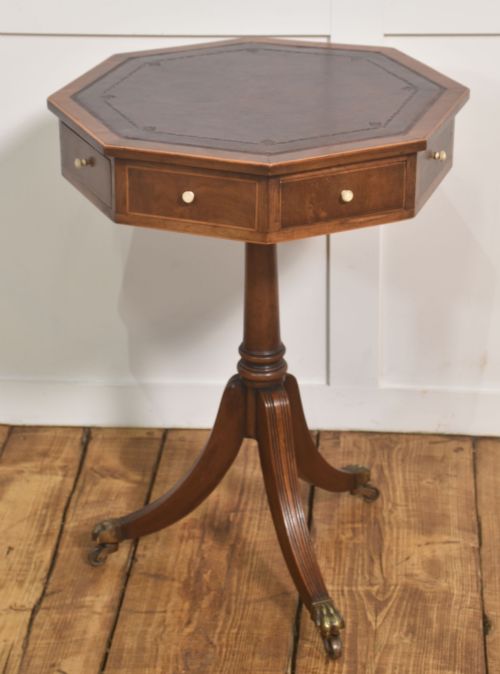
The selection ranges from simple provincial pieces to elaborately veneered examples in satinwood, olive, and amboyna. Forms span from modest candle stands to larger centre tables and drum tables supported by a central pillar and three legs.
Materials and Technique
Cabinetmakers utilised solid timbers and sophisticated veneers, selecting mahogany and rosewood as primary structural and surface woods. Details often incorporate contrasting stringing or inlay in boxwood, ebony, and brass alongside polished leather inserts.
Construction relies on stable pillar-and-tripod junctions where a central turned pedestal meets three shaped legs, frequently featuring tilt-top mechanisms that allow the surface to pivot upright when not in use.
Listings feature mahogany, rosewood, and oak alongside decorative inlays of boxwood, ebony, and brass.
Execution and Proportion
Quality rests upon the crispness of the timber turning, the integrity of the pillar-to-leg joint, and the sophistication of any inlay or veneer work. Superior examples display balanced proportions where the weight of the top harmonises with the span of the tripod base.
Gillow
The Regency Tripod Pedestal Table Glossary
- Tilt-top
- A hinged tabletop mechanism that allows the surface to rotate and lock vertically for storage against a wall.
- Tripod base
- A supporting structure consisting of three splayed legs radiating from a central vertical pillar.
- Drum table
- A circular library or occasional table with a deep skirt containing drawers, resting on a central pedestal.
- Stringing
- Thin inlaid lines of contrasting wood or light material used to outline panels and geometric borders on tabletops.
Regency Tripod Pedestal Table: Frequently Asked Questions
What is a tilt-top mechanism used for?
The tilt-top mechanism allows the circular top to pivot ninety degrees and lock into a vertical position. This saved valuable floor space in nineteenth-century rooms when the table was not in active use.
Today, this feature permits the table to sit flat against a wall as a decorative display piece or fire screen when not serving drinks or books.
How do I distinguish Regency from Georgian pieces?
Georgian furniture generally displays heavier proportions and classical carved motifs rooted in earlier architectural traditions. Regency design, spanning the early nineteenth century, introduces sleeker lines, bolder use of exotic veneers, and influences from classical antiquity.
Examining the secondary timbers, brass mounts, and inlay styles helps clarify the exact period of manufacture.
Where were these tables placed historically?
These versatile tables moved freely around domestic interiors to serve specific temporary functions. Smaller wine and candle stands sat beside seating areas, while larger drum and centre tables occupied the middle of reception rooms.
Their central pedestal design allowed multiple people to sit or stand around the perimeter without interfering legs.
Are these tables suitable for modern daily use?
Their compact footprints and sturdy tripod bases make them practical surfaces beside sofas or beds in contemporary homes. The durable hardwood construction handles everyday placement of lamps, books, and cups without difficulty.
Care should be taken with antique polished surfaces to avoid direct moisture and extreme temperature fluctuations.