




Regency Brass Strung Table
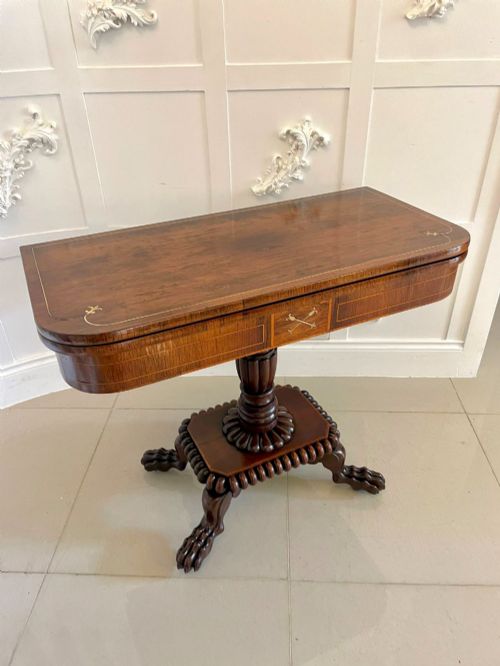
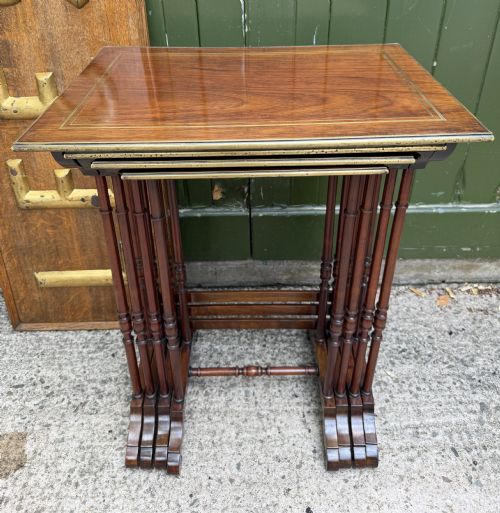
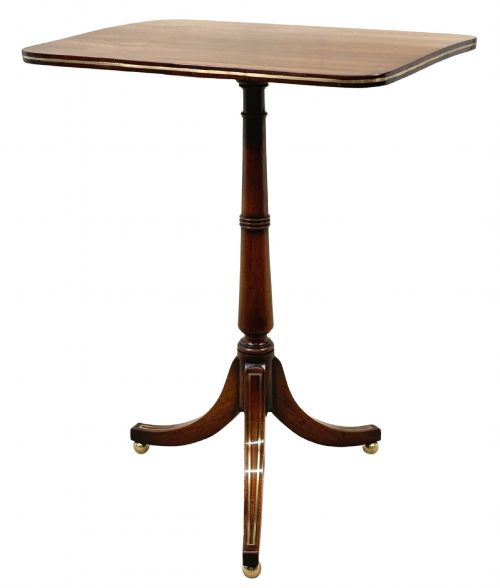
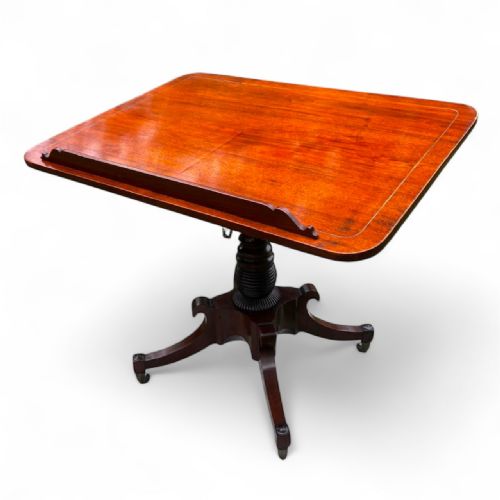
These regency brass strung table examples combine rich rosewood and mahogany with precise metal inlay, offering practical elegance for any room.
Regency Brass Strung Table
A regency brass strung table brings together the dark, figured timbers of the early nineteenth century and the crisp gleam of metal inlay. When you search for a regency brass strung table, you encounter furniture designed for domestic entertainment, writing, and display during a period of refined taste.
The most common forms on this page include card and games tables with fold-over tops, alongside occasional lamp tables and sewing tables. These pieces utilise rosewood and mahogany as primary timbers, decorated with delicate lines of brass stringing that trace the edges and borders.
While the majority of pieces belong to the Regency period and the wider nineteenth century, later revivals also appear. A 1920s mahogany dining table demonstrates how the aesthetic of brass inlay persisted long after the original Regency era closed.
Materials and construction
Cabinet makers constructed these tables primarily using solid and veneered rosewood or mahogany, often enhanced by contrasting ebony details. Timber selection focused on rich grain figures that provided a dark backdrop for metallic ornamentation.
Brass stringing and inlay required meticulous hand-cutting into channels carved directly into the wood. Craftsmen secured the metal strips flush with the timber surface before scraping and polishing the entire top to a smooth finish.
A solitary table clock appears among the furniture, proving that time management was just as important as card playing in Regency parlours.
Distinctions in quality
The sophistication of the brass inlay work separates standard domestic furniture from exceptional pieces. Superior examples feature intricate geometric patterns or foliate motifs rather than simple single lines.
Timber selection and secondary framing timbers also dictate the standing of a piece. Finer tables employ densely figured rosewood veneers over stable mahogany carcases, retaining crisp edge profiles and well-proportioned tripod or pillar supports.
The Regency Brass Strung Table Glossary
- Brass stringing
- Thin filaments of brass inlaid into channels cut into the wood surface to create decorative borders. This technique defines the linear ornamentation characteristic of the period.
- Card table
- A folding table designed for evening games, featuring a hinged top that opens to reveal a baize-lined playing surface. Many examples include internal wells for storing cards and counters.
- Rosewood
- A dense, heavily figured tropical timber prized for its dark purple-brown colour and contrasting black grain. It served as the principal exterior wood for high-status Regency furniture.
- Teapoy
- A small pedestal table or box designed specifically to hold tea canisters and sugar, reflecting the high social status of tea in the nineteenth century. These pieces often incorporate internal compartments and intricate brass inlay.
- Pembroke table
- A drop-leaf table with hinged flaps on two opposing sides, offering an adjustable surface area for dining or occasional use. The design allows the table to sit compactly against a wall when not in extended use.
Regency Brass Strung Table: Frequently Asked Questions
How do I spot a later revival piece?
Later revival pieces, such as those from the nineteen-twenties, often employ different internal construction methods and timber preparation techniques compared to genuine early nineteenth-century work. Examining the secondary woods beneath the table helps clarify the date of manufacture.
Cabinet-making standards changed over the decades, and the tooling marks left on the underside of a table provide clear clues to its age and origin.
Were these tables used for dining?
Certain forms, such as Pembroke tables and specific larger examples, served dining functions, while card and games tables catered to evening entertainment. Occasional and sofa tables accommodated books, sewing materials, and lamps.
Each form was tailored to specific domestic rituals of the nineteenth-century household, dictating the height, stability, and top configuration of the piece.
How should I care for rosewood surfaces?
Rosewood requires stable indoor humidity levels and protection from direct sunlight to prevent the timber from drying out or fading over time. Regular dusting with a soft, dry cloth preserves the polished finish.
Avoid using silicone-based polishes, as they build up on antique surfaces and attract dust, dulling the natural lustre of the wood and metal inlay.
What is the difference between brass stringing and inlay?
Brass stringing refers specifically to narrow, linear strips of metal inserted into borders and outlines. Inlay encompasses a broader range of shapes, including geometric brass motifs and star patterns set into the timber.
Both techniques required immense precision from the cabinet maker to ensure the metal remained flush with the surrounding wood grain through seasonal temperature changes.