

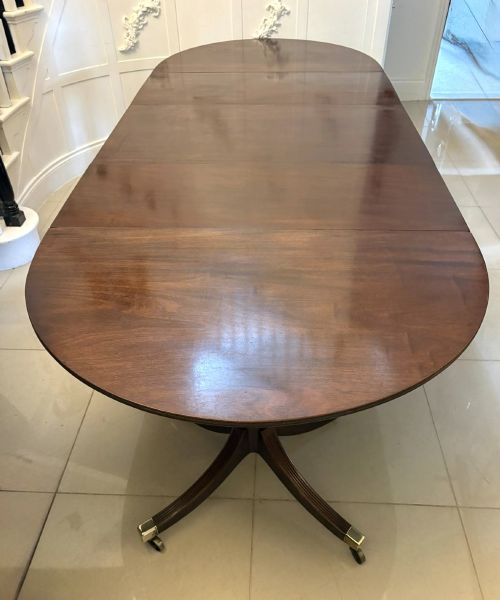

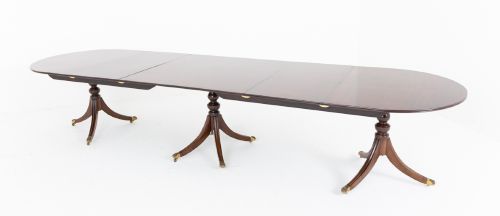
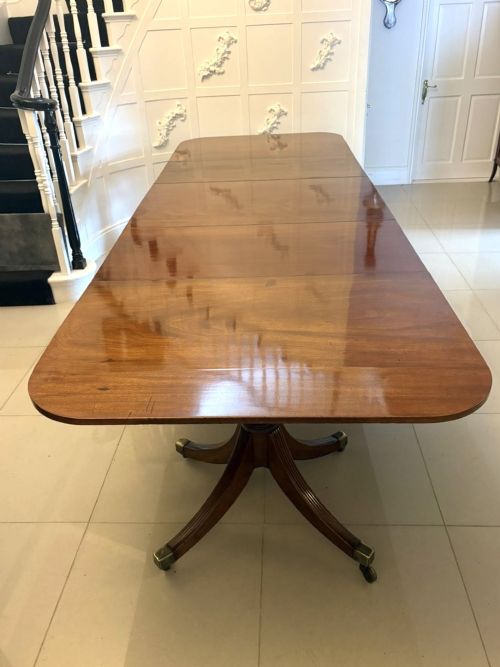
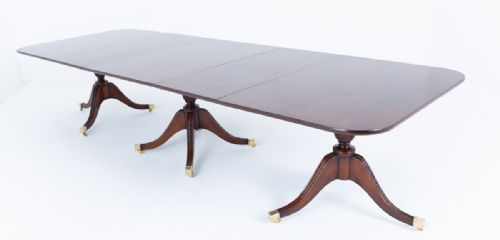
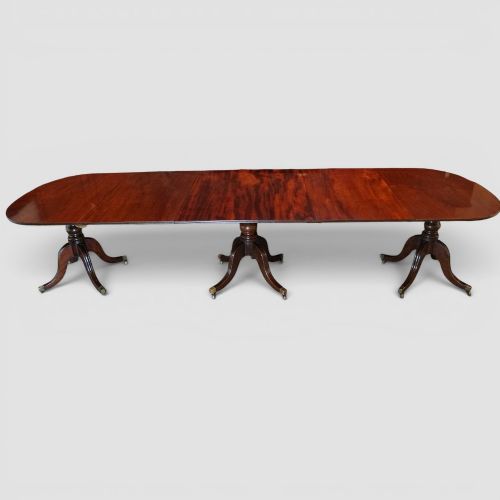
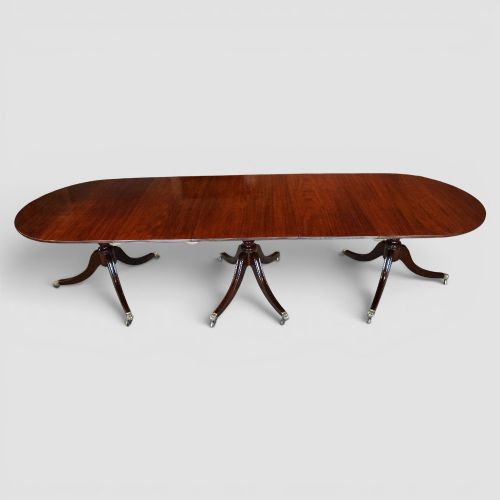
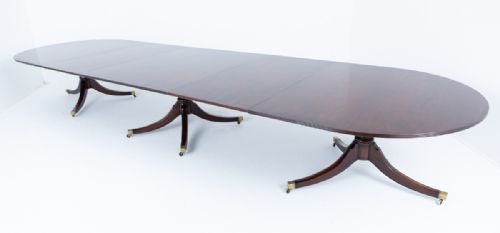
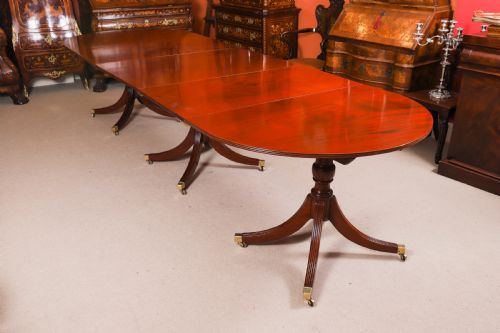


Regency Triple Pedestal Table
A regency triple pedestal table provides substantial length for entertaining, bringing together modular stability and rich timber grain.
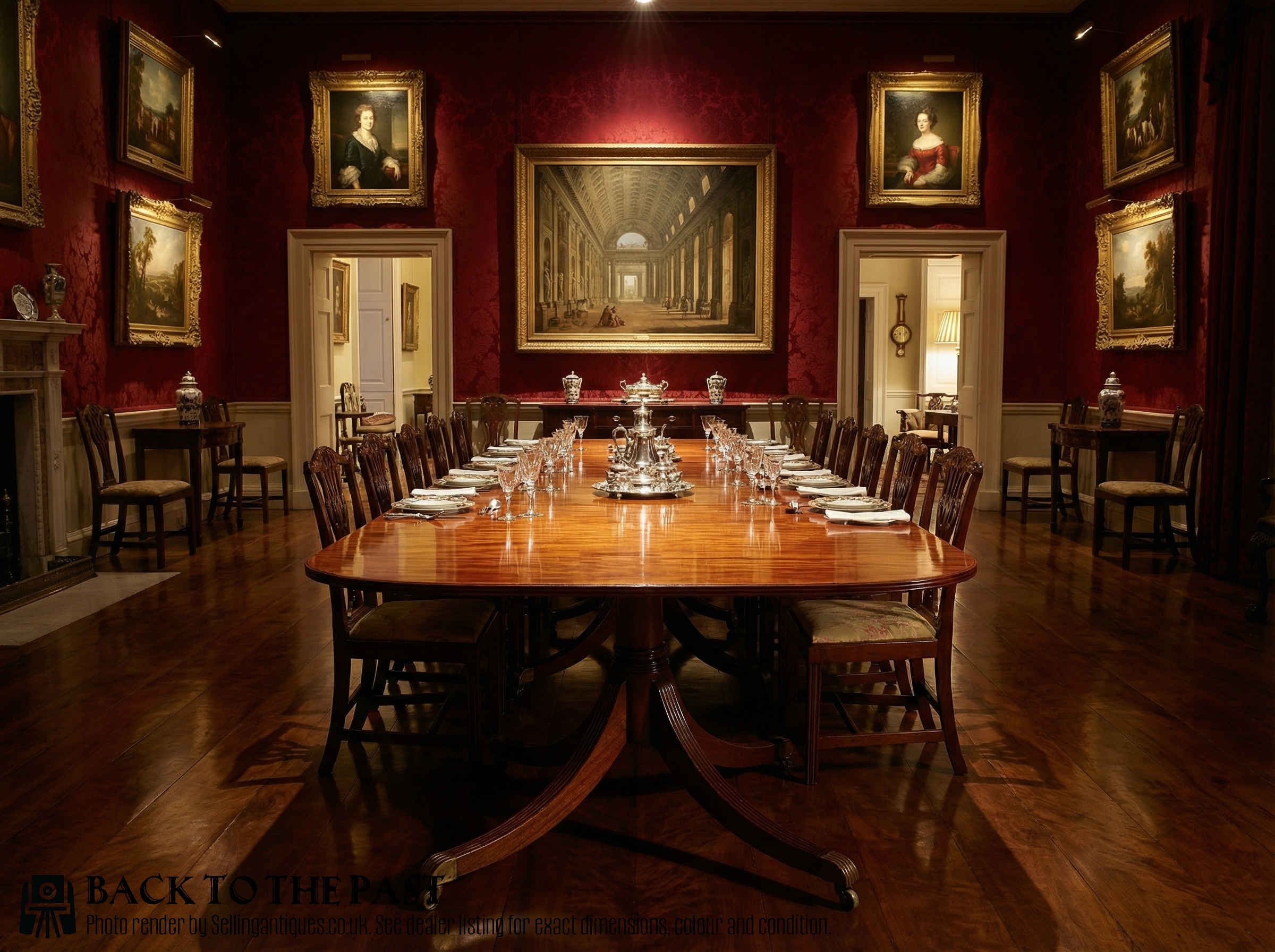
Regency Triple Pedestal Table
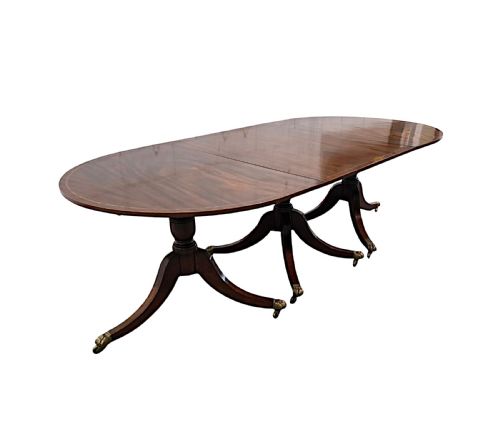
A regency triple pedestal table is a grand dining table designed with three separate columnar supports beneath a long, extending top. These pieces span from the original nineteenth-century period through to later twentieth-century revivals.
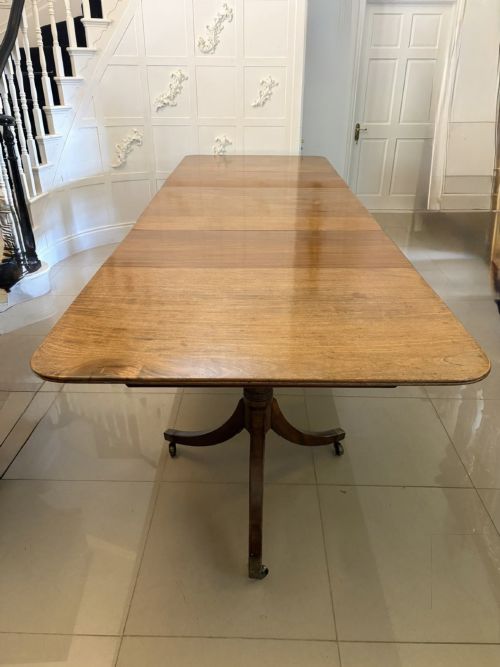
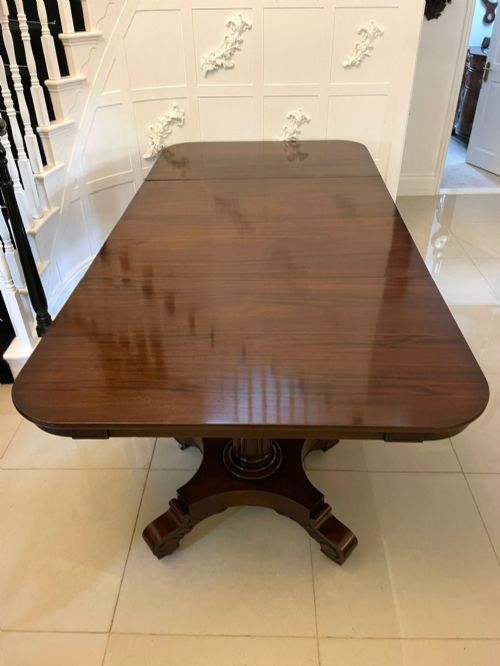
The version most commonly met on this page is constructed from mahogany, featuring multiple pillars and removable leaves to adjust seating capacity from ten up to twenty-two diners.
Makers and manufacturers ranging from the Georgian and Regency eras to Edwardian workshops and 1920s cabinetmakers produced these large formats to accommodate substantial dining rooms.
Materials and construction
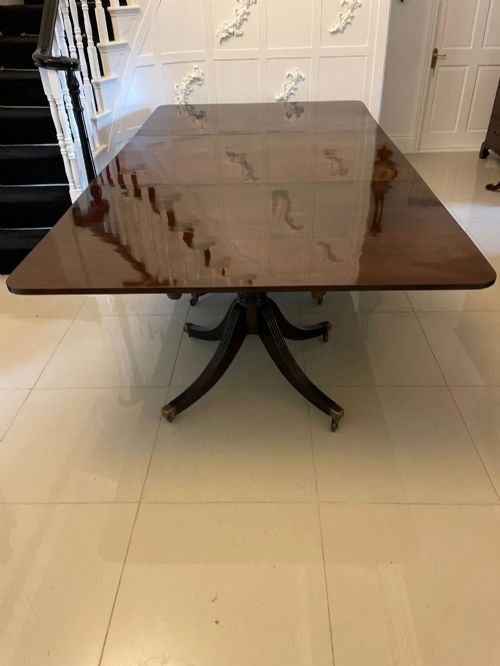
These tables rely primarily on figured mahogany timber for the expansive top surfaces and pedestals, selected for its rich grain patterns and deep colour. Brass accents, particularly on castor fittings beneath the pedestal legs, provide mobility and contrast against the dark wood.
Cabinetmakers constructed the framework using three distinct pillar supports, often standing on reeded or sabre legs, which allowed the weight of the long top to be distributed evenly while leaving space for chairs.
Regency Triple Pedestal Table Retail Price Guide 2026
Typical asking prices for regency triple pedestal table among the pieces listed under this phrase on Sellingantiques today, from the lower quarter to the upper quarter. They describe what is for sale here now, not the wider market.
Current listings feature tables spanning from the Georgian period through the nineteenth century to 1920s revivals, constructed predominantly in mahogany with brass hardware.
Distinctions in craftsmanship
Quality in these tables rests upon the selection of figured mahogany timber and the precision of the joining mechanisms that hold the extension leaves securely in place. Superior examples exhibit tightly figured grain across all sections, including the added leaves, ensuring a uniform appearance when fully extended.
The carving and turning of the three pedestals also mark the difference between standard production and exceptional workshop output, with finer pieces displaying crisp detail on the pillar bases and robust brass castors.
Whytock & Reid
The Regency Triple Pedestal Table Glossary
- Pedestal
- A central column support resting on branching legs that holds up the weight of the table top. These three pillars allow diners to sit without striking table legs.
- Extending table
- A dining table designed with removable leaves that insert into the middle to lengthen the surface. This mechanism allows the table to adapt to different numbers of guests.
- Figured mahogany
- Timber cut from specific parts of the mahogany tree to reveal swirling, highly decorative grain patterns. This premium wood was favoured for formal dining furniture.
- Castor
- A small wheel attached to the base of each pedestal leg to aid movement. These brass fittings allowed heavy dining tables to be repositioned easily within a room.
- George III
- A historical period spanning the late eighteenth and early nineteenth centuries associated with particular classical furniture designs. Pieces from this era often display refined proportions and elegant timber work.
Regency Triple Pedestal Table: Frequently Asked Questions
How do I use a triple pedestal table?
These large dining tables function by inserting or removing central leaves to adjust the overall length according to the number of guests. They provide a stable surface for formal dining while allowing flexibility in room layout.
Position the three pedestals to distribute weight evenly across the floorboards, ensuring the extending leaves lock firmly into the main sections for a level surface.
How do I tell original period tables from later revivals?
Examine the construction methods, timber characteristics, and secondary woods used beneath the top and inside the pedestal framing. Nineteenth-century pieces typically show hand-cut joinery and signs of age in the timber grain.
Twentieth-century revivals and Regency style pieces built around 1920 often utilise machine tooling and standardised fittings while maintaining the classic triple pillar proportions.
How many people can sit at these tables?
Seating capacity varies considerably depending on the length of the table and the number of extension leaves fitted. Available examples accommodate anywhere from ten up to twenty-two guests.
The three pedestal design ensures that diners can sit along the sides without bulky table legs interfering with chair placement.
What maintenance do mahogany tables require?
Protect the polished mahogany surface from moisture and direct heat by using coasters and placemats during daily use. Regular dusting with a soft cloth preserves the natural lustre of the timber.
Apply traditional wax polish occasionally to nourish the wood grain and maintain the depth of colour built up over decades of finish.