
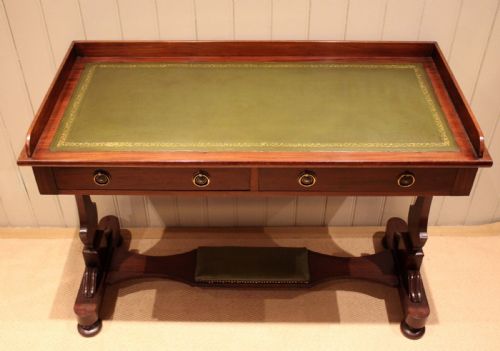
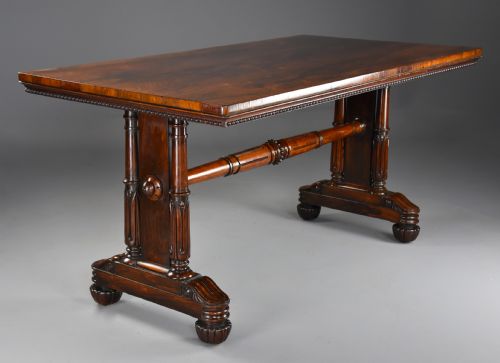


Regency Trestle Desk
A regency trestle desk is a practical surface for daily correspondence, built from figured timbers to sit centre stage in a study.
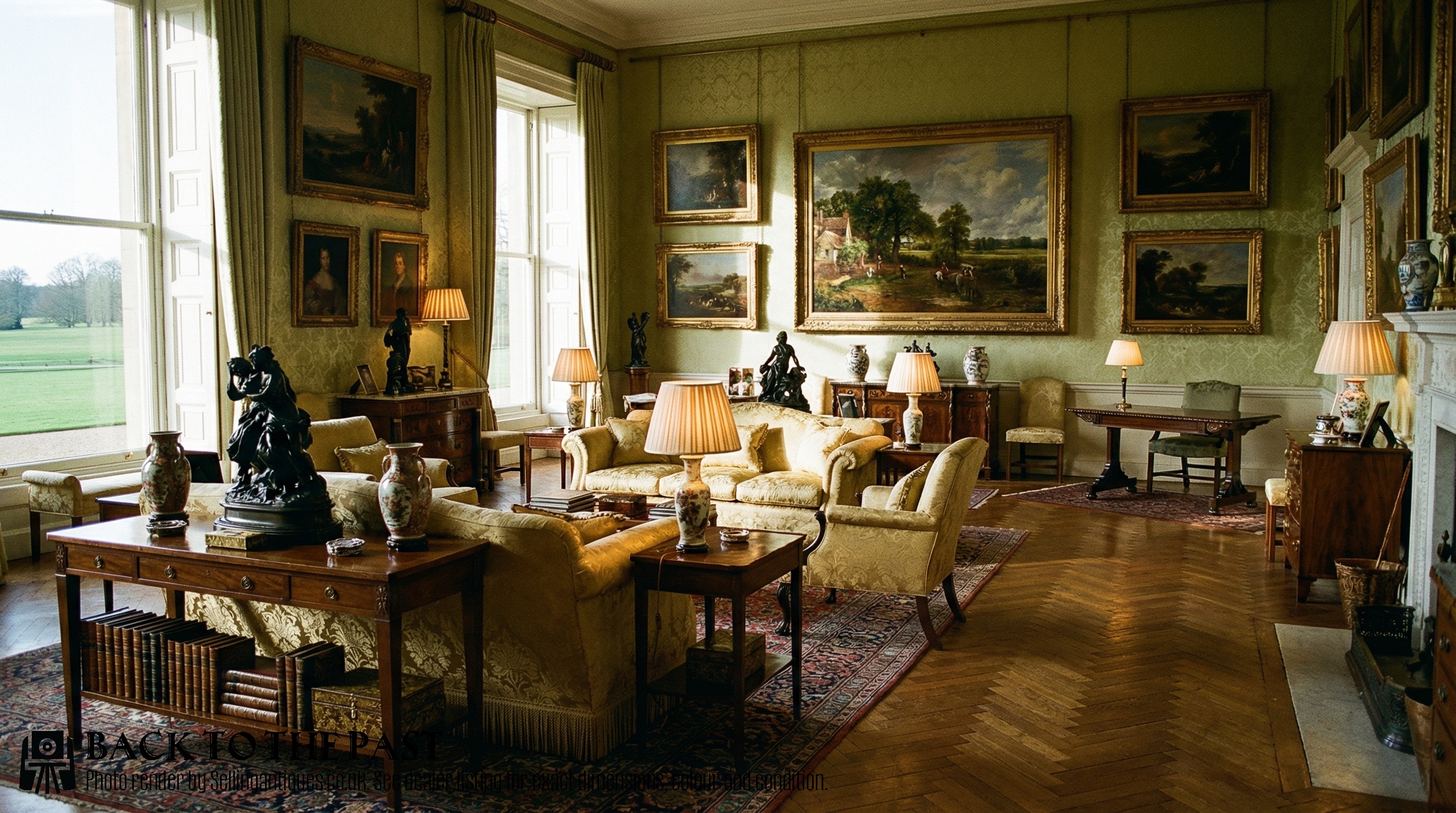
Regency Trestle Desk
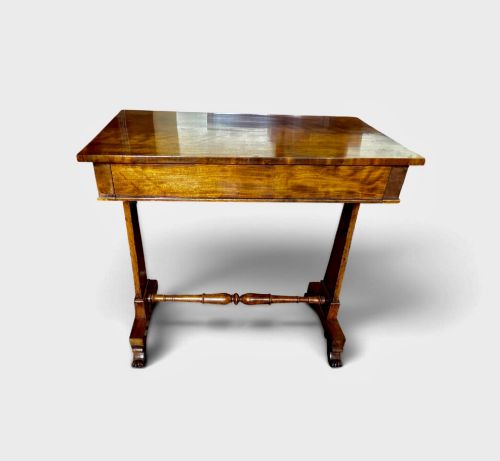
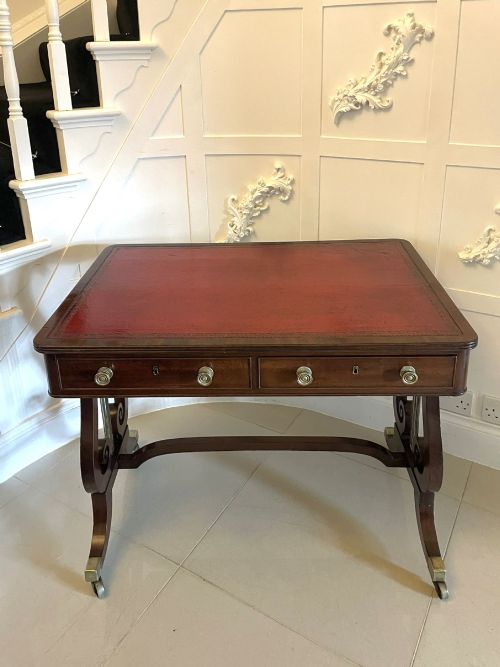
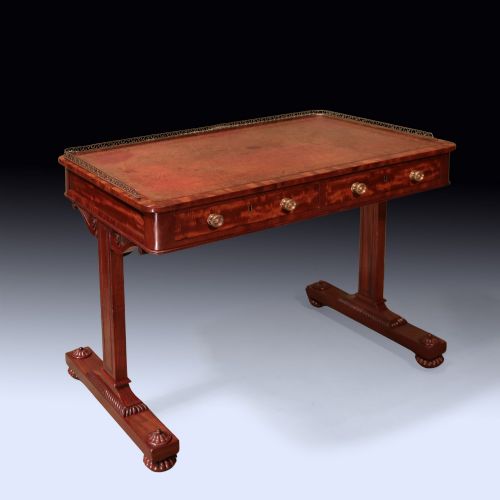
When you search for a regency trestle desk, you encounter writing tables, library tables, and sofa tables produced during the late Georgian and Regency periods. These forms span mahogany, rosewood, and pollard oak, often configured with freestanding pedestals or end supports suitable for placement in the middle of a room.
The pieces on this page originate predominantly from the nineteenth century, including specific styles from the William IV and George IV eras. Side tables and drop-leaf variations also appear, reflecting the versatile domestic uses of the period.
Makers of this era utilised substantial timbers and thoughtful proportions, resulting in forms that function equally well as writing desks or central display tables in a period interior.
Materials and construction
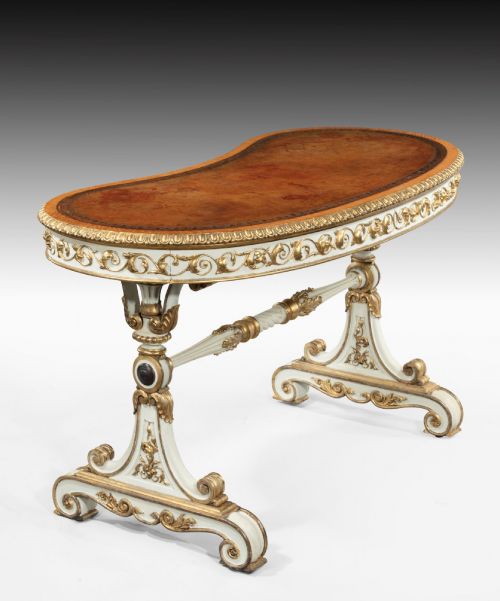
Cabinet makers relied heavily on dense tropical hardwoods like mahogany and rosewood, frequently selecting flame veneers and pollard oak for decorative impact. Brass mounts, leather inserts, and occasional giltwood or ivory paintwork provided contrast to the dark timber surfaces.
Construction techniques focused on stability and freestanding utility, employing turned columns, trestle ends, and sturdy plinths to support broad writing surfaces without wall attachment.
Regency Trestle Desk Retail Price Guide 2026
Typical asking prices for regency trestle desk among the pieces listed under this phrase on Sellingantiques today, from the lower quarter to the upper quarter. They describe what is for sale here now, not the wider market.
Several tables retain their original drop leaves, ready for an impromptu game of cards or a hastily abandoned letter.
Assessing quality and proportion
The distinction between standard examples and the finest work lies in the choice of timber figure, such as well-matched rosewood or flame mahogany, and the crispness of any carved detailing. Superior pieces demonstrate careful grain continuation across drawers and panels, alongside robust internal construction that ensures the table remains rigid when freestanding.
Proportion and scale dictate the success of the design, with finer items exhibiting balanced dimensions and restrained brass or marquetry inlay rather than excessive ornament.
Gillows·Gillingtons of Dublin
The Regency Trestle Desk Glossary
- Library table
- A large freestanding table designed for books and papers, typically finished on all sides so it can sit in the centre of a room.
- Sofa table
- A rectangular writing or occasional table traditionally placed in front of a sofa, usually featuring drop leaves at either end.
- Pollard oak
- Timber taken from trees that were pollarded, producing a dense, knotty grain highly prized for decorative veneer during the Regency period.
- Marquetry
- The art of applying pieces of veneer to a structure to form decorative patterns and pictures.
- Giltwood
- Wood that has been treated with gold leaf or gold paint to simulate solid gold.
Regency Trestle Desk: Frequently Asked Questions
Where should I place a library table?
Library tables are finished on all sides, making them ideal for the middle of a room rather than pushed against a wall.
They provide a generous writing surface and serve as a visual anchor in a study or drawing room.
How do I care for rosewood surfaces?
Keep nineteenth-century rosewood away from direct sunlight and excessive heat to prevent the timber from drying out or fading.
Dust regularly with a dry cloth and apply occasional specialist wax to maintain the sheen.
What is the difference between a writing table and a sofa table?
Writing tables are generally fixed-size rectangular surfaces intended primarily for correspondence and paperwork.
Sofa tables include hinged drop leaves on the short sides, originally designed to sit conveniently near seating furniture.
How do I identify Regency style?
Regency furniture draws on classical Greco-Roman influences, favouring clean architectural lines, rosewood and mahogany veneers, and restrained brass mounts.
Proportions remain balanced, avoiding the heavier carving associated with later Victorian production.