







Carved Oak Trestle Desk
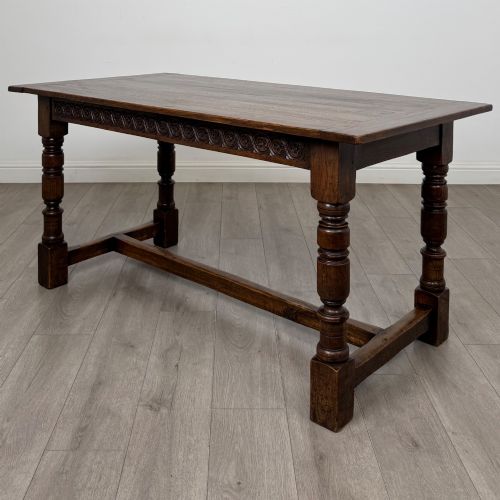
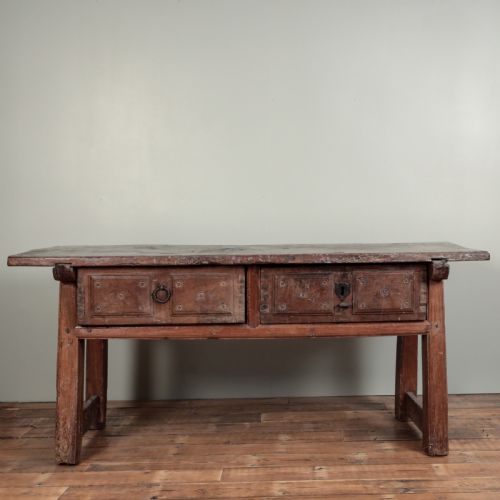
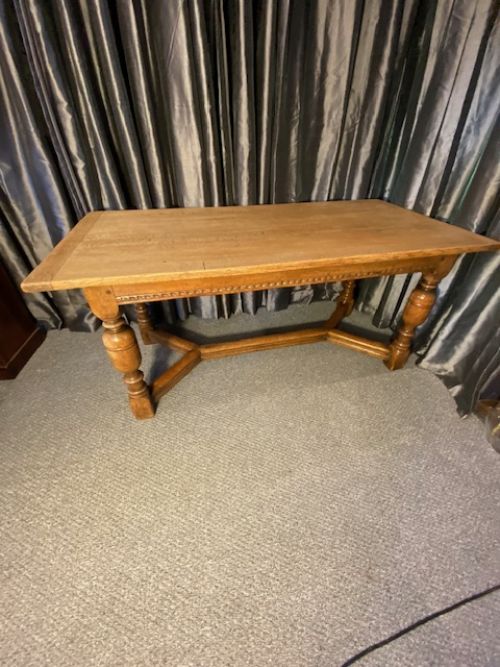
These carved oak trestle desk examples unite heavy timber construction with period character, offering a practical workspace defined by historical craftsmanship.
Carved Oak Trestle Desk
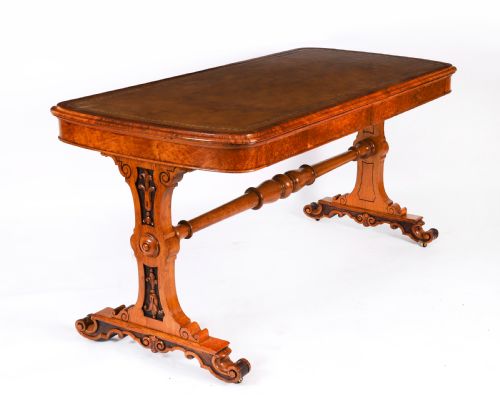
When searching for a carved oak trestle desk, you encounter heavy timber writing surfaces supported by robust side assemblies rather than standard four-leg arrangements. These pieces draw upon centuries of furniture design, adapting sturdy architectural forms into functional workspaces suited for study or library use.
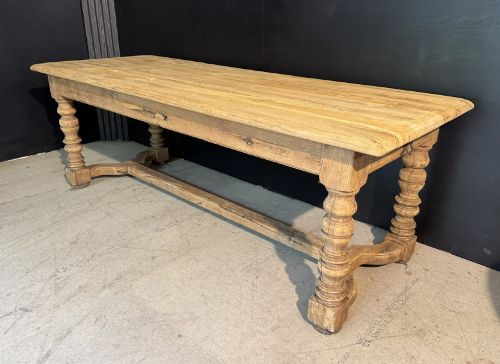
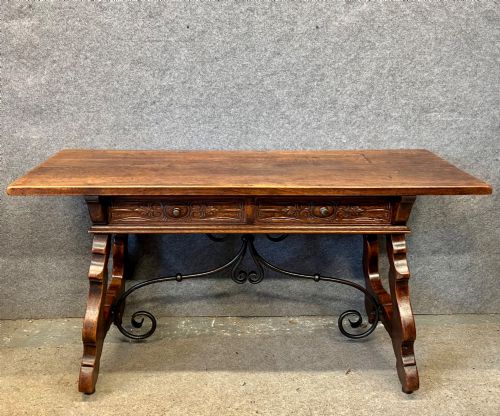
The selections available here span multiple eras and regional interpretations, ranging from austere 17th-century Spanish models to ornate Victorian Gothic revivals. While the phrase implies a specific desk format, the actual inventory includes related library tables and refectory forms that share the characteristic oak construction and trestle support structure.
You are most likely to meet 19th-century revival pieces that emulate earlier Jacobean or Gothic aesthetics through deep surface carving and substantial proportions. These later interpretations capture the visual weight of antique tables while serving modern surface area requirements.
Materials and Construction
The primary material across these pieces is solid oak, selected for its density and capacity to hold intricate carved relief work. Artisans utilised quarter-sawn boards to expose the timber's natural medullary rays, adding subtle visual depth to the flat surfaces and structural supports.
Joinery relied on traditional pegged mortise and tenon connections, ensuring the heavy frames remained rigid under daily use without relying on metal fasteners. Secondary materials such as wrought iron, brass, and leather frequently appear on writing surfaces and structural braces to complement the dark grain of the timber.
The documented periods span from the 17th century through the Edwardian era, encompassing diverse regional styles like Spanish Baroque and French Country.
Distinctions in Quality
The distinction between standard items and superior examples lies in the depth and precision of the hand-carved ornamentation. Master carvers produced crisp, undercut foliage and geometric patterns that catch the light, whereas lesser pieces display shallow, mechanical stamping.
Proportion and timber selection also divide the range, as superior desks utilise dense, highly figured pollard oak or unblemished heartwood rather than patched or inferior stock. The integration of the trestle supports reflects the maker's intent, with high-quality versions featuring integrated stretchers and pegged joints that completely eliminate side-to-side wobble.
Gillows·Charles Bevan
The Carved Oak Trestle Desk Glossary
- Oak
- A hard, heavy timber native to temperate regions, prized for its durability and prominent grain pattern. It serves as the foundational material for the vast majority of pieces catalogued here.
- Trestle
- A structural support consisting of two or more upright members connected by a horizontal beam or stretcher. This arrangement leaves maximum legroom beneath the writing surface.
- Gothic Revival
- An architectural and decorative style popular during the 19th century that reinterprets medieval motifs. Pieces in this style frequently incorporate pointed arches, quatrefoils, and heavy carved tracery.
- Pollard Oak
- Timber taken from trees that have been pruned near the top to promote a dense branch growth, resulting in highly decorative, mottled grain patterns. Cabinet makers utilised this timber for prominent surfaces.
- Refectory
- A long, narrow table traditionally used in monastic dining halls, characterised by substantial length and heavy stretcher bases. Many surviving examples have been adapted over time for secular workspace use.
Carved Oak Trestle Desk: Frequently Asked Questions
What defines a carved oak trestle desk?
These pieces consist of a heavy wooden writing surface supported by vertical end assemblies joined by a stretcher. They combine structural rigidity with substantial timber thickness.
The inclusion of hand-carved detailing distinguishes them from plain utilitarian tables, drawing on historical styles such as Gothic Revival or Jacobean.
How do I care for antique oak?
Maintain the wood by applying a quality beeswax paste periodically to nourish the dry grain and preserve the natural sheen. Avoid placing the furniture near direct heat sources or in fluctuating humidity.
Regular dusting with a soft, dry cloth prevents particulate accumulation without risking moisture damage to the antique finish.
Are these desks suitable for daily use?
The robust construction and generous proportions make them exceptionally well-suited for contemporary studies, home offices, or libraries. Their solid timber builds easily accommodate modern writing equipment and computers.
Protecting the writing surface with a blotter or leather pad prevents ink stains and surface scratches on the historic wood.
How can I date an oak desk?
Dating relies on examining the construction marks, tool traces, and joint types visible beneath the frame and inside drawers. Hand-sawn boards and irregular peg placements typically indicate older, pre-industrial manufacture.
Stylistic cues such as specific Gothic revival motifs or Spanish baroque turning also help narrow the period of creation.