




Regency Transferware Dish
A regency transferware dish brings rich monochrome pattern and blue and white narrative to the table.
Regency Transferware Dish
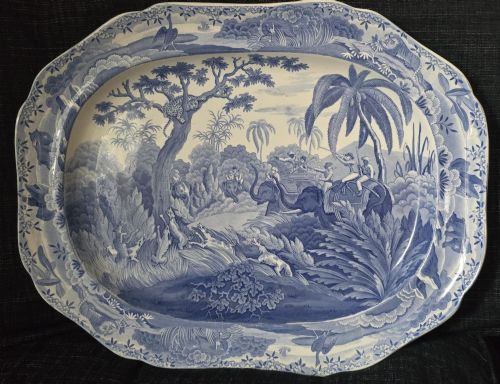
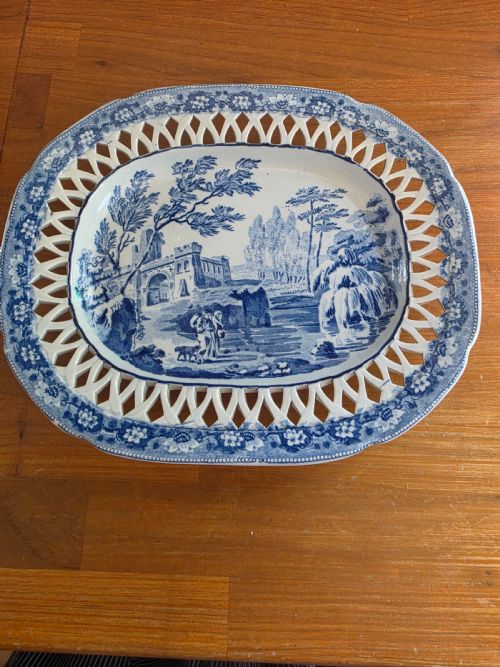
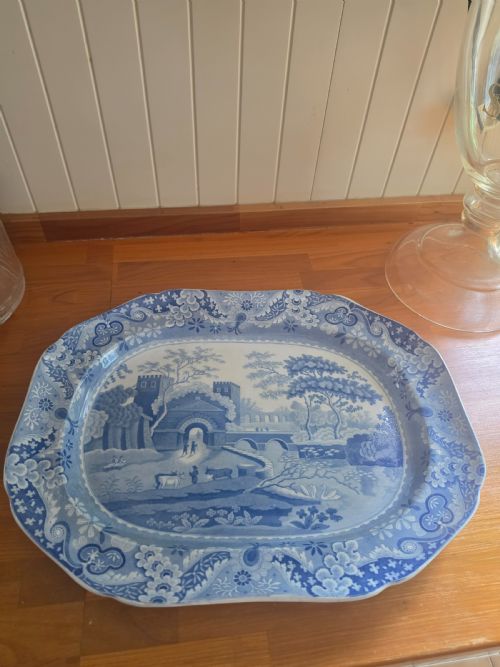
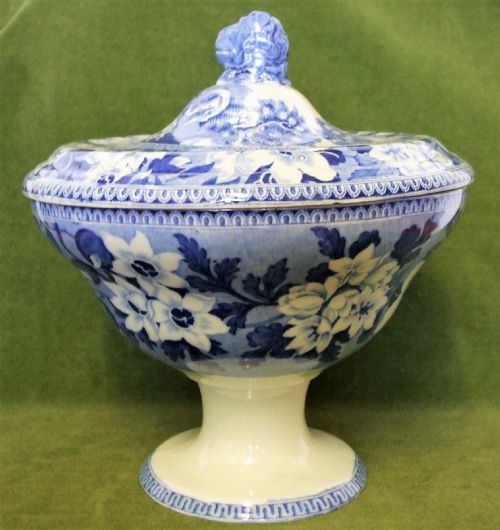
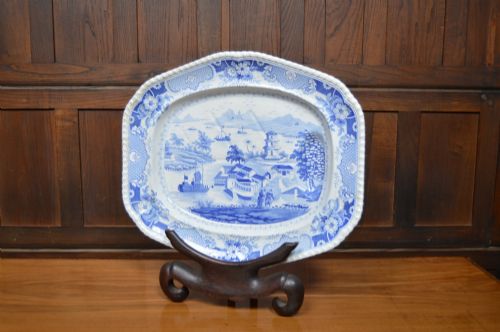
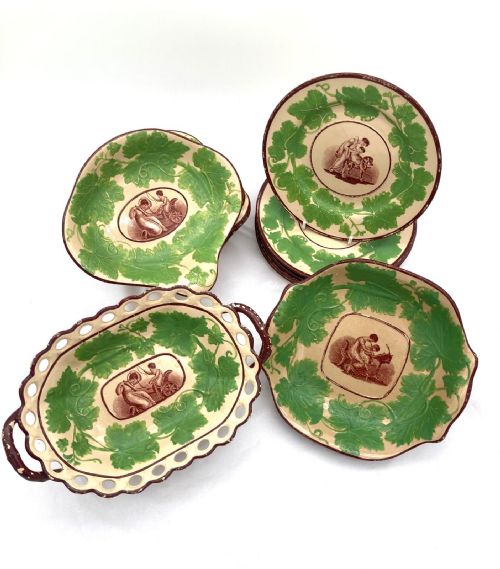
A regency transferware dish encompasses serving platters, large meat dishes, footed bowls, compotes and dinner plates produced during the nineteenth century. The examples found here span the Georgian and Regency periods, carrying pictorial scenes printed onto earthenware, pearlware and ironstone.
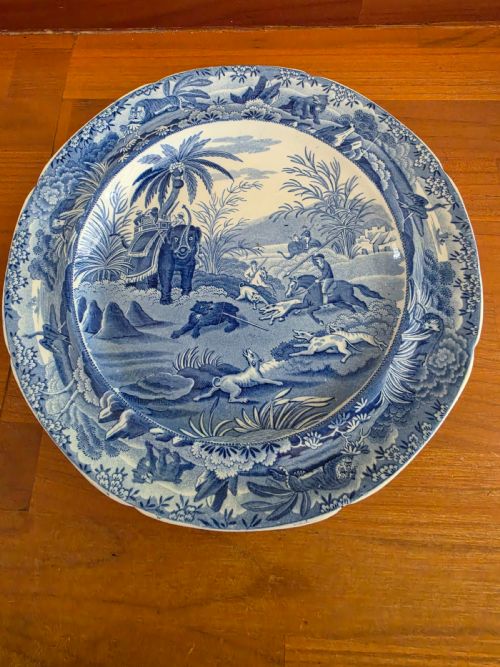
Buyers will most frequently meet large meat platters and serving plates decorated with blue and white prints. These pieces often depict topographical views, animal subjects or Chinoiserie patterns derived from English and Staffordshire potteries.
Forms range from simple circular plates to massive platters equipped with drainers, alongside soup and sauce tureens. Each item reflects the domestic dining habits of the period, combining utility with decorative narrative landscapes.
Materials and Technique
Potters built these wares using earthenware, pearlware and ironstone bodies finished with a transparent glaze. Ceramic glaze seals the porous clay beneath, creating a smooth surface that receives the printed decoration.
Makers applied designs using copper plate transfer printing, a technique where an engraved metal plate transfers ink onto tissue paper and subsequently onto the fired ceramic surface. Enamel colours occasionally supplement the dominant blue and white monochrome tones before a final kiln firing.
Regency Transferware Dish Retail Price Guide 2026
Typical asking prices for regency transferware dish among the pieces listed under this phrase on Sellingantiques today, from the lower quarter to the upper quarter. They describe what is for sale here now, not the wider market.
Object forms include serving platters, compotes, sauce tureens, dessert services and meat dishes with integrated gravy wells.
Judging Quality
Quality rests upon the clarity of the transfer print and the depth of the ceramic glaze. Crisp lines in complex pictorial scenes separate the finest works from softer, blurred impressions.
The sophistication of the modelling also dictates the hierarchy, seen in specialised shapes like meat dishes with integrated gravy wells or footed compotes. Maker attribution adds distinction, particularly when pieces bear clear factory marks from prominent Staffordshire potteries.
Spode·Davenport·John Rogers·Copeland and Garrett·Minton·Mason's Ironstone
The Regency Transferware Dish Glossary
- Transferware
- Ceramic pieces decorated by transferring a printed design from an engraved copper plate onto the clay or glaze. This technique allowed complex pictorial scenes to be replicated rapidly across large production runs.
- Pearlware
- A refined earthenware body developed in the late eighteenth century featuring a subtle bluish glaze that pooled in recesses. It served as an early precursor to later nineteenth century white earthenware.
- Ironstone
- A dense, durable type of heavy ceramic patented in the early nineteenth century to rival imported Chinese porcelain. It resists chipping and forms the robust base for many large serving platters.
- Meat dish
- A large oval or rectangular platter designed for serving roasted joints at the table. These often included a central well and drainer channel to collect juices.
- Compote
- A raised vessel on a foot used for serving fruit or sweet dishes as part of a dessert service. They bring height and formal structure to nineteenth century dining arrangements.
Regency Transferware Dish: Frequently Asked Questions
What is a regency transferware dish used for?
These vessels served functional roles in nineteenth century dining rooms, holding roasted meats, side dishes, desserts or sauces for family meals and formal dinners.
Today, collectors utilise them as decorative wall plates, table centerpieces or practical serving platters for modern entertaining.
How do I clean a transferware dish?
Wash antique ceramics gently by hand using warm water and mild dish soap. Avoid harsh scrubbers, harsh detergents or modern dishwashers.
Protect the fragile nineteenth century glaze from sudden temperature changes and accidental knocks against hard surfaces.
How can I tell the period?
Examine the ceramic body, glaze colour, pattern style and any impressed or printed factory marks on the reverse. Pearlware bodies and specific aesthetic motifs usually point towards the early decades of the century.
Matching the recorded series name, such as specific topographical or sporting views, helps narrow down the production decade.