

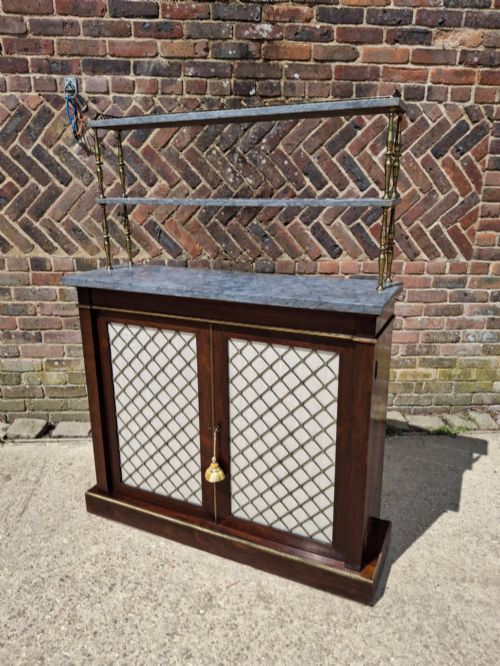
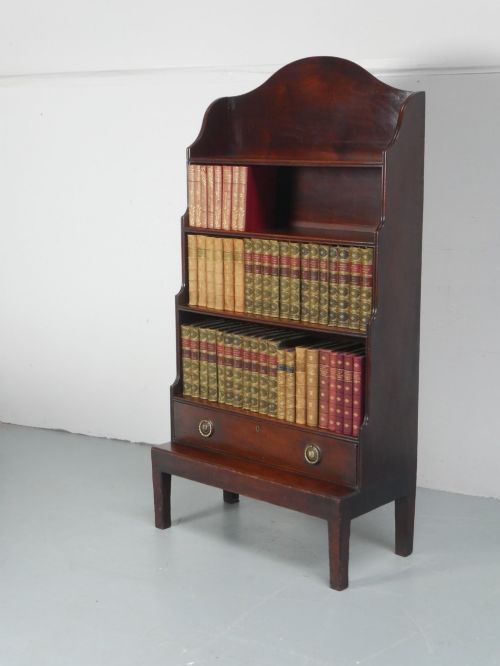
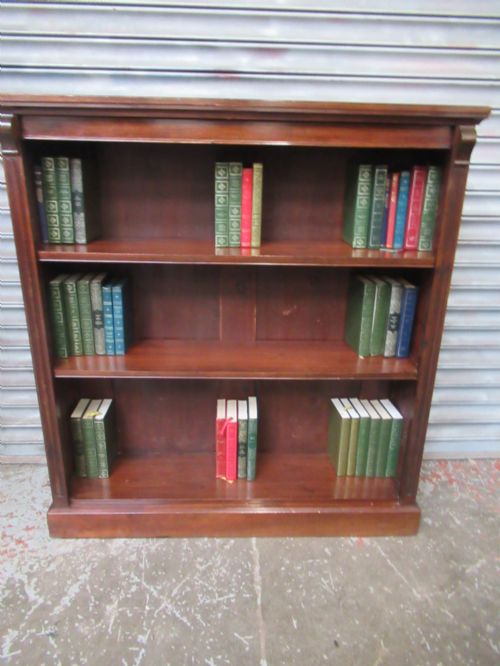
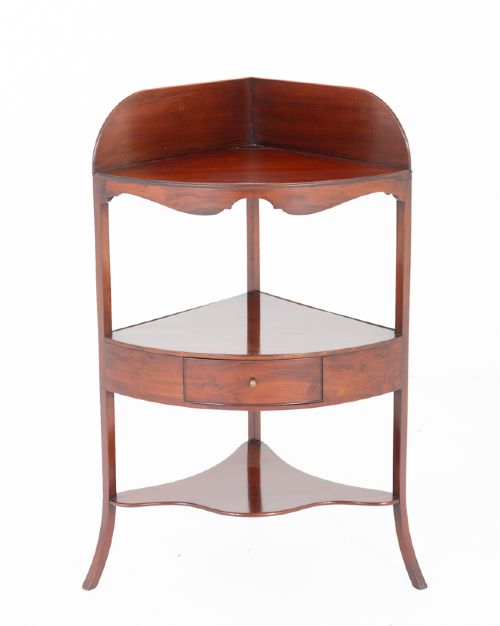
Regency Tiered Shelves
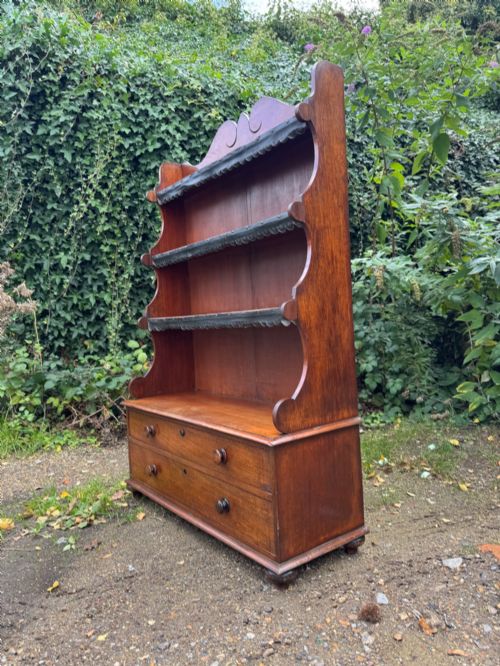
Regency tiered shelves are versatile stacking display stands and bookcases, designed to hold books and ornaments with architectural elegance.
Regency Tiered Shelves
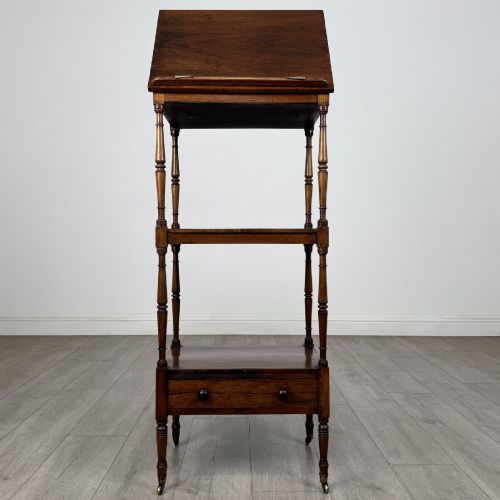
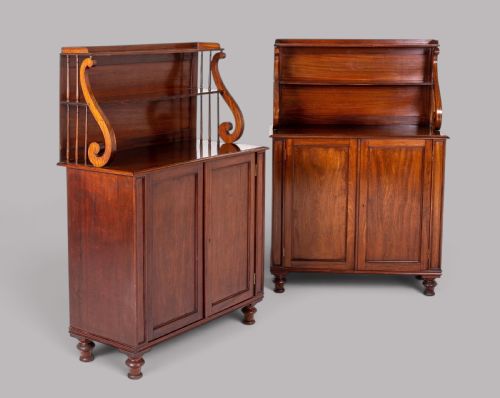
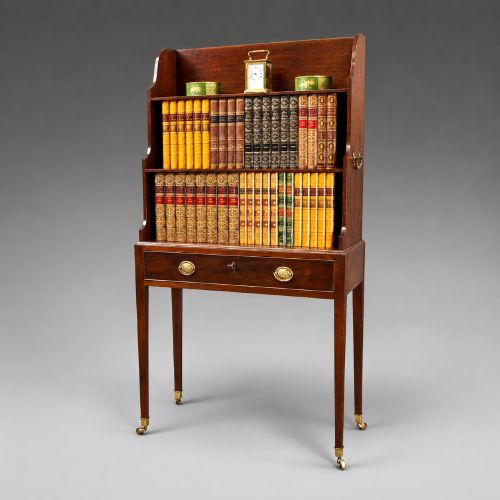
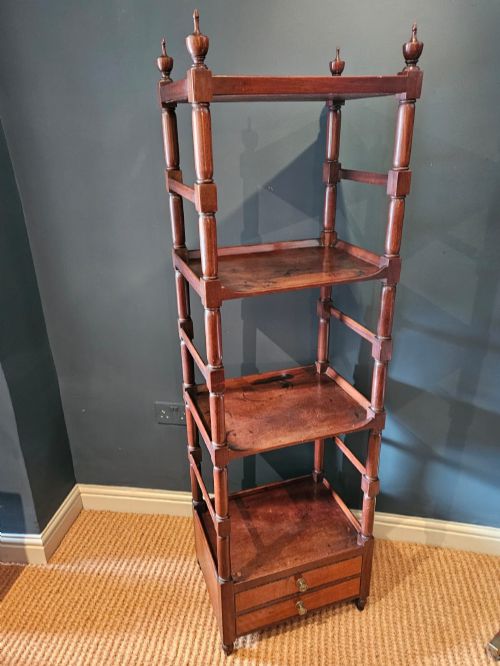
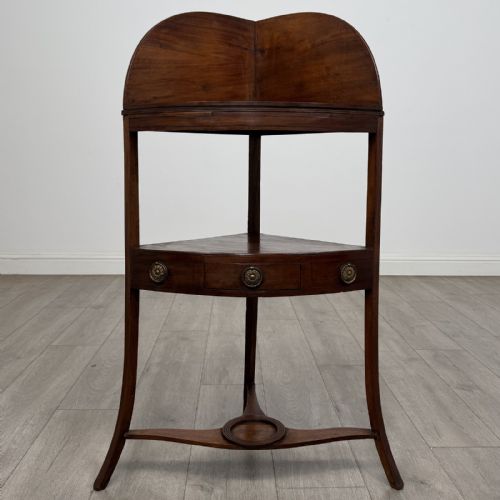
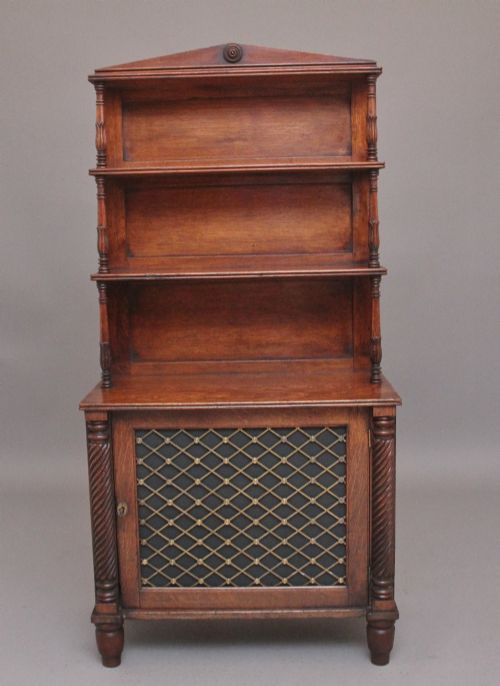
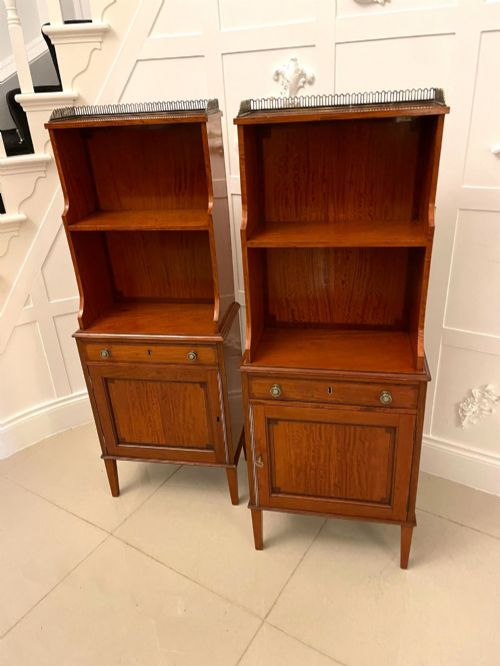
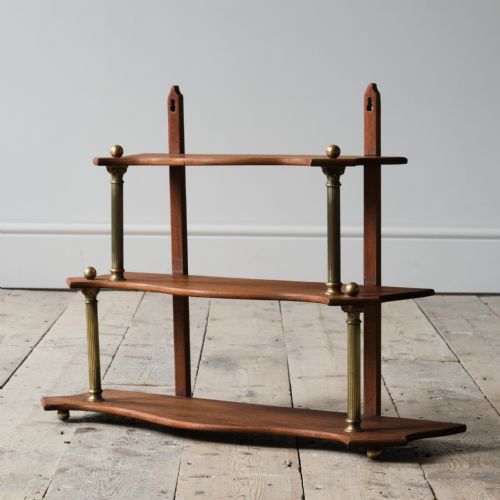
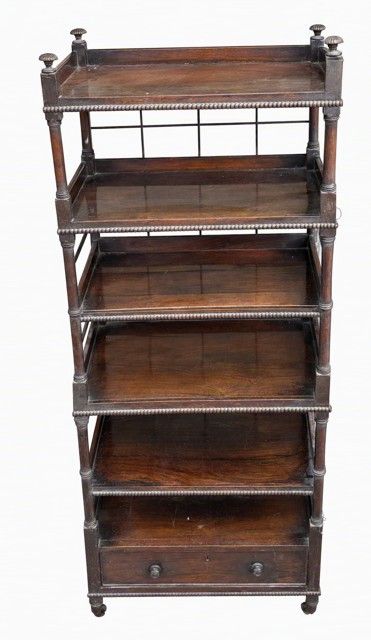
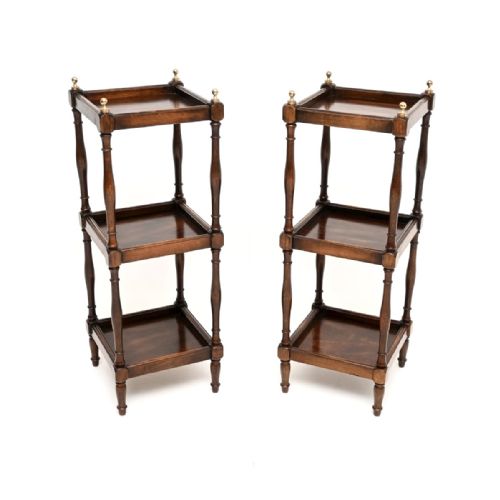
Regency tiered shelves comprise multi-level open storage units, standing bookcases, and wall-mounted shelves designed for domestic display and utility. These pieces include freestanding whatnots, waterfall bookcases, corner stands, and side tables fitted with multiple surfaces.
The pieces appearing on this page span the 19th Century, Georgian, Regency, William IV, and George IV periods, alongside later revivals from the Edwardian era and the 1920s. Mahogany and rosewood form the core of the selection, accompanied by brass details and occasional ebonised or gilt finishes.
Buyers are most likely to encounter freestanding mahogany whatnots and tiered open bookcases bearing the distinct proportions of the Regency style. Wall-hanging shelves and smaller side tables also appear frequently among the listings.
How they were made
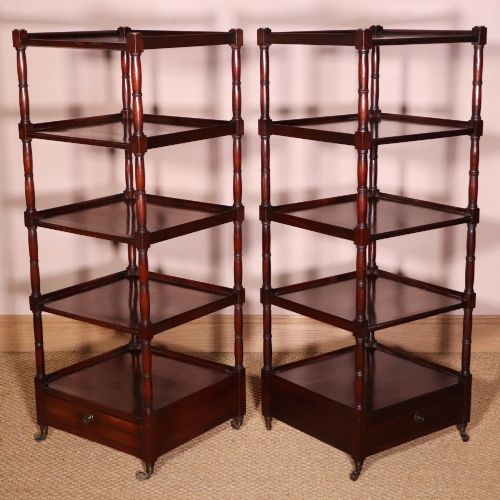
Cabinet makers constructed these tiered pieces primarily using solid mahogany, flame mahogany, and rich rosewood veneers over secondary timbers. Turned wooden supports or brass columns separate the individual tiers of shelves.
Many freestanding pieces incorporate functional additions such as drawers, small cupboards, or brass castors on turned legs for mobility. Finer examples utilise ebonised highlights, parcel gilding, or delicate pierced galleries to frame the open shelving.
Regency Tiered Shelves Retail Price Guide 2026
Typical asking prices for regency tiered shelves among the pieces listed under this phrase on Sellingantiques today, from the lower quarter to the upper quarter. They describe what is for sale here now, not the wider market.
Listings feature 19th Century, Regency, Georgian, Edwardian, and 1920s periods.
What varies in quality
Quality rests upon the selection of timber figures, such as dense flame mahogany and well-figured rosewood grain across the tiers. The crispness of turned columns and the robustness of joinery dictate the structural integrity of each stand.
Refined pieces display superior brass mounts, finely turned spindles, and well-integrated drawer linings that indicate skilled workshop production rather than mass manufacture.
Gillows
The Regency Tiered Shelves Glossary
- Waterfall bookcase
- A tiered open bookcase where each successive shelf steps back from the one below it. The sides often follow a downward sloping curve resembling water falling over rocks.
- Étagère
- A French term for a piece of furniture consisting of a set of open shelves for displaying small objects. These decorative stands appeared frequently in principal reception rooms during the nineteenth century.
- Cellarette
- A lockable container or cabinet designed to hold bottles, occasionally incorporated into the base of larger stands. It allowed hosts to keep wine and spirits secure within the living quarters.
- Parcel gilded
- Partially covered in gold leaf applied to specific carved details or mouldings. This decorative technique highlighted architectural elements against dark woods.
Regency Tiered Shelves: Frequently Asked Questions
What are regency tiered shelves used for?
These tiered units serve primarily to display books, ceramics, and decorative ornaments within domestic reception rooms. Their open structure allows items to be viewed easily from multiple angles.
Smaller wall-mounted versions and corner stands provide compact storage solutions for tighter spaces, while larger freestanding whatnots act as principal focal points in a room.
Are these shelves sturdy enough for heavy books?
Freestanding whatnots and bookcases generally utilise robust timber uprights and solid shelves designed to support standard book collections. However, wall-hanging variants depend entirely on secure wall fixings and lighter shelf loads.
Checking the stability of the column joints and the thickness of the shelf timber helps determine the weight capacity for daily use.
What is the difference between a whatnot and an étagère?
The terms are often used interchangeably to describe multi-tiered display stands, though étagère frequently implies a more decorative, French-influenced piece. Both styles provide open levels supported by slender vertical members.
Traditional English whatnots tend towards robust utility with functional drawers or cabinet bases, whereas étagères lean towards lighter display formats.