



Georgian Etagere Stand
A georgian etagere stand brings tiered vertical display and simple utility to any room.
Georgian Etagere Stand
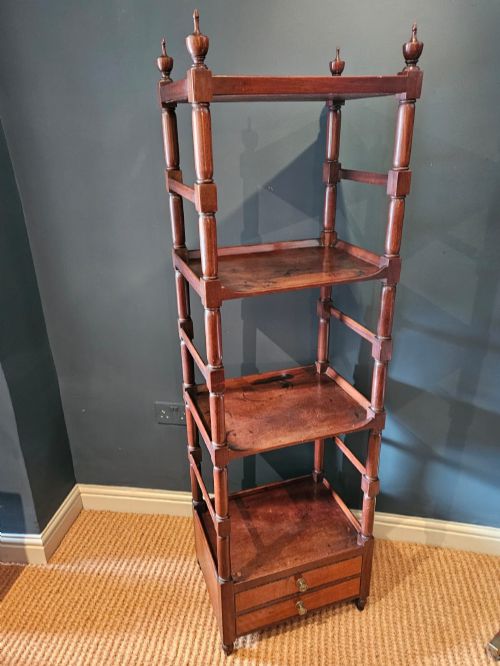
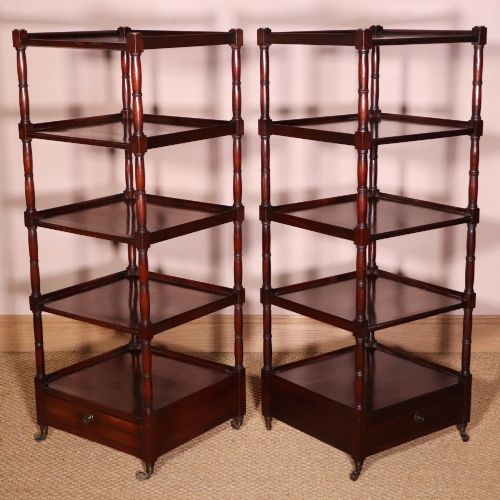
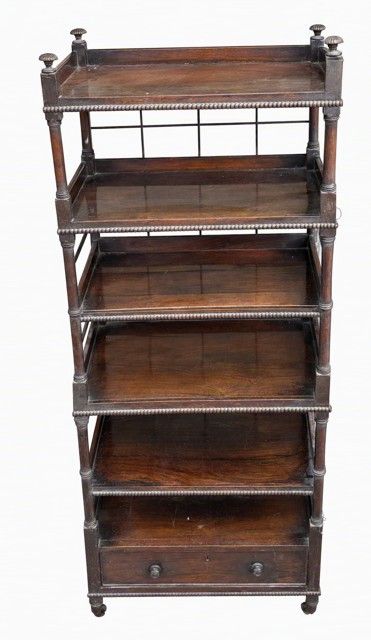
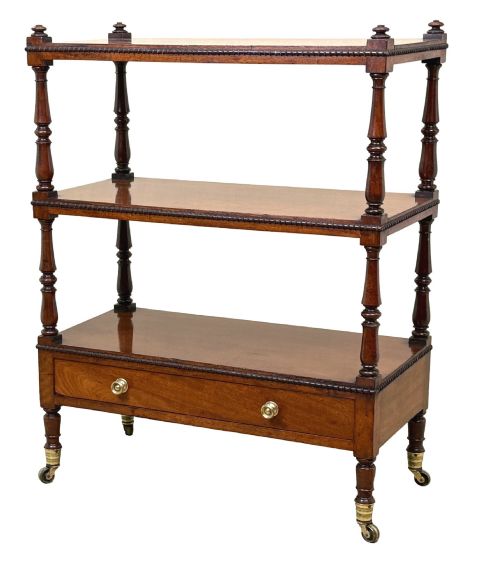
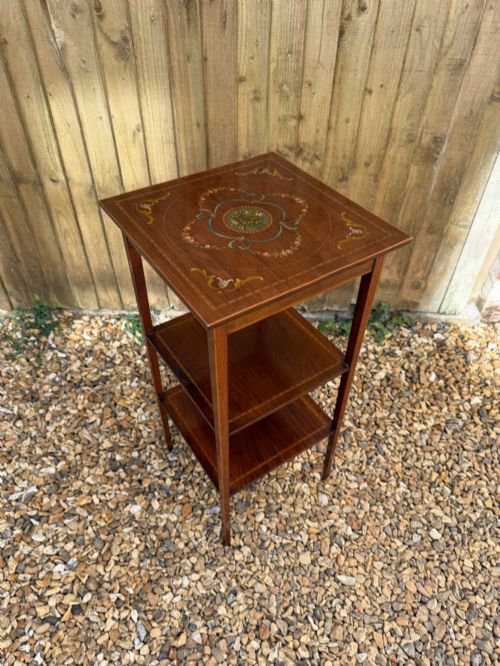
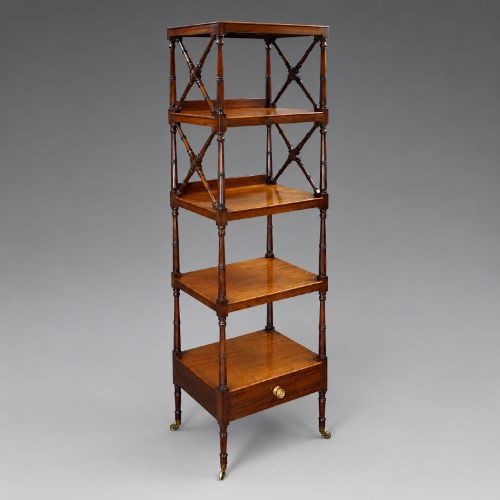
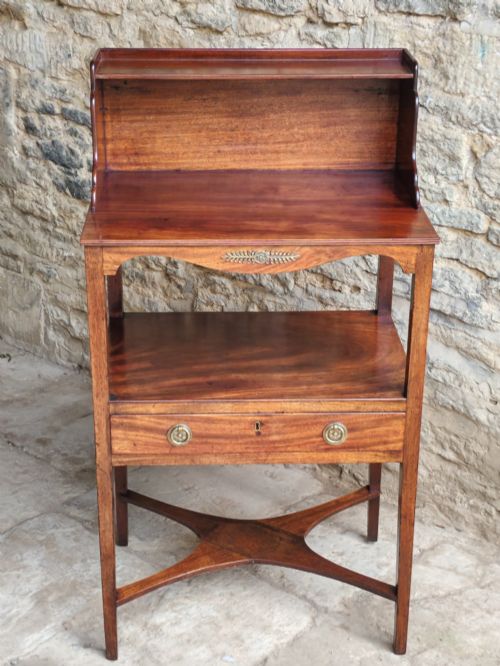
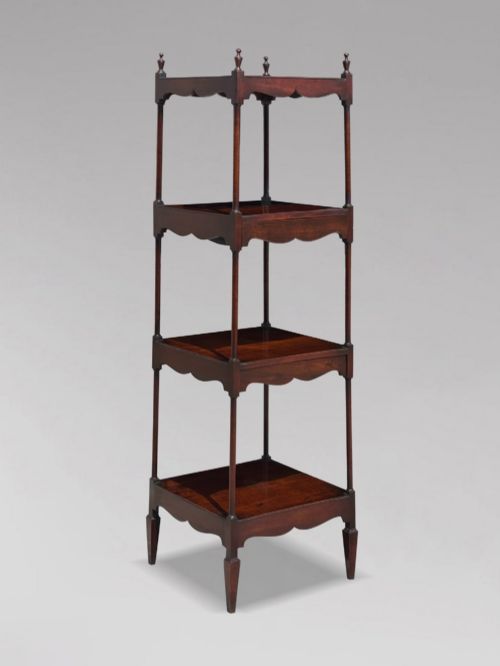
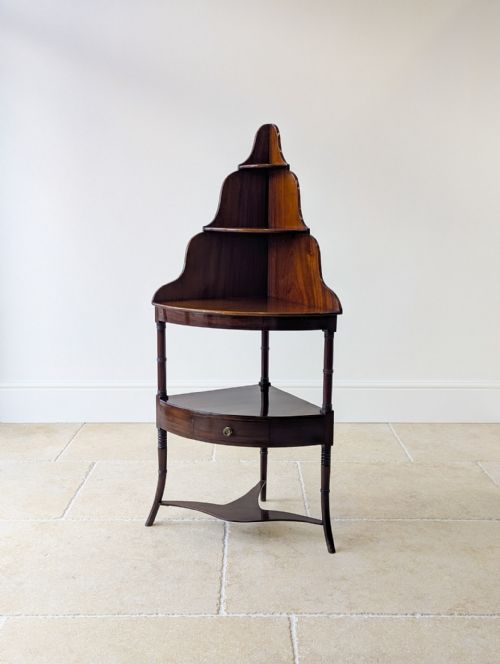
A georgian etagere stand comprises open tiers and shelves designed for holding books, music, and decorative items. These pieces appear as multi-tiered freestanding stands, corner units, and occasional tables originating primarily from the Georgian and Regency periods.
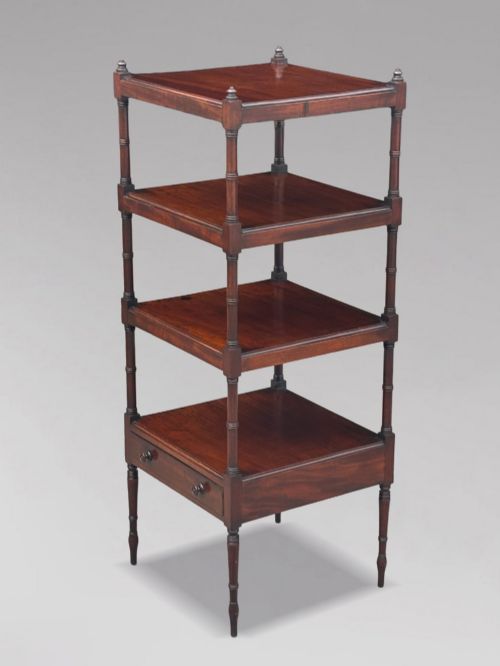
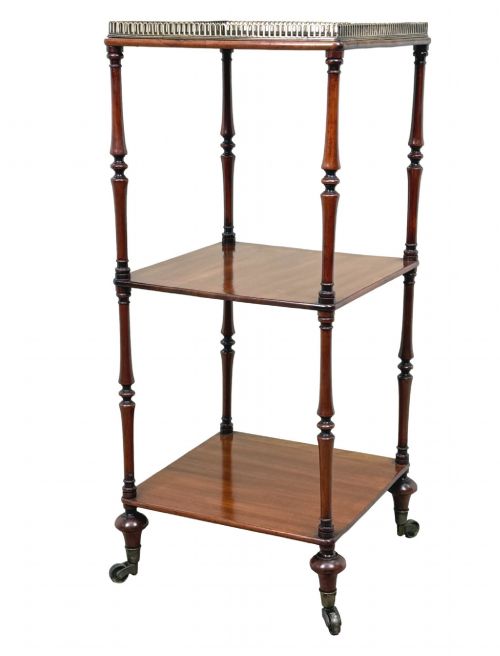
The form relies on stacked wooden platforms supported by slender uprights, frequently ending in castors. Examples range from compact three-tier bedside formats to tall four-tier music stands and open bookcases.
Most items encountered on this page date from the late eighteenth century through the early nineteenth century. Mahogany dominates the surviving pieces, often complemented by rosewood, maple, and brass details.
Materials and construction
Cabinetmakers built these stands predominantly using solid mahogany and mahogany veneers, valuing the wood for its strength and rich grain. Selected pieces incorporate contrasting boxwood inlay, ebonised surfaces, and exotic timbers such as birdseye maple and rosewood.
Structural support comes from turned or tapering upright posts that separate the graduated shelves. Brass castors, gallery rails, and leather inserts appear on finer iterations to aid portability and protect books or porcelain.
Georgian Etagere Stand Retail Price Guide 2026
Typical asking prices for georgian etagere stand among the pieces listed under this phrase on Sellingantiques today, from the lower quarter to the upper quarter. They describe what is for sale here now, not the wider market.
Some musical etageres managed to hold both the flute scores and the afternoon tea biscuits simultaneously.
What separates the grades
Quality rests in the crispness of the turning on the upright supports and the density of the timber selected for the tiers. Finer examples display thoughtful proportion, subtle boxwood stringing, and well-integrated drawer compartments.
Simpler workshop output relies on plain timber and heavier framing without decorative refinement. The presence of secondary woods, balanced grain matching across shelves, and original brass hardware elevate an individual stand above standard utility pieces.
Gillows
The Georgian Etagere Stand Glossary
- Etagere
- A piece of furniture consisting of a set of open shelves for displaying small objects. The form developed in France before being adopted by British cabinetmakers.
- Whatnot
- An open set of shelves used for books, ornaments, or serving. This term appears interchangeably with etagere in period records.
- Regency
- An architectural and decorative style spanning the early nineteenth century. It is characterised by classical restraint and a turn toward Greek and Roman forms.
- Boxwood inlay
- Narrow strips of pale wood inserted into contrasting darker timber to create geometric borders. Cabinetmakers utilised this technique to accent table edges and tier borders.
- Dumb waiter
- A tiered freestanding stand used in dining rooms for holding dishes and silver. These pieces share the vertical shelving structure seen in standard etageres.
Georgian Etagere Stand: Frequently Asked Questions
What is a georgian etagere stand used for?
These pieces were originally designed for holding books, sheet music, and decorative objects in principal rooms.
Today they function effectively as open display shelving or bedside tables in compact spaces.
How do I tell a georgian piece from a later revival?
Early pieces exhibit traditional hand-cut joinery, mature timber shrinkage, and appropriate patination on the surfaces.
Revival items from later centuries often show mechanical tool marks and standardised fixings beneath the shelves.
Where should I place an etagere stand?
Freestanding models suit corners, alcoves, or flanking larger pieces of furniture without blocking natural light.
Compact corner variants make efficient use of unassigned wall space in smaller reception rooms.
What woods were used for these stands?
Mahogany forms the primary structure for the vast majority of surviving examples from the Georgian era.
Selected items incorporate rosewood, oak, painted finishes, and birdseye maple alongside brass mounts.